SUNDAY 12TH OCTOBER – Calm and sunny day after early fog, 17C
Our final morning saw us return to the Spurn area. We drove through fog patches and it was actually pretty cold when we first arrived at Kilnsea, though before long we were all roasting once the sun got through! Our first port of call was to walk down Beacon Lane and along the beach to view Beacon Ponds, to try and find a Pectoral Sandpiper that had been around. We opted to go along the beach side so we had the light and this proved a good move as there were lots of small waders roosting on the islands over the high tide. Mostly Dunlin and Ringed Plover, there were a few Sanderling, Knot and Turnstone too and we picked out a single juv Curlew Sandpiper. A Sparrowhawk trying to nab a Dunlin was quite a sight – it managed to grab the bird before inexplicably dropping it and flying off, maybe somewhat mesmerised by all the waders swirling around it! There was no sign of the ‘Pec’ though so we walked further north along the beach (picking up a flock of Common Scoter heading south offshore) until we could view the northernmost section of the lagoon. Here we found the Pectoral Sandpiper roosting with a few Ringed Plovers and it gave really nice views – a smart, fresh juvenile bird.
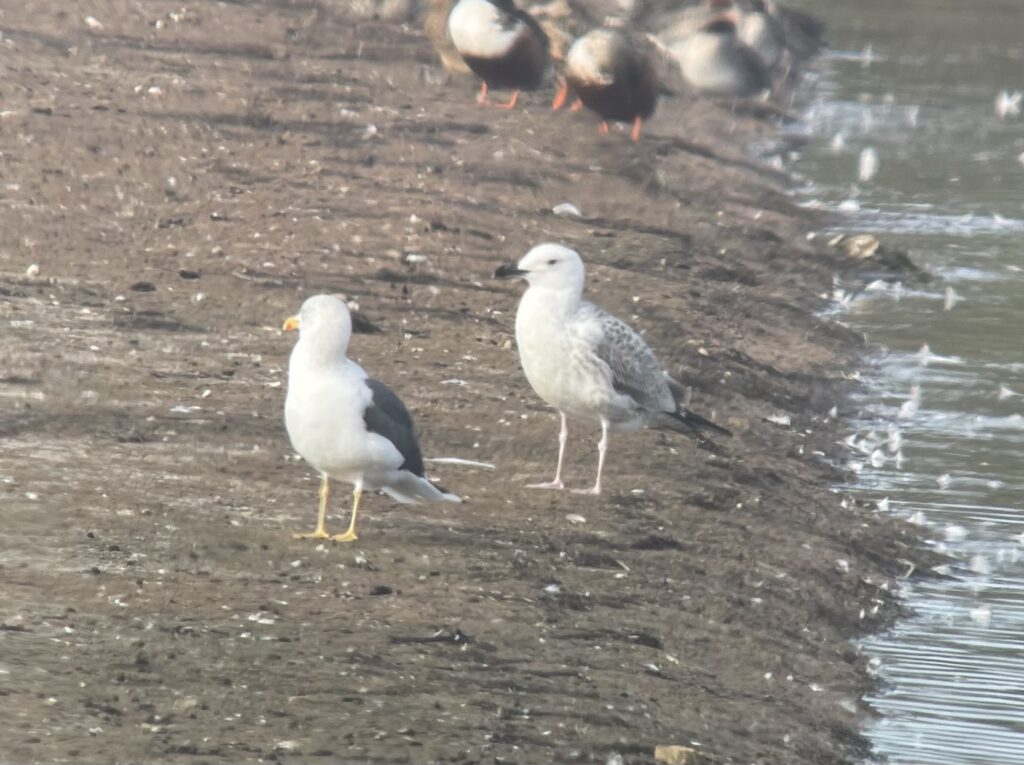
Caspian Gull, Beacon Ponds
We were almost back at the Bluebell car park when news came through that a Little Bunting initially found yesterday was now showing well by the Warren gate. We drove down there to find a small crowd already assembled but the bird had flown into long grass towards the clifftop and several efforts to flush it were unsuccessful. We abandoned it and went over to the screen as lots of waders were now dropping in as the tide began to recede. Mostly Golden Plover and Grey Plover, we also saw our first Bar-tailed Godwits of the trip and the same or another Curlew Sandpiper. A single Redwing fly past and perched beautifully on an elder for us, and several Redpoll were to be heard moving south. Walking up to the seawatch hide, we wanted now to try again for the bunting and we could see a small group assembled further south along the clifftop so we walked to join them. As we approached the Little Bunting flew out of the grass and landed on a fence just long enough for most to see it, before dropping out of view. Thankfully it wasn’t long before it repeated this manoeuvre and this time we all had good scope views – a smart bird and even right at the end of the trip we were managing to add some quality! This was our last action though as, after lunch at the Discovery Centre, we made our way back to Norfolk.
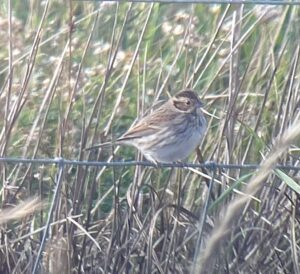
Little Bunting at Spurn
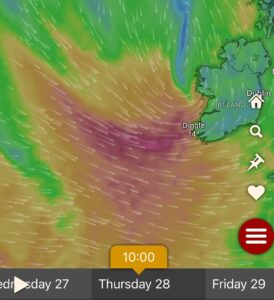 Left – a screengrab of the Windy App from Tuesday afternoon showing the picture for 10am on Thursday. A fast-moving low was racing across the Atlantic from the Southern tip of Greenland, bringing rain and strong westerly winds and making more or less a direct hit onto Ireland’s Dingle peninsula, County Kerry. The winds appeared to be pushing up into the coast of neighbouring Clare, and we figured large numbers of seabirds could be displaced into this area and then track back south once the front had passed…