News & Birding Diary

News & Birding Diary

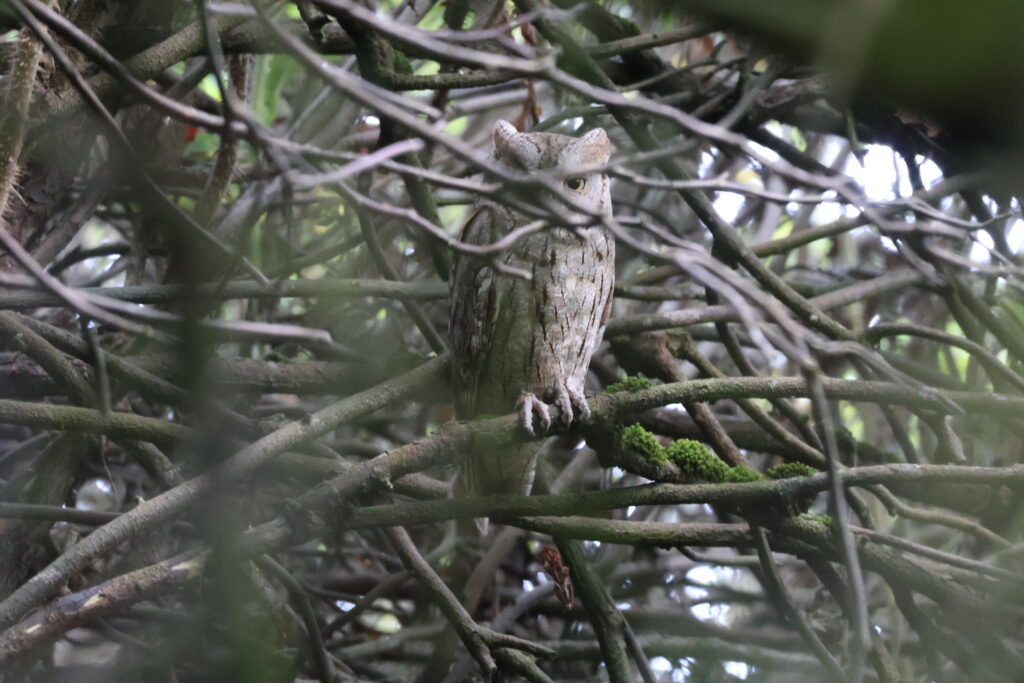
Birding Diary – A Scops Owl on Orkney!

12th Oct 2026

After spending six days on North Ronaldsay and enjoying amongst other things, a Two-barred Warbler both in the field and in the hand (the first ever to be trapped in Britain) we were away on the early plane back to Kirkwall on the morning of 8th October. The day dawned calm and sunny and after several days of westerly winds, we hoped a few migrants may arrive on Orkney Mainland in the slack conditions. With this in mind, we planned to head out to Deerness on East Mainland, where a number of good sites could be checked for rarities starting at Sandside and East Denwick. Both these sites though were very quiet – we saw a Yellow-browed Warbler, a couple of Redwing and a hunting Short-eared Owl but by and large there was not a lot in the bushes. Just back up the road, is a lovely little sheltered spot which we now know as ‘Lighthouse Quarry’ (perhaps someone can enlighten me as to why!) but which has a small manicured lawn surrounded on all sides by trees and bushes including sycamores and the ubiquitous rosa rugosa. This spot was more lively as there was a small pocket of warblers foraging in the canopy at the back of the garden – a male Blackcap, Willow Warbler, up to three Chiffchaffs and a Yellow-browed. I encouraged the group to stick at it as I felt there could easily be something else lurking and we chatted about the need to be patient in sites like this and let birds do their feeding circuit – you never know what else could be hiding in there but being elusive! With this in mind group member Fiona Wright and myself had drifted up the north end of the garden and were stood under the trees trying to get a view of birds in the canopy.


Initial views of the Scops Owl were quite obscured


Read more

Birding Diary – 1st October 2026 – The ‘Pinch Me’ Day!

7th Oct 2026

Over the years, whilst on Oriole Autumn trips to Shetland I have enjoyed several “pinch me” days. Those days when the weather is right, the cards fall your way and you see birds you never thought you would outside the pages of the Collins Bird Guide. I have seen several of a couple of the Shetland specials, Lanceolated Warbler and Pechora Pipit. I have only managed a single Pallas’s Grasshopper Warbler, but remarkably that sat in the open for its admirers. Three-star vagrants have included White’s, Siberian and Swainson’s Thrushes; Rose-breasted Grosbeak and a Veery at point blank range whilst a pod of Orcas swam into bay below us. However, October 1st 2026 might just be the “pinch me” day.


This year’s autumn trip had been dominated by westerly winds. American waders were plentiful with Buff-breasted and Baird’s Sandpipers to the fore. Nonetheless, the lack of east winds had severely limited eastern stragglers to Shetland. The one good eastern bird we had seen was a smart juvenile Citrine Wagtail expertly found by Jonny on Grutness beach. Eventually, constant westerlies became a bit of a drag and so we were pleased when a touch of south-east appeared in the forecast for 29th September to the 1st of October. Although seemingly short-range winds the 29th immediately produced with Yellow-browed Warblers, Redwings and Bramblings arriving. Best of all we found a smart, Red-breasted Flycatcher at Lower Voe. This was more like it.


The fly in the ointment was that whilst the forecast for 30th was for more south easterlies they were going to be accompanied by very strong winds and rain. Birding was not easy in that weather. It was hard to stand up, and the bushes were shaking so much it was next to impossible to see into them. However, the silver lining was that the 1st of October was set fair with just light south easterly winds. We went to bed knowing it was the last day of our trip but also hoping that some good birds, maybe even the “monster,” had arrived within the blow of the day before.


The morning started well in Sumburgh Hotel gardens with a showy Yellow-browed Warbler and a nice Common Redstart. We then moved on via a Slavonian Grebe at West Voe to the Pool of Virkie. The tide was out and there was a good spread of common waders, including a juvenile Curlew Sandpiper. By now news of an Olive-backed Pipit, several Barred Warblers and an Arctic Warbler had come through and we were keen to begin our own rarity hunting. As we began packing up our scopes Jonny’s sharp ears picked up the sharp ‘tick’ call of a bunting. As it flew over Sean expertly grabbed a shot. It was a Little Bunting, and we were on the scoreboard! Onwards!!
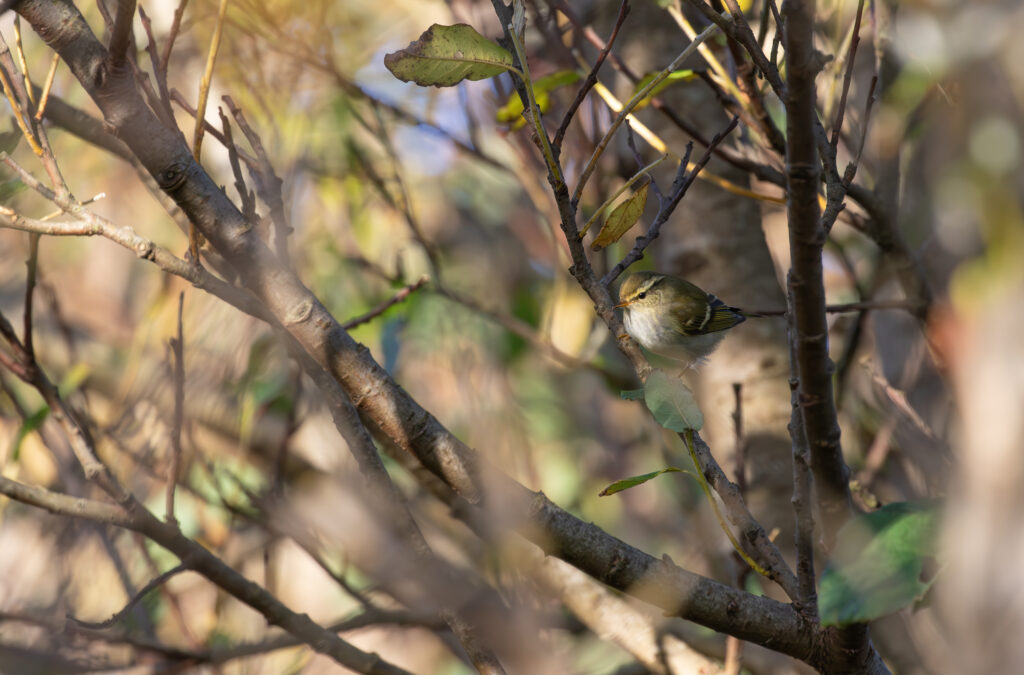
 

Yellow-browed Warbler


We tried to twitch an Olive-backed Pipit in Paul Harvey’s garden, but the limited viewing and a noisy cement mixer soon had us move on. A toilet stop was requested and some unseen force made us choose Quendale Mill Museum. We had decided to move on and bird Gulberwick and were just on our way out of Quendale when Jonny told me I had to turn around immediately. I knew it was something good but was unprepared for “Siberian Blue Robin, Hugh Harrop’s garden!!!”


Within two minutes we were opposite the drive to the garden. I dropped off Jonny and our clients and then had to drive back to Quendale Mill to park! This was agony, as it was half a mile down the road and I quietly feared missing the bird. I quickly parked and set off speed walking back up the hill towards the bird. By now birders were arriving, leaving cars less parked but more abandoned.Everyone was rushing up the road from the Mill. You always know it is serious when birders are running. Some of the portlier brethern appeared to be at risk of expiring, whilst some whip thin folk were impressively running ahead in wellingtons.


Eventually reaching the garden I was greeted with the news from our group that the bird had not been seen for 20 minutes or so since they arrived. Time dragged as more birders began to arrive. By now there must have been 150 birders gathered in a small space. Hugh Harrop assisted by a few locals began to try to tickle the bird up. A few brief views were had by a lucky minority who were standing in the right place but for the rest of us a frustrating wait went on. Just then someone whispered they had it on the ground in a gap in the vegetation. Sure enough the Robin emerged. It was face on. Upright and long legged, we could immediately see the eye-ring and scalloping on the breast. Otherwise, it looked fairly plain and colourless. However, it then turned through 180 degrees to head back into the vegetation. As it did a blue sheen was revealed that stretched from the nape to the tail and sharply contrasting with its brown wings. The amount of blue strongly suggested a first winter male. It was a moment difficult to describe, but my legs were genuinely shaking and I had goosebumps. A first for me whilst watching a bird. Over the next thirty minutes we enjoyed 3 or 4 further views of the Robin as it skulked in vegetation. The bird then disappeared and sadly was not seen again., much to the disappointment of later birders. However, by now the tension of the crowd had dissipated to be replaced by a low hum of contentment and smiles all round. The fifth record for Britain and we were there!
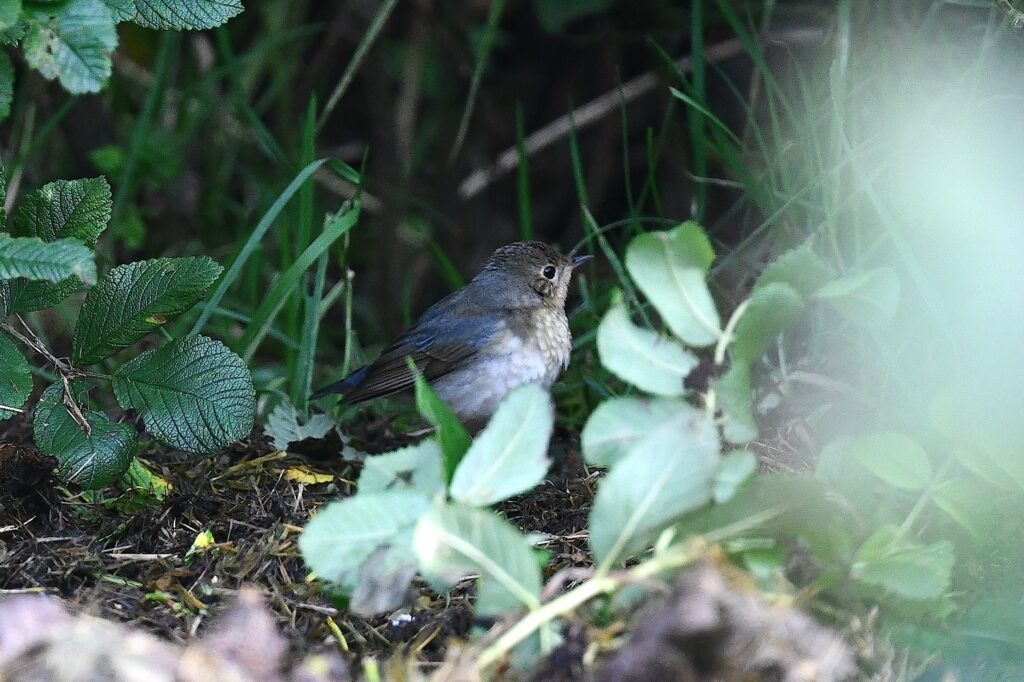
 

Siberian Blue Robin © Sean Greenway


Returning to the van we thought we could finally go to do our own birding. We drove north, stopping in Levenwick to have a late lunch. A birder who had arrived ten minutes before us had found a Siberian Stonechat, but there was no sign for us. Eating sandwiches Jonny received a call from Jack and Dan, two university buddies. They had an interesting phyollscopus warbler back in Quendale by the Mill. Superficially, it looked like a plain, dull Yellow-browed but maybe not. Two-barred Warbler was in the mix and the photos looked promising.


Back we went to Quendale. The warbler was in the small copse by the bridge. It soon showed and although the light was tricky, there was no doubt it was a Two-bar!! Not half a mile from the Robin another Siberian mega. The afternoon was sunny and warm, more Scilly type weather than Shetland and we watched the bird as if in a daze.


Two-barred Warbler


Time passed and as the ferry check-in was at 1730 we had to go. We just had time to work a couple of gardens in Gulberwick. A very showy Yellow-browed Warbler and a very unshowy Barred Warbler the reward for our efforts.


So ended our tour. A slow burn at first, but what a crescendo. October 1st, 2026, a ‘pinch me’ day indeed.


Nick Parsons, 3rd October,2026

Tour Availability

22nd Sep 2026

Check here for tour availability for 2026 and beyond, plus any changes made to the printed calendar.


Tours with limited or no availability are as follows, including ‘guaranteed departure’ status where applicable. Any tours not listed currently have more availability, but we always recommend checking with the office before booking as things can change very quickly.


***BESPOKE NORFOLK & UK DAY TOURS AVAILABLE – PLEASE CONTACT THE OFFICE FOR MORE INFORMATION***

Read more

Birding Diary – Kerry & Clare 2026

16th Sep 2026

Following our fact-finding trip in 2025, we are running our first tour to the West of Ireland this autumn with Ashley teaming up to co-lead with Cian Cardiff in Kerry and Clare. Here’s the latest blog post of how it’s been going! :-


WEDNESDAY 16TH SEPTEMBER – Overcast with showers in moderate SW winds. 16C

With the wind remaining NW overnight and backing to Westerly for the first couple of hours of the day, we thought it was worth another go at the Bridges this morning given the number of seabirds in the general vicinity yesterday. This meant another early rise and today we were in the car park at 7.30am so a bit ahead of yesterday. Initially passage was very poor and it seemed it had probably not been worth the effort – just a slow trickle of auks and a few Manx Shearwaters. But after about ninety minutes things began to pick up notably with Sooty Shearwaters which began passing through in good numbers (final count 72) with some really superb close views as well. Leach’s Petrels were still moving in small numbers, with 14 logged but again one or two of these were just off the point and moving slowly into the wind in perfect light. Four Great Skuas, two Arctic Skuas, five Pale-bellied Brent Geese, two Red-breasted Mergansers and a single European Storm-Petrel were also seen plus a handful of Arctic Terns and Kittiwakes. Bird of the morning was a fine adult Sabine’s Gull which came through at mid-range with a Kittiwake, stalling to dip-feed over the water before continuing west.


Read more

Birding Diary – Speyside 2026

23rd Apr 2026

We’ve just returned from three fantastic tours to the Scottish Highlands in April 2026 based out of the Grant Arms Hotel in Grantown-on-Spey. The weather was largely kind to us and we had three happy groups coming away with a nice list of Scottish specials!


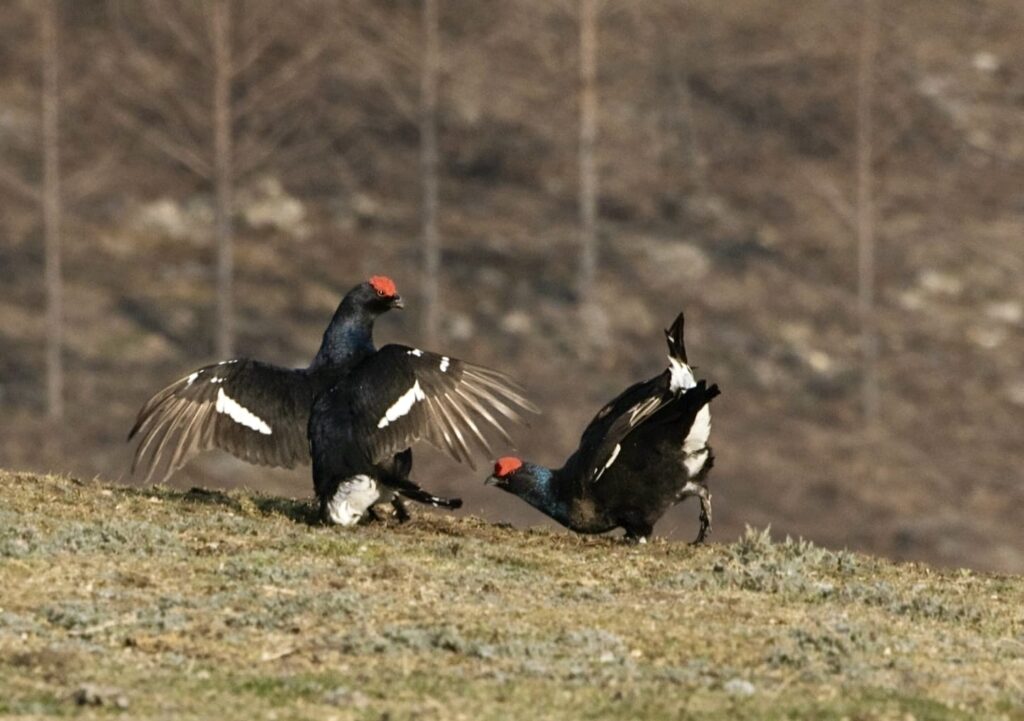
Black Grouse by Paul Griffiths


The Black Grouse lek was a clear highlight for our second tour, with most of the group voting the spectacle as their moment of the week. It’s not hard to see why – the bubbling and cooing of the males was carrying across the moor on a beautiful calm morning, and the birds amphitheatre on the top of a grassy knoll was bathed in perfect early morning light. As ever we watched cautiously from the road at a distance, using the vehicles as a screen, but tour participant Paul Griffths still managed to get this amazing shot!


Read more

Birding Diary – Trinidad January 2026

10th Feb 2026

Two of our leaders recently enjoyed a short but very successful scouting trip to Trinidad ahead of our new tour there running in 2027. Here we recount some of the highlights…


Day One

After a smooth direct flight from London Gatwick we had arrived at the Asa Wright Nature Centre the previous evening. After being welcomed with an excellent dinner and welcome drink we had an early night ahead of being on the centre’s famous veranda at dawn this morning. And wow, it did not disappoint!

As soon as the day began to brighten, birds began showing up to the feeding station en-masse. Some of the most obvious were the honeycreepers with Purple, Green and Red-legged showing up over the course of the morning. Six species of tanager were around, and hummingbirds numbered no less than twelve species during the day (including the stunning and tiny Tufted Coquette). It didn’t take long before we started seeing Channel-billed Toucans and Crested Oropendolas, and both Blue-headed Parrot and Orange-winged Amazon were flying about. There was so much to look at, especially raptors with seven species seen including an unexpected Black Hawk-Eagle.

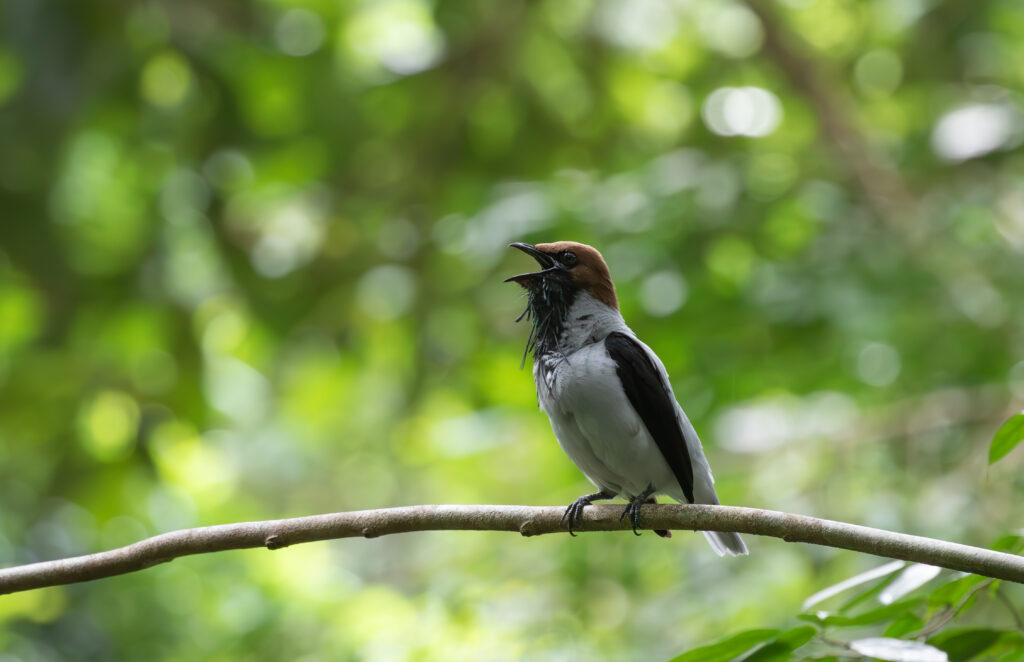
Later in the day we were shown around some of the forest trails. We checked out a lek of White-bearded Manakins and had superb views of the noisy Bearded Bellbirds. We also saw our first Trogons of the trip in the form of Guianan Violaceous Trogons. Later in the day, we were shown down to the famous Oilbird cave. Sure enough, at least twenty were present and we had superb looks with the red torchlight provided by our guide. There surely isn’t anywhere easier to see this unique bird in the world. During the evening, we spent more time watching the many hummingbirds, tanagers and Bananaquits from the veranda, and this was followed by a night walk where we saw huge Trinidad Chevron Tarantulas, scorpions and whip spiders among others. What a first day!


Bearded Bellbird


Oilbirds

Read more

Birding Diary – Norfolk 25th – 30th Jan 2026

26th Jan 2026

FRIDAY 30TH JANUARY – Overcast day with light drizzle

Our final day of the tour saw us venture south into the Brecks to have a look for some woodland birds, the main genre that we were missing for the list so far. It was forecast to be a grey day but basically dry – what we actually got was pretty much continuous light drizzle all day so this did hamper our chances with some species somewhat. We start at Lynford, where the main target was Hawfinch. We’d seen them on a recent visit perching up in the tops of the trees in the arboretum viewed distantly from the roost area, so wondered if they might be feeding in there at the moment and hence a better bet than the traditional location of the paddocks. We wandered slowly in to that area and almost right away heard the distinctive sharp, penetrating call of a Hawfinch and saw a small group fly through the canopy. They perched and we were able to get some binocular views and a quick glimpse in the scope before they melted away. Thankfully they were favouring this area as suspected and with patience we soon found them again, this time enjoying long scope views of this most spectacular of British finches.


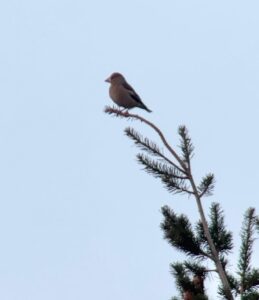
Down at the paddocks, the ‘chip-chip’ calls of Crossbills were predictably a constant backdrop – after several very poor years they are everywhere at the moment. Perched views were harder to come by but we did have a pair stripping bark in the paddocks and another male perched briefly in the conifers, plus lots of flight views. The drizzle hampered us from seeing much else but elsewhere around the arboretum we did have excellent views of Marsh Tits and Nuthatches.


Yellowhammer by David Carlsson

Read more

Birding Diary – Norfolk Winter 5th – 10th Jan 2026

6th Jan 2026

SATURDAY 10TH JANUARY – A calm day with sunny spells, 1C

Our final day turned out to be really productive, starting off with a Cattle Egret pottering about on the lawn outside the hotel during breakfast and 21 Russian White-fronted Geese which flew in calling and dropped into the field next to the car park. We made the short journey along the road to Titchwell reserve where we wanted to bird around the Meadow Trail for a few missing bits for our last, starting with Water Rail which showed well in the usual ditch by the west bank path. We couldn’t find the Firecrest with either of the small tit flocks though we did see Goldcrest and Treecreeper. Negotiating the icy boardwalk around to the Tawny Owl, we observed bits of the bird in its usual ivy-clad roost by the path – it made the fenland Long-eareds look showy by comparison! A Woodcock flushed out of the undergrowth and flew past us, with two others seen briefly in flight near the Visitor Centre, obviously still trying to find soft ground to feed on now things were starting to gradually thaw out.


Heading inland, we wanted to check a spot where some Bramblings had been feeding recently in a cover crop. On the way we saw a massive flock of Pink-footed Geese in the air, perhaps as many as 10,000 birds. They splintered into three groups with one large flock dropping into a field of beet tops though sadly they were in dead ground two fields back from the nearest road. Another Woodcock flushed from the verge and this time we got a great flight view as it crossed the road in front of us and off across an open field to our left. The finch flock was still present and numbered about 100 birds, mostly Chaffinch but with some Greenfinch, Goldfinch, Linnet and at least 6 Brambling. We had good scope views of them perched up in some birch trees in excellent light. Dropping back to the hotel we collected the cars before driving down to Swaffham and into the north Brecks. A faithful Goshawk spot was checked, as they are often already active on fine days early in the year. 14 Whooper Swans flew west in the distance and despite no Goshawks, we did have a surprise flock of 11 Woodlarks fly past. We managed to follow them until they dropped in a distant field, and so decided to drive down the lane to try and re-find them. The grass was longer than it looked and it was hard to even spot the many Redwings feeding in the same field. Eventually we found the Woodlarks though, and everyone got a clear view. Not an easy bird to find in winter.


Hawfinch (left) and Crossbill at Lynford


Lynford was our next stop and after a late lunch here, we went in search of some woodland birds. Three Nuthatch chased around and we soon started hearing the distinctive calls of Crossbills, which are going through a boom after several drought years. A female-type perched up for a long scope view but we went on to see about 20 more, including a lovely red male perched in the last golden rays of afternoon sunshine at the top of a spruce. We hoped for views of Hawfinch too, and eventually after very distant views of two, a female popped up in the paddock trees. Just as the light was starting to fade, a male also appeared and gave superb views to round off the day.

Read more

Latest Tweets

Our latest group to visit Brazil’s Pantanal are having a great time - here is one of their Jaguar encounters from yesterday!

This fantastic trip is superb for mammals as well as birds - check out next years itinerary details here 👉🏻 https://www.oriolebirding.com/tour/brazil-pantanal-cerrado/

Join our Newsletter

Don’t miss our latest offers, news and availability! To subscribe to our newsletter, simply follow the link below and you will automatically receive our next issue by email, as well as any news on fact finding tours not listed in our main programme. Past newsletters can be viewed by clicking here.

Subscribe to the Oriole Birding newsletter

ATOL Protected

All the flights and flight-inclusive holidays on this website are financially protected by the ATOL scheme. When you pay you will be supplied with an ATOL Certificate. Please ask for it and check to ensure that everything you booked [flights, hotels and other services] is listed on it.


Please see our booking conditions for further information