

SUNDAY 4TH MAY – Sunny spells and a cold northerly wind, 10C
Not exactly Spring-like weather for the final day of the tour, but we took on the challenge of trying to add some more different species to the trip list, finishing on a very respectable 122 species. Adjacent Titchwell reserve would be the destination for the morning, but boy it was cold as we battled out into the wind along the West Bank path! We saw a few birds around the reedbed pool area on the way down such as Reed Bunting and Pochard, but we decided to plough straight on down to the beach to have a quick look at the sea and shoreline before coming back with the wind behind us. The sea was actually surprisingly quiet given the onshore wind, but we did pick a single Little Tern up battling west and had super views of two pairs of Sandwich Terns which flew along the beach. There were quite a lot of Sanderlings on the shoreline too, and some very distant Common Scoter, out to the north-west towards the wind farm.
Parrinder Hide afforded some shelter from the wind and here we had good views of Mediterranean Gull, another party of Sandwich Terns, Little-ringed Plover, Common Sandpiper and our first Common Terns. A female Marsh Harrier also gave good views, flushing up the breeding Black-headed Gulls before puncing on something on one of the islands. Back around at Island Hide, we saw a couple more Common Sandpipers, another Little-ringed Plover close to the hide, and admired the 25 or so each of House Martin and Swift feeding low over the freshmarsh. Heading back towards the VC then, we called in at the reliable roosting Tawny Owl and could just about make it out hiding in it’s favourite ivy-clad tree – not so easy now the leaves are on the trees!
Given the weather, we wanted to seek a bit more shelter for the last walk of the trip and so after a circuitous route through the local farmland to check a few spots – noting a nice Grey Partridge – we arrived at a rather busy Lady Anne’s Drive in time for an early lunch. Four Whimbrel feeding in the fields on the west side were great to see – it has been a decent spring for them so far. We then walked west, through the shelter of Holkham pines in the sunshine, and added a few nice bits along the way out to Joe Jordan hide including Willow Warbler, Goldcrest and Treecreeper. From the new hide, we enjoyed watching the comings and goings of the Spoonbills at the colony, with both Great White Egret and Cattle Egret in the adjacent fields too. The highlight though was the new scrape which held a whopping eleven Greenshanks – a good Spring total for any site – and three Wood Sandpipers. Given the unfavourable weather for passerine migrants on the tour, a total north of 120 was a great result and we wrapped things up back at Briarfields around 3pm.
SATURDAY 3RD MAY – Sunny spells and fresh westerly winds, 14C
Today we headed south into the Breckland region, for a blockbuster day of birding in the fens and heaths of south-west Norfolk and North-west Suffolk. Our first location was a scrubland site where we hoped to find Nightingales, and despite the cool wind the sun was shining and we soon heard our first bird singing from the depths of the flowering hawthorns – though seeing it would prove a different matter. Over the next hour we heard at least four singing male Nightingales but we were almost about to give up on a sighting when we spotted one perched through a narrow gap between two trees. Thankfully it sat there long enough for everyone to get a good scope view! Also at the same spot we had excellent views of a Garden Warbler sitting out in the open singing, and on the way back to the car park we picked up a pair of Yellowhammer too.
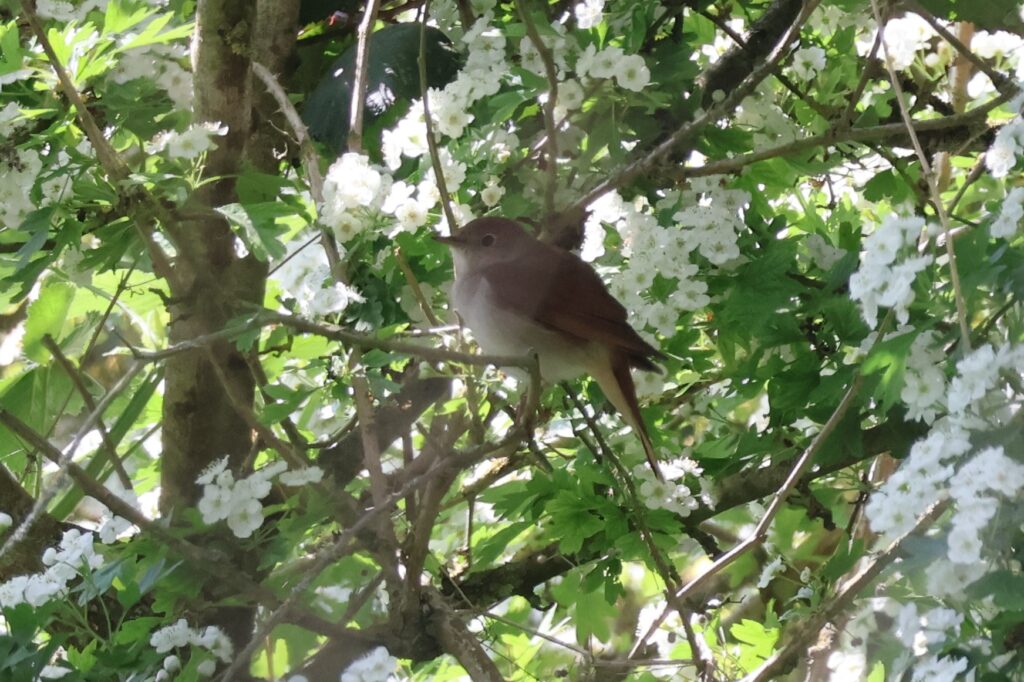
Nightingale
Next we headed to Lakenheath Fen, always a fantastic place to visit in early May. We headed straight down to Joist Fen viewpoint, noting our first Hobbies along the way with two pairs hawking dragonflies right above us. The whole walk was punctuated by the songs of Reed Warbler, Common Whitethroat, Sedge Warbler and Cetti’s Warbler, and there were plenty of insects on the wing such as the first Hairy Dragonflies and Four-spotted Chasers of the year. A Cuckoo perched up briefly but we needn’t have worried that not everyone got on it, as we had another cracking view of one down at the viewpoint. As we arrived there, we could see everyone looking at something right down in front and we were amazed to see a Bittern, right out in the open and only a few feet away, stalking through a narrow strip of open reeds! The bird walked right along in front of everyone and then sat in the edge of the reeds to the left, where it caught two fish! We actually stopped watching it – crazy really that there was a Bittern sitting in full view and we ended up ignoring it and looking at the Hobbies instead – and my goodness there were a lot of them. There were at least 40 birds hawking over the reedbed, mostly distantly but with small groups occasionally drifting closer. A really amazing sight to see and a real speciality of the reserve at this time of year. We ended with a quick look at the washland, but a cold wind had now set in and there wasn’t a huge amount to see there, so we decided to head somewhere a bit warmer.
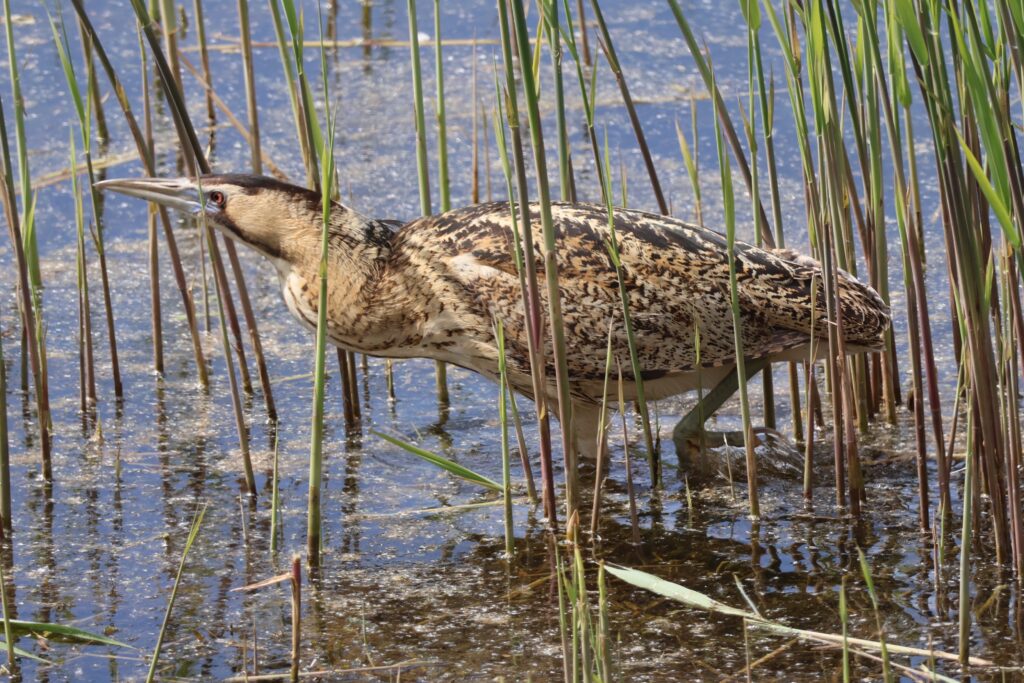
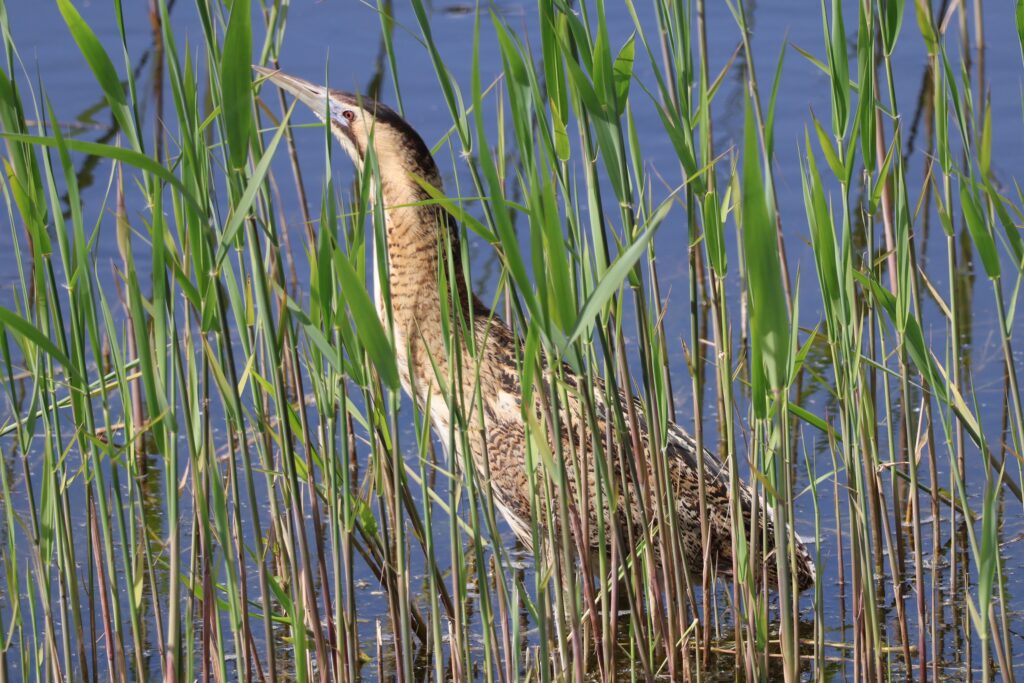
Bittern at Lakenheath
Weeting Heath NWT reserve was only a stone’s throw away, and here we hoped to see another Breckland speciality – the Stone Curlew. We had fantastic views of a pair from West Hide, with two tiny chicks perfectly camouflaged in the rough grass. Mistle Thrush and Stock Dove where also seen here, before we made the most of the last couple of hours of the afternoon a bit deeper into Thetford Forest. At the first clearing we checked, we found some warm sunshine and shelter from the wind, and a singing Tree Pipit which gave us fantastic views as it foraged on aphids on the newly unfurling leaves of a field maple. We spent a while watching the bird creeping along branches gleaning the tiny insects in the sunshine, a real treat to be able to watch one for such a prolonged period. The next clearing was more open and after flushing another three Tree Pipits from the trackside grass there and watching a pair of Stonechats going about their business, we finally heard the fluted cascade of our main target here, the Woodlark. We had two birds up in song flight, one on each side of the track – surely one of the best birdsongs in the UK. We just about had time for a really quick look in at Lynford to round off, but we didn’t add much there, and so headed back to base.
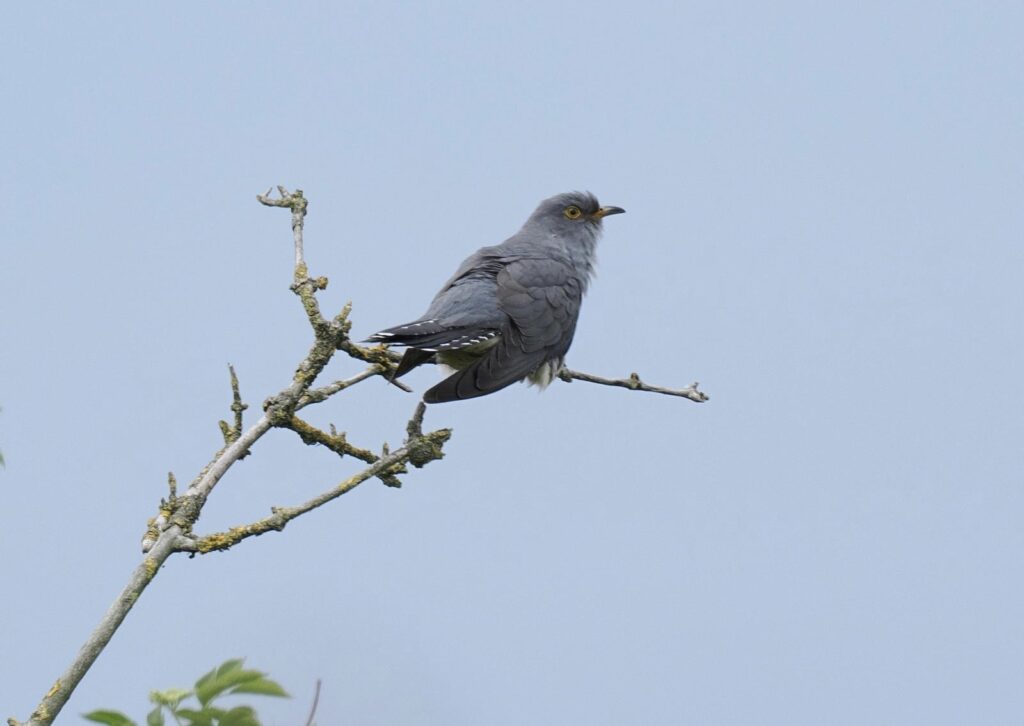
Cuckoo (by Joe Rizzo Naudi)
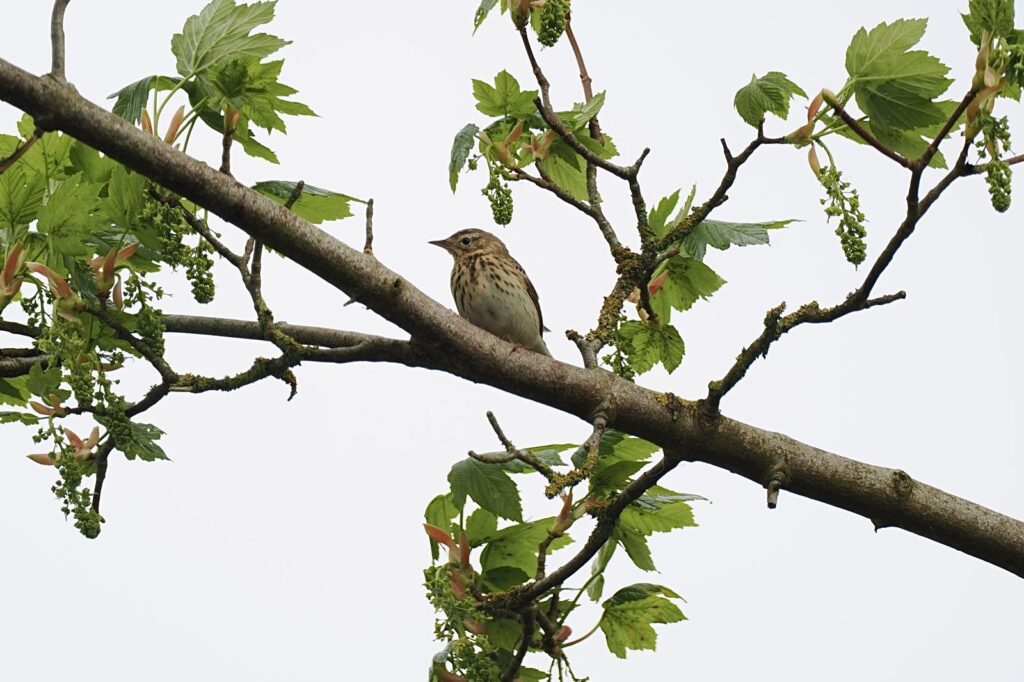
Tree Pipit (by Joe Rizzo Naudi)
FRIDAY 2ND MAY – Sunny spells and moderate Northerly winds, 15C
Despite the switch to a cool northerly wind after three days of warm south-easterlies, we enjoyed an absolutely brilliant spring day’s birding today with a group total of 97 species. We kicked off proceedings at Snettisham Coastal Park, walking the seawall northwards to view the wetland habitats of the Wild Ken Hill rewilding project. This would give us a fantastic cross-section of habitats with scrub and reeds one side, and freshwater pools the other, all a stone’s throw from The Wash. Summer migrant warblers were in full voice along the walk, with Sedge Warbler predominating – they seem to be having an excellent year this year! Common Whitethroat was also easily seen and Chiffchaff and Blackcap were about too. Low over the reeds, about ten Common Swifts were feeding, scything low through the air and trying to nab insects that were feeding in the lea of the bushes out of the wind. A couple of Sand Martins and the odd Swallow were with them, too. On the first significant area of open freshwater, we found five Wood Sandpipers, resting on their way to the taiga forests of the Baltic and Russia. Common Snipe, Redshank, Lapwing, Oystercatcher and Avocet were here too, and our first Spoonbill flew by. On the next pool we went one better, with two splendid full summer plumage Spotted Redshanks – not a common sight in Spring, these really are the top of the pops when it comes to waders! Not far behind them though is the splendid male Ruff – we saw 14 of this species scattered across the site, though only three were males and only one in what you would call fine fettle. A black bird, it sported an amazing magenta coloured neck! On the farthest pools, several hundred Bar-tailed Godwits were roosting, pushed off The Wash by the high tide, alongside perhaps two hundred Oystercatcher. Some of the godwits were in brick-red breeding dress, and provided a nice compare and contrast with the slightly larger, longer legged and less intensely-coloured Black-tailed Godwits feeding next to them. We saw several more Spoonbills, enjoyed the rather bizarre sight of a Red Kite carrying a fish and then best of all, a lovely Barn Owl made two really close passes in beautiful light. A Grasshopper Warbler reeled as we started out back along the bank, but we weren’t lucky with a sighting. Still, it had been a superb start to the trip.
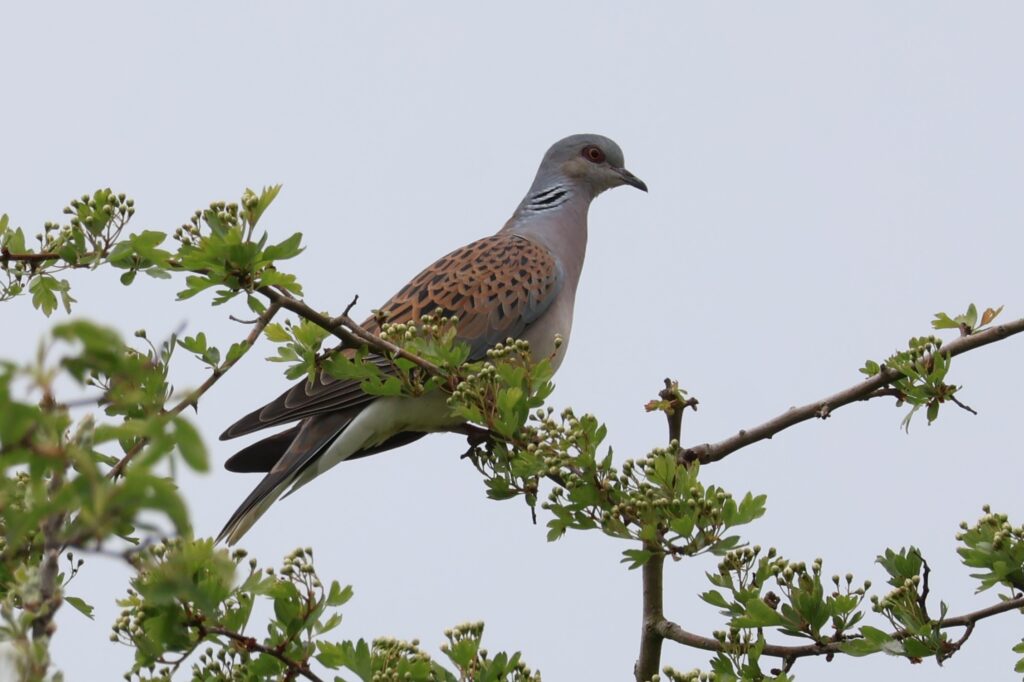
Turtle Dove
Next we had about an hours drive, east across the county to a nice area of heathland where we lunched out of the wind, listening to the wonderful purring song of a Turtle Dove. Initially we only saw the bird distantly, but eventually it performed a display flight over us before perching at point blank range – stunning! The songs of Garden and Willow Warbler, Blackcap and Chiffchaff could all be heard here too. Walking out onto the heath proper, we easily found our target bird, which was the Dartford Warbler. We enjoyed great close views of a wine-red male, perching right in front of us with the air thick with the coconut-scent of the yellow-flowering gorse. A fine male Stonechat and perched Willow Warbler were also seen, with a bonus Green Hairstreak butterfly seen on the walk back to the van.

Dartford Warbler
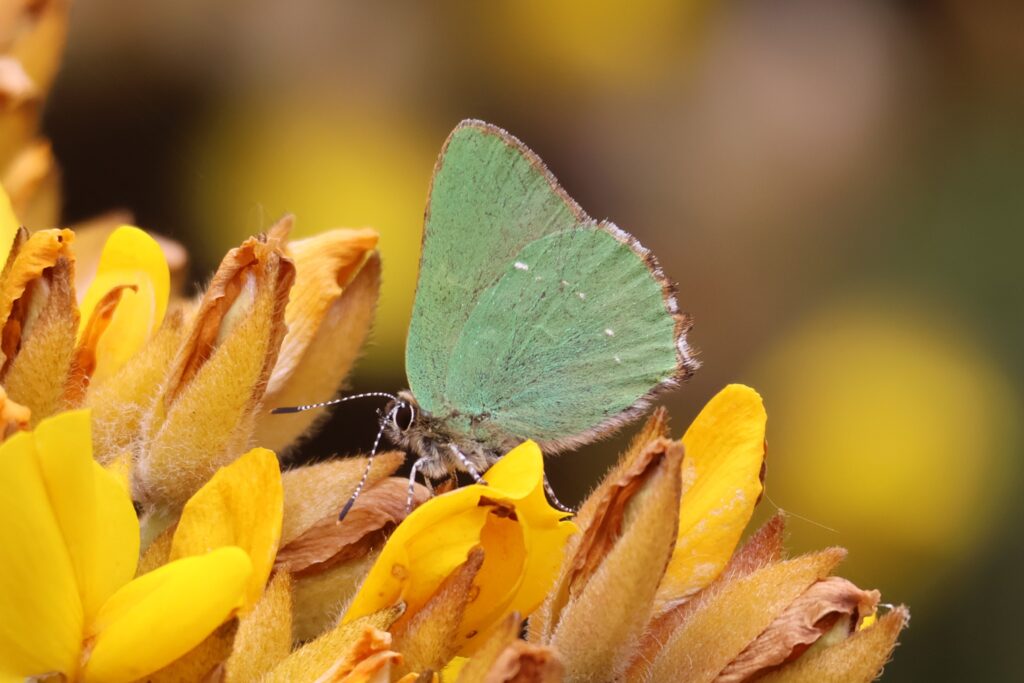
Green Hairstreak
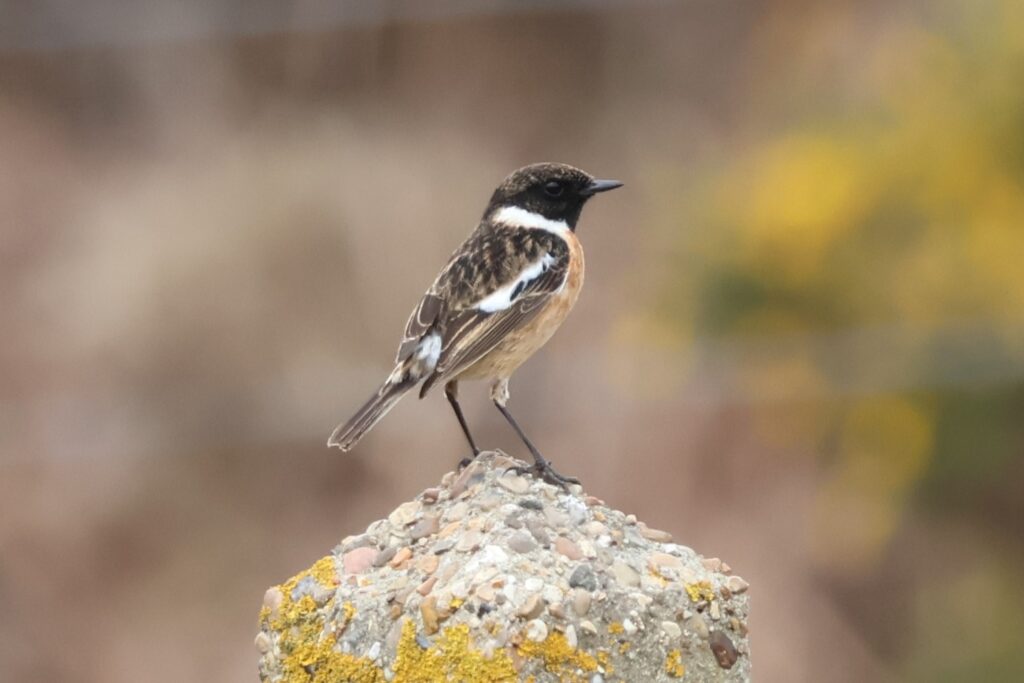
Stonechat
Back down to the coast now and a visit to Cley Marshes to search for more migrant shorebirds. From Avocet Hide, we could view Simmond’s Scrape where we added a pair of mating Little-ringed Plovers and a close Common Sandpiper. There was more action on Pat’s Pool though, viewed from Teal Hide, with a close group of Black-tailed Godwits and two speckled Greenshanks feeding right outside the hide. Our main target bird was a passage Temminck’s Stint, and we eventually found it feeding in typical furtive fashion along the muddy edge of one of the islands. It eventually came much closer too, so we could see its mousy plumage with scattered black summer feathers on it’s back, and diagnostic yellowish legs. On the adjacent pool, a Little Stint was then picked out – distinctly busier in its feeding manner, the rufous edges to some of the upperpart feathers and black legs easily set it apart from it’s rarer congener. Several more Little-ringed Plovers, another Wood Sandpiper and three more Common Sandpipers completed the shorebird scene while a very smart breeding-plumaged Cattle Egret dropped in and lots of Sand Martins were chattering away as they fed low over the pools. Great birding!
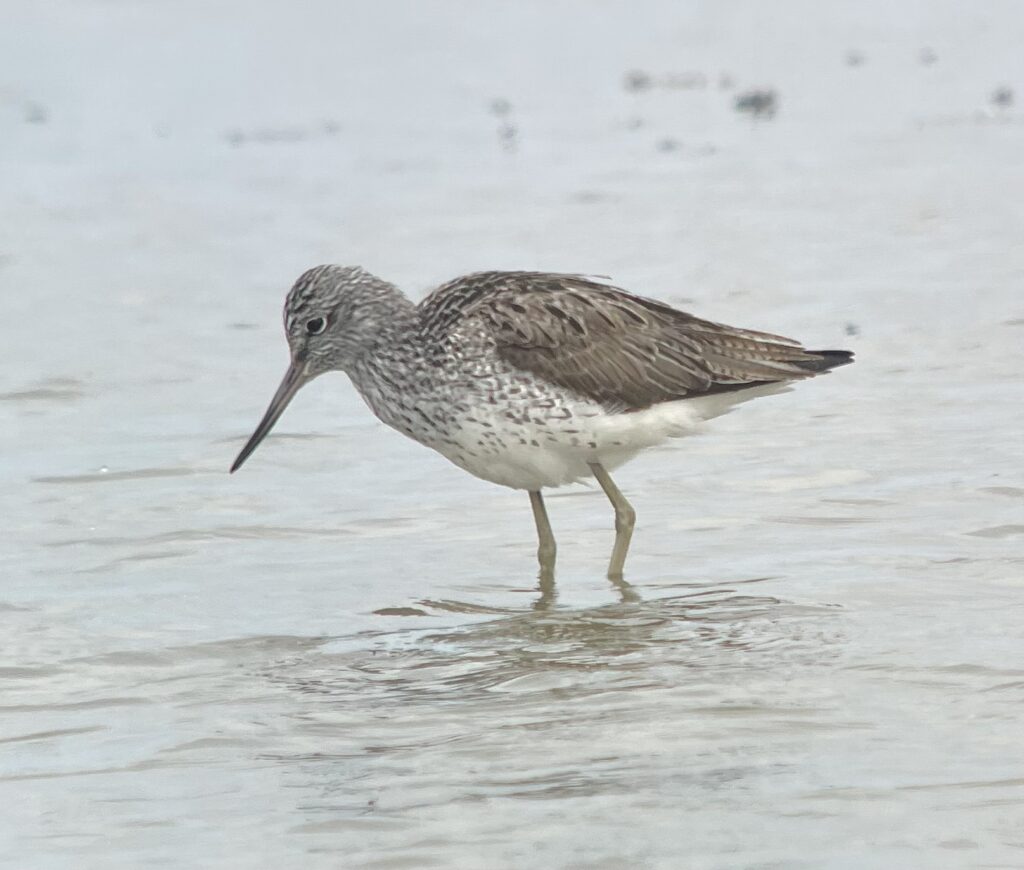
Greenshank
To round off the day, we took a stroll down the East Bank. We had the light with us, which made for superb viewing – two more brick-red Bar-tailed Godwits and a Greenshank were on Pope’s Pool, while we also saw Reed Warbler and Reed Bunting along the walk and had another Spoonbill fly past. At Arnold’s Marsh, the passage wader theme continued with a lovely mixed flock of Dunlin and tundrae Ringed Plovers, a fly-through Whimbrel, single Grey Plover and a superb Turnstone. It really had been an exceptional day for number and variety of waders – spring passage can vary tremendously but we had really reaped the rewards of the recent good weather conditions. We headed back along the coast road to Briarfields where we arrived wearily at just after 6pm.
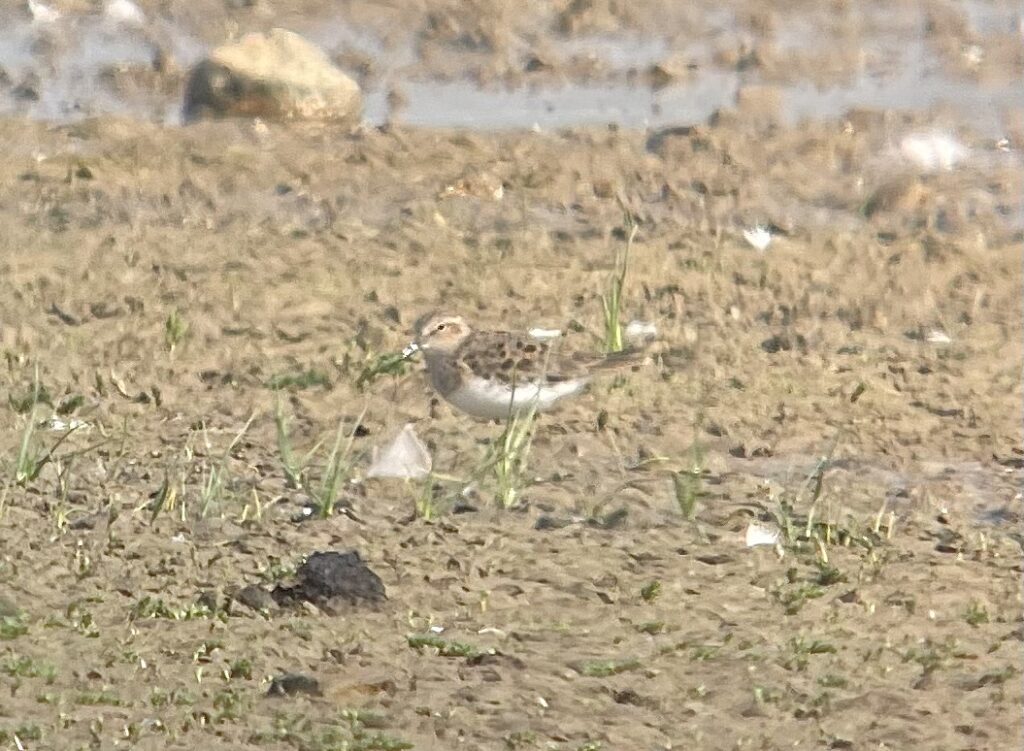
Temminck’s Stint


