
SUNDAY 12TH OCTOBER – Calm and sunny day after early fog, 17C
Our final morning saw us return to the Spurn area. We drove through fog patches and it was actually pretty cold when we first arrived at Kilnsea, though before long we were all roasting once the sun got through! Our first port of call was to walk down Beacon Lane and along the beach to view Beacon Ponds, to try and find a Pectoral Sandpiper that had been around. We opted to go along the beach side so we had the light and this proved a good move as there were lots of small waders roosting on the islands over the high tide. Mostly Dunlin and Ringed Plover, there were a few Sanderling, Knot and Turnstone too and we picked out a single juv Curlew Sandpiper. A Sparrowhawk trying to nab a Dunlin was quite a sight – it managed to grab the bird before inexplicably dropping it and flying off, maybe somewhat mesmerised by all the waders swirling around it! There was no sign of the ‘Pec’ though so we walked further north along the beach (picking up a flock of Common Scoter heading south offshore) until we could view the northernmost section of the lagoon. Here we found the Pectoral Sandpiper roosting with a few Ringed Plovers and it gave really nice views – a smart, fresh juvenile bird.
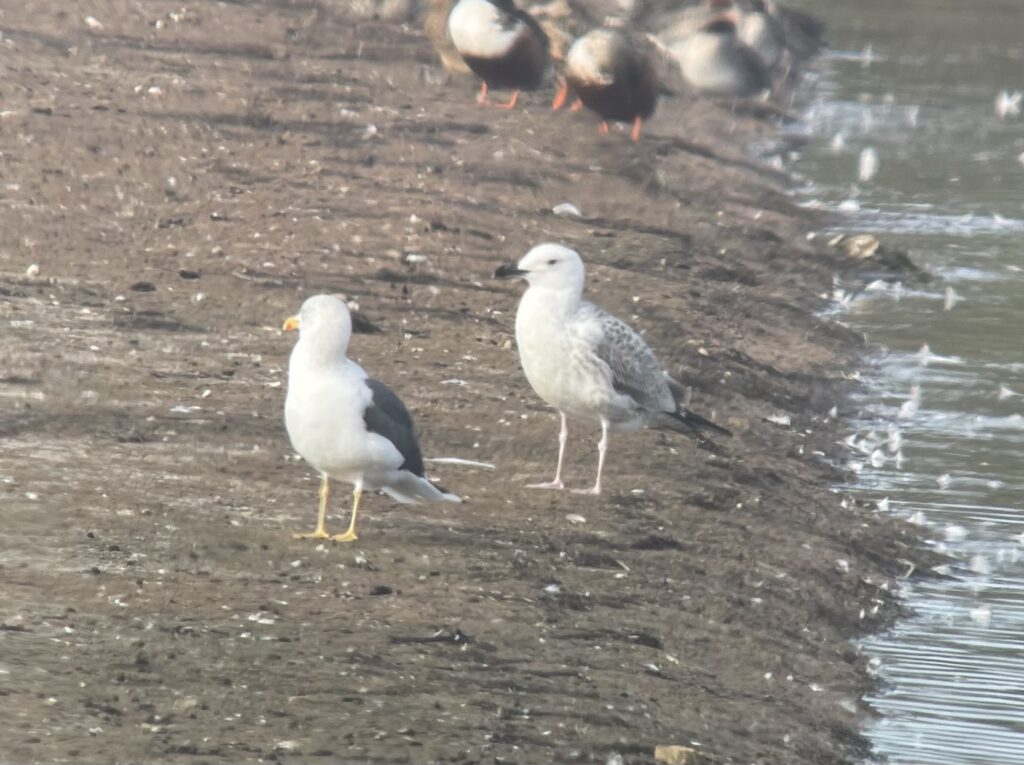
Caspian Gull, Beacon Ponds
We were almost back at the Bluebell car park when news came through that a Little Bunting initially found yesterday was now showing well by the Warren gate. We drove down there to find a small crowd already assembled but the bird had flown into long grass towards the clifftop and several efforts to flush it were unsuccessful. We abandoned it and went over to the screen as lots of waders were now dropping in as the tide began to recede. Mostly Golden Plover and Grey Plover, we also saw our first Bar-tailed Godwits of the trip and the same or another Curlew Sandpiper. A single Redwing fly past and perched beautifully on an elder for us, and several Redpoll were to be heard moving south. Walking up to the seawatch hide, we wanted now to try again for the bunting and we could see a small group assembled further south along the clifftop so we walked to join them. As we approached the Little Bunting flew out of the grass and landed on a fence just long enough for most to see it, before dropping out of view. Thankfully it wasn’t long before it repeated this manoeuvre and this time we all had good scope views – a smart bird and even right at the end of the trip we were managing to add some quality! This was our last action though as, after lunch at the Discovery Centre, we made our way back to Norfolk.
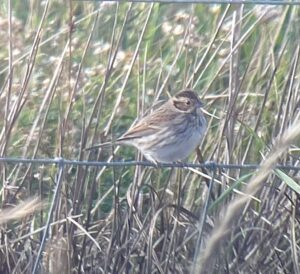
Little Bunting at Spurn
SATURDAY 11TH OCTOBER – A fine, calm day, 16C
It was back up to the Flamborough area today and with the very settled conditions we hoped it might just be the sort of conditions that a few migrants might sneak through. We started at the lighthouse area and spent the first couple of hours completing a circular walk via golf course willows, old fall hedge and plantation and back along the clifftop. In realty it was extremely quiet with just a couple of Song Thrush, four Yellowhammer, a Chiffchaff and two Goldcrests noted – plus a big surprise in the form of a vis-mig Ring-necked Parakeet which came squawking in over the lighthouse car park and off in a south-easterly direction!
As we came back along the cliffs on the southern side of the headland, a pod of Bottle-nosed Dolphins were picked up moving east close inshore – we had superb views of them from our elevated position as they slowly made their way through the flat calm water and around Flamborough Headland.
South Landing next, and with the calm weather the local ringers had the nets open near the car park and were catching good numbers of Redpolls with the aid of a tape lure – over 35 had been ringed and we saw a couple in the hand. The wooded valley down towards the sea was once again birdy with a tit flock containing a few Chiffchaffs and Goldcrests, plus two Grey Wagtails over and a male Bullfinch. The weather was beautiful, but there really wasn’t a great deal about as a result!
After lunch then we decided to draw stumps and head inland to Wykeham Forest on the edge of the North York Moors above Scarborough. It was just beautiful here and we had a very enjoyable two hours scanning the blue skies for raptors without much success – though we did get a very distant glimpse of a male Goshawk mobbing a couple of Buzzards before bombing back down into the forest. It was great for small birds here though, with Marsh Tit showing well around the watchpoint and superb views of a male Crossbill which dropped in onto a small perfectly lit pine tree right in front and below us. A very welcome surprise came in the form of the ‘airrrr-airrrr-airrr’ call of a Willow Tit, from somewhere away in the pines to the right of the viewpoint. We tried to see the bird without success (there were plenty fo Goldcrests and a couple of Treecreepers too) but thankfully got a second bite at the cherry when it or another began calling from oaks by the roadside near the car park. This one showed and for some of us, we got our first Willow Tit views for several years. A nice way to end the day!

Male Crossbill at Wykeham
FRIDAY 10TH OCTOBER – Light westerly winds and overcast, 15C
With little hope of any migration on the coast in the continuing light westerly winds and settled conditions, we decided to draw stumps and head around to Blacktoft Sands to see what the situation was like there. It took about an hour to drive around via Goole to get to the reserve, which sits west of the River Trent’s confluence with The Humber in the southernmost part of Yorkshire’s East Riding. Lots of Tree Sparrows were around the car park and our initial exploration of the hides to the east side of the reserve did not fill us with confidence – lots of water and no birds at all. However we learned from a local that prior to the last few days spring tides, everything had actually been bone dry and there hadn’t been any birds then either!
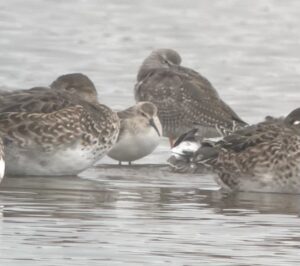
Curlew Sandpiper and Spotted Redshank, Blacktoft Sands
We headed to the west end of the reserve and at Marshland Hide there was actually plenty to see with birds roosting over the tide. An island full of Redshanks hid three lovely juvenile Curlew Sandpipers, and there were at least six Spotted Redshanks too. A single juv Ruff was present with another twenty or so flying around, and several Snipe were hiding among the throng of Teal around the margins of the pool. A Marsh Harrier sowed very well feeding on something at the water’s edge, and after constantly hearing the ‘pinging’ of Bearded Tits, and seeing one group in flight, we had excellent scope views of a group here feeding on the ground at the back of the pool.
Ousefleet Hide offered more of the same common ducks, more Bearded Tits, a Stonechat and a few small skeins of Pink-footed Geese heading over. With lunch on the cards, we decided to go back and grab our stuff from the van and head to the upper deck of First Hide, where we could scan out over the reedbed. It was very pleasant sitting here gazing out, but we didn’t add anything more. A second check of Singleton Hide likewise did not add anything more, though a big flock of Golden Plover overhead was nice.
We then took a circuitous route around via Scunthorpe to the Humber Bridge, and made our way north via Beverley to the Yorkshire Water reserve at Tophill Low. The hide on the eastern side of ‘D’ Reservoir gave us good views of a nice spread of wildfowl, with a small flotilla of Red Crested Pochards and at least three Goldeneye among the hordes of diving ducks and Coot. We also had good views of a Black-necked Grebe, looking very monochrome next to the buffy Little Grebes which were also present. The southern end of the reserve added a close Sparrowhawk and lots of Teal, but not much else. Slim pickings but it had been a beautiful day and we hadn’t got wet!
THURSDAY 9TH OCTOBER – Moderate Westerly winds and sunny spells, 14C
Today was, rather predictably, a comedown and return to normality after yesterdays exploits! We planned to head down to the Spurn area for the day but in the brisk westerly winds, and very little news, it felt like it might be slim pickings. The Needletail had departed and was not seen at first light despite a huge gathered crowd, and in fact was seen later in the morning – in Aberdeenshire! Well it is the World’s fastest bird in level flight!
We arrived at Kilnsea Wetlands (now completely bone dry after such as dry summer) and walked up towards the listening dish hedge. Lots of Tree Sparrows were in the cover strip and at least four Yellowhammers were present too, plus a few Reed Buntings. Along the embankment we were able to shelter from the wind and scan Beacon Ponds with the light behind us – lots of wildfowl here, mainly Wigeon but with the odd Pintail and Shoveler. A small group of Dunlin were present, lots of Little Grebes and a couple of Mediterranean Gulls. After another quick check of the bunting flock in the hedge we headed back to the van, and on to Kilnsea village.
It was wild and windy along the Humberside path but we checked through some Dunlin on the mud and then walked south past Cliff Farm. A Whimbrel was a nice sighting, alongside a Curlew in the saltmarsh, and we saw Grey Plover and Turnstone too. As we walked back up, two Crossbill came in calling and did two circuits of the village before disappearing north.
Down to the Discovery Centre next for a coffee and then we had our lunch down towards the Warren, before wandering down to the seawatch hide. It was desperately quiet offshore and with zero grounded migrants or vismig either, it was thin gruel! A nice flock of Golden Plovers had settled on the Humber off the viewing screen though and we heard a Spotted Redshank here plus saw a superb full summer Grey Plover which looked a bit out of place among all the juveniles! From this point we decided to cut our losses here and head up to Hornsea Mere, because it was stuffed with birds yesterday and was at least likely to give us plenty to look at.
Parking this time on the south side, due to the time of day and light, we walked through the sheep paddock to give ourselves a view north over the water. The Ring-necked Duck was still present but extremely hard to get on in the very active Aythya flock. At least three first-winter/female type Scaup were also present. Better still though was a Garganey which floated into view with a shoveler, giving everyone good views before flying west and showing its silvery-blue wing patches. On the gull roost island, we picked out a beautiful big first-winter Caspian Gull, towering over everything else on the island. A second bird also came in to bathe, also a first-winter, giving everyone a chance to get more familiar with the key ID features. A nice session back at the mere – it certainly is a birdy place at the moment!
WEDNESDAY 8TH OCTOBER – Calm day in sunny spells, 20C
WHAT. A. DAY!
We kicked off proceedings with a visit to Hornsea Mere, on what looked set to be, given the weather, a mediocre day’s birdwatching along the East Yorkshire coast. Actually the mere was superb with low water levels meaning huge numbers of wildfowl present including a good count of 55 Whooper Swans. Two Glossy Ibis were feeding close by Kirkholme Point and after giving good views they flew off high west, being joined by a third bird before dropping along the distant reed edge which they shared with a sentinel Great White Egret. Among the hordes of diving ducks we scanned carefully to look for a drake Ring-necked Duck which had been seen yesterday. Eventually, with the help of some local birders, we located the bird and ended up getting very good views as it dived constantly among the Tufted Ducks and Pochards. We also saw some nice groups of Pintail, and up to five Greater Scaup including a moulting 1w drake. A very nice start to the day!
Heading on to Flamborough Head our next plan was to head down to South Landing where both Barred and Yellow-browed Warblers had been reported the previous day. The sun was shining and the sheltered hedge at the northern edge of the car park looked perfect for the Barred Warbler. We discovered there was another larger hedge over the back though and once we found a little path to take us there, we soon found the Barred Warbler rummaging through the top of some hawthorns before giving brief flight views. Not the best, but we planned to return after taking a walk along the sculpture trail to check for the ‘YBW’. Along the trail we found a few Goldcrests and among them was indeed the Yellow-browed Warbler, though views were brief deep inside a dark tangle. We relocated to the sunny edge of the trees and eventually had some more brief views of the bird in the open, and then it was gone and we didn’t see it again. Thankfully though the Barred decided to give itself up at this point and we had superb views of it feeding in the open in the front of the hedge for about twenty minutes – nice one!
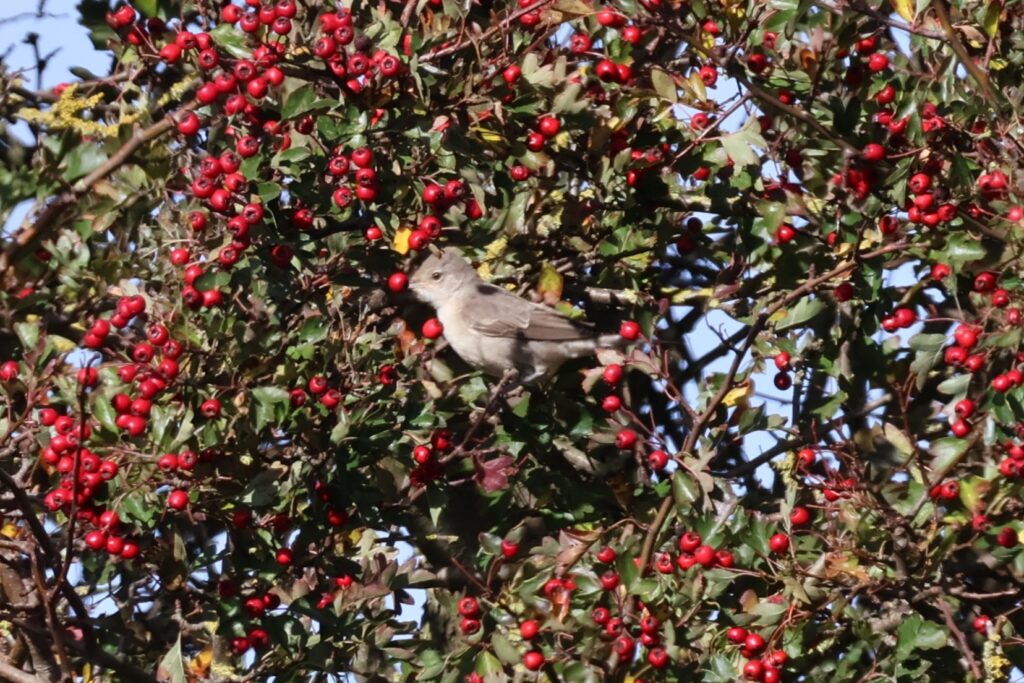
Barred Warbler at South Landing
After lunch we took a stroll down the sycamore gulley towards the coast and it was birdy here. We had already had a single Crossbill, three Brambling and a few Redwing go over but now four Redpolls joined the party and we must have seen ten Chiffchaffs and several Goldcrests, plus a Blackcap, among the roving tits. Two Grey Wagtails and a Red-breasted Merganser were added down at the shore, before we climbed the mountainous steps and returned via the whaley bridge along the west side of the ravine.
Next we headed down to Flamborough Head car park and mega news reached us of a White-throated Needletail (a mega rare swift from east Asia seen only a handful of times previously in Britain) which had been photographed at Tophill Low, some 15 miles away in a straight line (but an hour by road). The bird had departed and we discussed the possibility that it could hit the coast and if it did, we were in a good place – keep looking up! We seawatched for a bit – noting Red-throated Divers, Shag, Gannets and a few Guillemots – and then decided to head along to Bempton. The high cliffs there could yet be a draw to any errant vagrant swift in the area and in any case, we wanted to try for owls in the late afternoon sunshine.
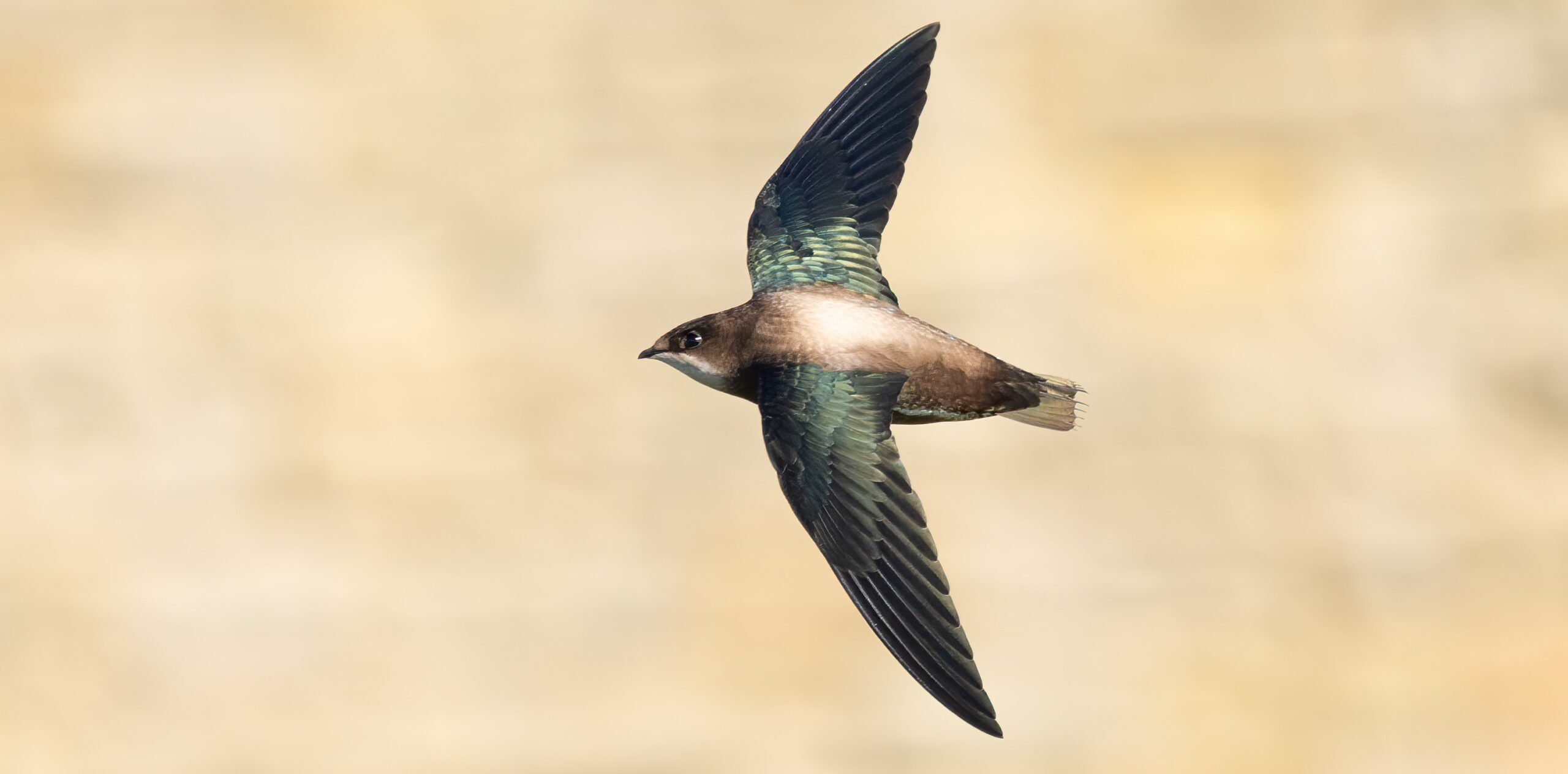
Arriving on site we had a coffee and then took up position on the verandah outside the visitor centre as from here we could scan both sides. After half an hour a Barn Owl appeared and gave beautiful views quartering the grass fields in the low evening sunshine. We watched it drift south over the path and as our gaze followed the owl, Babs yelled out the immortal word – “Swift!”. Amazingly we all got on the bird, which showed a square tail, white vent and silver back as it cruised north along the clifftop and disappeared below Bartlett Nab – it was the WHITE-THROATED NEEDLETAIL!! Panic set in – we’d seen it extremely briefly (only a few seconds total) but we had clearly seen all the features between us so immediately put the news out and raced down to the viewpoint as we felt there must be a chance it was patrolling beneath the cliffs. Sadly this was not to be and we scanned north and south along the cliffs for almost half an hour with no sign of the bird, which we assumed had continued north never to be seen again. We gave up, and began to set off back to the VC when something made us have the traditional ‘one more look’ – as we glanced back a pocket-rocket zoomed like an Exocet up from the cliffs below and right over our heads – it was the White-throated Needletail and there it was just a few metres over us!! Insane views followed as the bird ploughed back and forth over us in the calm evening air, scything its way out over the sea and back in again repeatedly. We put an update out that it was still present and helped get as many arriving birders on it as we could before more locals appeared and the pressure was off. We left as dusk began to settle on an incredible day in the field, one that perhaps we would never ever top!
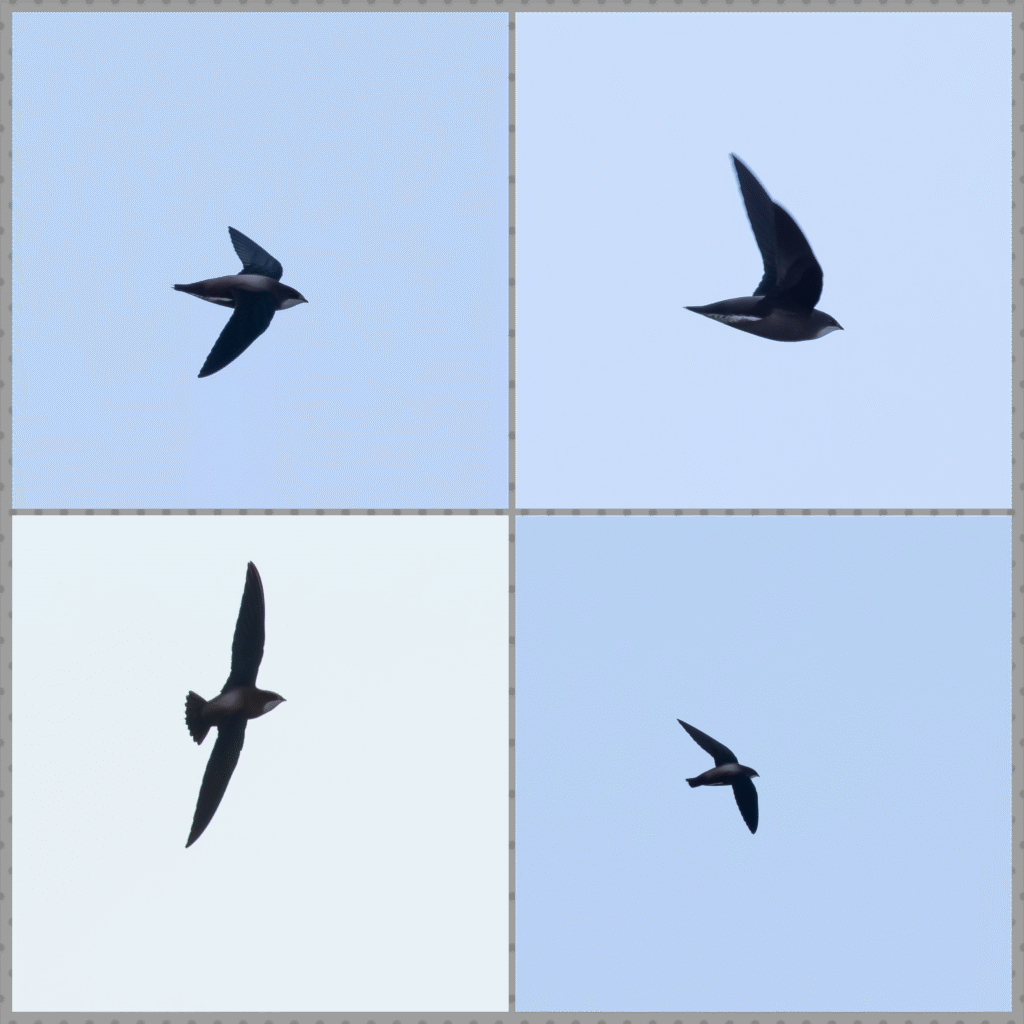
White-throated Needletail at Bempton by Jane Stylianou
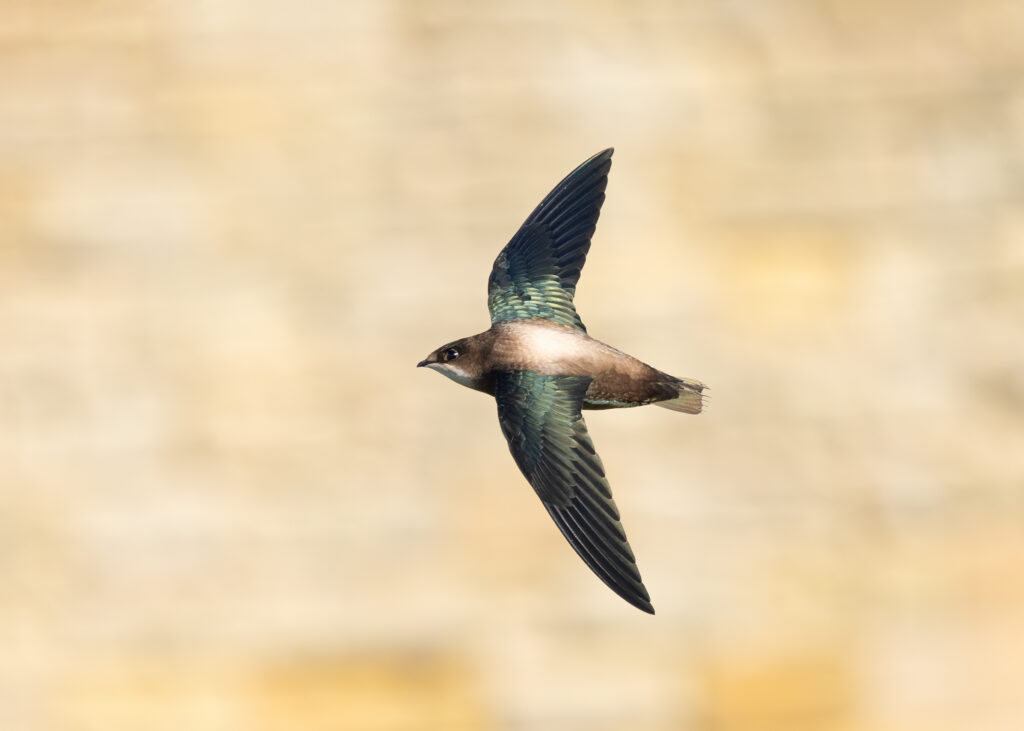
White-throated Needletail by Graham Jepson
TUESDAY 7TH OCTOBER – Overcast day in light SW winds, 15C
After setting off from our Norfolk base in Great Ryburgh, we headed to King’s Lynn to meet up with three more of the group and then it seemed rude not to pop into the settling lagoon at South Wooton which had recently been hosting a juvenile Lesser Yellowlegs. The bird was still present and despite viewing from the edge of a new housing estate and looking through a fence, we had excellent views of this slender Nearctic vagrant, feeding alongside two Green Sandpipers. We also saw Snipe and Black-tailed Godwit here, and a Sparrowhawk flew over us – not a bad start!
From here we headed on one hour to Frampton Marsh in Lincolnshire. After a record dry spring and summer it was more like a desert than a marsh with no water at all remaining on the reserve proper! We saw a Whooper Swan and some flyover flocks of Wigeon, but most of the action was on the saltmarsh where one or two tidal pools remained. Some Brent Geese, more Wigeon and Teal and three Ruff were noted here, plus several Marsh Harriers quartering the saltmarsh. Eight Golden Plover flew over and two Dunlin dropped onto one of the pools. Hardly the normal Frampton wader-fest but a few bits for the trip list! Lots of Meadow Pipits were about and among them we noted the odd Reed Bunting and Rock Pipit. Finally some more big flocks of Wigeon passed over containing both Pintail and Shoveler.


