

THURSDAY 28TH NOVEMBER – Frosty start with east wind picking up later, dry. 5C
We rose to another cracking sunrise but it was distinctly colder at a nippy -4C first thing! We had only a short journey this morning, along the back lanes alongside the sprawling Loch Ken to the RSPB car park at Mains of Duchrae. Here we planned to spend a couple of hours walking down to the hides and back where we hoped to find Willow Tit. Four Greenland White-fronted Geese flew in yapping as we set off along the track, and we had already seen several Red Kites along the drive down. The woodland was really quiet with everything covered in a hoar frost, but there were a few passerines to be found including Goldcrest, Redwing, Coal Tit, Nuthatch, Treecreeper and several Bullfinches. Willow Tit was heard giving its distinctive nasal call but we were not lucky with a sighting – this was compounded by the fact that the feeders have now all been removed from the site rendering the chances of actually seeing one here now extremely unlikely. A single flyover Crossbill, Great-spotted Woodpecker and Redpoll were the other scant highlights here, plus another Great White Egret flying along the loch (we’d seen another from the vehicles at the sluice on the River Dee earlier).
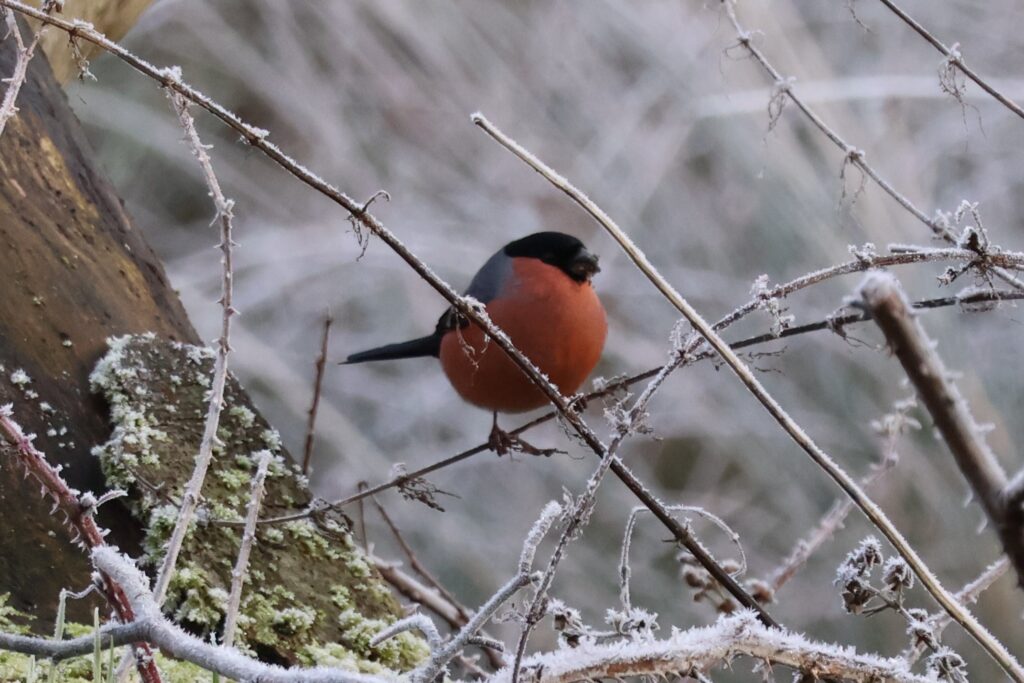
Bullfinch at Ken-Dee Marshes
From here we took a drive out past Laurieston where we saw some roadside Fieldfares, lots of Red Kites and a Peregrine, and on west to Wigtown. We arrived at the RSPB Crook of Baldoon car park in time for a late lunch but it was a different day here, with a freezing cold wind whipping in across the merse. We braved a short walk after lunch, noting a female Goosander, another Great White Egret (five now for the trip!!) and a few Shelduck. Howard glimpsed a Bittern but the rest of us were looking the other way – it unfortunately dropped out of view into a distant ditch so we had little chance to relocate it. Sparrowhawk was also seen and a Merlin was chased off distantly by a crow over the saltmarsh.
We rounded off our quietest day of the trip back in Castle Douglas with another look at Carlingwark Loch as dusk fell. There were lots of Tufted Ducks at the near end but we couldn’t spot anything Nearctic amongst them. At least sixty Goldeneye were present though and three Goosanders included a lovely salmon-pink drake. Back to base then for an earlier finish ahead of our final morning birding tomorrow.
WEDNESDAY 27TH NOVEMBER – Light winds and sunshine, 4C
We woke to fog this morning but thankfully as we breakfasted it already began to burn off to reveal a virtually cloudless blue sky, and we headed west to Stranraer along the A75 with much trepidation for what would surely be a blockbuster days birding around Loch Ryan. We headed first up the eastern side to Cairnryan, where we would kick off scanning the loch with the morning sun behind us. In the flat calm conditions, we could already see the vast number of wintering seafowl peppered across its glassy surface and we couldn’t wait to get stuck in! A fine drake Red-breasted Merganser was close to the parking spot and we saw our first Shags, Red-throated Divers, Eiders and Black Guillemots from this vantage point too. The plan for the majority of the day was to work our way anti-clockwise around the large sea loch, keeping the sun at our backs and scanning as many areas as possible to increase the chances of scarcer species. Our next stop was in the South-east corner just east of Stranraer town, and gave us our premier seafowling session of the day. A brilliant flock of over 500 Scaup were sleeping on the water here, the dove-grey backed drakes dotted in amongst the browner females with their white facial blaze. Liberally scattered in amongst them were 22 Slavonian Grebes, and often we had small flotillas of them with Great Crested Grebes for comparison. A handful of Long-tailed Ducks included two fine drakes, and there were good numbers of Common Scoter further out in the loch too. Around fifty Red-breasted Mergansers were displaying and we picked up yet more Black Guillemots, Red-throated Divers and a shoreline Rock Pipit.

Pale-bellied Brent Geese and Wigeon
Moving further round the loch, we stopped by the outfall and checked the beach for waders – Ringed Plover, Turnstone, Dunlin, Knot and Curlew being noted here. There were more Scaup closer in here (with four Tufted Ducks amongst them!) and just as we were packing up to move a party of Pale-bellied Brent Geese came in to bathe in the burn mouth. A quick stop along the south-western shoreline added another close Slavonian Grebe and some better views of Common Scoters, and then we continued round to The Wig for lunch. It was stunning here lunching on the picnic tables with the sun on our backs and lots of wildfowl in the bay. There were lots more Pale-bellied Brent Geese here, plus our first Bar-tailed Godwits and a sizeable flock of Golden Plover. In the bay was a whopping 23 Slavonian Grebes – we had now seen well over fifty of this species. After lunch we walked the track out to the point – this used to be a regular winter spot for a large flock of Twite but we weren’t sure how many were left here now in years of ever-diminishing returns. We managed one flyover, and then dug two more Twite out with a small flock of Linnet and Chaffinch in a Kale crop. The birds were hard to view as they kept disappearing into the brassicas and only briefly landing on the fenceline, but we managed to get everyone a scope view. Reed Bunting, Stonechat, Skylark, Redwing, Mistle Thrush and Song Thrush were some of the other passerines noted. At the point we added a Grey Plover, and then picked out our first Great Northern Diver, rather distantly to the north-east. Ailsa Craig looked dramatic, rising from the sea in the distance, with the Isle of Arran clearly visible some 30 miles away beyond it. On the walk back to the van, some of the group saw a shoreline Greenshank.
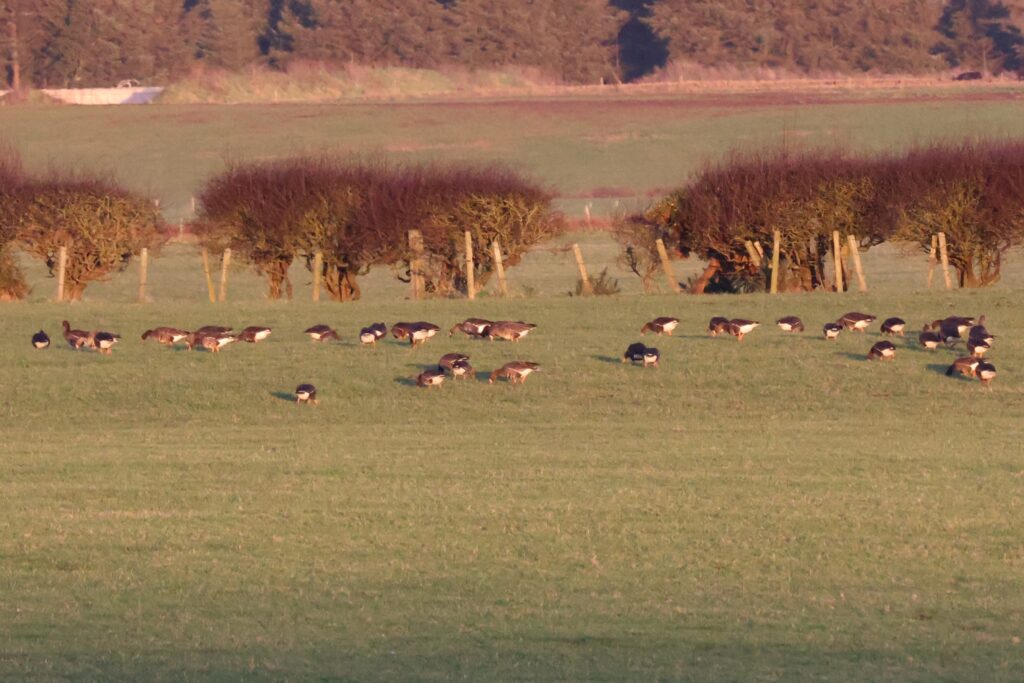
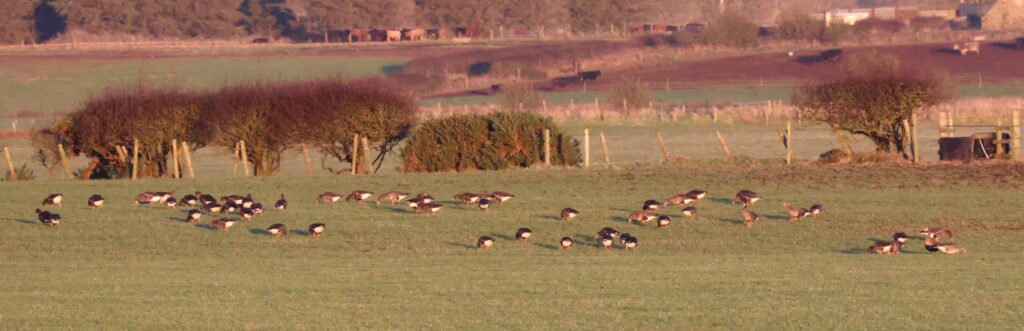
Greenland White-fronted Geese at West Freugh
As ever at this time of the year, the day was racing on and we needed to make a quick pit-stop in Stranraer for fuel and toilets next. After this we had a little time before dusk to drive across the West Freugh area, an expanse of marshland and arable fields surrounding a disused airfield, which is still a winter haunt for a few Greenland White-fronted Geese. Luck was on our side as on the first lane we drove along, a flock of whitefronts were found an ideal distance from the road and in perfect light. We scoped them as the sun began to dip below the skyline, and enjoyed a brief flyover Merlin and a cracking perched Peregrine at the same time. The 126 Greenland Whitefronts probably represented the sum total of birds in the area, so we had been fortunate. A ringtail Hen Harrier and an impressive roost of cronking Ravens rounded off a brilliant days birding, and it was pretty much dark as we set off on the hour-long journey back to Castle Douglas.
TUESDAY 26TH NOVEMBER – Light winds and sunshine, 6C
A beautiful day to kickstart our Solway Coast tour for the Marylebone Birdwatching Society! We started at Carlingwark Loch right in Castle Douglas itself and just a short drive from our conveniently situated hotel. We were looking into the morning sun somewhat but it was a lovely spot with some nice flocks of Goldeneye and several small flocks of Little Grebe totalling about fifty birds. A Nuthatch called and showed to some – and a Scottish tick for at least one of the leaders! Our main destination for the day today though was Caerlaverock, and so we made the 45 minute journey through Dumfries and down alongside the River Nith to the vast expanse of merse overlooking the Solway estuary and Cumbrian coast on the far side.
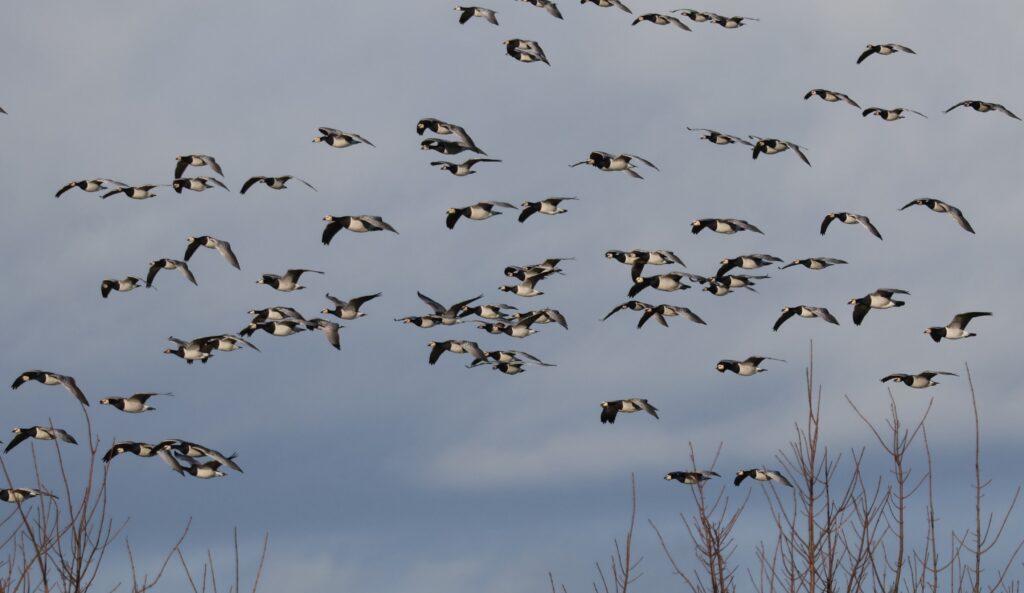
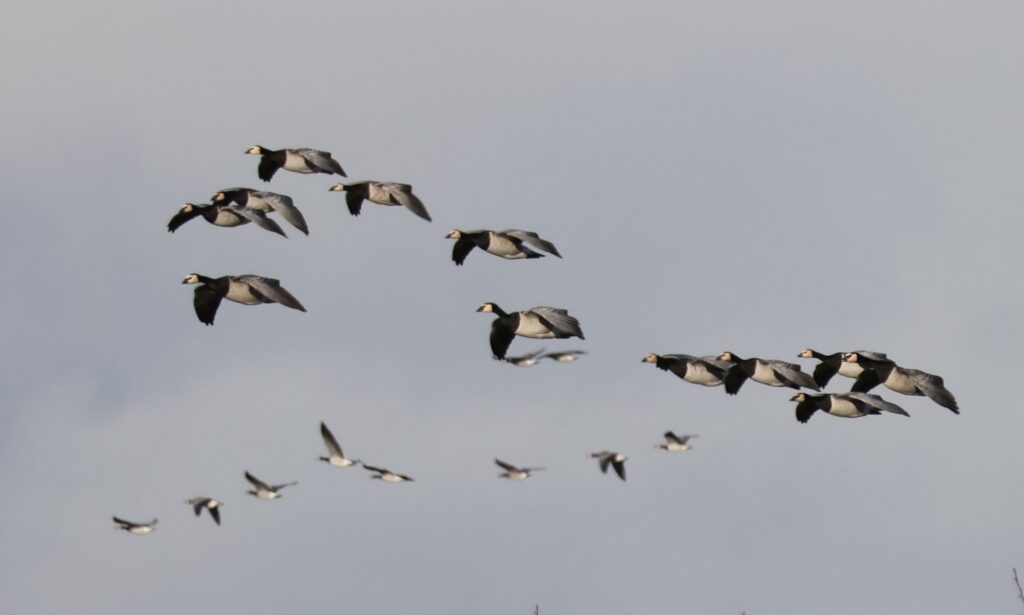
Barnacle Geese flying in at Caerlaverock
Our first flocks of Whooper Swans, Barnacle Geese and Pink-footed Geese were seen in the fields on the drive down. Around the visitor centre, we saw our first Tree Sparrows, which were a chirpy companion for us throughout the morning. Taking the long straight track down to the Alexandra Tower, we scanned the merse with the light behind us and saw a few ducks including Teal, Shoveler, Wigeon and Pintail. It was so clear we could see for miles and it didn’t take long before a ringtail Hen Harrier was spotted, quartering along a gorse hedge. The bird flew towards the hide before veering off against the sun – but we would see it again later! The tree-lined avenue running back to the visitor centre produced good views of a pair of Treecreepers, and there were some great views of Yellowhammers and Tree Sparrows to be had too.
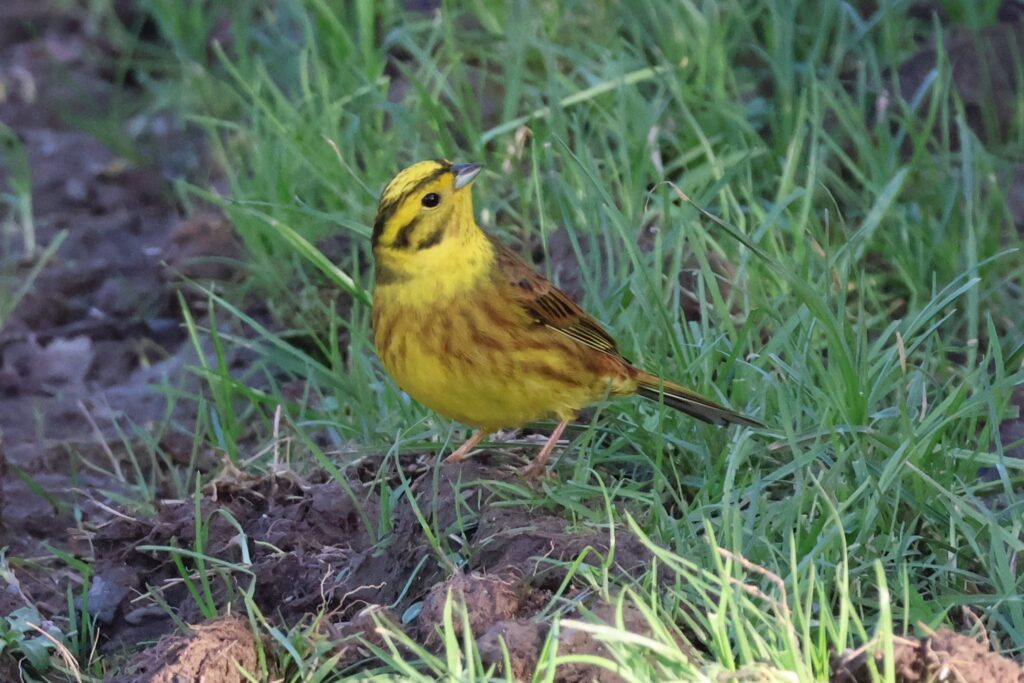
Yellowhammer
Taking the second track to the other tower hide, we had some good views of five Bullfinch in the hedges. The view from the tower again provided an excellent vista and this time a Merlin was seen, perched on a dead tree branch at the edge of the vast saltmarsh. We scoped the bird until it took flight to mob the Hen Harrier which had now drifted into view – the Merlin would repeatedly climb high and then hammer down vertically at the harrier, which twisted to present its gangly but well-armed legs in response. As we left the hide, some of the group also saw a male Hen Harrier and a Sparrowhawk, so it had been a good morning for raptors. Back at the main observatory we watched the swan feed at 1pm, enjoying close views and soaking up the sounds of the wintering Whooper Swans close to the hide. More Yellowhammers and Tree Sparrows followed over lunch, plus a couple of Siskins feeding on alder cones in the car park. We had a short walk back up the entrance road to scan the big flocks of Barnacle Geese, and while we could see them all spread out in excellent light, they were a bit distant to view through the limited gaps in the hedge. We had been treated to a couple of spectacular flights though, as the yapping flocks wheeled around over the farm.
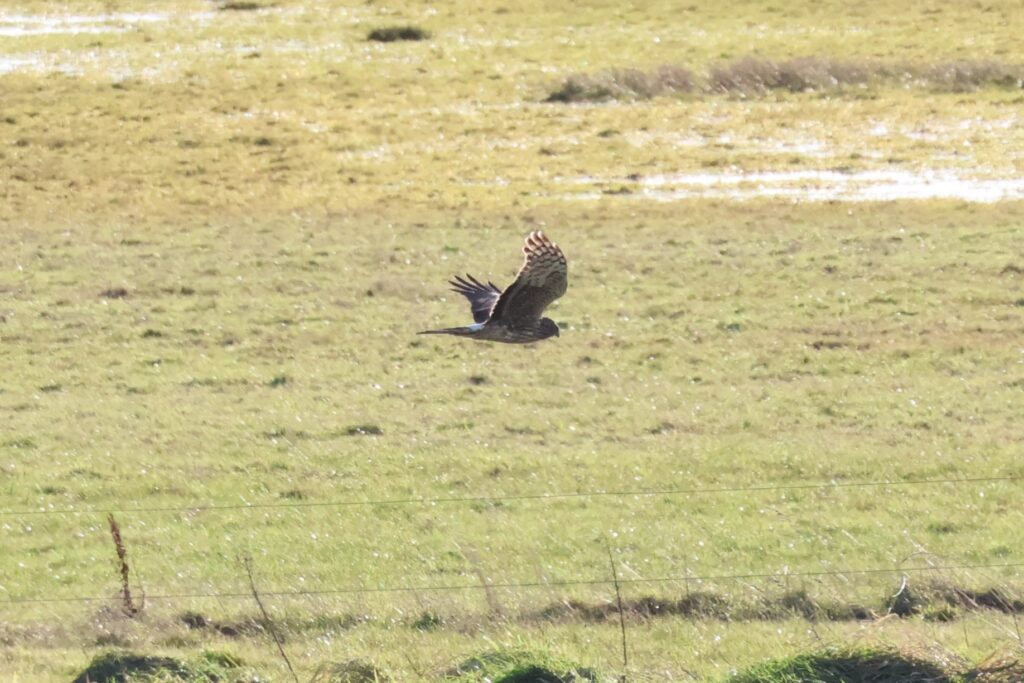
Hen Harrier
To end the day we would drive around half an hour to Lochmaben to check out Castle Loch. This serene spot provided some nice birdwatching with good flocks of Tufted Duck and Goldeneye supplemented by around twenty lovely Goosanders. A pair of Kingfishers flew to and fro in front of us, with one eventually posing for us on a well-placed post. More of a surprise, was a Great White Egret lurking in the reeds at the far side – though of course this species is racing northwards now much like its commoner cousin did twenty-odd years ago. A Red Kite and a small Starling murmuration closed the show for us on what had been a glorious days weather.

Whooper Swan
MONDAY 25TH NOVEMBER – Strong winds and rain showers
A travelling day for the group today as we set off from Norfolk at 9am, with the majority of the group taking the train from Euston to Penrith where we had arranged our rendezvous. With the aftermath of Storm Bert, there was a lot of disruption on the public transport network and the train arrived about forty minutes late, effectively ruling out our planned last-light birding at Lochmaben. However there were a few birds spotted along the way, such as Golden Plover, Buzzard, Kestrel, some skeins of Pink-footed Geese and even a male Hen Harrier! We all got settled in at our base for the next four nights on the outskirts of Castle Douglas, ready for an exciting few days birding on the Solway Coast!


