
Following our fact-finding trip in 2025, we are running our first tour to the West of Ireland this autumn with Ashley teaming up to co-lead with Cian Cardiff in Kerry and Clare. Here’s the latest blog post of how it’s been going! :-
WEDNESDAY 16TH SEPTEMBER – Overcast with showers in moderate SW winds. 16C
With the wind remaining NW overnight and backing to Westerly for the first couple of hours of the day, we thought it was worth another go at the Bridges this morning given the number of seabirds in the general vicinity yesterday. This meant another early rise and today we were in the car park at 7.30am so a bit ahead of yesterday. Initially passage was very poor and it seemed it had probably not been worth the effort – just a slow trickle of auks and a few Manx Shearwaters. But after about ninety minutes things began to pick up notably with Sooty Shearwaters which began passing through in good numbers (final count 72) with some really superb close views as well. Leach’s Petrels were still moving in small numbers, with 14 logged but again one or two of these were just off the point and moving slowly into the wind in perfect light. Four Great Skuas, two Arctic Skuas, five Pale-bellied Brent Geese, two Red-breasted Mergansers and a single European Storm-Petrel were also seen plus a handful of Arctic Terns and Kittiwakes. Bird of the morning was a fine adult Sabine’s Gull which came through at mid-range with a Kittiwake, stalling to dip-feed over the water before continuing west.
We broke off at 11am and headed up to nearby Loop Head Lighthouse for a check around. We heard a Lapland Bunting call twice but couldn’t pin it down amongst all the pipits and skylarks around the lighthouse area. A bit further back along the road we saw two Choughs and a Sparrowhawk flew right past us. The so-called ‘plover fields’ lived up to their name with about 40 nice Golden Plover present, though there was nothing American amongst them! We then dropped down into Kilbaha and had lunch by the small marsh before checking some of the adjacent gardens. No American passerines to be found here sadly!
For the rest of the afternoon we worked our way along the south side of the peninsula checking as many beaches and marshy spots as we had time for. Lots of Ringed Plover and Dunlin seen, and lots of Rock Pipits checked for American Pipit! Querrin held large numbers of Redshank and we had a Whimbrel here and another close Sparrowhawk. Finally at Moyasta we saw a good number of wildfowl including our first Shoveler and Pintail of the trip, plus about 10 Greenshank. A slower day but still great to be out there checking some amazing looking spots for rarities and also largely staying dry in the process!
TUESDAY 15TH SEPTEMBER – Sunny spells and moderate NW winds. 16C
We left the hotel early this morning and headed for the legendary Bridges of Ross on the Loop Head peninsula. One of the best, if not the best seawatching site in Europe, this location is a birding rite of passage in the same way a visit to Fair Isle or Scilly would be! We arrived on site at 8am and joined the only other seawatcher present, Niall Keogh. Together with Niall we recorded the wealth of seabirds passing for the next 7.5hrs and with the near-perfect viewing conditions, everyone in the group saw all the key birds and most of them extremely well.
One of the standout birds was Leach’s Petrel, and as a group we logged perhaps 80 including some stunning close range views in perfect light as they passed just behind the slabs and close in around the point. Grey Phalarope was a close second with a staggering day total – we clocked probably 100 of these pelagic waders including several groups of five or six together. Several birds paused on the water in front of the watchpoint too and gave some brilliant views through the scope – for all of us including Cian this was the most we had ever seen in a day. Cory’s Shearwaters passed mainly in the morning, with around 40 moving slowly through. Most were mid-range but we had several closer ones and again the excellent light played a part in the views. Only two Great Shearwaters logged though, one distant bird and one much closer in the afternoon. Among the other assorted seabirds were a single European Storm-petrel, juv Little Gull, juv Black Tern and a trickle of Arctic Terns, Sandwich Terns, Kittiwakes, Fulmars, Gannets and of course Manx Shearwaters. The Manx weren’t going through in massive numbers more of a steady trickle all day long.
Skuas were represented by all four regular British species. We saw around 10 Arctic Skuas with one group of four passing so close it was binoculars only. Three Great Skuas included a lovely ginger juv in the afternoon, and an adult Pomarine Skua was all too brief just as we were setting up first thing. Two intermediate juv Long-tailed Skuas passed in the afternoon, with a juv Arctic for company – a perfect comparison showing the difference in size, structure and plumage tones. Three gorgeous Sabine’s Gulls were seen, tow adults and a smart juvenile and all pretty good views at mid-range. Other wildlife included Common Dolphins throughout the day, several leaping Atlantic Bluefin Tuna and some nice views of a lingering Ocean Sunfish. Finally Sooty Shearwaters get a mention with about 200 passing during our vigil, again many in the close Manx line giving superb scope views. All in all this was a memorable days birdwatching!
MONDAY 14TH SEPTEMBER – Wet day in fresh southerly winds, 20C
Today we would be leaving Kerry and heading up to County Clare for the next three nights. The forecast for the day was not good with frontal weather coming in off the Atlantic but also heavy showers pushing up from the south on the strong winds. We weren’t sure how long we could remain dry for, if at all! We headed into Dingle and then over the Connor Pass, a spectacular mountain road which would take us to the north side of the peninsula. The top was shrouded in cloud but as we descended the north side there was a brief window of sunshine and a superb view down towards Brandon Point. We worked a couple of small beaches over high tide and while none held any waders of note, there were a few birds to see offshore. This included lots of Sandwich Terns and Razorbills, a handful of Common Scoter, a single Arctic Tern, an Arctic Skua and three summer plumaged Red-throated Divers. Castlegregory beach held a Great Northern Diver and a closer group of Common Scoter, but then the heavy rain descended and we had to call it quits.
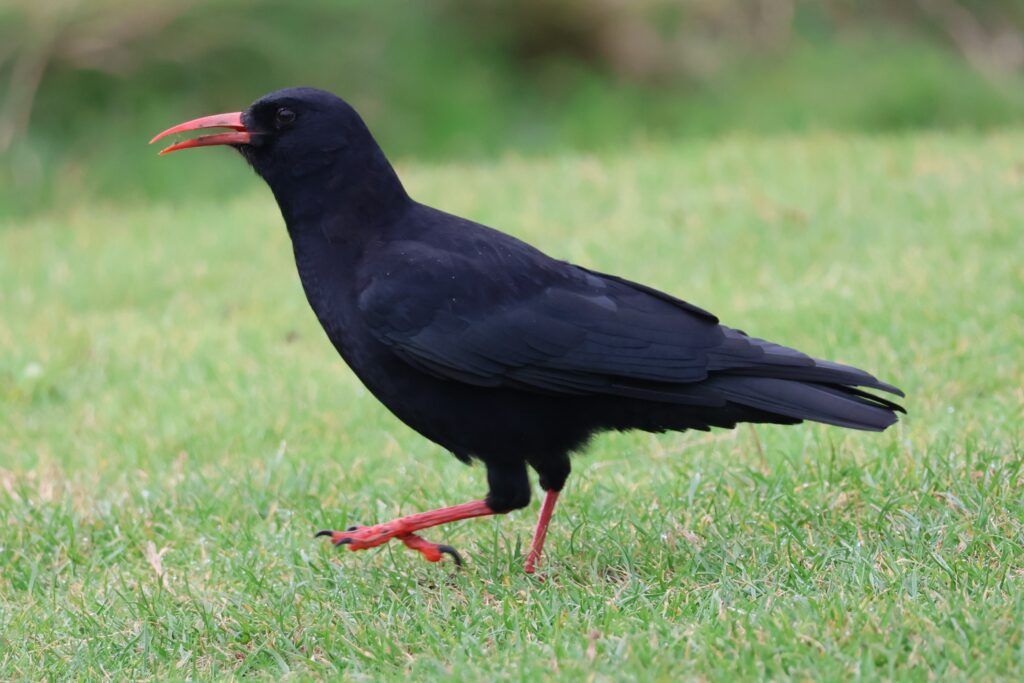
Chough – no bird pics today in the rain so here’s one from yesterday at Dunmore Head!
Continuing to Tralee, we called at the supermarket for lunch provisions and then continued on up the coast to Carrahane Strand. We arrived in the dry, and so donned our wellies and headed across the saltmarsh and onto the estuary. We had to walk quite far out into the bay to view the small waders – perhaps 200 Dunlin here being the largest number seen so far on the trip. Good numbers of Sanderling scuttled around us, and a single juv Curlew Sandpiper was picked out. Inevitably though, the heavens opened again and we got absolutely soaked. By the time we got back to the van, we were thoroughly wet through! Driving just up the road to Blackrock Sands, we parked and had lunch in the rain – the beach did hold a few small waders but the rain was driving straight in and with our gear already soaked, we had to draw stumps.
From here we had a two hour drive to our next base in County Clare, which would take us via Limerick and Shannon. We had to pass a small lake where a Pectoral Sandpiper had been seen in recent days, so we called in. The lake was almost dry but in fact looked superb for waders with lots of soft mud. No ‘Pec’ for us but several Black-tailed Godwits, a Ruff and a close Peregrine which did two circuits of the pool. We eventually reached our very comfortable hotel at 5pm. Tomorrow it’s the Bridges of Ross!
SUNDAY 13TH SEPTEMBER – Calm day, overcast with sunny spells. 16C
There are not many mornings in the West of Ireland when there is not a breath of wind but today was one of them. On this basis we kicked off with a wander around Dunquin to look for any passerine migrants that might come out of the woodwork in the nice weather. Five Willow Warblers was the best we could manage, along with a selection of other common birds. At nearby Dunmore Head, we had more fantastic views of Choughs with one bird feeding in the car park and allowing us to walk right up to it and take photos! A pair of Raven were also present and as we walked along the coast path to the head, some Common Dolphins could be seen out in the direction of the Great Blasket Island. No other birds of note on the headland but some of the group also saw some close Bottle-nosed Dolphins on the walk back round.
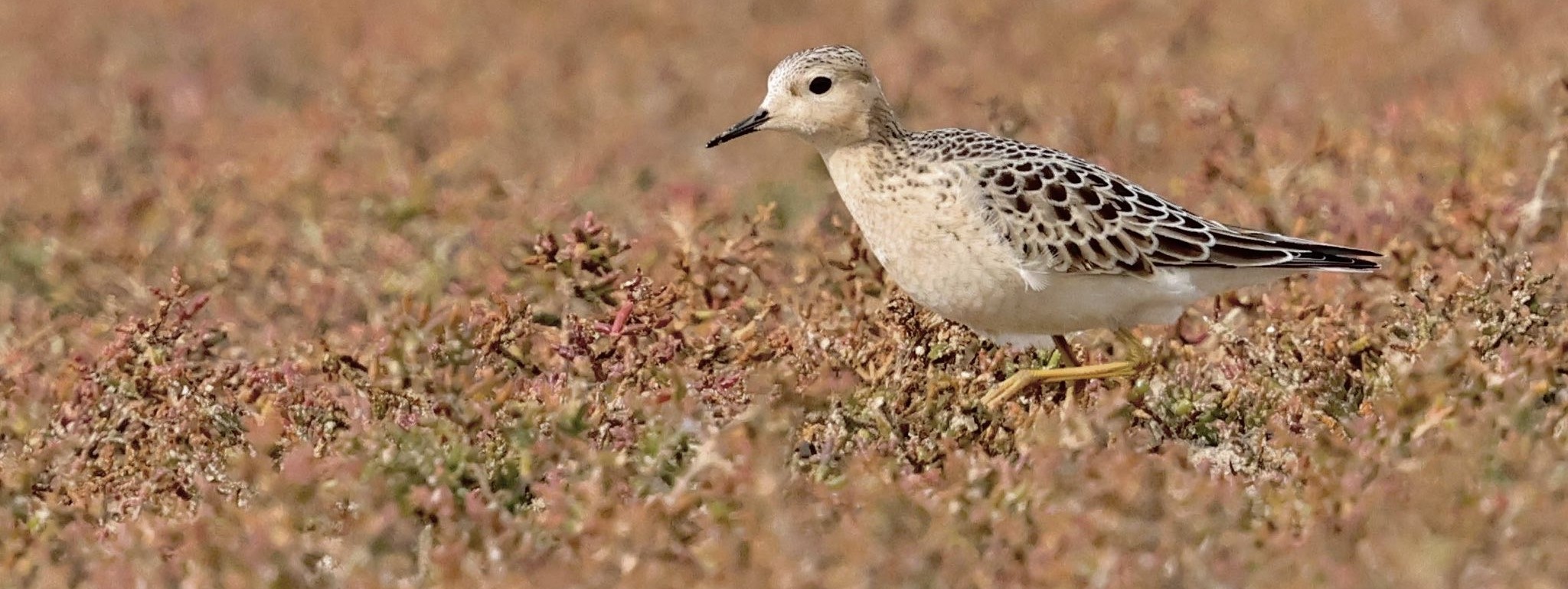
Ferriter’s Cove was our next stop, only fifteen minutes away. A nice spot with plenty of birds but small waders were thin on the ground – just a single Dunlin and a few Sanderling. A smart juv Black-tailed Godwit and a couple of Greenshanks were also seen. We then headed back to Baile an Reannaigh to re-check it now on the low tide. It had a very different look with the tide so far down and that meant more beach to check! A few Sanderling, Turnstone, Ringed Plover, Knot and three Snipe were the best of it until we got to the far end of the beach, and the Buff-breasted Sandpiper flushed out of the little stream where it had been feeding yesterday evening. Now we were close and over the next half hour we had some sensational views of it. Every time a walker or dog went over the bridge it would flush out onto the beach but it was so keen to get back into it’s favoured spot that it would soon return to feed right in front of us. A superb little wader and the best views most of us had ever had.

Buff-breasted Sandpiper 13th September by Chris Darby
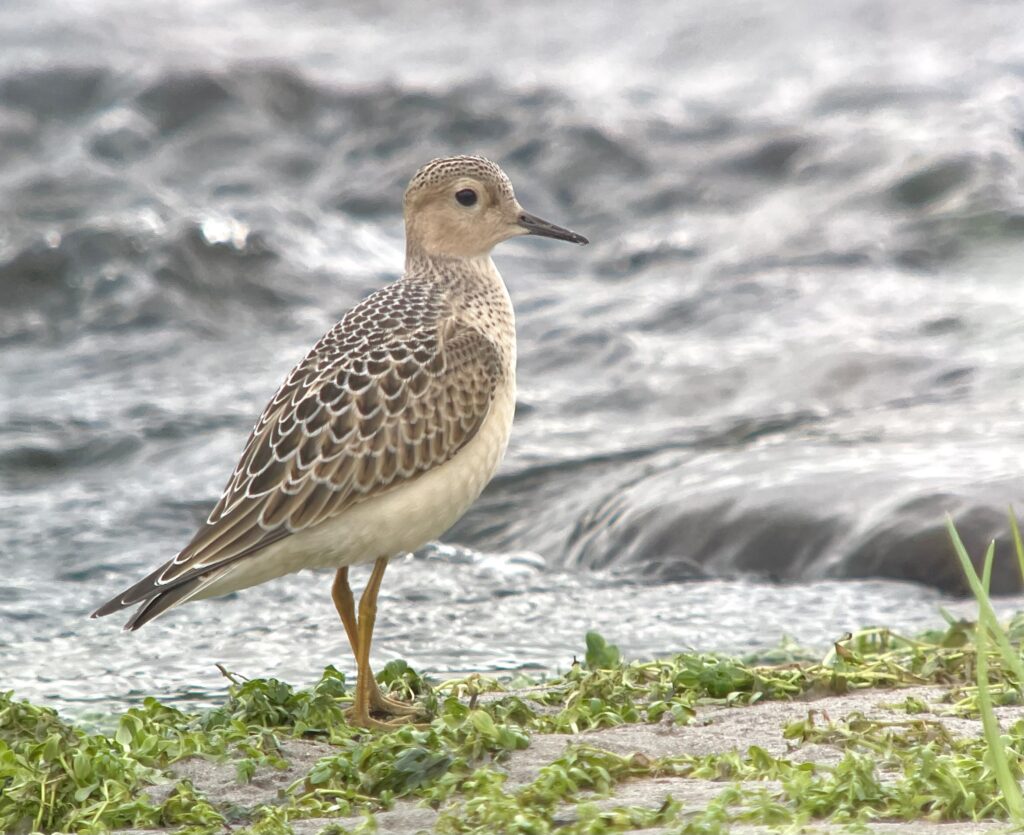
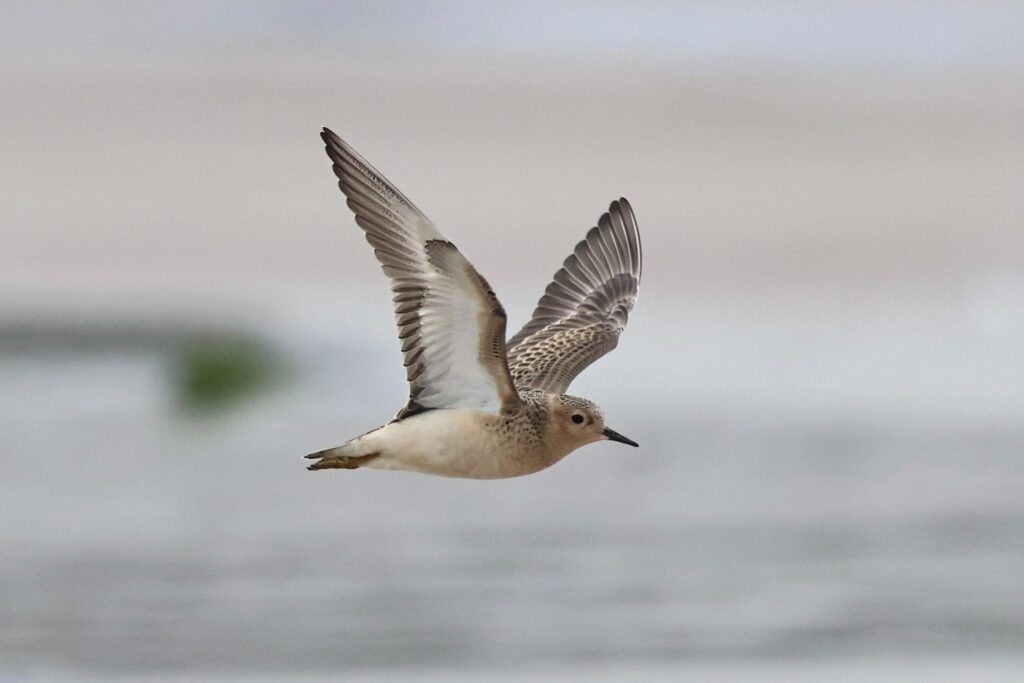
Buff-breasted Sandpiper at Baile an Reannaigh, 13th September (AJS top, Cian Cardiff bottom)
Dingle next and a stop at the supermarket for lunch, before returning to the estuary at the edge of the town to sit and picnic in the sunshine. A few Mediterranean Gulls and lots of Ringed Plovers were seen, but not a lot else. We then planned to head to Trabeg, an enclosed estuary just east of Dingle. The tide wasn’t on our side but we saw another 30 Med Gulls, a brief Kingfisher, a Black-tailed Godwit and a juv male Ruff from the eastern side. Two Clouded Yellow butterflies were a nice surprise and a group of Redpolls showed for us on the way out. A distant Peregrine was surprisingly our first of the trip. Then from the west side, we navigated a farm track to give us views of the North-west corner of the estuary. Still not enough tide but there weren’t many birds here anyway other than more Greenshanks.
Back through Dingle then, and a last roll of the dice of the day back at Ferriter’s Cove. A Whimbrel was new, feeding in the base of the marram at the top of the beach, and the juv Black-tailed Godwit from earlier was still here. An uptick in Ringed Plovers now with maybe fifty present, and way out in the mouth of the bay we could see a stream of seabirds passing that included an Arctic Skua. A quiet day all round, but still some nice birds to be seen. Tomorrow, we move north to County Clare.
SATURDAY 12TH SEPTEMBER – Rain clearing to sunny spells in fresh SW winds. 17C
It was a stormy night with a front coming in off the Atlantic, and it was still lashing down as we had breakfast this morning. The front was supposed to drift inland and sink slowly south so with that in mind, we planned to spend the first hour of the morning driving across to Tralee to see if we might be able to connect with a juvenile Semipalmated Sandpiper present at Blennerville for the last couple of days. We arrived there just as the rain stopped but with the tide dropping fast, it was already probably a bit too low at its favoured spot in the creek by the windmill. We saw plenty of common waders here though only a couple of Dunlin. Greenshanks were common and a Common Sandpiper flew up the river. We decided to relocate to the other side and view off the small car park at Cockleshell beach. From here we had really nice close views of several small parties of Dunlin and Ringed Plover, and picked out a peachy juvenile Curlew Sandpiper with them. A group of four pristine juvenile Icelandic Black-tailed Godwits were also present and several nice juv Knot. Other bits and bobs included Stonechat, Rock Pipit and Wheatear. We were about to move on when Cian spotted the Semi-P mega distant back to the south of us, consorting with about ten Dunlin. We all got reasonable views but figured that back by the car park, we could improve on that considerably. A stony peninsula took us another 100m further out towards the bird, and from here with the light behind us we had really nice views of the juv Semipalmated Sandpiper. A slightly stockier bird than Little Stint, lacking the bright rufous feather fringes and white braces of that species in juvenile plumage. Its distinctive stop-start feeding-action, almost like a plover, also stood out. Our first rare wader in the bag! There were also double figures of Greenshanks here and distantly out on the estuary we could see about 30 Pale-bellied Brent Geese. Back at the van, two Choughs flew in calling and after flying right over our heads, they perched on the roof of a barn and gave superb views as they sat there preening themselves – cracking birds!
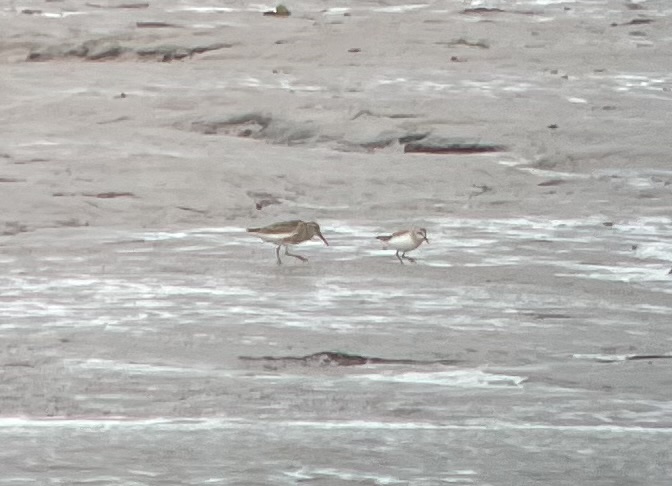
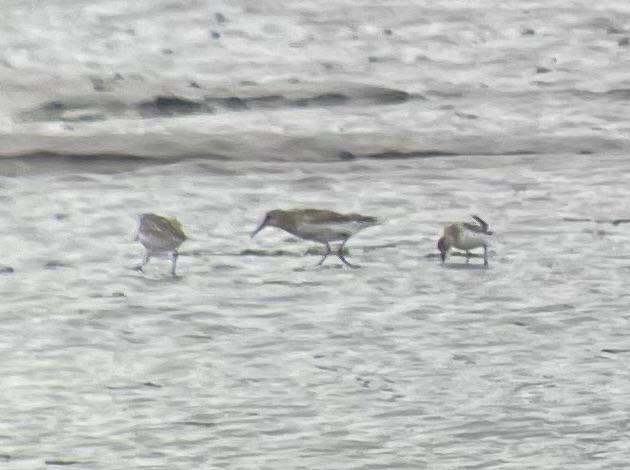

Semipalmated Sandpiper – a juvenile bird at Blennerville seen on the ebb tide, 12th September 2026
Moving to Tralee Bay wetlands centre, we checked the boating lake for rare gulls (there weren’t any!) and then had more success with an excellent lunch – well more like brunch as most of us opted for the full Irish all day breakfast! Sufficiently recharged, we headed back into the field and with the sun now shining, wanted to head back west to the end of the Dingle peninsula to check some of the famous wader sites there. En route we passed Derrymore beach so stopped there for a quick look. Lots of Sanderling, and a distant Red-throated Diver, but not a lot else. Ventry beach was the next stop, to the west of Dingle. This well-known spot was bursting with gulls and waders – up to four Mediterranean Gulls were seen and a nice party of Sandwich Terns as well. Large numbers of Ringed Plovers included a bird which in flight piqued our interest due to a lack of white in the wings. In the end though, we were happy we had got to grips with all the birds present and we couldn’t see anything that wasn’t a Ringed Plover. Another nice couple of juv Knot were present while offshore we added a brace of Black Guillemots and several Shag. News started filtering through of an arrival of Buff-breasted Sands with a flock of five in the next county and one now just up the road at Ferriter’s Cove. We had time to check one more site so headed for the excellent Baile an Rennaigh.

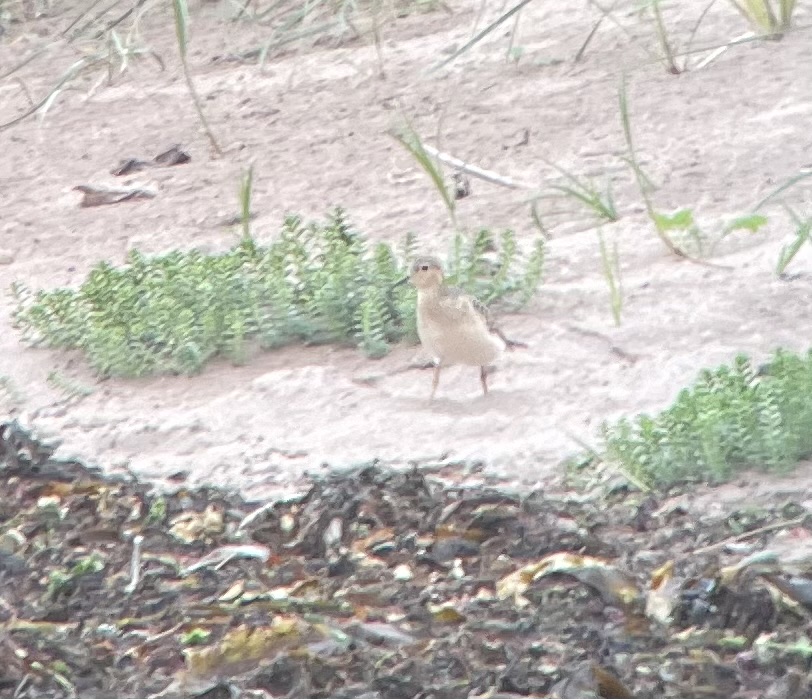
Buff-breasted Sandpiper at Baile an Rennaigh, 12th September 2026
As we pulled up two British birders were already scoping the waders – they’d just found a Buff-Breasted Sandpiper! We got straight on the bird, and had really nice views as it scurried along the fringe of the marram dunes. It twice disappeared into a small burn mouth but came out twice more and everyone had some good scope views – unfortunately the now very high tide prevented us crossing the bridge to get closer. The beach was full of Sanderling, Turnstone and Ringed Plover too and an adult Arctic Tern floated in. It was nearly 6pm now though and after some more final views of the Buff-B, we called it a rather successful first day.
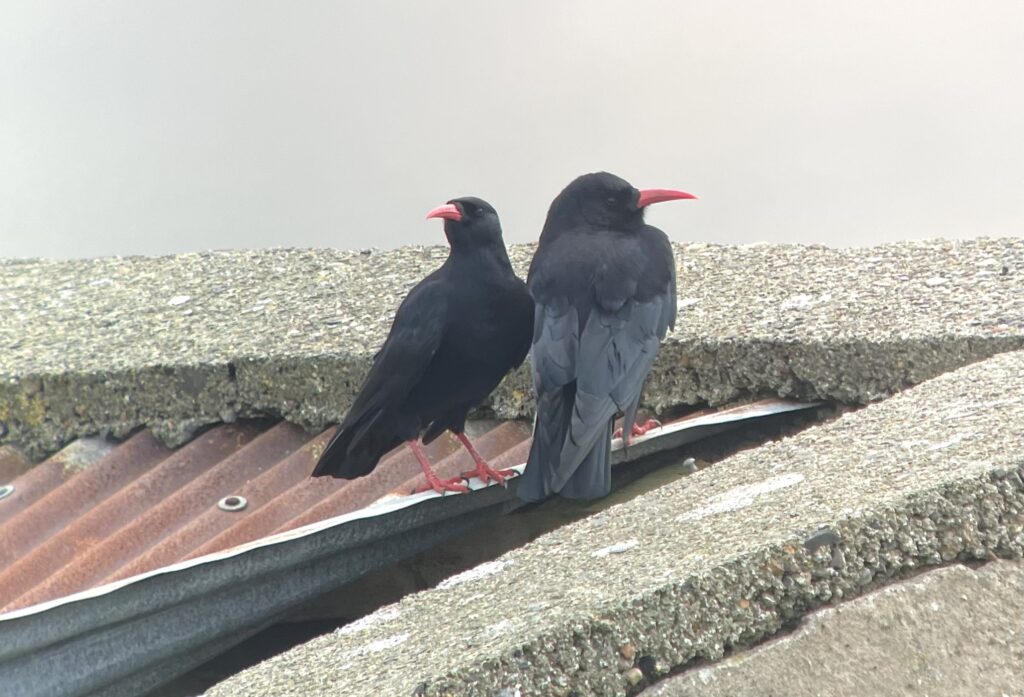
Choughs at Blennerville, 12th September 2026
FRIDAY 11TH SEPTEMBER
We set off as a group this morning from various points around the UK to convene at Cork Airport in Ireland just before 2pm. After a very swift transit through the terminal we were soon in our hire van and headed North-west towards County Kerry on the west coast, a journey of around 2.5hrs. After a stop in Dingle for some provisions, we continued the final 30 minutes to our accommodation at Dunquin and enjoyed our first night in the bar with a Guinness and some local folk music. Bring on the American shorebirds tomorrow!


