

SATURDAY 10TH JANUARY – A calm day with sunny spells, 1C
Our final day turned out to be really productive, starting off with a Cattle Egret pottering about on the lawn outside the hotel during breakfast and 21 Russian White-fronted Geese which flew in calling and dropped into the field next to the car park. We made the short journey along the road to Titchwell reserve where we wanted to bird around the Meadow Trail for a few missing bits for our last, starting with Water Rail which showed well in the usual ditch by the west bank path. We couldn’t find the Firecrest with either of the small tit flocks though we did see Goldcrest and Treecreeper. Negotiating the icy boardwalk around to the Tawny Owl, we observed bits of the bird in its usual ivy-clad roost by the path – it made the fenland Long-eareds look showy by comparison! A Woodcock flushed out of the undergrowth and flew past us, with two others seen briefly in flight near the Visitor Centre, obviously still trying to find soft ground to feed on now things were starting to gradually thaw out.
Heading inland, we wanted to check a spot where some Bramblings had been feeding recently in a cover crop. On the way we saw a massive flock of Pink-footed Geese in the air, perhaps as many as 10,000 birds. They splintered into three groups with one large flock dropping into a field of beet tops though sadly they were in dead ground two fields back from the nearest road. Another Woodcock flushed from the verge and this time we got a great flight view as it crossed the road in front of us and off across an open field to our left. The finch flock was still present and numbered about 100 birds, mostly Chaffinch but with some Greenfinch, Goldfinch, Linnet and at least 6 Brambling. We had good scope views of them perched up in some birch trees in excellent light. Dropping back to the hotel we collected the cars before driving down to Swaffham and into the north Brecks. A faithful Goshawk spot was checked, as they are often already active on fine days early in the year. 14 Whooper Swans flew west in the distance and despite no Goshawks, we did have a surprise flock of 11 Woodlarks fly past. We managed to follow them until they dropped in a distant field, and so decided to drive down the lane to try and re-find them. The grass was longer than it looked and it was hard to even spot the many Redwings feeding in the same field. Eventually we found the Woodlarks though, and everyone got a clear view. Not an easy bird to find in winter.
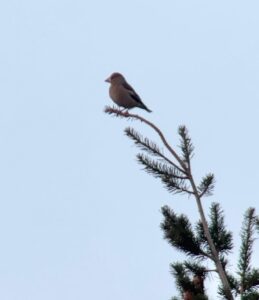
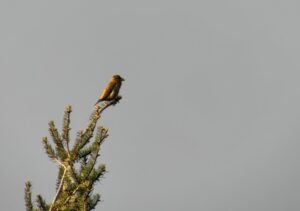
Hawfinch (left) and Crossbill at Lynford
Lynford was our next stop and after a late lunch here, we went in search of some woodland birds. Three Nuthatch chased around and we soon started hearing the distinctive calls of Crossbills, which are going through a boom after several drought years. A female-type perched up for a long scope view but we went on to see about 20 more, including a lovely red male perched in the last golden rays of afternoon sunshine at the top of a spruce. We hoped for views of Hawfinch too, and eventually after very distant views of two, a female popped up in the paddock trees. Just as the light was starting to fade, a male also appeared and gave superb views to round off the day.
FRIDAY 9TH JANUARY – Moderate SW winds and heavy rain, 3C
A tough day today as an Atlantic storm which had been battering the South-west of England reached us overnight bringing large amounts of heavy rain which was set to continue throughout the day. We had already seen it coming and opted to make this our East Norfolk day, where lots more driving than birding suited a day of torrential rain! We started at Buckenham Marshes, where we were able to shelter behind the hide and scan the marsh, picking up three Russian White-fronted Geese, thousands of Wigeon, a few Snipe and a Black-tailed Godwit. Filby Broad next and we were delighted to see that the Aythya flock was not in its usual spot right at the back of the broad but most of the birds were much closer along the north edge. We got straight onto the female Ring-necked Duck and had superb views, while three Scaup were in the same group – two females and a first-winter drake. Otherwise we saw large numbers of Pochard and a few Goldeneye, but we couldn’t find the recently reported Smew or Ferruginous Duck.
We had lunch over by Rollesby Broad just to check in case the missing ducks had wandered there – more Tufted Ducks and Goldeneye but nothing more. We then drove on to Oby and checked the fields there for Cranes, noting a flock of 29 birds including several juveniles, feeding along the sheltered edge of a maize strip. From here we toured around the coast road via Horsey and Waxham looking for geese, not finding any until we encountered a large flock of Pink-footed Geese at Sea Palling. Probably 4000 birds scattered across a large ex-beet field, but amazingly considering the recent influx, we couldn’t find any Bean Geese despite the birds being quite nicely spread on open ground. Finally we ended the day at St Benet’s – a speculative look for owls in the rain was not successful but we noted four more distant Cranes. A tricky day, but we had managed to see a few nice bits.
THURSDAY 8TH JANUARY – Calm overcast day, 3C
A superb days birding today as we had our specially arranged ‘Birds & Breakfast Boat Trip’. This saw us meet our skipper at 8am and set out up overy channel on what was a stunning calm morning, and we were soon enjoying our coffee and bacon rolls to the sights and sounds of thousands of Wigeon, springs of Teal, and hordes of winter waders – Black-tailed Godwit, Grey Plover, Dunlin, Ringed Plover and Turnstone all at point blank range. As we approached Gun Hill, a Red-necked Grebe popped up in front of the boat and gave stunning views – a real influx of this species is going on at present and they seem to be in all the harbours along the coast. Wigeon continued to dominate as we headed west along Norton creek, with clouds of them in the air pretty much the whole time, and peppered across the water. Brent Geese and Shelduck weren’t far behind, and we were continually passed by Marsh Harriers, Buzzards and Red Kites too. Small birds included Rock Pipit, Skylark and Reed Bunting. Along the quieter part of the creek we did get superb views of Red-breasted Mergansers both settled and in flight – always a spectacular species to see well.
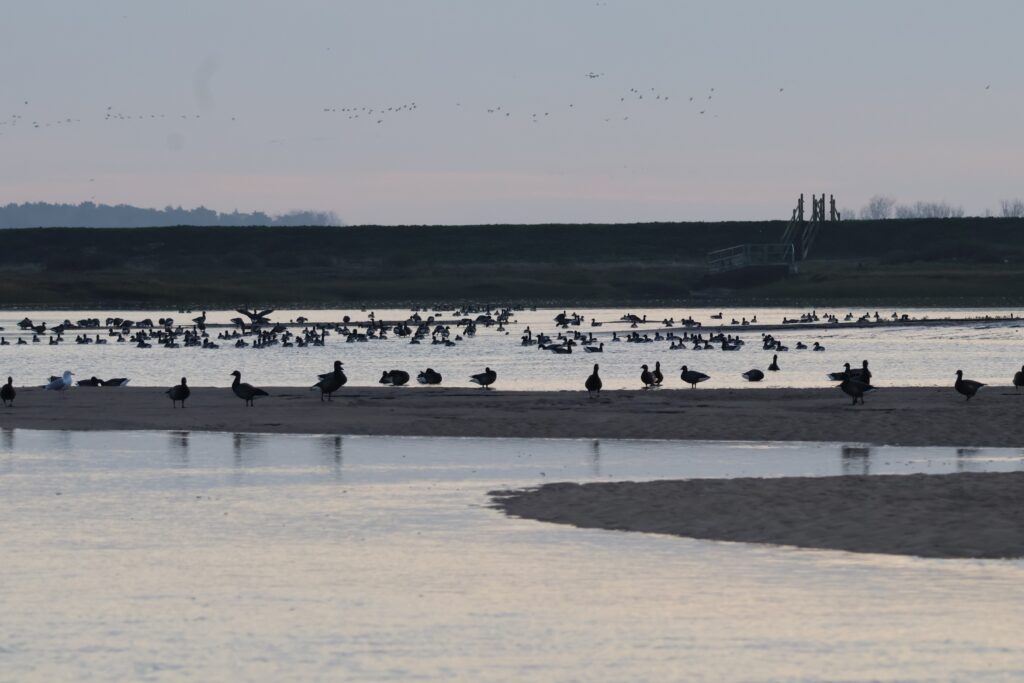
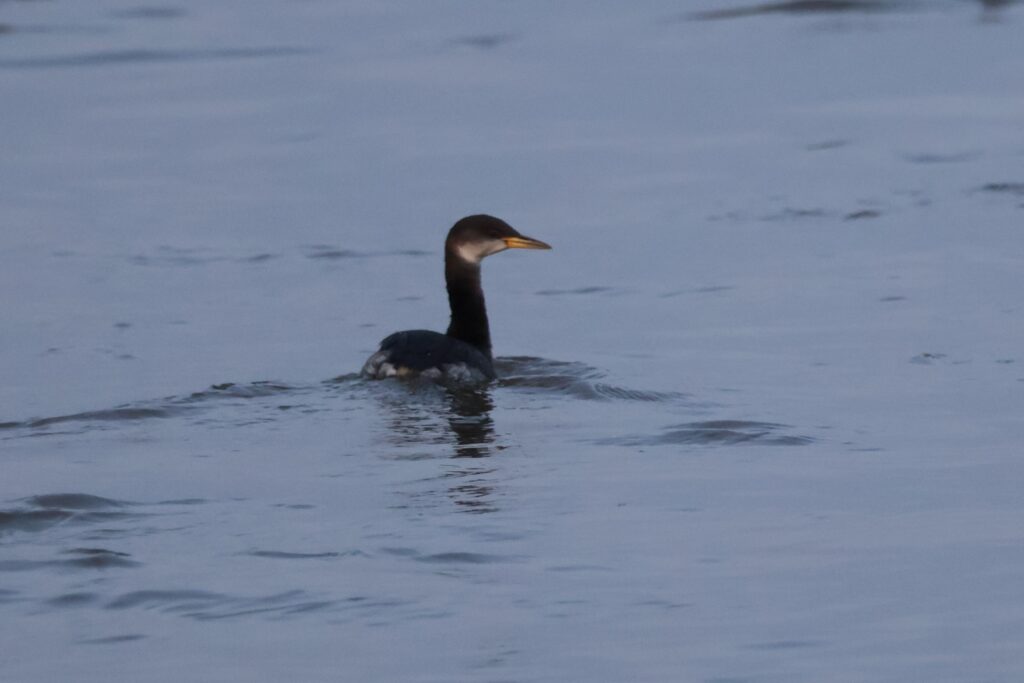
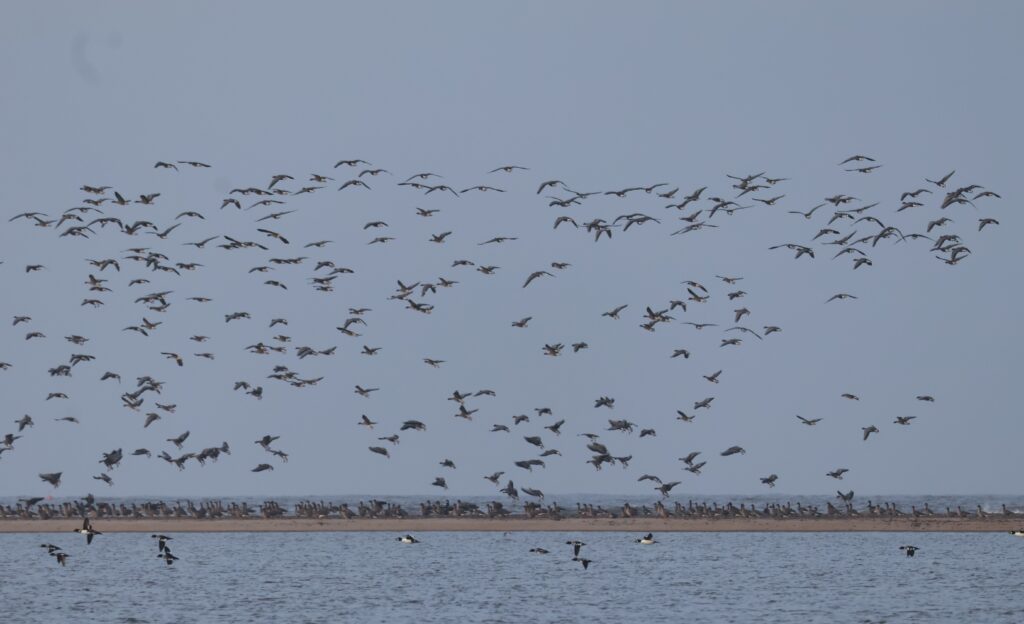
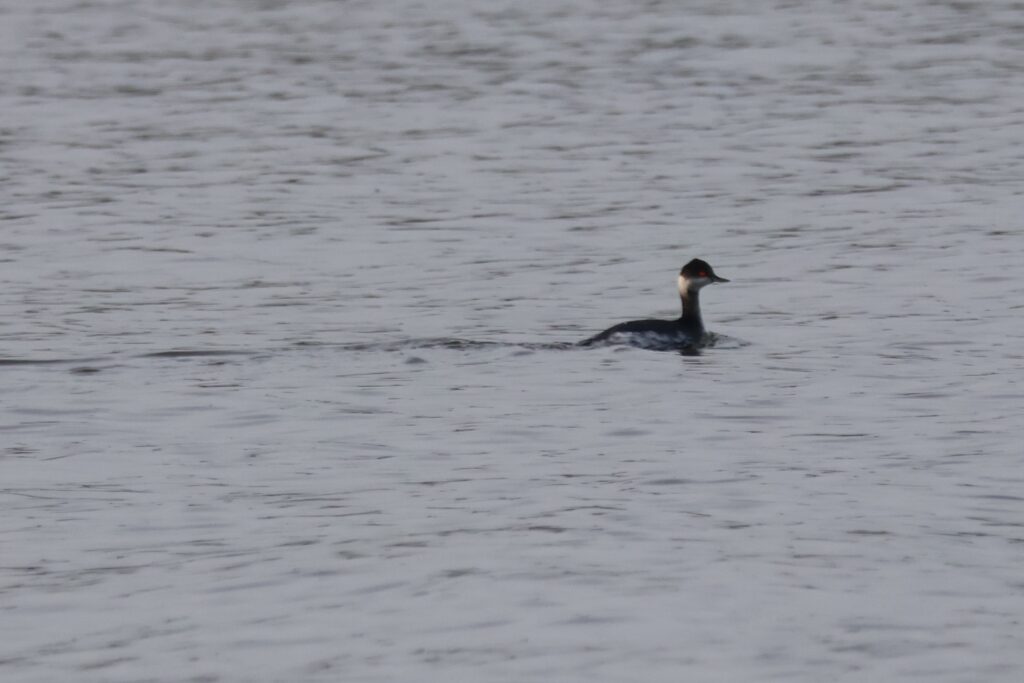
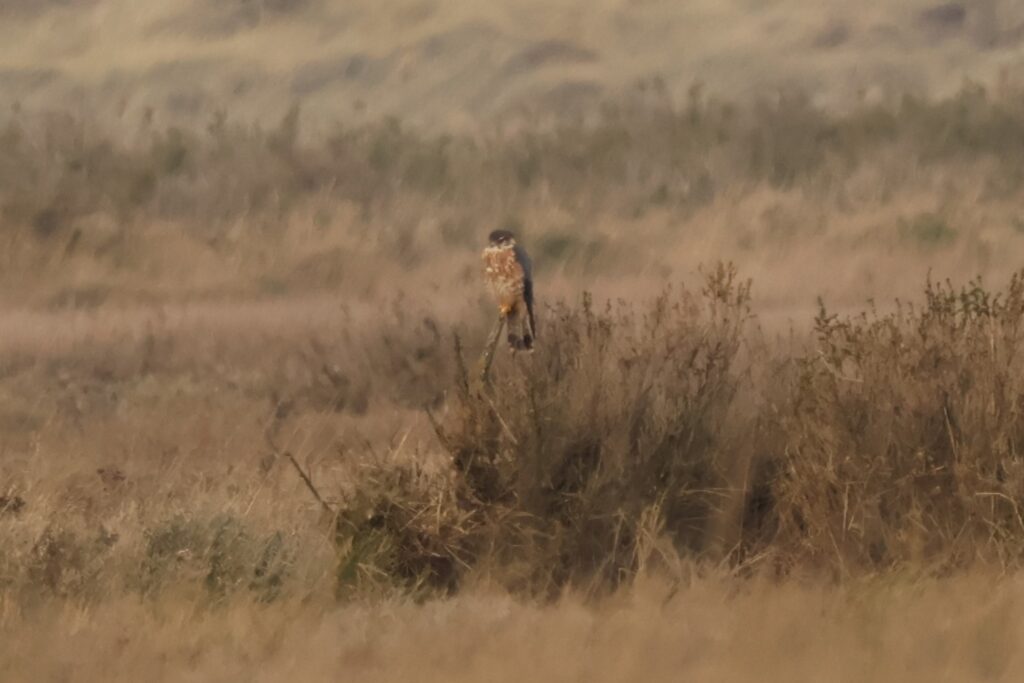
A selection of images from this mornings boat trip – from top: Brent Geese, Red-necked Grebe, Pinkfeet and Goldeneye, Black-necked Grebe, Merlin
Next we reached the wide open expanse of Cocklebight, which was covered by the tide on full flood, and more waterbirds included about 60 Goldeneye and 3 Common Eider. On the sand bars at the west end of Scolt Head, thousands of Pink-footed Geese were still in their roost having still partly been on night feeding, and we were treated to a spectacle of them eventually coming off and flying inland right over our heads. The final highlight here was a somewhat expected one, as we found the wintering Black-necked Grebe – here now for its 7th winter – and had great views of it close to the Brancaster beach side. As we made our way slowly back to Overy, a Merlin gave us one final highlight, perched on a suaeda bush on the saltmarsh and allowing us to cut the engine and glide right past it. A truly superb morning!
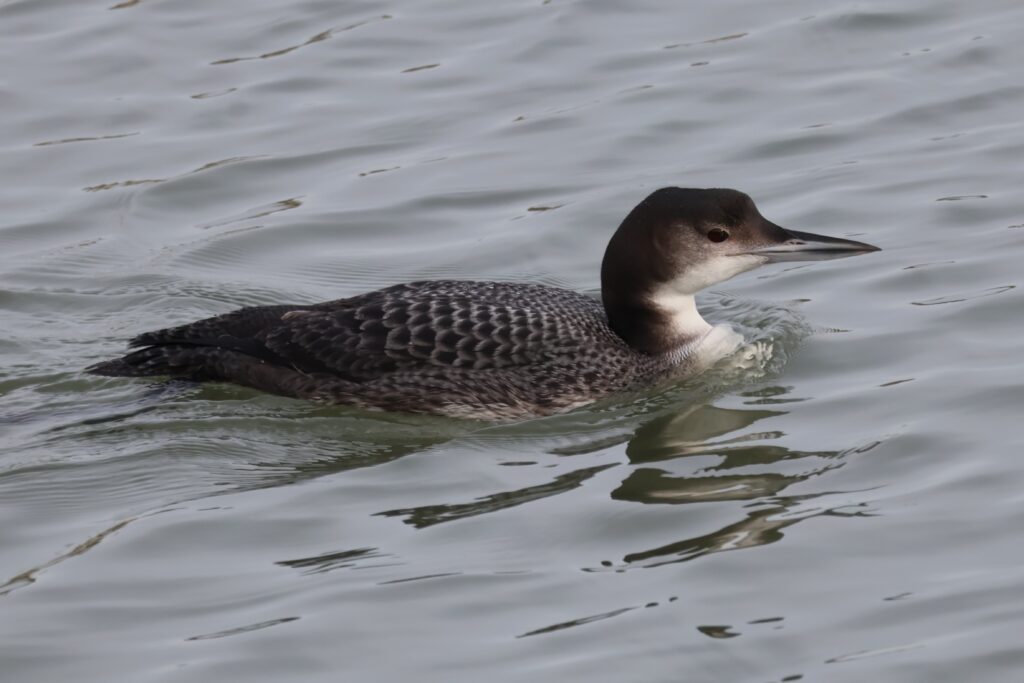
Great Northern Diver at Wells
Wells harbour next then and another waterbird treat in the form of an incredibly showy juvenile Great Northern Diver. We watched the bird diving around the pontoon in the small marina and at times we could nearly stroke it! There was a second one distantly out towards the mouth of the harbour too, plus we enjoyed good views of the Common Seals. Lunch beckoned now, a little later than usual, and we had this in Weybourne beach car park. A nice flock of Common Scoter were off the beach here and two female Velvet Scoter were with them. One bird had a lot more white on the face than normal but after watching them extensively we decided that structurally it must just be an aberrant Velvet. We ended the day with a walk along East Bank at Cley, but other than some pinging Bearded Tits we didn’t add anything new and so rounded things off at 4pm.
WEDNESDAY 7TH JANUARY – Sunny day with moderate westerly winds, 3C
We ventured south into the fens around Peterborough today, always a good value winter days birding! Starting on the North side of the Nene Washes near Thorney, we drove some minor roads looking for swan herds. We soon located about 250 Whooper Swans, and careful scanning revealed two pairs of Bewick’s Swans. It is always a delight to see this rapidly declining winter visitor – we have to enjoy them while we still can. We left the field of trumpeting swans behind and continued out towards Thorney, noting a rather impressive flock of 200 Stock Dove along the way. After a coffee and toilet stop on the edge of Peterborough, we made our way on through Crowland and on to the River Welland. Here we saw several Goosanders where the road followed the river past the water tower, and then as we neared Deeping Lakes reserve the hoped-for swan herd loomed into view.
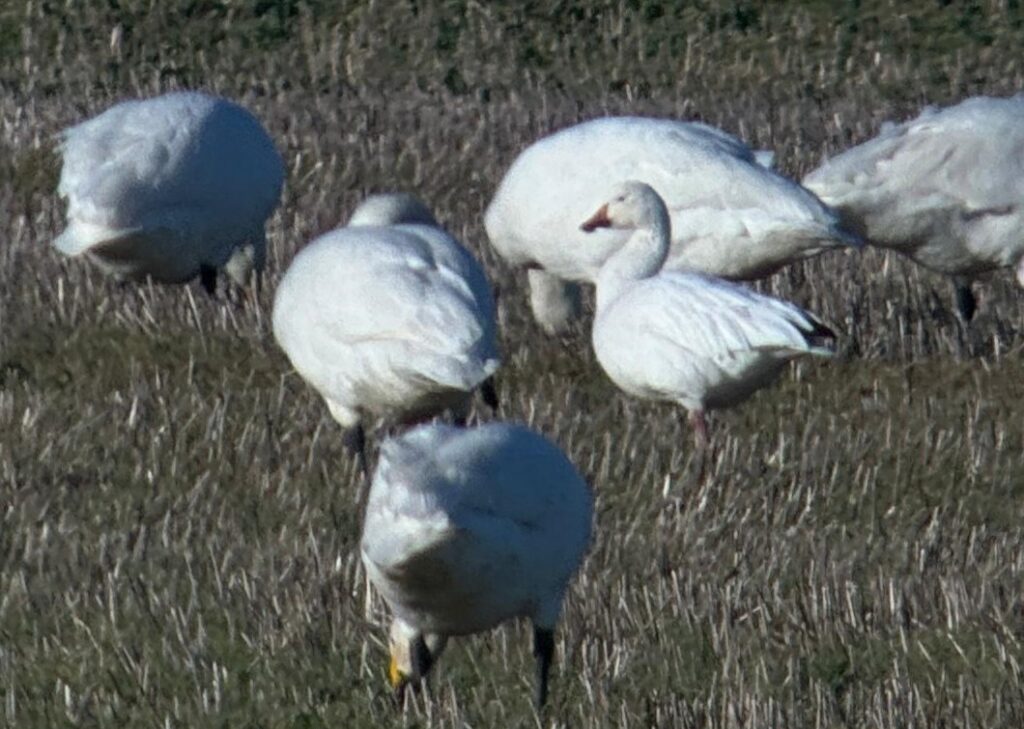
Snow Goose at Deeping, Lincs, 7th January
An adult white morph Snow Goose had been found recently with the Whoopers here and we were really hoping to catch up with it today. Farm workers were loading sugarbeet in the swans favoured field, so they had moved into stubble further back, but we could pick the Snow Goose out from the road sleeping among them. Better views were required though so we parked up and walked along the river bank to try and get closer, and despite the biting wind we managed to see the Snow Goose well as it walked among its much larger congeners. We continued on to the reserve then, having lunch before walking down to the hide. Lots of Redwings and Fieldfares were piling out of the hedges and a Green Woodpecker showed well on the short grass near the car park. The main reason for visiting the reserve though was to try to see roosting Long-eared Owl, and with the sun shining on their favoured ivy-clad tree, we were lucky to get excellent views of one and sketchier views of two others. Several dapper Goldeneye were also seen, and we added Shoveler and Pochard too.
The plan for the end of the day was to head around to the south side of the Nene Washes and to Eldernell. The light was starting to fade as we walked down the bank to check the Tawny Owl roost. Sadly we could not find this nor any Short-eared Owls here today, but we did get good views of up to 16 Cranes, both on the ground and eventually in flight as they headed off to roost. Four Great White Egrets were also noted and a juv male Hen Harrier flew low across the washes and dropped into its own sleeping spot. A good days birding and we had managed the freezing cold wind pretty well!
TUESDAY 6TH JANUARY – Cold day in light winds and sunny spells, 0C
A solid start to the first of our Norfolk winter five day birding trips saw us head out into the cold after a spell of snow and freezing temperatures had gripped the county over the last few days. We started with a quick look in the field next to the hotel as a large flock of Greylag Geese hosted about a dozen Barnacle Geese and a couple of elusive Russian White-fronted Geese, though these remained stubbornly out of view in a fold in the field. Next we popped into Brancaster Staithe harbour, where a big marsh tide meant the water was right up to the middle of the car park. We had a quick check for the recent Black-throated Diver without success but a super Spoonbill flew east through the harbour, and we saw a single drake Goldeneye and five Red-breasted Merganser. Rock Pipit and Ringed Plover were also added, to kickstart the list.
Our plan for the rest of the morning was to visit Holkham. Lady Anne’s Drive was wonderfully devoid of cars and people, and a flock of 400 Teal swirled over us as we parked up. There were a few Pink-footed Geese along the drive too, but most were further west on the marsh – part of a day roost count made by the wardens here today of 44,000 birds. Walking west through the pines, we encountered several small tit flocks with Treecreeper and Goldcrest in tow, but we were not able to find any of the recent wintering Hume’s Warblers – perhaps the snow had moved them on at last. Salt’s Hole was jammed full of ducks and we saw a beautiful drake Pintail here among the Wigeon and Gadwall. Reaching Joe Jordan Hide, we now had great views of a couple of large gatherings of the Pinkfeet with some right outside the hide and another 2000 or so feeding on the grass to the west. Mistle Thrush, Redwing and Fieldfare all showed well from the hide too, feeding on the remaining hawthorn berries. A Woodcock flushed off as we chatted to the warden, before making our way back through the pines. A lovely Grey Wagtail was also seen uncharacteristically wandering around under a Holm Oak, while a Cetti’s Warbler was hopping around in the open on the grass beside the path, no doubt driven out by the cold.
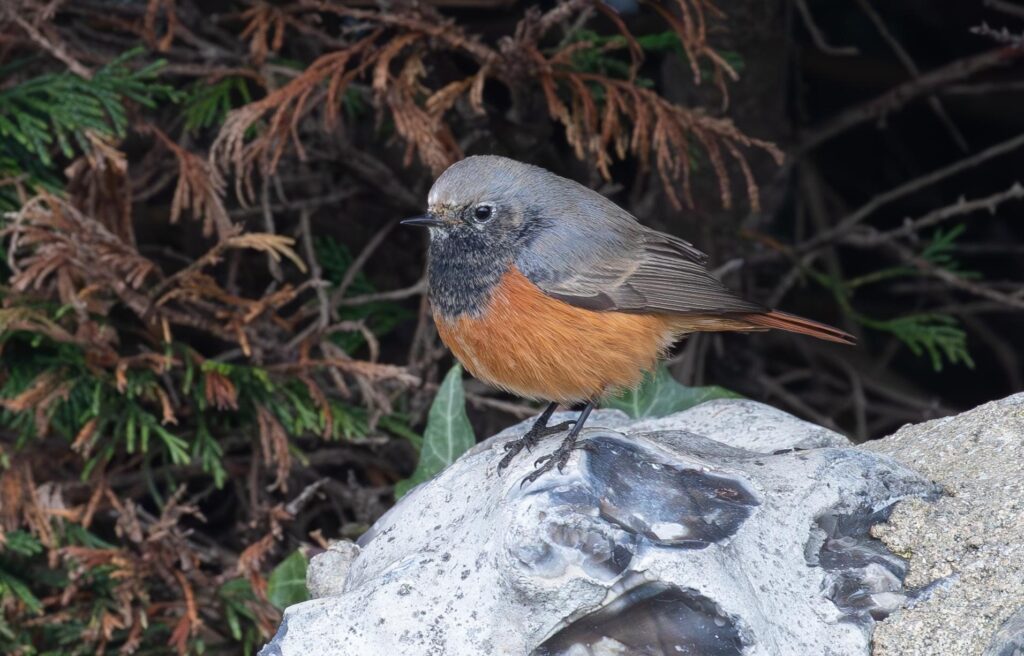
Eastern Black Redstart at Sheringham, 6th January
Next we made the half hour journey eastwards to Sheringham, where we lunched on the esplanade before having a look for the wintering Eastern Black Redstart. The bird had become more elusive since the snow, and nobody had reported it so far today. We spread out and checked as many roads in the vicinity as we could but there was no sign. Almost at the point of giving up, we tried further west and found two people watching it round the back of some garages! It had just flicked over a wall into a garden though and was again lost. We tried the next road over and thankfully found it hiding in some evergreen shrubs in the front of a garden. It was actually eating berries – probably not its first choice food but maybe all that was available in the cold. We backed off and let it hop out into full view which it duly did, and we had superb views – what a smart little bird it is!
As is often the case at this time of year the day was racing on and the gloom was just starting to descend, especially as it had now clouded over and gone up to 1C! We tracked back west along the A149 to Wells, and headed down to North Point to try for the Taiga Bean Goose. We were in luck as the bird was really close with the Greylags west of the car park, so we had superb views of it. A bonus Barn Owl floated across at the back too and on the east pool, we picked up a first-winter Caspian Gull with the gathering hordes of large gulls as dusk approached.
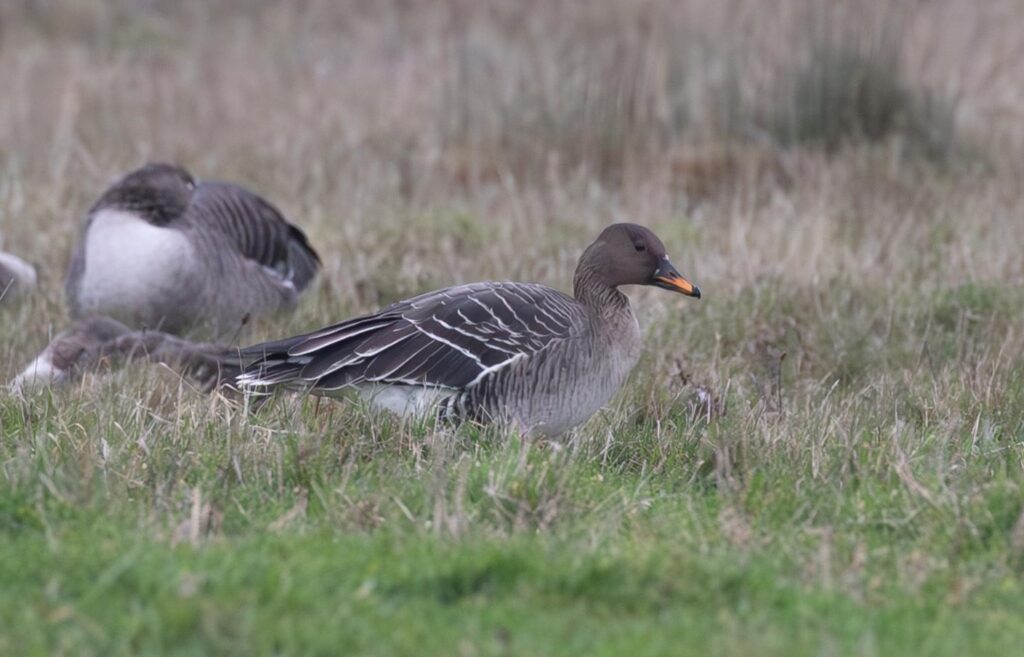
Taiga Bean Goose, Wells, 6th January
We had time for one more roll of the dice which was to head down the drift at Garden Drove and scan the saltmarsh off the end for raptors at dusk. A Cattle Egret (actually our second of the day) was with the cows by the start of the track. There were lots of thrushes, mainly Redwings, piling out of the ivy as we walked down and a large flock of Brent Geese was feeding in the fields to the east of the track. These would later flight over to the marsh in a burbling flock at dusk, but not before we had scored with good views of two Hen Harriers – a grey male which gave a lovely long fly-past, and a quartering ringtail. To cap off the day, a roost flight of Pink-footed Geese headed right over us on their way to East Hills – just magic!


