Norfolk is a destination synonymous with the mass arrival of migrant birds heading south towards continental and African wintering grounds. Migration in autumn is a more leisurely affair, with birds in less of a hurry than spring, and the numbers are swollen by the recently fledged juvenile birds. Weather is of course everything, and our exact destinations on this Norfolk autumn birding tour will be influenced largely by wind direction and to incorporate as always the best of what has been seen locally.
As well as visiting the main reserves we will visit a number of smaller sites such as Stiffkey, Warham, Salthouse, Kelling, Burnham Overy and possibly also the east coast round to Great Yarmouth. Wafting easterly winds accompanied by poor visibility created by mist or rain are the ideal conditions for producing large falls of continental migrants, namely Common Redstart, Pied Flycatcher, Northern Wheatear, Whinchat and a variety of common warbler species. It is on the back of these arrivals, however, that rarities often occur and we will hope for a few goodies during the tour which in past years have included Red-breasted Flycatcher, Yellow-browed Warbler, Red-backed Shrike, Pectoral Sandpiper, Rose-coloured Starling, and even Citrine Wagtail and Olive-backed Pipit.
It will be the pine belt at Wells and Holkham and the coastal scrub at Holme and Warham that will attract our attention should an arrival occur, and the supporting cast can often include Spotted Flycatcher, Lesser Whitethroat, Garden Warbler, Ring Ouzel, Tree Pipit and the first groups of Redwing, Eurasian Siskin, Lesser Redpoll and Brambling, while Common Crossbill and Firecrest are always likely here at this time of year. On the freshwater scrapes at Cley and Titchwell, a mass of shorebirds will await us with up to twenty five species including huge flocks of Dunlin, many smart juvenile Curlew Sandpiper and Little Stint, Wood, Green and Common Sandpipers, Spotted Redshank, Common Greenshank, Whimbrel, Ruff, Little Ringed and European Golden Plovers and Black-tailed Godwit. Yellow-legged, Mediterranean and Little Gulls occur while a Eurasian Spoonbill may drop in to join the many Little Egrets now resident.
Marsh Harrier, Bearded Tit and Pied Avocet are as ever commonplace, while Little, Barn and Short-eared Owls may also be seen. Should the wind turn North-westerly and strengthen, we may position ourselves in the shelters along Sheringham seafront to witness seabird passage off the North Coast. A variety of terns, gulls, divers, grebes and waders may pass, as well as all four skuas, Manx & Sooty Shearwaters, Northern Gannet, Northern Fulmar, Kittiwake and if we are really lucky, a Leach’s Storm-Petrel. You should expect to walk on average five to six miles per day on this tour, and see up to 140 species on this exciting Norfolk autumn birding tour.
Arrive at Briarfields Hotel at Titchwell late afternoon. You will be met by your guide for an introductory chat about the week ahead at 1800 before dinner.
Our first day is spent exploring the RSPB reserve at Titchwell and its environs. Anything can turn up here, but we are especially hoping for shorebirds. Migration will be in full swing and we can expect species such as Little Stint, Curlew Sandpiper, Ruff and Pied Avocet to be present in good numbers. Smaller numbers of Spotted Redshank, Greenshank and even a Jack Snipe can also be expected while this is a prime time for vagrants such as Pectoral or White-rumped Sandpipers. On the beach, species such as Bar- tailed Godwit, Grey Plover and Sanderling should be present. Bearded Tit, Marsh Harrier and Water Rail are resident and a passing Peregrine is likely to cause panic over the marsh. Little Egret and Eurasian Spoonbill are both regulars here, sometimes being present in good numbers. On previous tours, we have encountered Buff-breasted Sandpiper, Red-necked Phalarope, Icterine Warbler and Spotted Crake. Offshore, Terns will be passing and these in turn are likely to attract marauding skuas, searching for an easy meal. Arctic Skua is the most likely, but the three other species are also encountered, albeit in small numbers. The first returning wildfowl are present and these could include Brent Goose, Eider, Red-breasted Merganser and Common Scoter. Several species of warbler should be present in the bushes, as well as commoner woodland species.
Our day begins, at the excellent, but rather understated area at Stiffkey. Brent Goose should be arriving in good numbers and several species of common shorebirds can be expected. The trees in and around the campsite are good for Pied Flycatcher, Firecrest and commoner warblers. Yellow-browed and Barred Warblers are annual here and the occasional Icterine Warbler turns up. The coastal path and its sueda bushes, often hold good numbers of migrants including finch flocks, pipits and more warblers and chats. Wryneck is a regular visitor here and on past visits we have encountered Little Bunting, Tawny Pipit, Red-backed Shrike and Blyth’s Reed Warbler. We will also visit Stiffkey Fen, an area of open water that often attracts large numbers of wildfowl and shorebirds such as Common Sandpiper, Greenshank and Common Snipe. The afternoon sees us heading for Wells Woods and/or Holkham Pines, where more migrants could include Yellow-browed, Icterine and Barred Warblers, while this is a great place to witness numbers of Redstart and Pied Flycatcher in fall conditions. Mediterranean Gull is sometimes noted in the flocks in the nearby fields. Many rare birds have been noted here including Radde’s and Dusky Warblers, Olive–backed Pipit, Rustic Bunting and Britain’s first Red-breasted Nuthatch. Although this particular feat is unlikely to be repeated, the area usually turns up something of interest and we have recorded Red-breasted Flycatcher and Yellow-browed Warbler on previous tours. We have also seen Great Grey Shrike on previous visits.
Today, we head along the coast to the splendid reserve at Cley. Anything can and often does turn up here. Resident species that we hope to encounter include Bearded Tit, Bittern and Barn Owl. Shorebirds should also be present in good numbers with species similar to Titchwell likely to be seen. Along the fields and ditches we can expect to see migrants such as Yellow Wagtail and Whinchat. Offshore, we can expect more Skuas, terns and seabirds, whilst a Little Gull might be present. If we are very lucky a passing Sabine’s Gull or Leach’s Petrel may put in an appearance, especially if winds turn to North-westerly. Should the wind be from a westerly direction, it would not be unrealistic to expect a transatlantic shorebird such as White-rumped or Pectoral Sandpiper to be present. Whatever happens, it is likely to be an interesting day. Whilst in the area, we also pay a visit to Kelling Water Meadow, which has held Citrine Wagtail on more than one occasion, Salthouse where we may encounter an early Lapland or Snow Bunting, as well as more shorebirds.
Today we remain flexible to allow for the presence of any rare birds along the north coast. Depending on the winds, we may sea watch from the shelters on Sheringham Promenade where in strong north-westerlies a variety of seabirds may pass including such sought after species as Long-tailed Skua as well as more regular Sooty Shearwater. Alternatively we may make a full exploration of Burnham Overy Dunes and the west end of Holkham Pines, which would be our longest walk of the week. Always worth the effort, the dune system can hide tired migrants and on days of thrush arrivals from the continent it is possible to see many hundreds of Song Thrush, Blackbird and Redwing coming in off the sea. Rare wheatears have occurred here in the past and its another good spot for a bluetail or Radde’s Warbler. Among falls of European Robins, the odd Common Redstart might still appear, and other warblers include Lesser Whitethroats often of the siberian race blythi. The nice thing about this walk is a supporting cast of wintering wildfowl, raptors, flocks of Golden Plover, Great White Egrets and the like will be on offer throughout the morning. At some point during the tour we will take out half a day to visit Breckland in order to look for pre-migration flocks of Stone Curlew. These are best observed during September and October, and we have often seen flocks of over fifty birds together – well worth seeing!
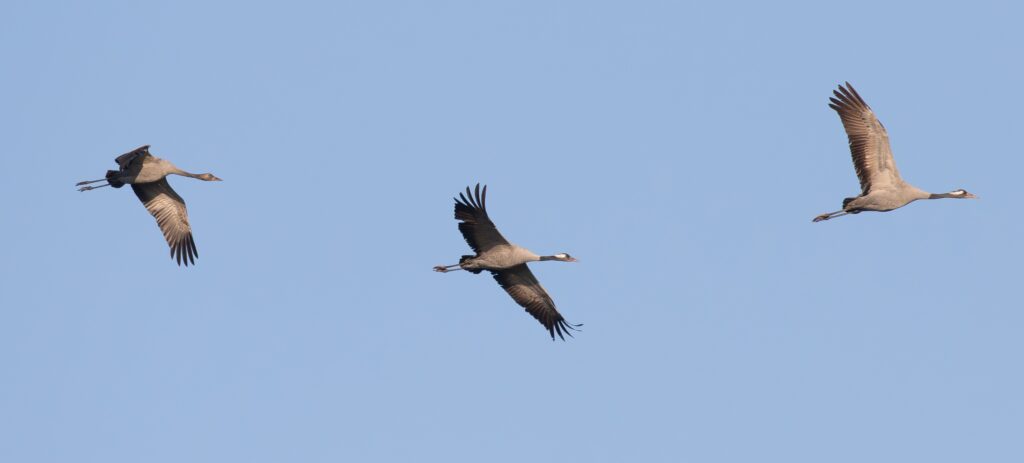
We head to the East Coast of Norfolk visiting various sites. At Sea Palling, we should encounter migrant warblers, chats and possibly Firecrest and winter thrushes with more of the same around Winterton Dunes. We drive the minor roads around Horsey Mill in search of the small resident population of Common Cranes, though these can sometimes be difficult to find. If we are doing well and time permits, we venture to Great Yarmouth Cemetery, which has an excellent record for turning up unusual migrants. Black Redstart, Firecrest, Yellow-browed and Pallas’s Warbler are reasonably regular and Red-flanked Bluetail has also been recorded. At Hickling Broad we visit the Rush Hills Scrape on the south side where a host of gulls, terns, shorebirds and wildfowl often congregate and several scarce or rare species have been recorded.
At the north-western tip of the North Norfolk Coast, Holme Dunes reserve lies perfectly placed to receive migrants that have drifted along having made landfall further east. The open scrubby habitat is good for chats, Wheatears and maybe an early Ring Ouzel, while the dense areas of scrub hold warblers and frequently a Red-Backed Shrike or Wryneck. Yellow-browed Warbler is annual in the pines, while the marshes host the first returning flocks of Pink-footed Geese and are often hunted by a passing Marsh Harrier, Merlin or Peregrine. Offshore, seabird passage can be good in onshore winds. We may combine our visit to Holme with the RSPB reserve at Snettisham should the correct tides coincide with our visit, and here we can expect a truly amazing number and variety of shorebirds roosting on the gravel pits after the high tide has forced them off the vast expanse of the Wash. The network of freshwater pools and reed beds at Burnham Norton will certainly attract our attention, with its recent run of rarities following the Stilt Sandpiper of 2005. Little Stint and Green Sandpiper are regular here, with Red-necked Phalarope recently recorded, and it gives further opportunities to look for mobile parties of Spoonbill or a passing raptor. The tour concludes around 1500 for the onward journey home.
Briarfields Hotel at Titchwell with all rooms en suite.
Six nights en suite accommodation on a bed breakfast and evening meal basis, packed lunches, transport in Norfolk, all guides and reserve entrance fees.
Transport to/ from Norfolk, travel insurance, drinks and any items of a purely personal nature.
King’s Lynn
“The small number of participants, the fnatsic numbers and variety of birds, the casual paceand the sheer depth of knowledge of the leader all made the holiday the great success it was”
D M Cornwall.
“We want to say thanks for a great two days in Norfolk. We had a fantastic time in your beautiful home territory and are so glad we decided to book the tour even though the extra travel was after an all-night flight! I told David that I actually enjoyed those 2 days more than our time in Africa”
P & D W Florida
“A thoroughly enjoyable and recommended six days. Ashley was a pleasure to be with – we have never met a leader with such skills before and the accommodation was first class. Great value for money”
P & SJ Gloucestershire
“Ashley’s knowledge of the birds and the area was brilliant and the service from booking through to the end of the trip was very professional”
J & TM Wiltshire