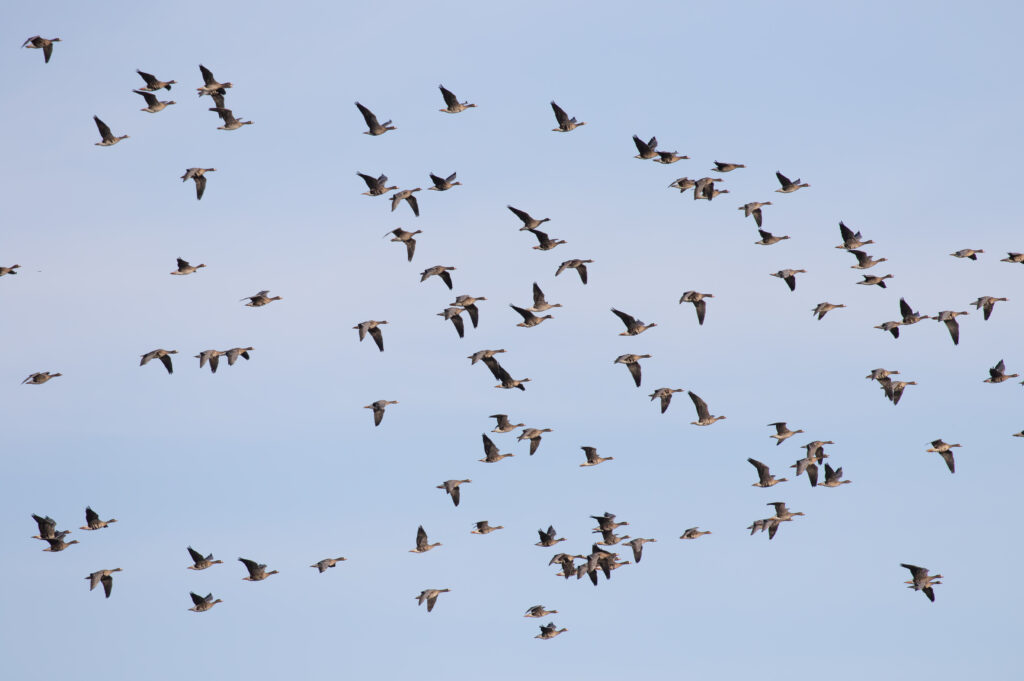
There are few better destinations for winter birding than the Norfolk Broads. Thousands of waders, ducks and geese winter in the Broads and we have timed this new three-night tour to be right at the peak of winter bird numbers in the area. Perhaps the most obvious will be the geese flocks with thousands of Pink-footed Geese wintering in the Broads. These flocks are often joined by scarcer species such as Barnacle and Tundra Bean Geese, or perhaps something even rarer. In the Yare Valley, we will search for the several hundred Russian White-fronted Geese which winter there, and the RSPB reserves at Buckenham and Cantley are famous for their spectacular numbers of wintering ducks and waders.
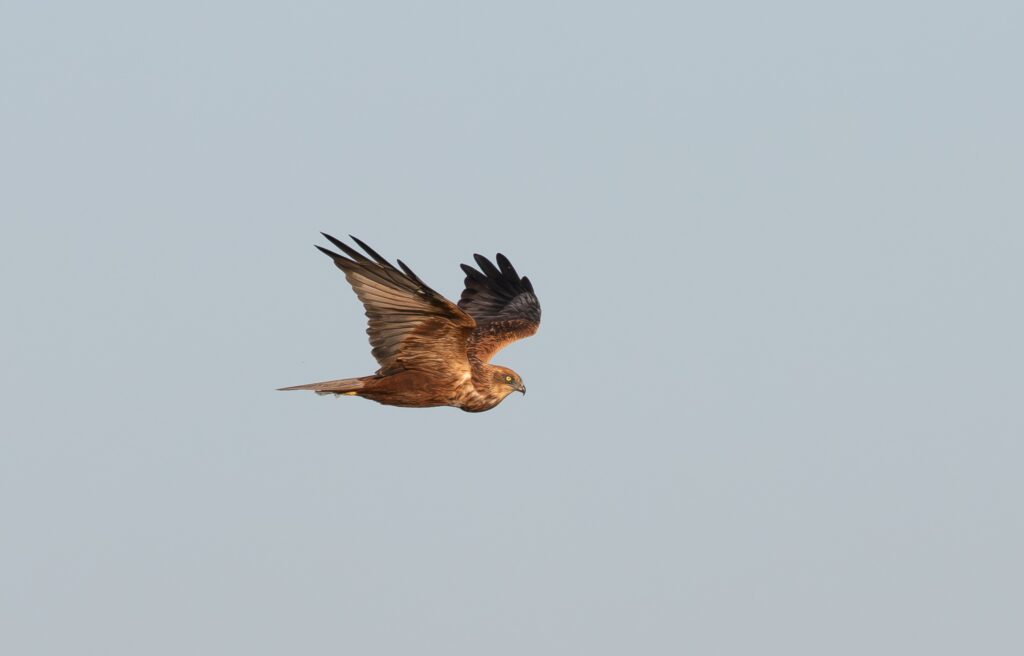
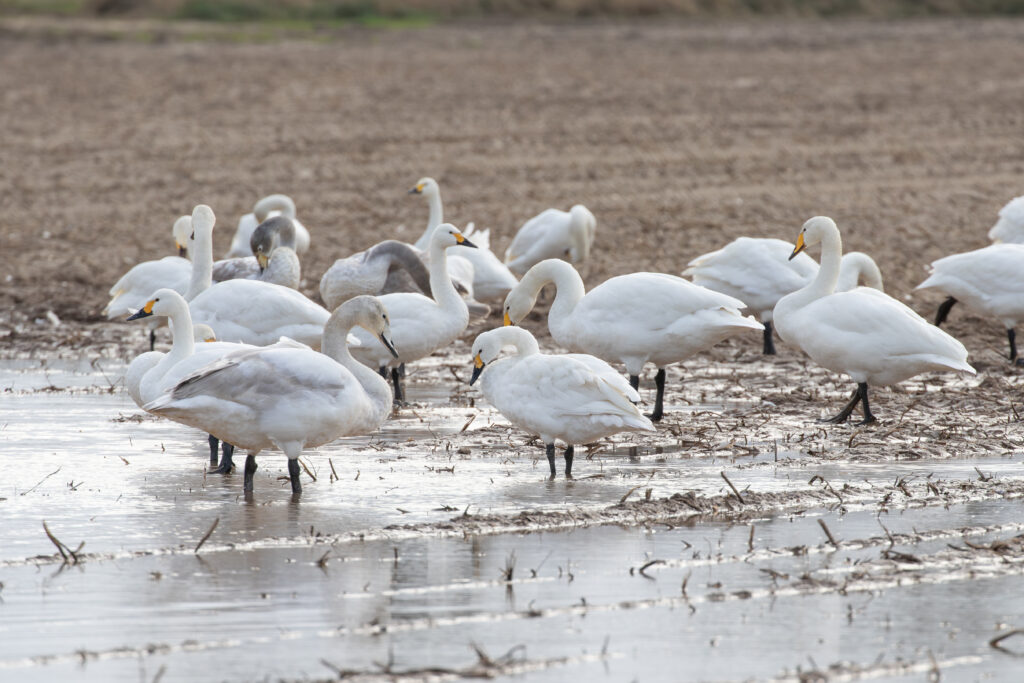
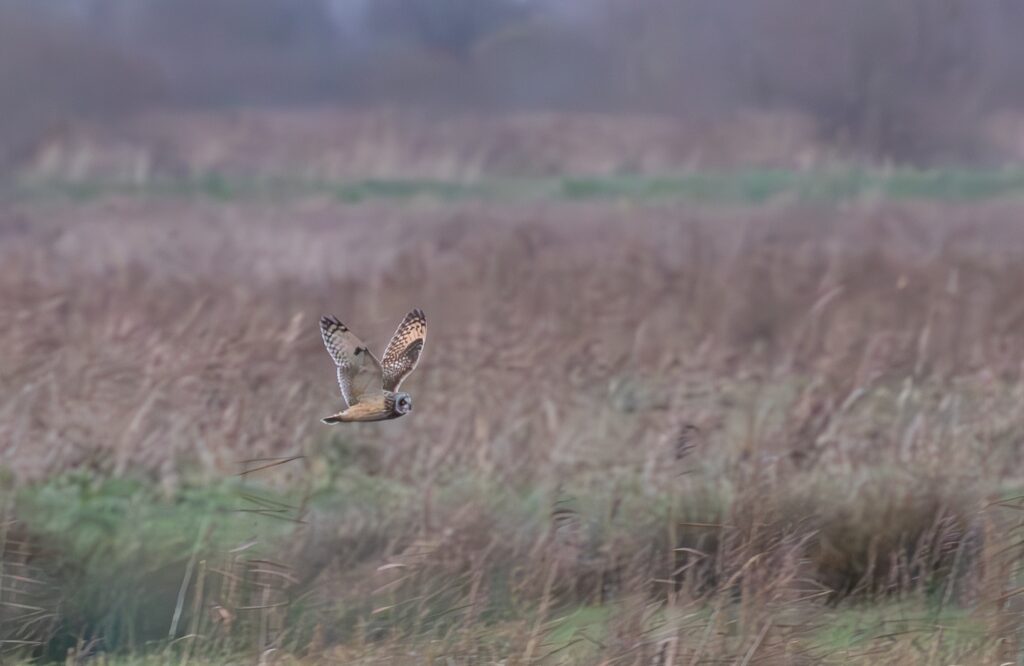
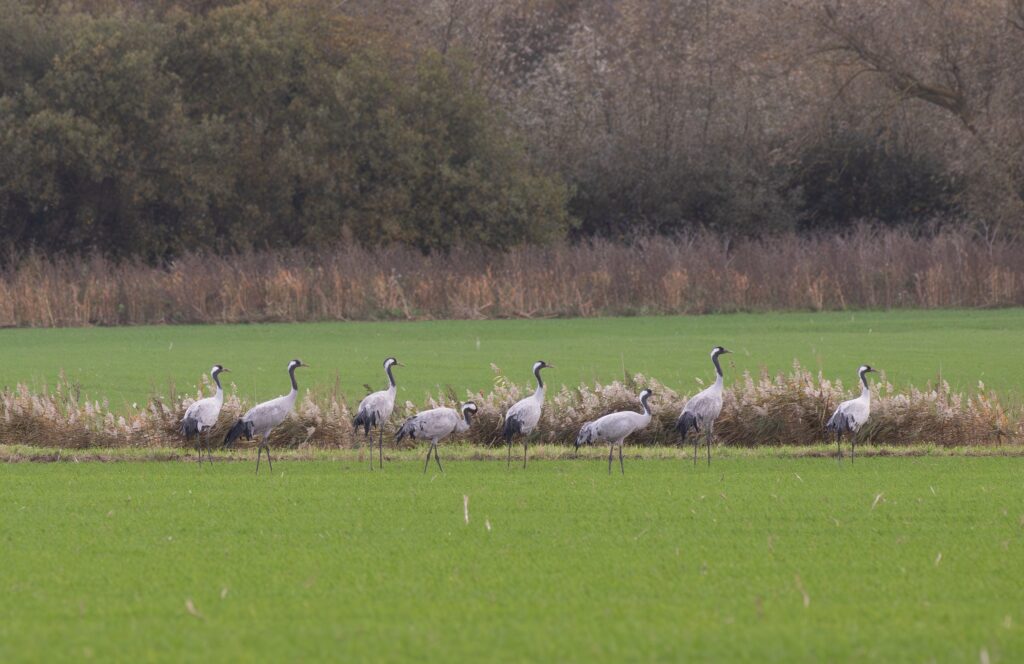
The wide expanses of grazing marshes in the Broads play host to both Whooper and Bewick’s Swans during winter and Common Cranes are doing really well in the area. It is not unusual to see Crane flocks numbering thirty-plus, and close views are often possible. Species such as Great and Cattle Egrets are now regular, and there are often a few Short-eared Owls in some of the quieter spots. In the evening, we will visit the Stubb Mill raptor roost, famous for the large numbers of Cranes and Marsh Harriers which can be watched arriving to roost. There is usually a Hen Harrier or two as well, and Merlin, Woodcock and large Pink-footed Goose flocks may appear too.
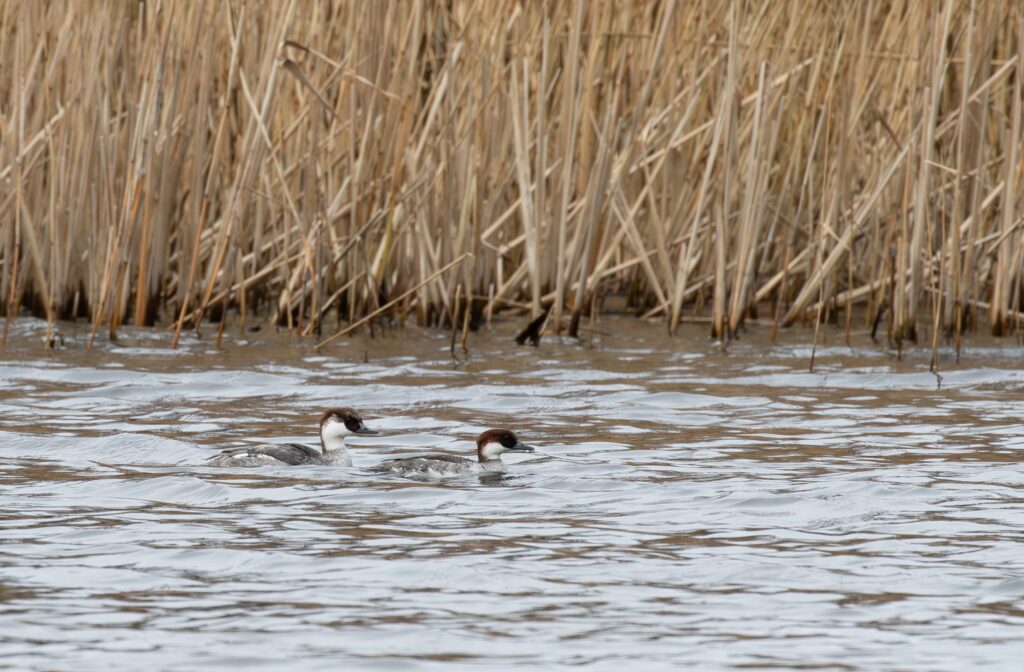
A visit to the Trinity Broads will give us a chance to scan the hundreds of ducks which winter there, and, in recent years, rarer species have included Ring-necked Duck, Ferruginous Duck and Smew. The dunes of east Norfolk are good for Snow Bunting and perhaps Shore Lark. We will also make a venture down into Suffolk where we will visit the famous Minsmere RSPB reserve, particularly good for species such as Caspian Gull and Water Pipit at this time of year, and if time allows, call in at Kessingland Beach or Ness Point (the UK’s most easterly point and particularly good for Black Redstart and Purple Sandpiper!). Jonathan Farooqi will be your leader for this exciting new tour.
DAY ONE
Check in late afternoon at Dairy Barns on the edge of Hickling. Your guide will meet you for pre-dinner drinks and a chat about the birding days ahead at 1800.
DAY TWO
We will start the day in the Yare Valley at Buckenham Marshes RSPB reserve. At this time of year the extensive marshes are carpeted by flocks of Lapwing, Wigeon and Teal. Scanning through them we hope to pick out Ruff and Black-tailed Godwits, and the reserve is frequently visited by Marsh Harriers which flush the thousands of waterbirds and make for quite the spectacle. The Mid Yare is also excellent for geese and we hope to find the wintering flocks of Russian White-fronted Geese. If we don’t manage to find them at Buckenham then we’ll try the neighbouring RSPB reserve of Cantley Marshes. Later in the day, we will head northwards to check some fields for Cranes, before reaching the Ludham area and its wintering Whooper and Bewick’s Swans. We will end the day at St Benet’s Abbey which has been very productive in recent years for species such as Short-eared Owl, Crane, Cattle Egret and Hen Harrier, and we will watch thousands of Cormorants flying inland to roost.
DAY THREE
We spend day three visiting some more of the East Norfolk’s great birding sites. We will call in to have a scan over Breydon Water where thousands of wildfowl and waders includes species such as Pintail, Golden Plover and perhaps Short-eared Owl. We will also visit Winterton Beach which has been a great place for Snow Bunting in recent years, and there will be many Grey Seals on the beach there too. It is just a short drive around to what is know as the ‘Horsey Straight’ where we will search for flocks of Pink-footed Geese which often hold Tundra Bean Geese at this time of year. After lunch, we will head south across the Broads to the Trinity Broads. This is one of the best areas in Norfolk for wintering diving ducks, and in recent years the flocks of Pochards, Tufted Ducks and Goldeneye have produced scarcities such as Scaup, Smew, Ferruginous and Ring-necked Duck. Finally, we will end the day at the famous Stubb Mill raptor watchpoint at Hickling where we will watch dozens of Cranes and Marsh Harriers arrive to roost, and there is a good chance of seeing Hen Harrier and Merlin. Spectacular flocks of Pink-footed Geese often fly over to roost and Woodcocks head out to feed on the marshes
DAY FOUR
For our final day we will head south into Suffolk. Our first stop will be at Lowestoft’s Ness Point (the most Easterly point in Britain) where a small flock of Purple Sandpipers spend the winter, and there is often a Black Redstart or two around as well. Nearby Kessingland beach has held a small group of Shore Larks in recent winters so we will call in here if some been reported. Our main birding site today will be RSPB Minsmere. Here we will scan through the waders, ducks and gulls on the scrapes, while the reedbeds hold species such as Water Rail, Bittern, Bearded Tit and Marsh Harrier. We may be able to pick out a Caspian Gull or Water Pipit, and if time allows, scan the sea for Red-throated Divers and other seabirds. There is always a chance of a rarity in Suffolk at this time of year, with Zitting Cisticola, Hume’s Warbler and Temminck’s Stint all being noted over the last couple of winters, and we will make an effort to catch up any rarer species reported. It is sure to be a great day to end the trip. We conclude the tour around 1500 to allow for the onward journey home.