DAY ONE
Arrival in Panama City & Orientation
Fly London/Panama City via Amsterdam with KLM. We arrive around 16.30 and will be transferred to Riande Aeropuerto Hotel, just five minutes from Tocumen International Airport, for check in. We will have dinner here this evening and take an early night ready for our journey east tomorrow!
DAY TWO
San Francisco Nature Reserve & arrival at Canopy Camp
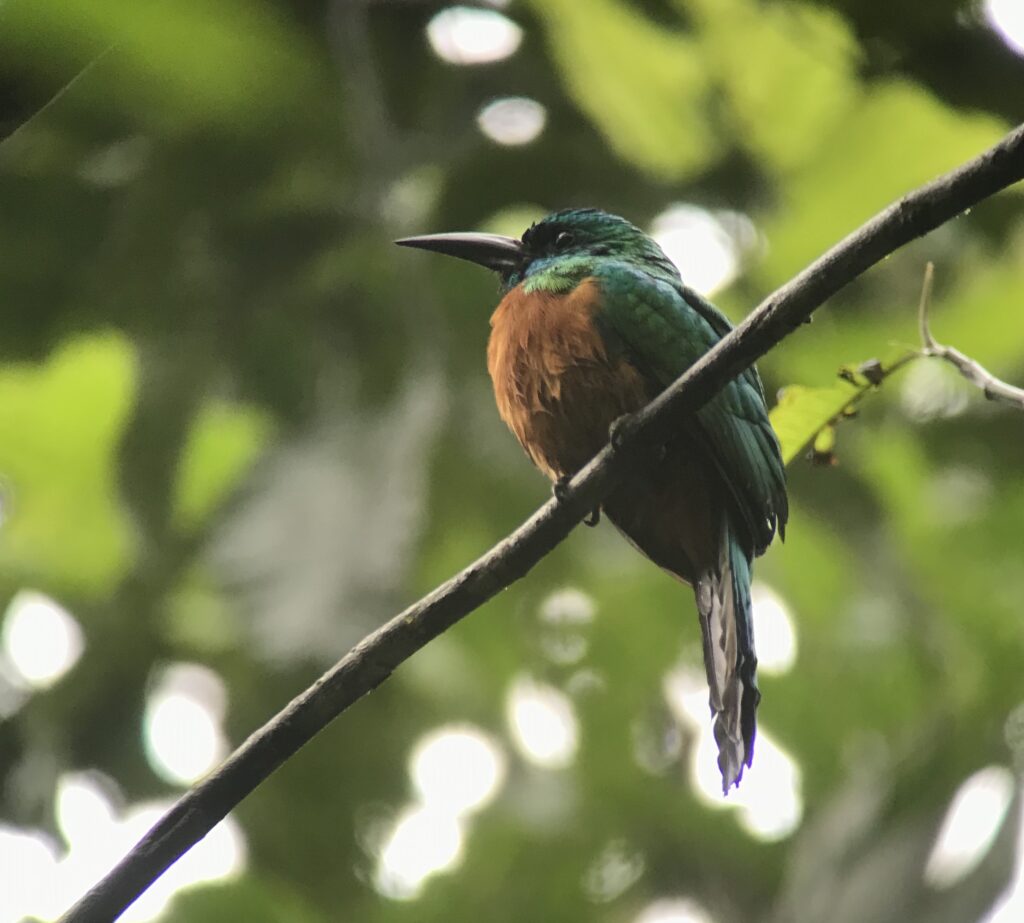
We will rise early for breakfast before starting our journey towards the Canopy Camp. We will stop at San Francisco Nature Reserve, a private forest reserve owned and managed by the St. Francis Foundation, covering 1,300 acres in eastern Panama Province, and we will spend the morning birding at this fantastic site. The San Francisco Reserve was established in 2001 by Father Pablo Kasuboski, an American priest from Wisconsin who came to Panama in 1988. The reserve serves as a wildlife refuge and protects the headwaters of the main rivers of the area. The foundation created by Padre Pablo, as Father Kasuboski is called, also works on infrastructure development in the area by building and maintaining aqueducts, roads, schools and churches. In fact, the St. Francis Foundation built and maintains the largest private rural aqueduct in all of Panama and Central America. The reserve has a variety of habitats including primary, secondary and riparian forests, forest edge, fields, farmland, ponds and wetlands. During our morning here, we will explore the some of the different habitats along the short road that enters the reserve. We will hope to find Great Jacamar, Broad-billed Motmot, Collared Aracari, Russet-winged Schiffornis, Royal Flycatcher, White-fronted Nunbird, Brownish Twistwing, Yellow-green Tyrannulet, Central American Pygmy-Owl, Blue and Plain-breasted ground-doves, and if we’re very lucky, a Black-and-white Hawk-Eagle soaring overhead or a Wing-banded Antbird along the trails! In the afernoon, we will head back to the Pan-American Highway and continue east. We will carry on from here to Canopy Camp Darien, and arrive before daylight fades so we can settle into our tents and get acquainted with the setting. After a delicious dinner of fresh American and Panamanian fare, we will gather to have a meeting about the days to come, and settle into our tents for the night.
DAY THREE
Canopy Camp Trails & Aruza Lagunas
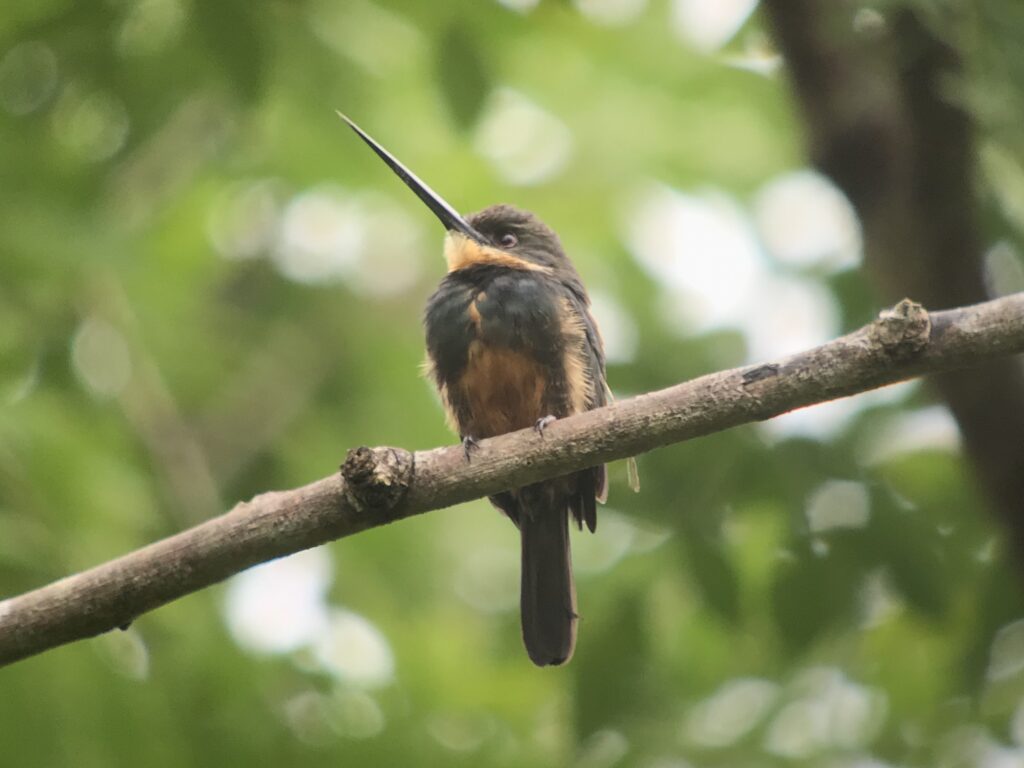
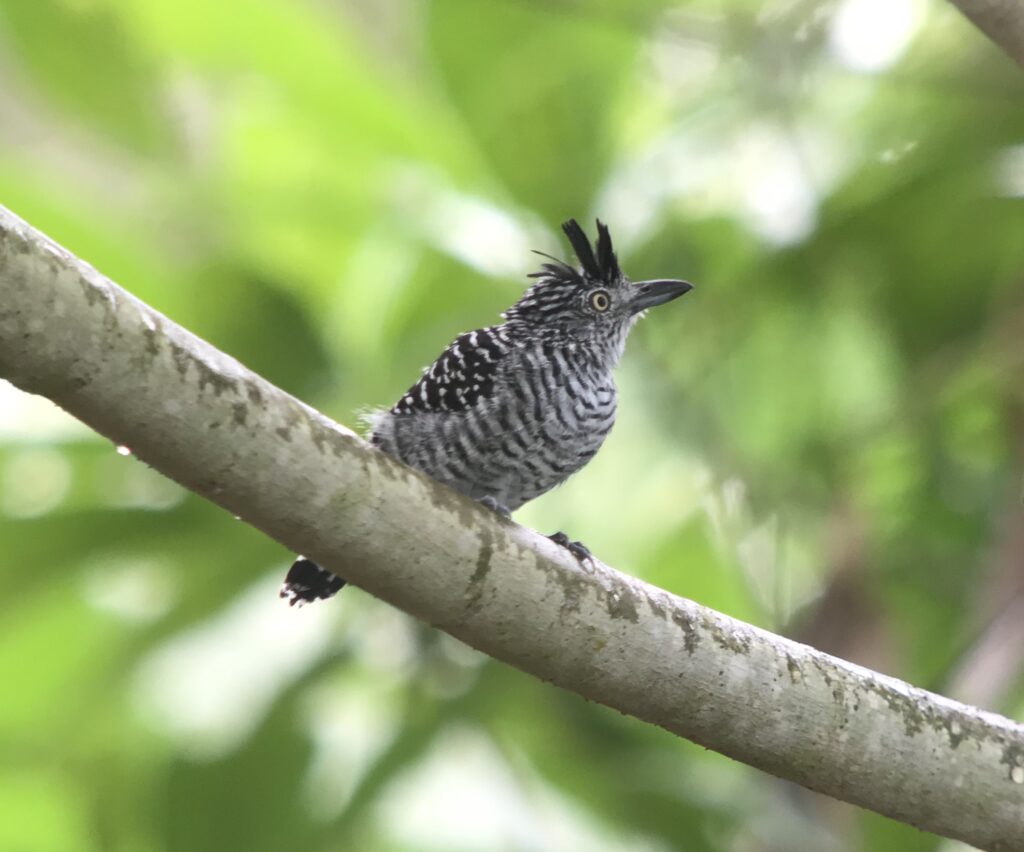
We will meet before sunrise for a hot drink and to enjoy the sounds of the birds. Black-mandibled and Keel-billed toucans call from the towering Cuipo trees; Red-lored and Mealy parrots fly overhead; White-bellied Antbird, Bright-rumped Attila, White-headed Wren and Golden-headed Manakin sing from the surrounding forests; while Pale-bellied Hermit and Sapphire-throated Hummingbird visit the flowers around camp. Rufous-tailed Jacamar and Barred Puffbird are also seen frequently around the campsite. We will be served a hearty breakfast at 7:30 am. After breakfast we will work our way into the forest on “Nando’s Trail,” in hopes of finding Tiny Hawk, Black Antshrike, Great Antshrike, Olive-backed Quail-Dove, Cinnamon Becard, Black-tailed Trogon, Double-banded Graytail, Gray-cheeked Nunlet, Yellow-breasted Flycatcher, Royal Flycatcher and Russet-winged Schiffornis. We will also be looking for groups of Red-throated Caracara, King Vulture and Short-tailed Hawk overhead in the clearings. Ornate Hawk-Eagle, Plumbeous and Zone-tailed hawks are also possible.After lunch we can enjoy the hummingbirds and other species around the camp, dip our feet in the rocky stream or have a siesta. This afternoon we will bird along the road to Las Lagunas. This road extends 12 km south off the Pan-American Highway through open farmland, dry scrub and roadside habitat. The road eventually crosses a small stream and ends at small ponds. Along the roadsides, we hope to find Red-breasted Blackbird, Spot-breasted Woodpecker, Yellow-breasted Flycatcher, White-headed Wren, Smooth-billed and Greater Ani, Muscovy Duck, Rufescent Tiger-Heron, Southern Lapwing, Blue-headed Parrot, Striped Cuckoo, Scaly-breasted Hummingbird, Ringed and Amazon kingfishers, Fork-tailed Flycatcher, Buff-breasted Wren, Bananaquit, Giant and Shiny cowbirds, Crested Oropendola, Laughing Falcon and Aplomado Falcon. If we’re lucky, we may get a glimpse of a Chestnut-fronted Macaw or a shy Little Cuckoo, both having been seen along this road. At the lagoons, we hope to find Pied Water-Tyrant, Capped Heron, the beautiful Yellow-hooded Blackbird and the extraordinary Black-capped Donacobius, a great habitat for all these wonderful species!
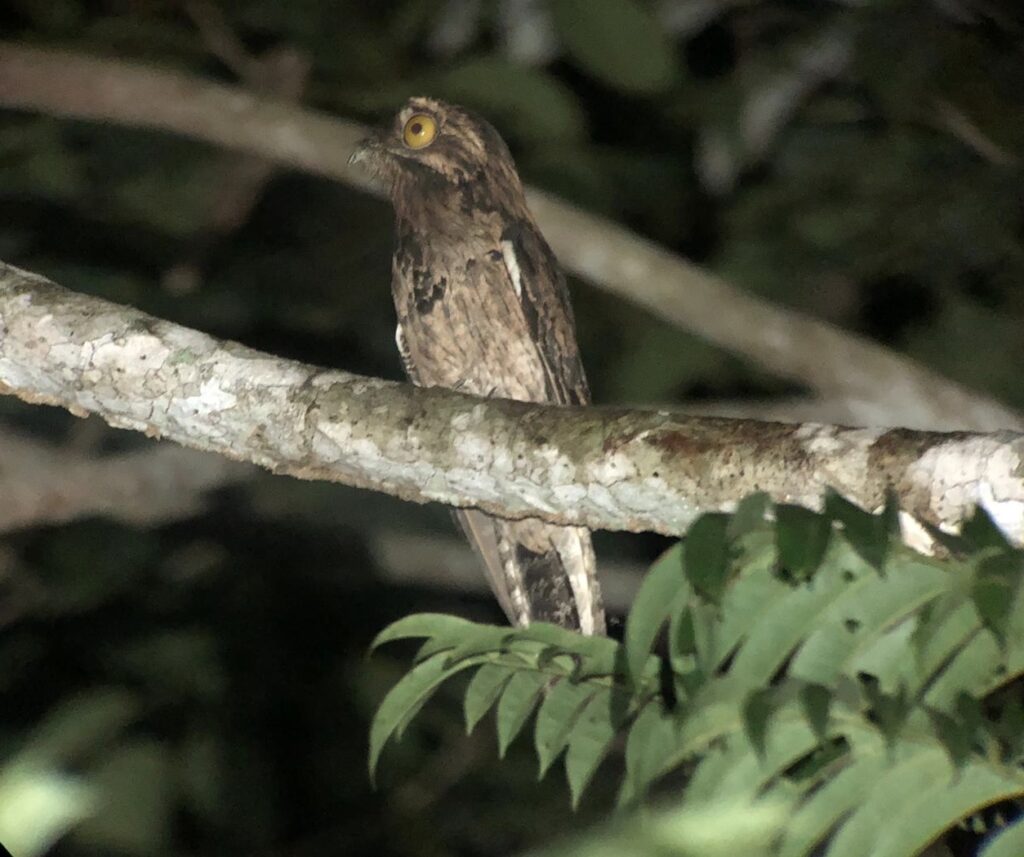
After dinner we will gather to look for owls, including Striped, Crested, Barn, Black-and-white and Mottled owls, as well as Common and Great potoos are sometimes heard around the camp and likely some nocturnal mammals such as Panamanian Night Monkey. We will end the day with our checklist, tallying our sightings for our first full day at the Canopy Camp!
DAY FOUR
Nuevo Vigia
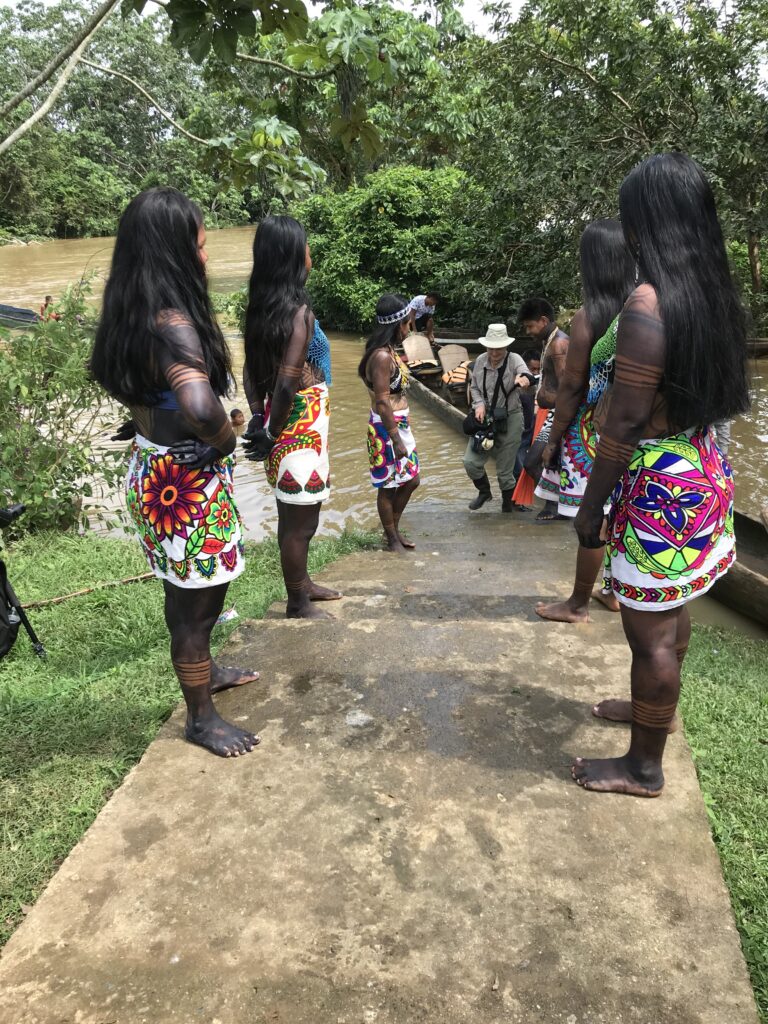
We will awake once again to the energetic dawn chorus of oropendolas, wrens, antbirds, manakins, parrots and toucans, as the sun rises over eastern Panama. After a satisfying breakfast, we will once again leave the Canopy Camp for a morning filled with great birds! This morning we are off to Nuevo Vigia, an Embera village nestled north of the Panamerican Highway, surrounded by great secondary growth dry forest and two small lakes, all of which attract an enticing variety of birds. The village is accessible by “piragua”, locally-made dugout canoes. As we coast along the Chucunaque and Tuquesa Rivers, we will keep our eyes and ears open for Chestnut-backed, Crested and Black oropendolas, Spot-breasted Woodpecker, Common Black Hawk, Yellow-tailed Oriole, Red-billed Scythebill, Capped and Cocoi herons, White Ibis, Greater Ani, Solitary Sandpiper and other water birds. We will spend the majority of the morning birding at the lakes, a great place to see Black-collared Hawk, Bare-crowned and White-bellied antbirds, Green Ibis, Gray-cheeked Nunlet, Spectacled Parrotlet, Black-tailed Trogon, Striped Cuckoo, Black-bellied Wren, Little Tinamou, Golden-green Woodpecker and Green-and-rufous Kingfisher! In the village of Nuevo Vigia, local artisans weave colorful decorative masks and plates out of palm fronds and carve cocobolo wood and tagua nuts into animals and plants, and we will have the opportunity to meet some of the community members and admire (and purchase) some of the beautiful products they make by hand. We will enjoy a satisfying picnic lunch in the village, followed by more great birding around the riversides and scrubby habitat surrounding Nuevo Vigia before heading back to the Canopy Camp.
DAY FIVE
Aligandi
We take an easier day today, inbetween our two long full day excursions. In the morning we travel about forty minutes from the camp to Aligandi, and area of agricultural fields and secondary growth forest where we can look for some Darien specialities. The area is excellent for raptors, and as well as familiar Roadside and Grey-lined Hawks, Bat Falcon and Broad-winged Hawk, we may find Aplomado and Laughing Falcons. Open areas are great for the larger parrots such as Mealy and Red-lored, plus various flycatchers and tyrannulets. Long-tailed Tyrant, Pied Puffbird, Crimson-crested Woodpecker and Blue Ground-dove can also be found here. Once we reach the forested areas, mixed feeding flocks are the target – this is a great place to find Double-banded Greytail and White-eared Conebill, two of Dariens trickier specialities. Black-crowned Tityra, Grey Elaenia, Purple-throated Fruitcrow and the scarce Sooty-headed Tyrannulet might also be found here. After a long lunch break back at the camp, we keep this afternoon flexible to look for any missed species or to visit another area. Alternatively we could stay around the camp as the verbena garden here is very good for hummingbirds in late afternoon – this includes the Ruby-topaz Hummingbird, an extremely rare bird in Panama.
DAY SIX
Harpy Eagle!
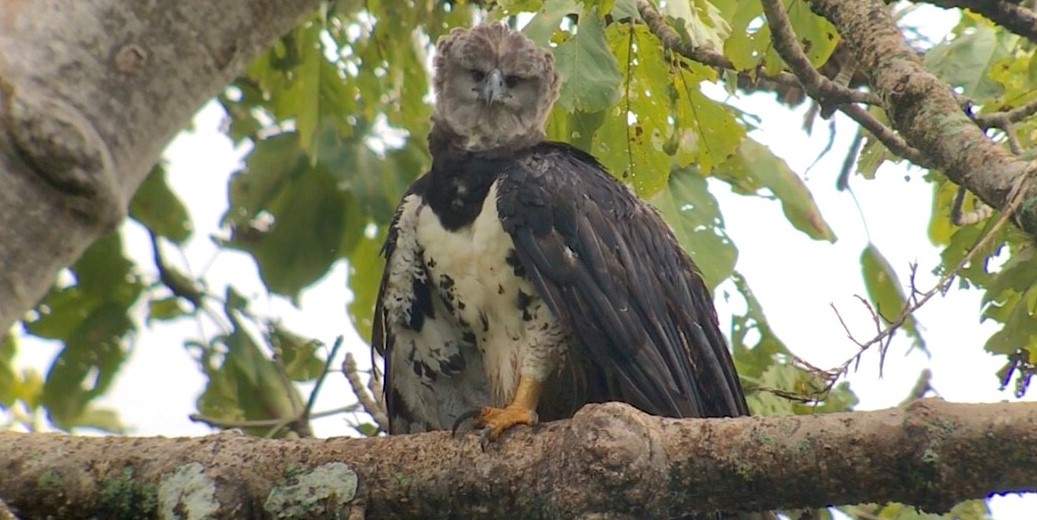
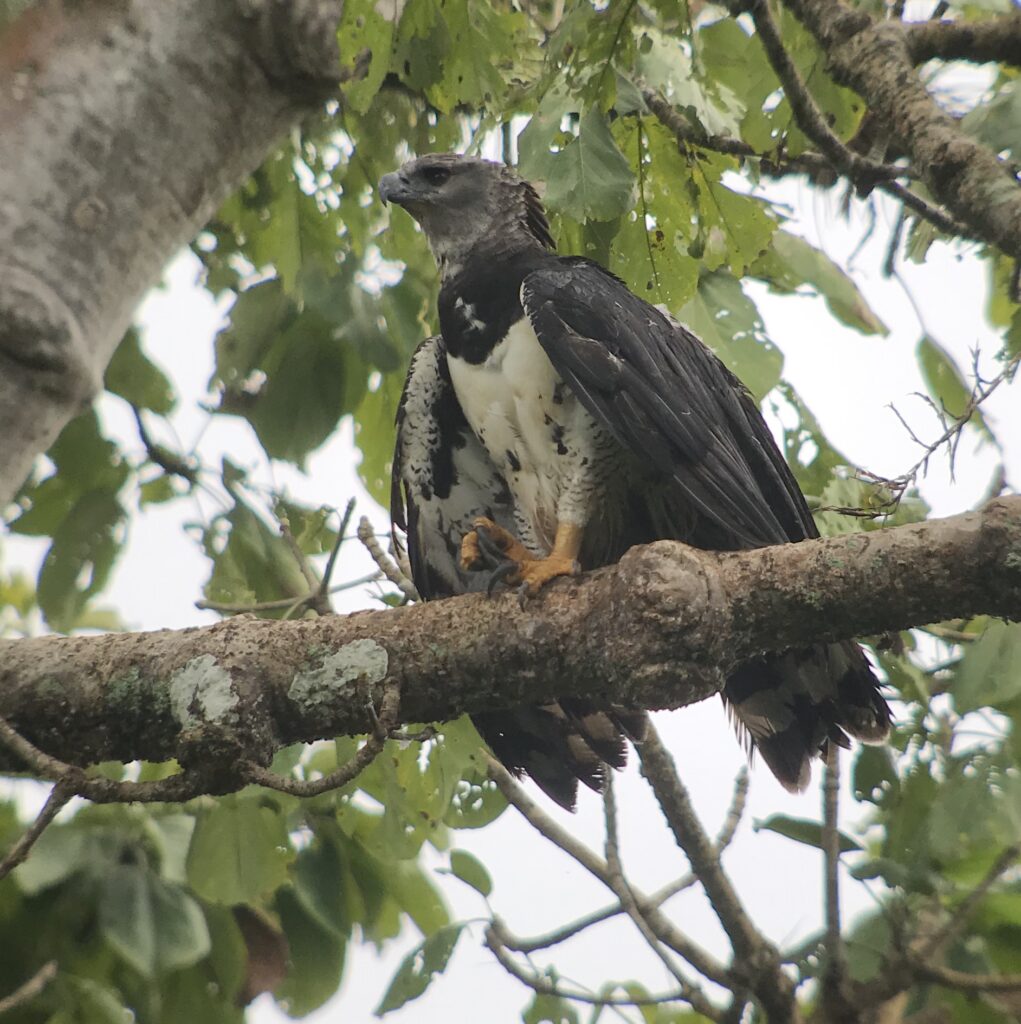
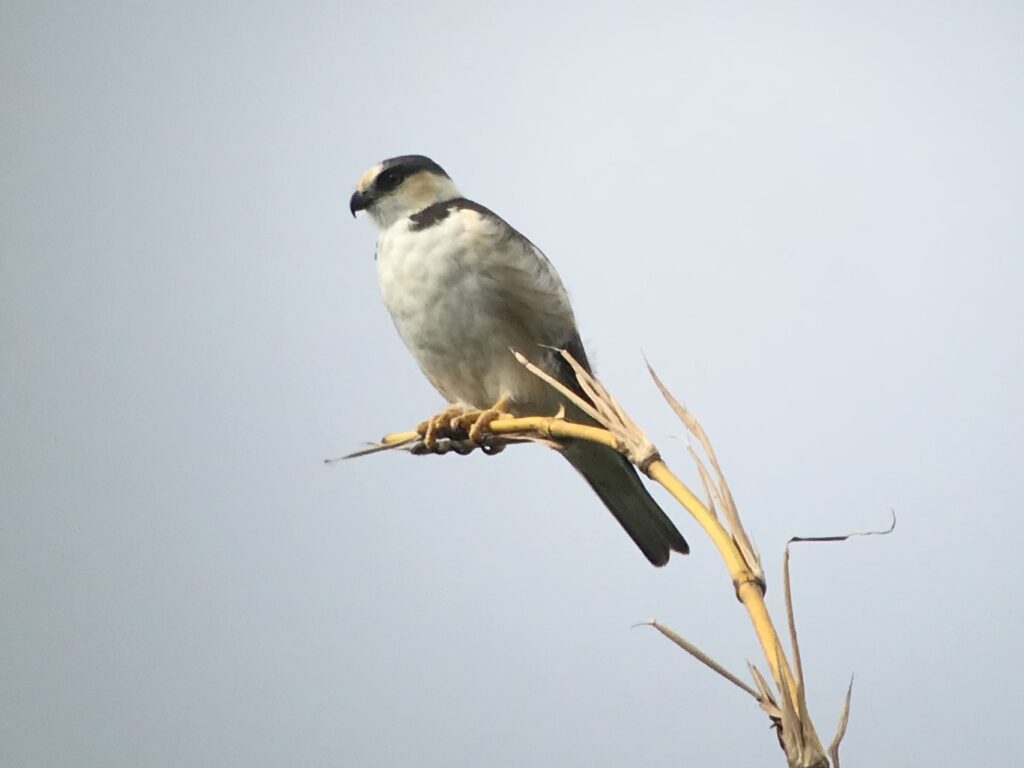
One of the most spectacular birds of fabled Darien is the Harpy Eagle—Panama’s elusive National Bird. Powerful and majestic, Harpy Eagles live in intact dense lowland rainforest, now within the protected borders of Darien National Park. The Harpy Eagle is our target for the day! Today we will start very early, long before sunrise, and drive to Yaviza, at the end of the Pan-American Highway. Arriving at dawn in Yaviza, we will board a “piragua”—a dugout canoe, and traverse the still waters of the Chucunaque and Tuira rivers. The river edges offer shrub and grass habitat, as well as mudflats and beaches depending on the water level. There are plenty of birds to see along the riverside: Neotropic Cormorant, Anhinga, Great Blue, Cocoi, Little Blue, Tricolored, Striated and Capped, Snowy Egret, White Ibis, Green Ibis, Yellow-crowned Night-Heron, Pied Water-Tyrant, Bronzed Cowbird, Yellow-hooded Blackbird and both Crested and Black Oropendolas. White-tailed Kite, Black-collared Hawk and Common Black-Hawk may be found cruising overhead. Many eastern Panama specialties can be seen along the river, including Spectacled Parrotlet, Rufous-tailed and Dusky-backed jacamars, Large-billed Seed-Finch, Black-capped Donacobius and more!
Upon arrival, we can scan the open areas for Spot-breasted Woodpecker and Great Potoo. We are likely to have to make a trek of around one hour through open country and banana plantations, and it could well be wet and muddy underfoot. It is along this trail where we will approach the huge nesting tree where the mighty Harpy Eagle has recently raised a chick. With some luck, we may see an eaglet in the nest or on the tree branches, or even an adult or two nearby. Hopefully with some success this morning, we can rest and have a picnic lunch in the field, and continue to bird along the trail. Other large forest eagles, including Ornate Hawk-Eagle and Crested Eagle, can also be found in the area, as well as Gray-cheeked Nunlet, White-fronted Nunbird, Green-and-rufous Kingfisher, Agami Heron, Red-throated Caracara, Chestnut-backed Antbird (the eastern Panama race shows white dots on the wings), Chestnut-fronted and Great Green macaws, Double-banded Greytail and more. After lunch and a break, we will retrace our steps and start our way back to Yaviza by river. Along the Pan-American Highway, we can scan for bird activity as the sun sets in the horizon. We will plan to arrive back at the Canopy Camp by dinnertime, and reminisce about the fantastic day we had!
*Please note it is hot and humid at El Real and the trails are muddy. Departure will be at 5am. Presence of Harpy Eagle is unpredictable but we will hope for an active nest. The Canopy Camp team are always looking for new nest sites and in the event of one becoming available, we may change the itinerary at short notice to accommodate.
DAY SEVEN
El Salto Road & Tierra Nueva Foundation
El Salto Road extends 6 km north from the Pan-American Highway and ends at the mighty Río Chucunaque. This open road and surrounding dry forest is a great place to search for regional specialties including Golden-green Woodpecker, Double-banded Graytail, Blue-and-gold and Chestnut-fronted macaws, Black and Crested oropendolas, Blue Cotinga, White-eared Conebill, Black-breasted Puffbird, Orange-crowned Oriole and the majestic King Vulture. A trail at the end of the road will take us into low-canopy forest, where we hope to find Bare-crowned Antbird, Pale-bellied Hermit, Olivaceous Piculet, Streak-headed Woodcreeper and Forest Elaenia.
Adjacent to EL Salto Road is the property of the Tierra Nueva Foundation. Fundación Tierra Nueva is a non-profit organization whose main mission is “working towards the sustainable development of people of the Darién Rainforest.” The property is the home of a technical school focusing on applications in agriculture. We will explore the trails of this large, forested property, in hopes of finding Streak-headed Woodcreeper, Yellow-breasted and Black-billed flycatchers, Red-rumped Woodpecker, Slaty-backed Forest-Falcon, Cinnamon, Cinereous and One-colored becards, White-eared Conebill, White-headed Wren and the magnificent Great Curassow. We will also search for the eastern race of the Chestnut-backed Antbird, which shows white spots on the wings.
DAY EIGHT
Return to Panama City
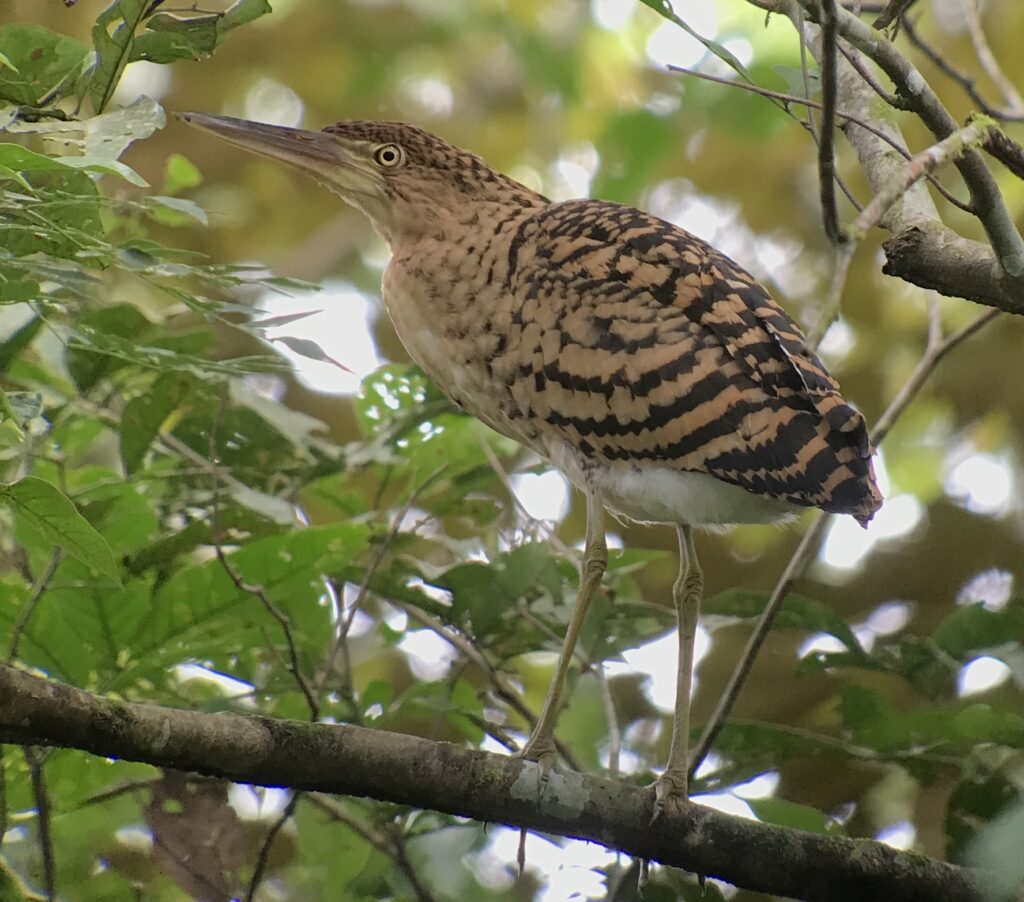
We take a later breakfast today after the weeks exertions and take time to pack our things for the return journey to Panama City. Departing the camp, the drive would take around 3.5hrs if we were to make it in one go. We will make a drinks and comfort stop at Torti, where a small restaurant with hummingbird feeders makes a great venue for watching Blue-throated Goldentail, Long-billed Starthroat, Sapphire-throated Hummingbird and Black-throated Mango. Over lunch, we will stop at the bridge at Lake Bayano, Panama’s second largest lake. This reservoir supports great amounts of water birds, including a large colony of Neotropic Cormorants, as well as Anhinga, Cocoi Heron and the rare Bare-throated Tiger-Heron. We will scan the water’s edge for Purple Gallinule, Pied Water-Tyrant, Smooth-billed Ani and Ruddy-breasted Seedeater. A short trail leading from the water’s edge is a great place to search for Black Antshrike, Bare-crowned Antbird, Rufous-winged Antwren and Golden-collared Manakin. At another great place stop along the way, Río Mono Bridge, the surrounding forest is home to One-colored Becard, Black-headed Tody-Flycatcher, Blue Cotinga, Pied Puffbird, Orange-crowned Oriole, Blue Ground-Dove and more. We will also scan the river below for Green-and-rufous Kingfisher and the elusive Fasciated Tiger-Heron. We aim to arrive back in Panama City at 1600 for our evening flight back to the UK.
DAY NINE
Arriving back at Amsterdam Schipol airport this morning, we will say our goodbyes as everyone catches their onward connection back to the relevant UK airport.
*Please note that the Canopy Camp itinerary is constantly evolving as the team discover new and better sites to see some of the birds. Don’t be surprised if we visit one or two different spots to those listed, but rest assuredd this is always with the aim of providing the best itinerary we can*