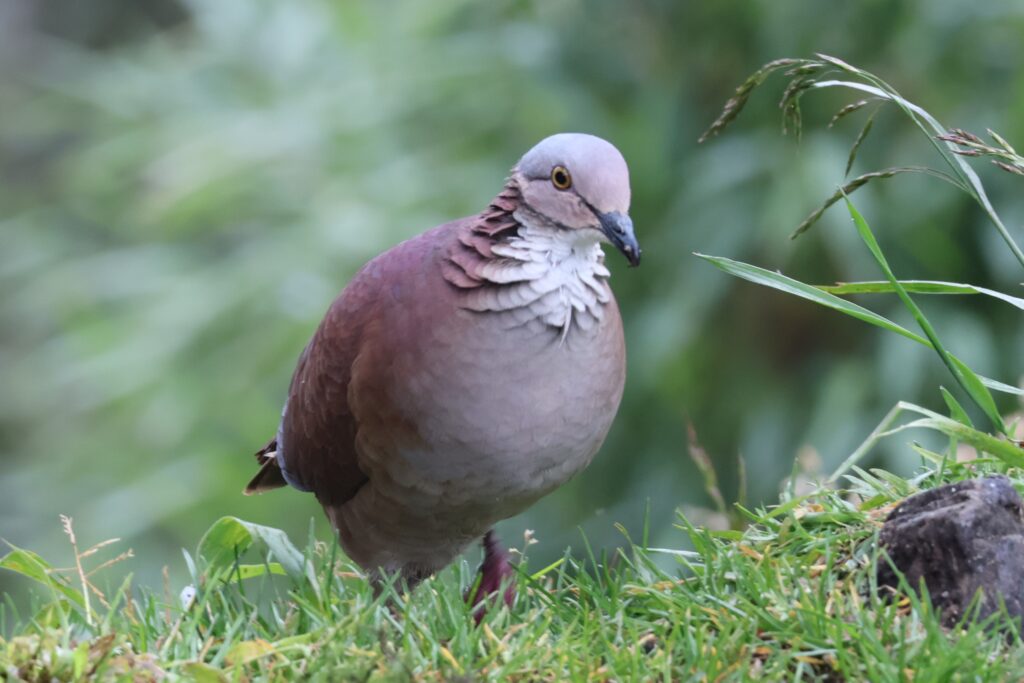
Colombia is one of the premier birding destinations in the World, with a species list of almost 2000 it is unmatched by any other country. Positioned at the gateway to Central America, but with influences of the Amazon and Andes in its southern quarters, this is a large country and of course too big to cover it all in one tour! Following our inaugural tour in 2025, this itinerary combines some of the premier locations together in one blockbuster trip as we head into the Montezuma region and end in the Santa Marta range which hosts a crop of range-restricted endemics. Especially for those of you who have already cut your Neotropical birding teeth in the Central American countries of Panama and Costa Rica, Colombia represents the logical next step, with many species and families you will already be familiar with, supplemented by a true South American influence to the avifauna and of course some highly desirable endemics. From Bogota, we take an internal flight west to Pereira and concentrate on the Otun Quimbaya area before continuing to the fantastic Rio Blanco reserve. Here a number of antpitta feeding stations should add some exciting photographic opportunities as we get close to secretive species other wise normally hidden from view on the depths of the forest.
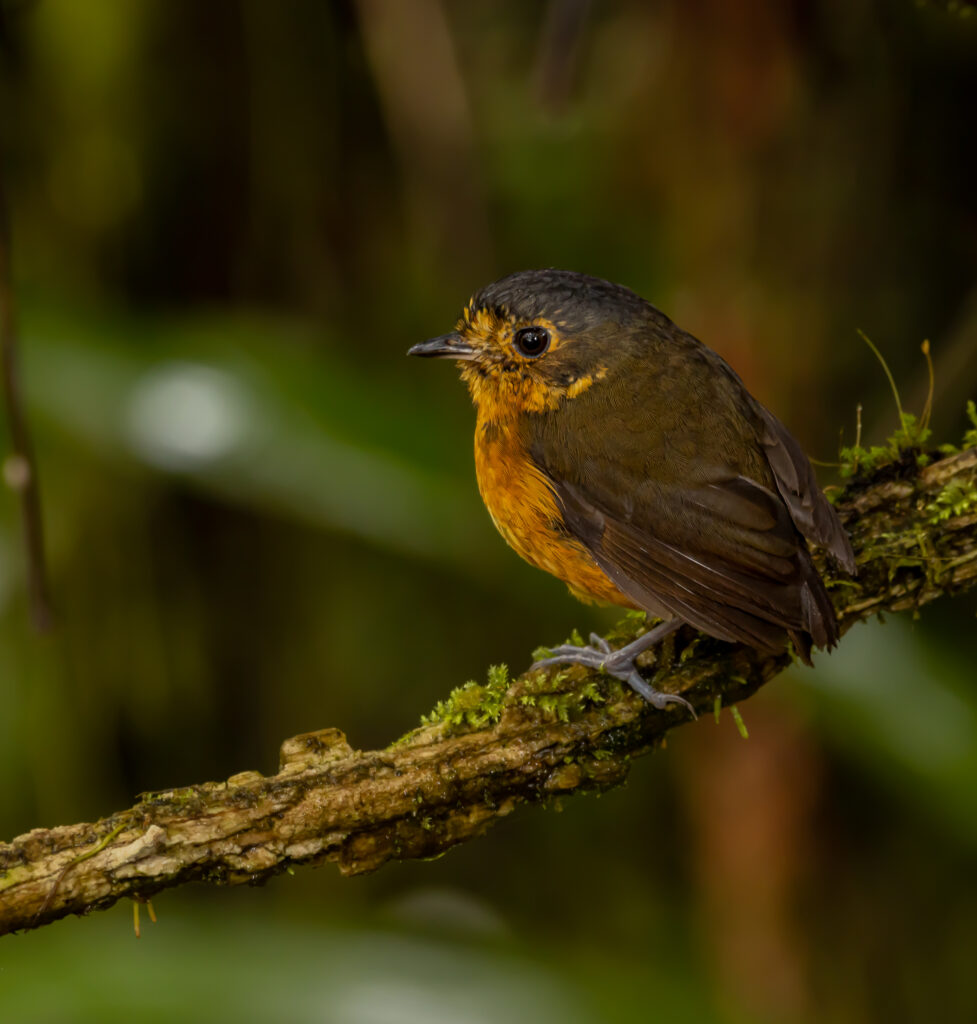
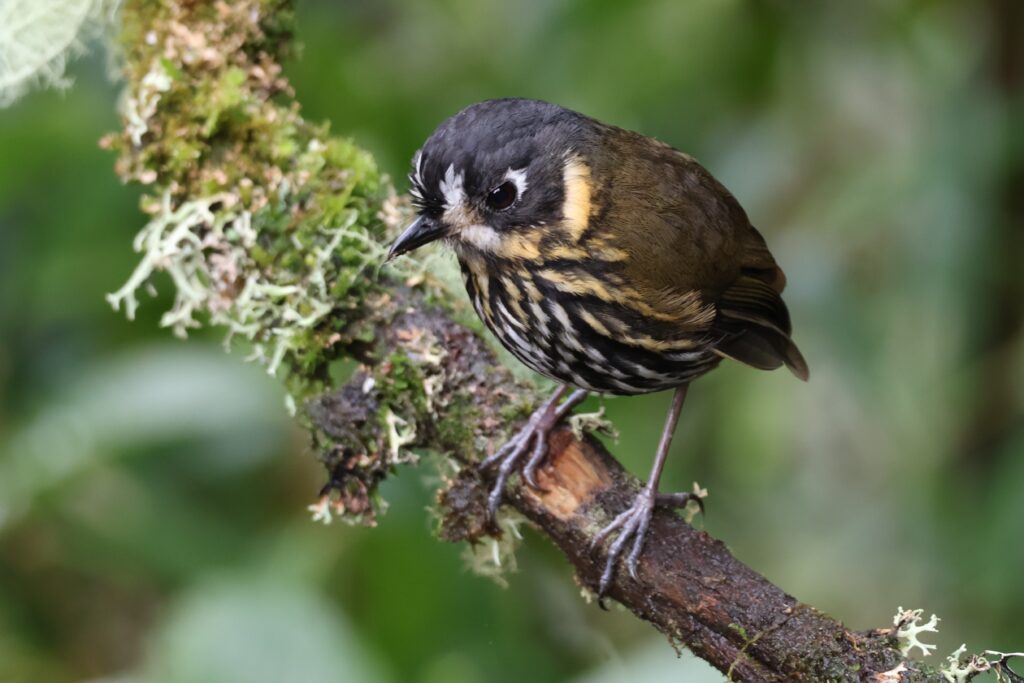
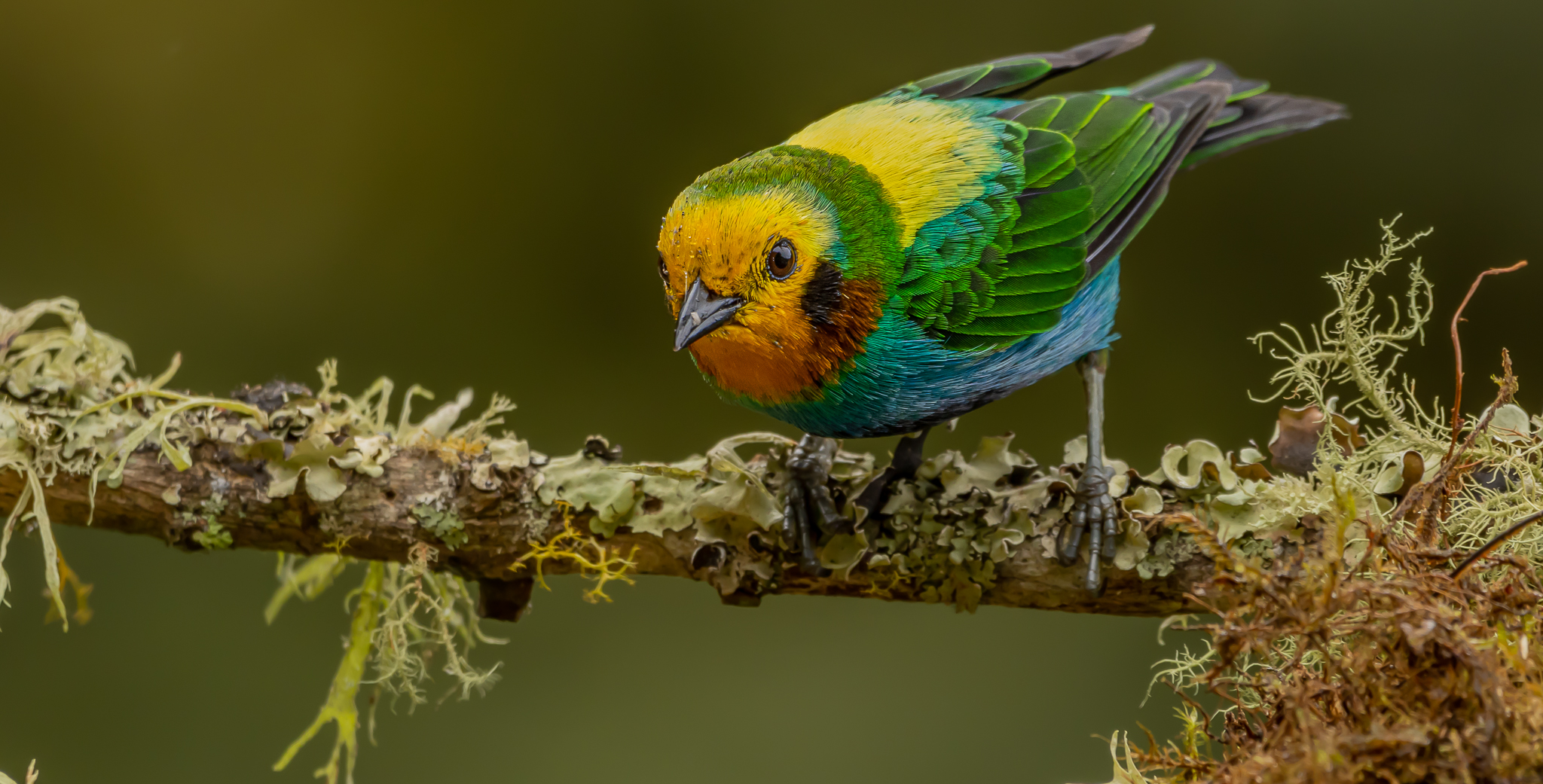
Hacienda del Bosque reserve brings chances for Crescent-faced Antpitta and Equatorial Antpitta, before we continue to Montezuma for a three-night stay. This rather basic lodge is one of those ‘must-stay’ birding lodges as it is in a prime region for Choco-Pacific endemics with access close to hand to the national park. The lodge feeders attract such gems as Rufous-gaped Hillstar and Empress Brilliant while the recently described nocturnal Olinguito sometimes visits after dark. Days are spent birding the nearby Tatama National Park and surrounds to 2500m elevation, with Munchique Wood-wren (only formally described in 2003), Purplish-mantled and Gold-ringed Tanagers and Choco Tapaculo among the highlights. Before our return to Bogota, we have yet more excitement as we birdwatch close to the fabled ‘KM 18’ road at 2000m in the western Andes – here a ‘tanager-fest’ should include the highly-prized endemic Multi-coloured Tanager, among others.
After a flight north to the Caribbean coast, we transfer on to the back-packers town of Minca for an overnight (complete with Military Macaws) before ascending into the Santa Marta range for our trip finale. The coastal sierras of Santa Marta are totally isolated from the main Andes chain and as such have developed a high level of endemism for such a relatively small and relatively recently discovered area. We aim to see all the accessible specialities based out of the legendary El Dorado lodge including an exhilarating early-morning 4×4 ascent to the fabled San Lorenzo Ridge for the super-rare Santa Marta Parakeet. We then wrap things up by descending to the coast and the Riohacha area where we search for lowland dry forest endemics including the spectacular Vermillion Cardinal.
Here at Oriole Birding we pride ourselves in the specialism we have developed in delivering top quality birding tours to the Neotropics, guided by leaders who have a wealth of experience of guiding trips in the region. We use the best local guides that enjoy working with our ethos, of enjoying spectacular birding without trying to pack too much into rushed itineraries. Our group size is 8, a maximum number which is absolutely essential to maintain the high standards of customer care on these tours and to make sure everyone has the best chance to see all available species on narrow forest trails. This simply cannot be achieved with larger groups. Working with our partners on the ground, Neblina Forest, you can be sure that Oriole will once again deliver you a first class experience for your birding trip to Colombia. Ashley Saunders will lead this tour alongside a local guide, and you can expect to see around 450 species, and a high proportion of endemics.
DAY ONE
Fly London to Bogota with KLM/Air France (with local airport departures available from various UK airports) arriving at 2200. Transfer to hotel in Bogota.
DAY TWO
This morning we return to the airport to take an internal flight west to Pereira. On arrival we then have around an hours drive on to Otun Quimbaya reserve where we spend the rest of the afternoon birding. Some of the speciality birds of the area such include Torrent Duck, Red-ruffed Fruitcrow, Andean Motmot, Western Emerald and Cuaca Guan. Overnight Pereira.
DAY THREE
Spanning the Otun river basin, the reserve protects some superb forest areas and this morning we will get stuck in to birding here and hoping to find some of those roving, species-rich mixed flocks for which Neotropical birding is so fabled. The excitement of picking off literally tens of species at a time can be quite mind-blowing at times! Stile’s Tapaculo occurs here, and we will also have our first chance for the endemic Multicoloured Tanager. Sickle-winged Guan, Rufous-breasted Flycatcher, White-capped Dipper, White-throated Daggerbill and a variety of tanagers and flycatchers can also be expected. We might also find Bar-crested Antshrike, Blackish Rail and a selection of common species of open habitats such as Rusty-margined Flycatcher and various saltators as we then depart and bird our way north to Montezuma. This trip will take several hours as we make numerous short birding stops along the way. The final leg of the journey to the lodge will be by 4×4, and while this will be our most basic accommodation of the trip (but clean and hospitable with great food!) it will surely be a highlight. Nestled in the Reserva Natural Cerro Montezuma, the lodge has some great birding (including hummingbird feeders) of it’s own but also gives us access to the park to be close to the best birding spots over the next couple of days. Overnight Montezuma Lodge.
DAYS FOUR & FIVE
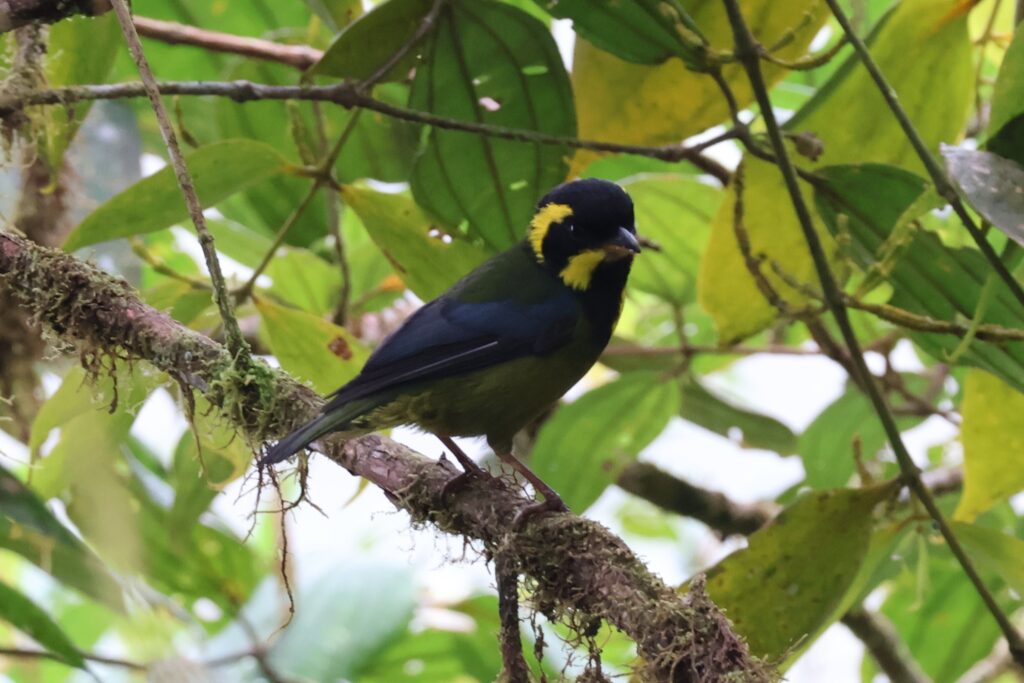
The first of two full days birding in this Choco-Pacific region will find us in an endemic rich, wet forest at elevations up to 2500m. We will use 4×4 vehicles to negotiate the bumpy tracks and roads and aim to be at the top of one such road first thing today, with breakfast taken with us in order to enjoy the best of the early morning weather and views across the spectacular Cerro Tatama – as well as the peak of bird activity. Munchique Wood-wren and Chestnut-bellied Flowerpiercer are two top endemic targets, but it may well be the ‘tanager-fest’ that steals the show here, headlined by the endemic Golden-ringed Tanager. Most of the birding will be sifting through mixed feeding flocks, and with two full days here we can really take our time and make sure that we see as many of the top target birds well as we can. Our second day will target more tanagers – Purplish-mantled, Glistening-green, Grass-green, Blue-winged and Black-chinned Mountain-tanagers – plus there will be chances for some quality birds like Choco Tapaculo, Choco Warbler, and Black Solitaire. Both days will more or less be spent along the same rough road, birding at different elevations where new exciting species come into play as we change altitude. Ochre-breasted Antpitta, Ocellated Tapaculo, Tanager Finch, Bicoloured Antvireo, Narina Tapaculo and Blackish Rail are a couple of really good birds that we might also find during our time here. Overnights Montezuma Lodge.
DAY SIX
We will have a final morning of birding at Montezuma today to catch up on any missed species – this area is highly prone to heavy rainfall so we will need some flexibility in case we lose a half day somewhere along the line. After lunch we depart towards the Manizales area where we will be staying at the excellent Recinto del Pensamiento. There is good birding to be had right around the hotel grounds but the main reason for visiting this area is to visit some antpitta feeding sites and to try for the endemic Buffy Helmetcrest. Overnight Recinto del Pensamiento.
DAY SEVEN
Today we visit an area bordering the volcano of Nevada del Ruiz. A day targeting quality rather than quantity and birding up around 4000m altitude will see us go first and foremost for the Buffy Helmetcrest. Andean Duck, Tawny Antpitta, Grass Wren, Plumbeous Sierra-Finch and Buff-necked Ibis are just some of the other species we might find. We visit a hotel and thermal baths, where their beautifully planted gardens attract a range of hummingbirds – Great Sapphirewing, Rainbow-bearded Thornbill, Shining Sunbeam and Black-thighed Puffleg are all possible. Overnight Recinto del Pensamiento.
DAY EIGHT
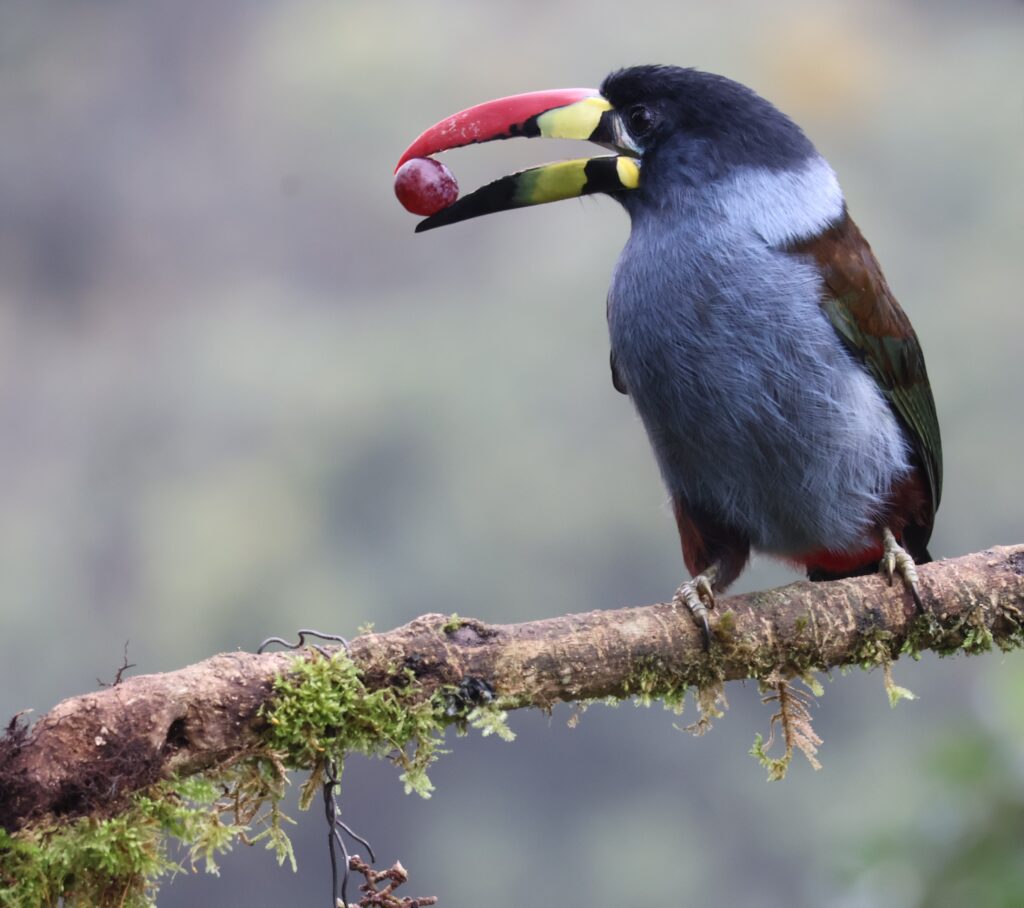
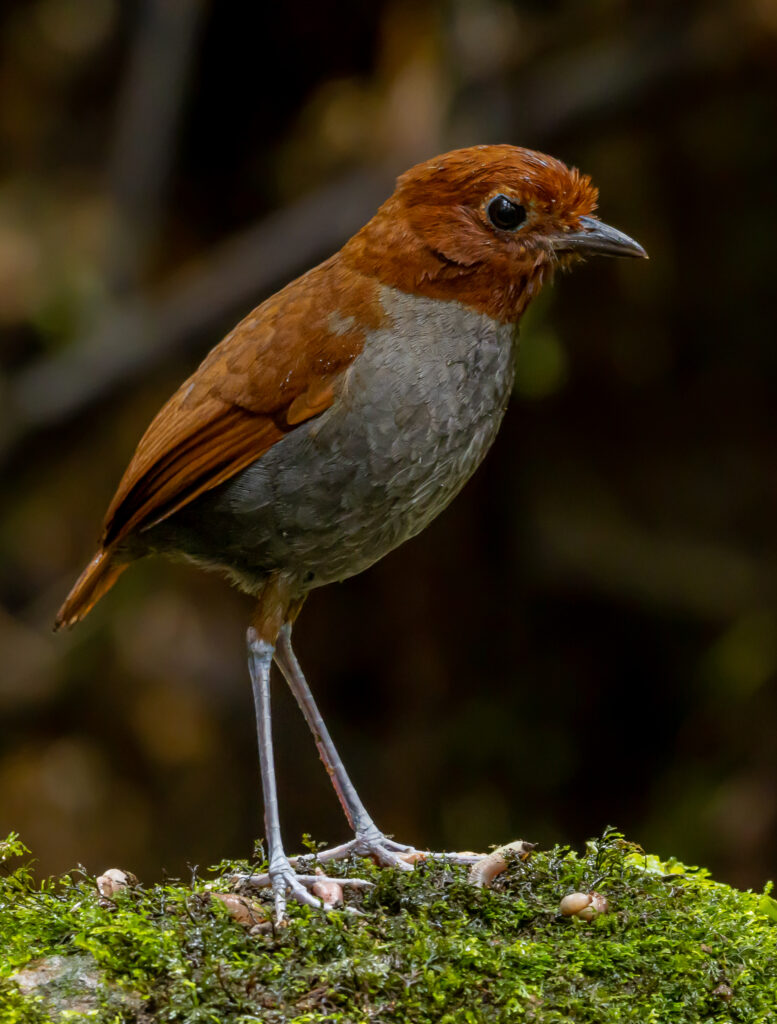
An exciting morning on the cards today as we visit the fabulous Rio Blanco reserve and to try and target some of its antpittas which can be seen at close quarters at a series of feeding sites operated by one of the park rangers. Chestnut-crowned, Brown-banded, Slate-crowned and Bicoloured Antpittas are all possibilities. Golden-fronted Whitestart is an endemic that we hope to find here and Hooded Antpitta can sometimes be found in the forest away from the feeding sites too. The intriguing Plushcap, and tricky Dusky Piha, Ash-coloured Tapaculo and Green and Black Fruiteater are also possible and for Dipper-lovers, the river holds White-capped Dipper too. The list of top birds goes on and on at Rio Blanco and we might also be lucky to see Ocellated Tapaculo (what a bird!), Golden-plumed Parakeet, Red-hooded Tanager and Masked Saltator here as well. Hummingbird feeders attract a huge range of species and among the common ones we will be hoping to pick out a Tormaline Sunangel, White-bellied Woodstar and Fawn-breasted Brilliant. In the afternoon we move on to the small private finca and reserve at Hacienda el Bosque. We should have time to spend at the feeding station – Grey-breasted Mountain-Toucan is another shy forest-dweller that is most often seen at specific feeding stations such as this and here they like a tasty snack of grapes! Hummingbirds and flowerpiercers, fruiteaters and mountain-tanagers will be some of the other groups we can enjoy at this excellent reserve, and this is also one of a couple of places in the itinerary where we might see the spectacular Sword-billed Hummingbird. Overnight Hacienda del Bosque.
DAY EIGHT
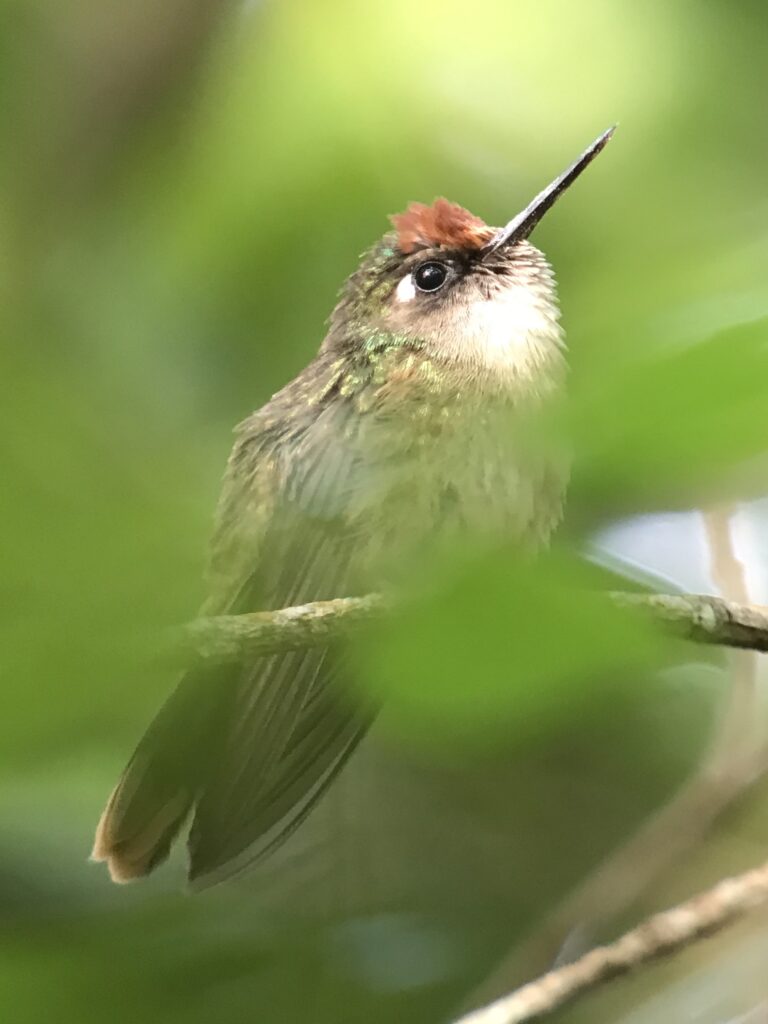
Adding to our Antpitta theme, there are some more excellent feeding sites here at Hacienda del Bosque where we have chances for two more absolute crackers – Crescent-faced and Equatorial Antpittas. We rise early to try two of the feeding sites at first light – but its not just antpittas on offer as there are likely to be several other brilliant photographic opportunities with various wrens, spinetails and Chat-tyrants! After the early morning antpitta safari, we enjoy a hearty breakfast and probably have a bit more time to spend at the feeders before we set off on the long drive south to Cali. Our final destination will be in the hills to the North-west, but of course there will be a few birding stops along the route. More widespread Neotropical birds such as Red-headed Barbet, Flame-rumped Tanager, Sparkling Violet-ear and Andean Motmot might be seen en route. Purple-throated Woodstar, Booted Racket-tail, White-necked Jacobin and Speckled Hummingbird might welcome us at the small private lodge of La Florida on arrival – we are not staying here but visiting late afternoon to try for the Multicoloured Tanager, which visits the feeders. We will stake it out over a welcome cup of coffee before heading to their hide to try for Chestnut Wood Quail and Little Tinamou. We then transfer to our delightful accommodation nearby. Overnight Finca La Lolita.
DAY TEN
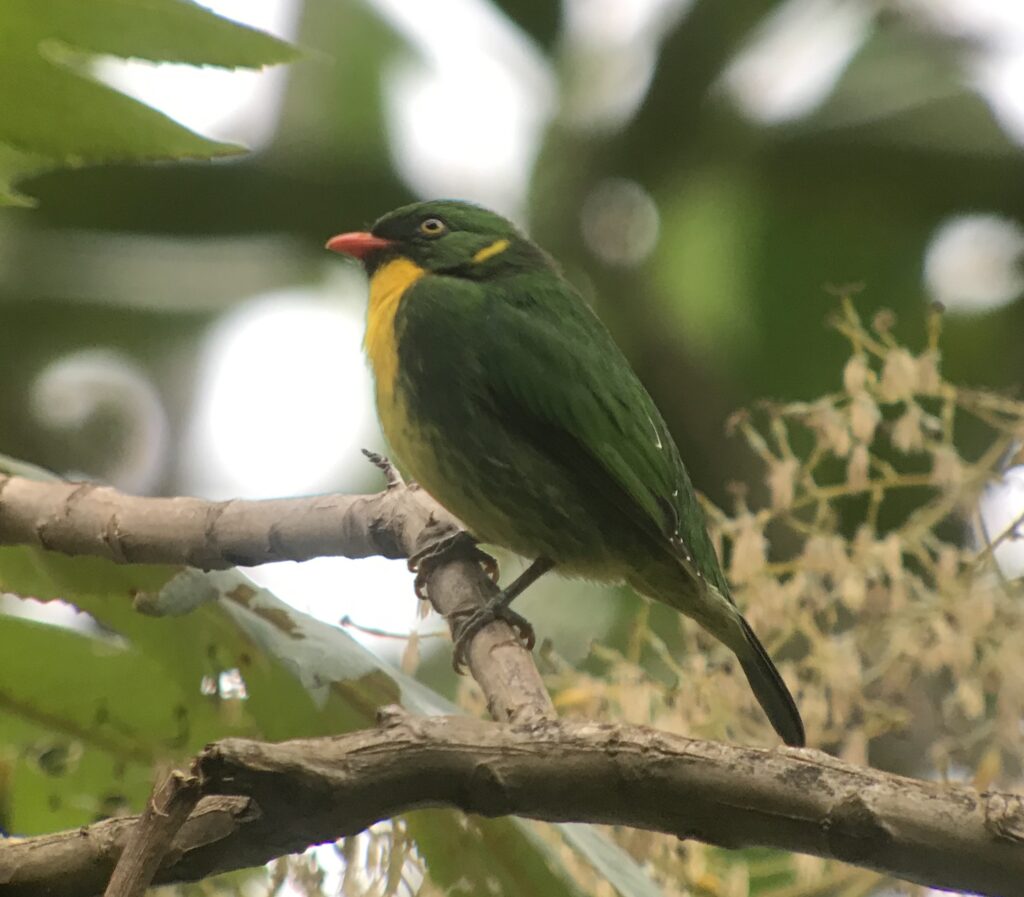
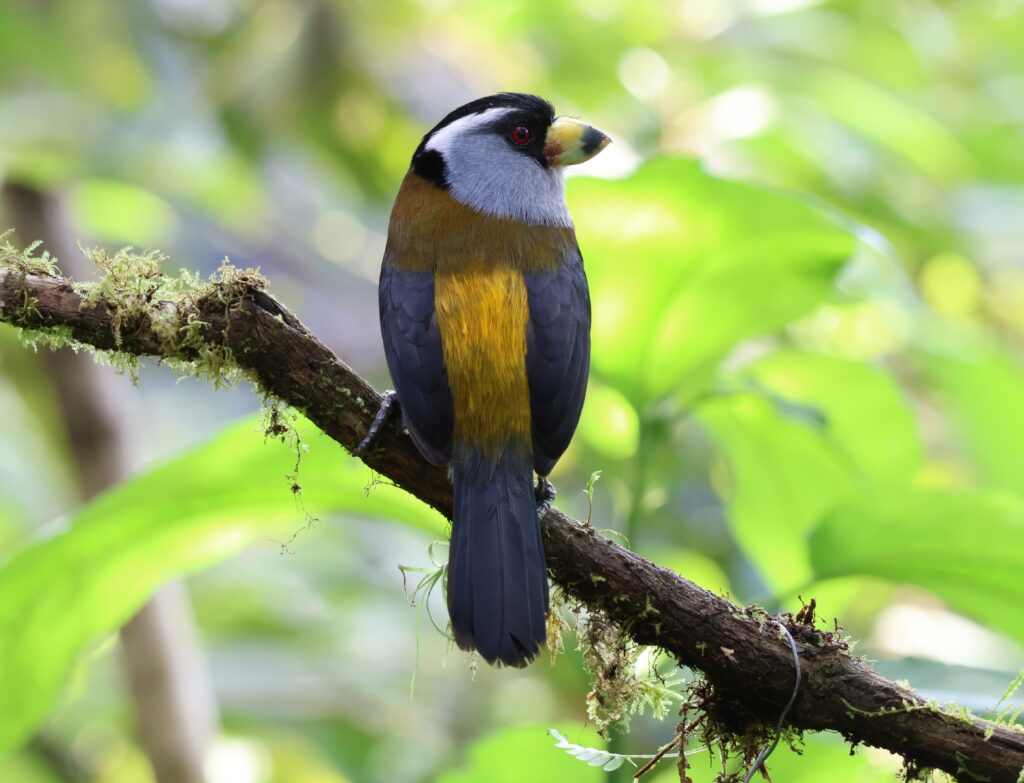
We are visiting a few fabled Neotropical birding locations on this tour, perhaps none more so than the area around ‘KM 18’, situated on the old Buenaventura road at around 2000m in the Western Andes. We will start with an early morning visit to an Andean Cock-of-the-Rock lek where the birds display just a couple of feet away outside the blind. Multicoloured Tanager, a prized endemic, will be the headline act (if we haven’t already seen it!) but there are many, many other tanagers here too including some show-stoppers like Metallic-green, Beryl-spangled, Golden-naped, Saffron-crowned and Bay-headed Tanagers. We have chances to add to our antpitta tally too and we could get to 7 or 8 species for the trip if either of the local feeding sites produce Moustached Antpitta for us. The wet forest is great for furnarids which love to feed among the mossy branches of the trees – Streak-capped Treehunter, Montane Woodcreeper, Spotted Barbtail and Pearled Treerunner are all here. There is so much to see here and we will not really want to tear ourselves away. Golden-headed Quetzal, Scarlet-fronted Parakeet, Uniform Antshrike, Marble-faced Bristle-tyrant, Colombian Chachalaca, Narina Tapaculo and Andean Emerald just continue to add yet more quality to the quantity already assembled! This area used to be one of the off-limits regions for birders until the beginning of the last decade, since when it has opened up some wonderful birding opportunities along the fairly quiet old Buenaventura road. Some target birds will include Rose-faced Parrot, Purple-crowned Fairy, Lemon-browed Flycatcher, Golden-chested Tanager, Scarlet and White Tanager and the sought-after Toucan Barbet, a really striking looking miniature toucan! Overnight Finca La Lolita.
DAY ELEVEN
Today we upsticks and move on to the Caribbean coast in the north-east of the country. The exact time of our internal flight from Cali up to Riohachca will dictate how much birding we can do and where this morning. The flight will land us on the Caribbean, and a totally different environment – coastal saline lagoons and dry forest scrub. It will be hot here, but the birding can be truly superb. We will likely spend the afternoon at the lagoons of Los Flamencos National Park. Scarlet Ibis and Roseate Spoonbill add splashes of colour while most of the regular American herons will also be present. Greater and Lesser Yellowlegs, Spotted Sandpiper, Brown Pelican, Magnificent Frigatebird, and a variety of other waterbirds can also be expected. We stay overnight at Hotel Oma right on the edge of the park, ready to return early tomorrow.
DAY TWELVE
The dry forest scrub will be the order of the day today. Small watering holes among the acacia scrub should give us the chance to see good birds right away: Pearly-vented Tody-tyrant, Slender-billed Inezia and Pied Water-tyrant for example. Using the calls of the Ferruginous Pygmy-owl, a surefire trick in this habitat to draw in all manner of small birds, we may be bombarded with an incredible array which may include White-whiskered Spinetail, Pale-legged Hornero, Buffy Hummingbird, Blackpoll Warbler, Black-crested Antshrike and Orinoco Saltator. Grey Kingbird replaces Tropical in this habitat and will be really common, and both Scaled Dove and Greyish Saltator should be frequent. The top target bird in this habitat though is also the most spectacular – Vermillion Cardinal! We will dedicate as much time as possible to getting good views of this amazing bird. Ruby-Topaz Hummingbird also occurs and may be seen dancing around the flowering acacia – this really is quite a place!
Continuing through the scrub to a small indigenous settlement, we will seek White-whiskered Spinetail and Pale-legged Hornero, while Northern Scrub Flycatcher, Brown-crested Flycatcher, Straight-billed Woodcreeper, Black-faced Grassquit and the stunning Vermillion Flycatcher might be seen. Russet-throated Puffbird and the gorgeous endemic Chestnut Piculet will hopefully all be added before we move on.
As the day warms up, we return to the lagoons for some more waterbirds. Often hundreds of Black Skimmers and Royal Terns can be seen, plus Black-necked Stilts and Blue-winged Teals. Laughing Gulls, Brown Pelican, Gull-billed Tern, Semipalmated and Western Sandpipers may be on show and Green-rumped Parrotlet should be a lovely addition in the surrounding trees. We have lunch back at a local restaurant, and then head back into the scrub for one last go.
Perhaps this time we will be able to coax the Ferruginous Pygmy-Owl itself into view, and with it another variety of small birds. White-fringed Antwren, the stunning Black-crested Antshrike, Tropical Gnatcatchers and Tropical Mockingbird for example. Now we must depart, as we have a long drive to complete in the heat of the afternoon as we head all the way up into the mountains of Santa Marta above Minca – a journey which is likely to take at least four hours. This road is in a poor state, and progress is slow and only possible with 4×4. We will travel in a convoy of three vehicles and bird our way up the mountain making stops for short walks if time allows. Overnight Mountain Lodge.
DAY THIRTEEN
This morning we have to start very early, at 4am, in order to make the very rough and bumpy journey up the mountain track to the fabled San Lorenzo ridge, which affords access to the remaining Santa Marta endemics which are available for us on this tour. A dawn arrival is essential to give the best chance of one of the most difficult of these species – the Santa Marta Parakeet. They occasionally stop in the trees on the ridge as they leave their roost at dawn, but then disperse into the mountains for the day. In the paramo habitat on the ridge, we could see Santa Marta Warbler, Rusty-headed and Streak-capped Spinetails, Santa Marta Mountain-tanager, and the Santa Marta subspecies of Grey-breasted Wood-wren. The Santa Marta Bush-tyrant is also present but extremely difficult to see, mainly because it tends to be down the slope below and the dense vegetation means there is no reasonable view. Other species on the ridge could include White-sided Flowerpiercer, Santa Marta Brush-finch, Great Thrush and Scaly-naped Parrot. After breakfast here, we start walking back along the track trying for more endemics. The Santa Marta Toucanet, Santa Marta Antpitta, Black-backed Thornbill and Tyrian Metaltail are all possibilities here. Mixed flocks can produce Montane Woodcreeper, White-throated Tyrannulet, Blue-capped Tanager and Golden-breasted Fruiteater too. The time will fly by, and very soon we will have to make our way back down the bumpy road to the lodge for a very welcome lunch. Afterwards, there will be downtime to rest of enjoy the hummingbird feeders. A great selection comes in here including the Santa Marta Blossomcrown – and we saw the enigmatic and little-known Santa Marta Sabrewing here in 2025!! The valley is brilliant for raptors too – look out for Solitary Eagle, Bat Falcon, Plumbeous Kite and Black and Chestnut Eagle. Overnight Mountain Lodge.
DAY FOURTEEN
Mountain Lodge is a fantastic place to wake up and be surrounded by the sounds of the cloud forest! Sickle-winged and Band-tailed Guans and even Lined Quail-Dove come in to the feeders. After a more leisurely start, our morning excursion takes us back uphill, to a spot where we hope to have a chance for the elusive Rusty-breasted Antpitta. We also have the morning to bird the forest here and catch up with any key species we may have missed yesterday. After lunch back at the lodge, we will take one of the reserve trails in the afternoon to look for more key regional specialities. The hummingbird feeders are also a great place to enjoy a variety of new species as the gardens are buzzing with Green and Sparkling Violet-ears, Crowned Woodnymph and if we are lucky, the endemic White-tailed Starfrontlet. Two endemic finches can also be seen – Sierra Nevada Brushfinch, and Santa Marta Brushfinch, and occasionally the gardens are visited by Black-fronted Wood-quail. Mixed flocks contain both Black-capped and Blue-capped Tanagers, Slate-throated Redstart and maybe a Golden-breasted Grosbeak. It is also much cooler here in the cloud forest, and the trees are festooned with mosses, bromeliads and vines – it really is quite a fabulous place! We will also enjoy good food and hospitality at the well equipped lodge, which offers comfortable accommodation yet access to the remotest of locations. Perhaps the recently described Santa Marta Screech Owl will be our last highlight of the day. Overnight Mountain Lodge.
DAY FIFTEEN
This morning we depart Santa Marta and make our way down the mountain towards Minca, stopping to look for any missing species on the way especially the Rusty-breasted Antpitta, White-lored Warbler, Swallow Tanager, Cinammon Flycatcher, Yellow-billed Toucanet, Santa Marta Tapaculo, Blue-naped Chlorophonia, Santa Marta Antbird and the endemic bangsi subspecies of Grey-breasted Wood-wren. There will be further chances to stop at flowering bushes in the small village on the way down to try again for Santa Marta Woodstar and maybe pick up a Blossomcrown or Coppery Emerald.
The road down to Minca gives access to good quality forest, and if we are missing any other Santa Marta specialities – such as Golden-winged Sparrow, Scaled Piculet and Santa Marta Foliage-gleaner – we will endeavour to try for them again. Mixed groups of tanagers include Bay-headed, White-lined and Summer, while Buff-throated and Streaked Saltators are common. A wide selection of flycatchers can often boggle the mind, particularly those in genus myiarchus – we may see Dusky-capped, Great-crested and Brown-crested. Smaller tyrant-flycatchers could include Pale-eyed Pygmy-tyrant and Southern Bentbill. Gartered Trogon and Whooping Motmot are two of the larger insectivores to look out for, and at the other end of the scale skulkers among the tangled vines of the understorey can include Rufous-breasted and Rufous and White Wrens. The area holds plenty of raptor potential too – Black Hawk-eagle, King Vulture and Short-tailed Hawk could all appear overhead. On arrival at the lodge we can take some time to enjoy some new hummingbirds at the feeders, such as Black-throated Mango and White-vented Plumeleteer. Overnight La Casona Minca.
DAY SIXTEEN
This morning we head to a nearby location to watch Military Macaws leaving their overnight roosting place. Numbers vary a lot from year to year but we hope to find at least a few squawking overhead as they depart for the days foraging. The secondary growth forest along the track here is also good for the range-restricted Black-backed Antshrike, and we will hopefully get stuck into our first mixed feeding flocks containing North American migrants such as Tennessee Warbler, Red-eyed Vireo, American Redstart and Rose-breasted Grosbeak. Depending on the timing of the return flight, we may have lunch at the lodge before descending down to Santa Marta from where we will take a flight down to Bogota. In the evening, we depart for the UK.
DAY SEVENTEEN
Arrive back in London early afternoon where the tour will conclude.
WHAT’S INCLUDED
Return flights London/Bogota, internal flights Bogota/Pereira and Cali/Santa Marta, fourteen nights accommodation all en suite, guidance and transport in Colombia, bottled water, all meals from in-flight on day one to in-flight on day seventeen, pre-tour pack and checklist and reserve entrance fees.
NOT INCLUDED
Alcoholic drinks, transport to and from London (plus any accommodation required), tips to hotel staff and main birding guide (Oriole will cover all tips to drivers and ‘local guides’), laundry and any items of a purely personal nature.
VISA AND PASSPORT
British Nationals can enter Colombia for up to 90 days as a visitor without a visa at the discretion of the Colombian Immigration Officer on arrival. You may need to provide evidence of return travel. Check the latest entry requirements on the gov.uk website before travel and ensure you have a minimum of 6 months validity on your passport for the time of travel. Yellow Fever certificate required if travelling from a high risk country (or if you have transited for more than 12 hours through an airport of a country with risk of Yellow Fever transmission).
TOUR INFO
Physically this tour requires a good level of fitness, as there will be some long days, and some gentle walking at altitude. Otherwise most of the trails are quite easy and often we are birding from dirt roads. Perhaps 3 miles of walking per day can be expected. You must expect to start each day around 0530, and birding ends at dusk around 1730. We will often take a long lunch break during the middle of the day, with time to rest. For the San Lorenzo ridge excursion, we must leave at 4am in order to reach the ridge for dawn – this is the only way to see in particular the Santa Marta Parakeet. You should be prepared for some very bumpy rides in 4×4 vehicles. These are normally Toyota Landcruisers with comfy seats, but the tracks negotiated particularly at Santa Marta are very, very rough. If you suffer from back problems, you would find this difficult. The longest transfer on the trip is about 5 hours by road.