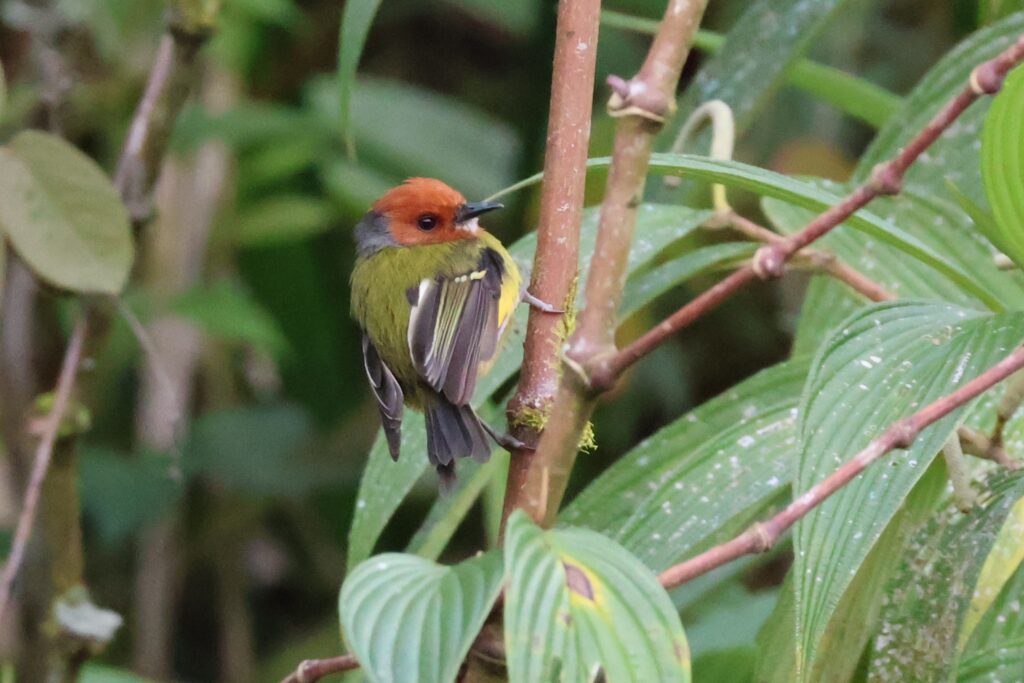
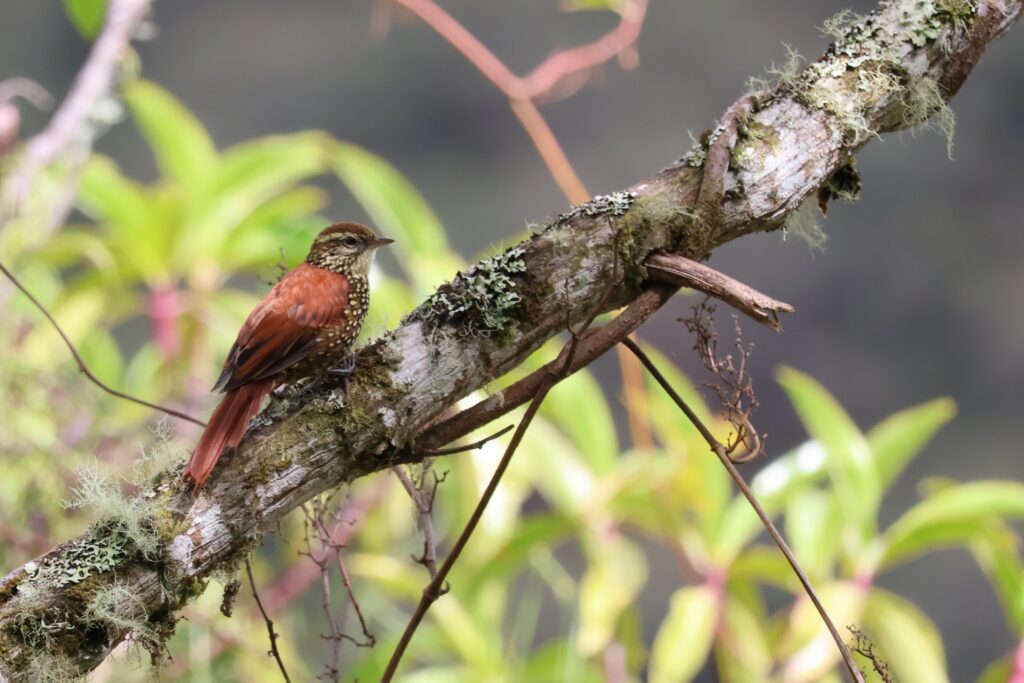
Peru is one of the best countries for birding in the World, so it is perhaps a little surprising that this is the first time we have offered it in our ever-expanding tour programme! Following Ashley’s trip there in December 2024, on which he and Juan Carlos Figueroa recorded over 400 species, we are pleased to bring this new itinerary to our portfolio. The problem with such a big and diverse country, with so much variation in altitude and habitats, is knowing which bits to try and cover in one tour. Our itinerary is unique, in that we utilise the reliable internal flights between Lima and Cusco to combine some of the highlights of the North, with the spectacular and diverse birding on the famous Manu Road in the South.
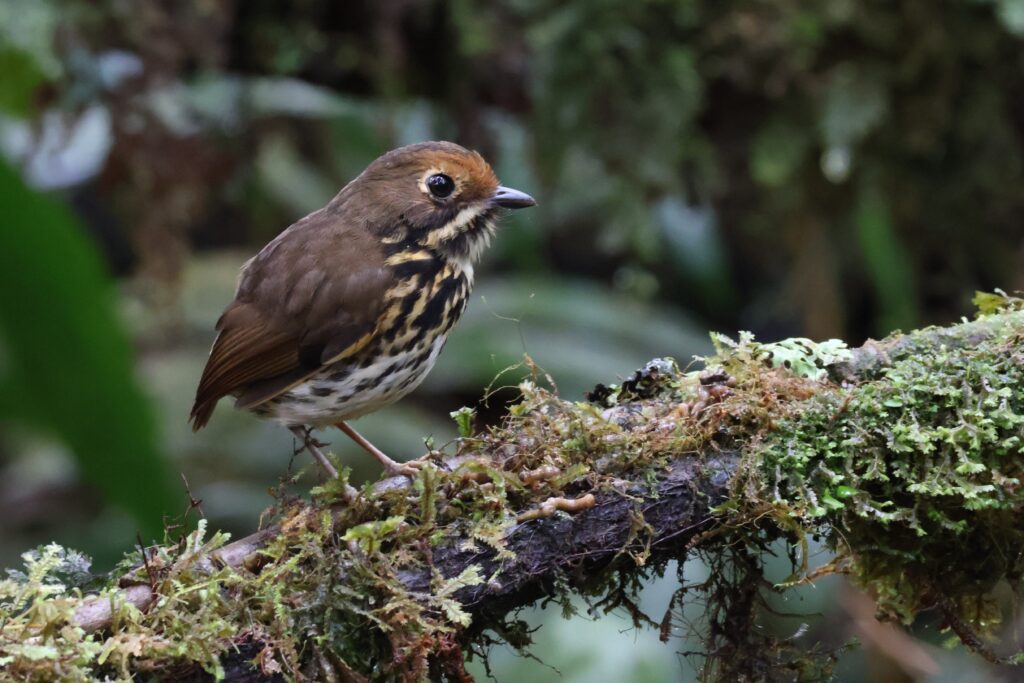
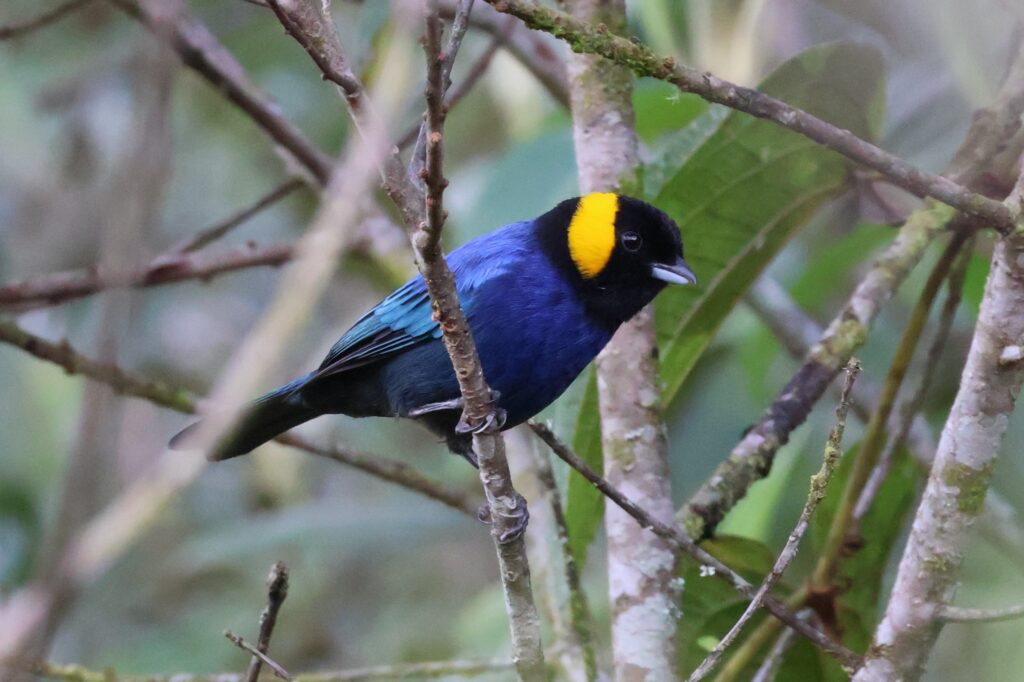
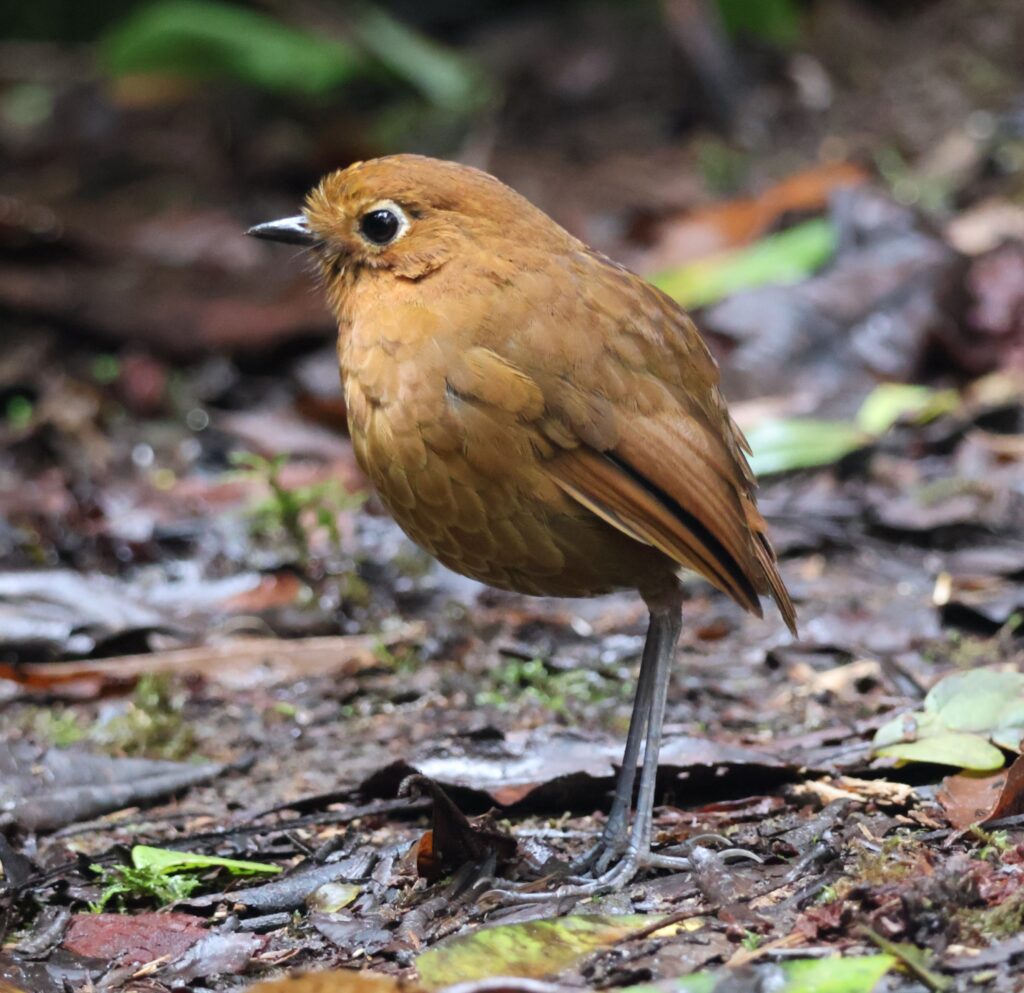
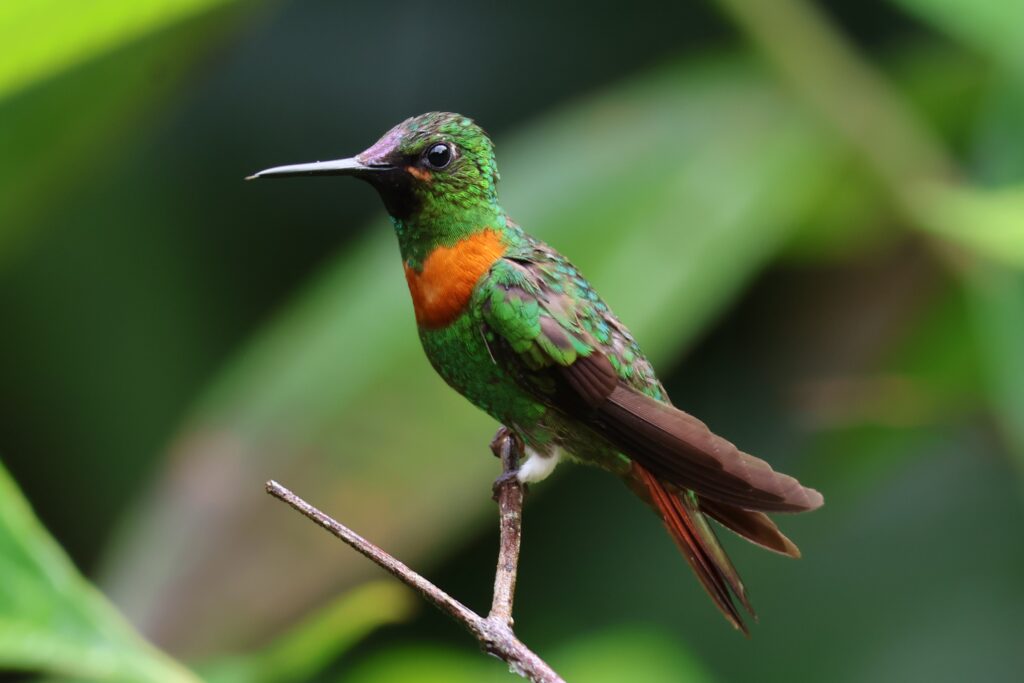
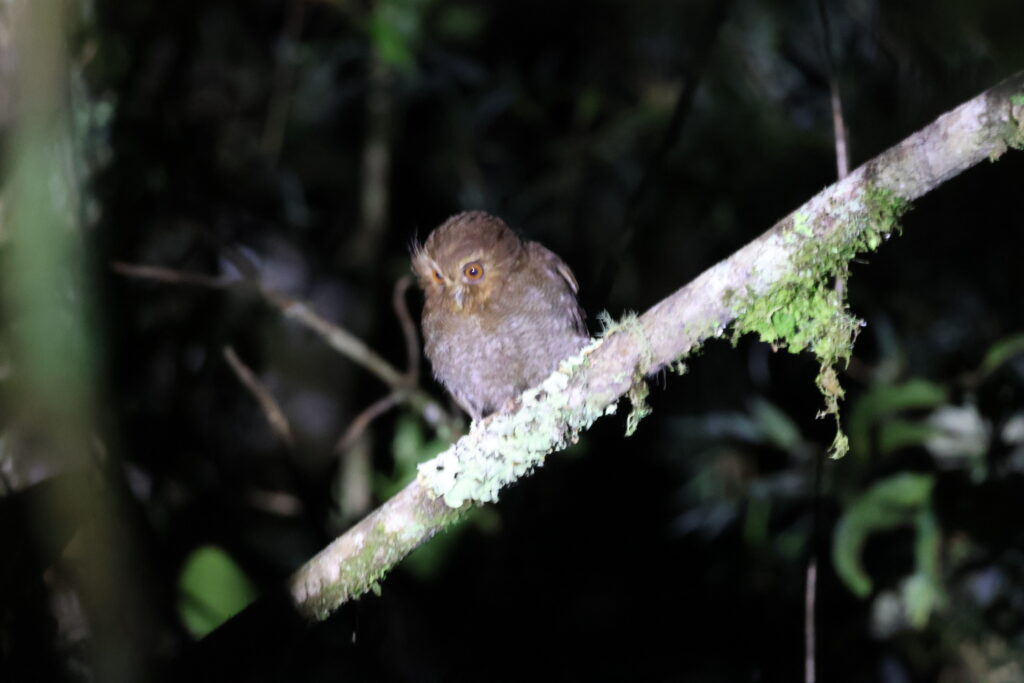
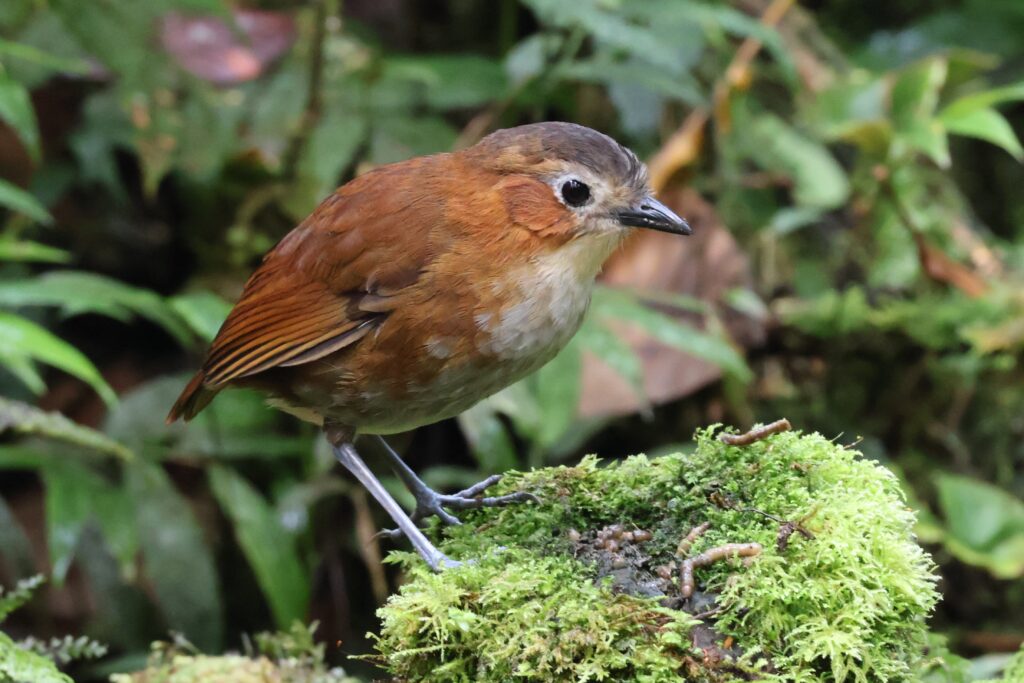
We start in the area around Pomacochas, after a short internal flight up to Chachapoyas from the capital city of Lima. Our five nights in this area gives us the chance to connect with some delectable endemics, none headlining more than the Marvelous Spatuletail, an incredible but tiny hummingbird with an improbably long tail, which we are likely to see and photograph at very close quarters. Five wonderful endemic antpittas are also on offer, from the subtle Chestnut (part of the recently split ‘Rufous’ group) to the gaudy Rusty-tinged and magnificent Pale-billed. Ochre-fronted and Chachapoyas Antpittas make up quite the set. In the elfin cloud forest, we search for such gems as Yellow-scarfed Tanager, Cinnammon Screech-Owl, Johnson’s Tody-flycatcher and Yungas Pygmy-Owl, while the lodge feeders attract Sword-billed Hummingbird, surely one of the most spectacular birds in the world. There are highlights too numerous to mention here, from Maranon Crescentchest in the dry scrub to Torrent Duck on the rivers and of course, the enigmatic Long-whiskered Owlet whose tiny range is centred around the very lodge where we stay.
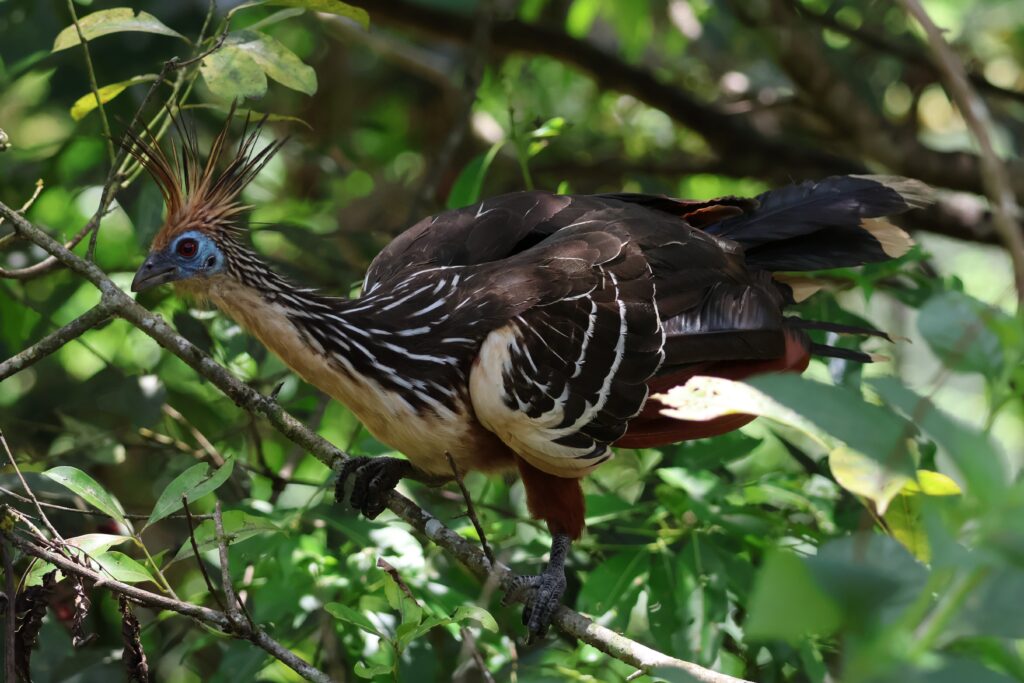
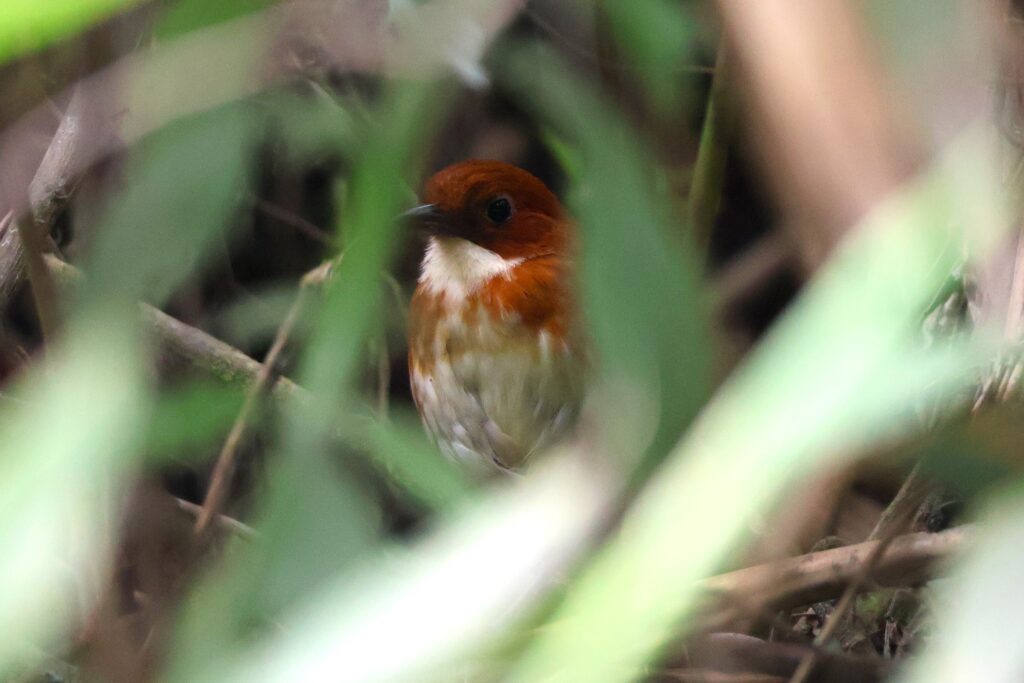
After a flight down to Cusco, we then embark on an ornithological journey along one of the world’s most famous birding routes, the Manu Road. Starting at Wayqecha up around 2900m, we search for Urubamba and Red and White Antpittas, the latter being one of the highlight birds of the entire trip. MIxed species flocks here can be mind-boggling, often reaching over forty species in a single wave – many of which will likely be near-endemic. We work our way down the elevations, trying for Leymebamba and the tricky White-throated Antpittas, reaching the warmer climes of the Amazonian lowlands. Here, at Manu Biological Station, we enjoy raucous macaws overhead,, Hoatzins outside our rooms and tinamous coming to the lodge feeding stations. Our focus will be on seeing many of the bamboo-specialists such as Bamboo Antshrike, Manu Antbird, Bluish-slate Antshrike, White-lined Antbird, Goeldi’s Antbird, Dusky-cheeked Foliage-gleaner, Cuzco Warbler and White-cheeked Tody-flycatcher. We have chances for Amazonian Antpitta too, and the lagoon at our lodge hosts a variety of waterbirds, including Sunbittern. Excursions out from here will take us deeper into the Amazon, for some spectacular macaw licks and a chance even for Harpy Eagle.
Towards the end of the tour we retreat back up the Manu Road as far as Cock-of-the-Rock Lodge, where as it’s name suggests, we have the opportunity to visit the lek of one of the Neotropics flagship birds. Andean Cock-of-the-Rock is one of those must-see birds, and here we will have them bouncing around at eye level from a purpose-built shelter, close enough to photograph as well as just watch their fascinating behaviour. We end our tour in Cuzco, the touristic gateway to the iconic Inca city of Machu Picchu. For those interested, there is a short extension offered to travel by train from Cuzco and stay two nights there in order to visit this marvel of the ancient world (price on application). Your tour leaders will be Marcus Nash and Juan Carlos Figueroa, assisted throughout by local guides. You can expect to see up to 400 species.
DAY ONE
Fly UK to Lima via Amsterdam with KLM. Regional airport departures possible from London, Manchester, Bristol, Birmingham, Norwich and Leeds. Arrive to Lima early evening and transfer directly to the Wyndham Hotel which adjoins the main airport terminal and is reached via a connecting walkway in a two minute walk. We will have dinner there and an early night ready to start the tour tomorrow.
DAY TWO
Our exact itinerary today will depend highly on the internal flight schedule for the flight from Lima to Chachapoyas. There is only one flight per day and we are unlikely to know the exact timing until nearer the tour, but it is usually in the morning departing Lima around 0900. The flight takes 90 minutes, crossing the Andes and into the town of Chachapoyas which is the gateway to birding Northern Peru. We will be met by our ground agent and driver and start making the journey towards Pomacochas and on to Owlet Lodge where we will sleep tonight. Driving straight takes around 3hrs, but we will break the journey with birding en route. The road snakes its way north through spectacular gorges along the river where we might spot Torrent Duck and we will make some stops to check for them. If the flight time is as expected, we will reach the lodge around 5pm and spend the last hour of the day checking the hummingbird feeders. Long-tailed Sylph, Peruvian racket-tail, Chestnut-breasted Coronet, Fawn-breasted Brilliant, Speckled Hummingbird and Collared Inca are the common ones, but the gorgeous Emerald-bellied Puffleg can also be seen and if we are lucky, Sword-billed Hummingbird also shows up. We will get checked in and then take a short drive to a spot for dusk where we will make our first try for the extremely localised endemic Long-whiskered Owlet, from which our lodge takes it’s name. There are three or four options for sites we can try but some are restricted (they only call the owl once every fifteen days at one for example) and we will need to be flexible. It is also possible to see it on the lodge trails but it involves a 6km hike, so that option will be our last resort! Overnight Owlet Lodge.
DAY THREE
We rise early as always and start right beside the lodge where one of the rangers feeds a Chestnut Antpitta – the first of hopefully many species of this fabulous family we might see on the tour. Chestnut was part of the former super-species known as Rufous Antpitta, which was recently split into myriad different species across South America, many extremely localised and endemic. The Chestnut doesn’t come in every day, so we may need to try for it again if we miss it today. Either side of breakfast we will check the hummingbird feeders again and other birds around the lodge include Pale-edged Flycatcher, Glossy Black Thrush and Russet-crowned Warbler. After breakfast we set off on one of the excellent lodge trails – nice and open, good underfoot and not steep, it will give us a brilliant couple of hours birding hoping for the mind-boggling mixed flocks that can pass through. Some skulking species we might hear in the forest, and will try and entice out, include Chestnut-crowned Antpitta, Rufous-vented Tapaculo, Streak-headed Antbird, Sharpe’s Wren and the superb White-eared Solitaire. Mixed flocks should bring Grass-green, Silvery, Flame-faced and Saffron-crowned Tanagers, while the bulky and spectacular Blue-winged Mountain-tanager will also add a splash of colour among the moss-clad branches and bromeliads of the cloud forest. Owlet Lodge sits at around 2500m elevation, so the ecosystem is mid-level east Andean slope – Black-throated Tody-Tyrant, Streaked Tuftedcheek, Cyptic Becard, Montane Woodcreeper, Russet-mantled Softail and the gorgeous Golden-headed Quetzal are therefore among some of the other species expected. We return to the lodge for lunch, and a break, before taking the vehicle for a short distance along the road in the afternoon. We will do some roadside birding to look for Johnson’s Tody-flycatcher, Yellow-scarfed Tanager and Speckle-breasted Piculet, before arriving late afternoon at the reserve at Fundo Alto Nieva. A visit to their hummingbird garden might, if we are lucky, add the range-restricted Royal Sunangel. We then join a ranger and head up into the elfin forest for about 500m to wait at dusk for the Cinammon Screech Owl. That should round off a spectacular days birding!
Overnight Owlet Lodge
DAY FOUR
This morning we have an early breakfast and then drive back to Fundo Alto Nieva. The ranger will meet us and we will go back into the forest but with a different target in mind, as we visit a feeding site for two very special birds – Ochre-fronted and Rusty-tinged Antpittas. We would be very fortunate to get both species at the feeder (though it is possible) but if we miss one, then we can still try for it elsewhere in the forest. We then bird our way slowly back to the start of the trail, hoping for more roving mixed species flocks. Green and Black Fruiteater is common and can often be found alongside Blue-winged Mountain-Tanagers. Flycatchers can include Mottle-cheeked Tyrannulet, Cinammon-breasted Tody-tyrant and Ornate Flycatcher, while there are some nice wrens too including the beautiful Bar-winged Wood-wren which is a speciality of this elevation. Yellow-throated Tanager, Olive-backed Woodcreeper, Bronzy Inca and Tawny-bellied Hermit are just some examples of other species we might find on the walk in this beautiful forest. We will check the hummingbird garden again in case we missed the Royal Sunangel yesterday, before returning to Owlet Lodge for lunch.
The afternoon will be rather flexible, depending on targets. We may do some more birding along the Alto Mayo road, especially if we still need to find Johnson’s Tody-flycatcher. Another option is taking on the longer trail from the lodge, to do some more forest birding there, with a view to ending the day trying again for the Long-whiskered Owlet if we missed it previously. There is also the chance to try for Rufous-banded Owl which occurs around the lodge.
Overnight Owlet Lodge
DAY FIVE
Today we will be moving south back towards Chachapoyas, but we will bird as we go! Our main destination for the morning will be the trail up to Trocha Cresta de san Lorenzo, which starts just beyond the town of Pomacochas. Here we drive part way up and then walk the rest of the way – it is a fairly tough hike, of several kilometres with around 300m of uphill elevation and the track while wide, can be slippery. There are some really good birds on offer at this higher elevation though, with chances to hear (and maybe see) Leymebamba, Chachapoyas and even Undulated Antpittas, and at the top the ultimate prize awaits – the endemic Pale-billed Antpitta. This amazing bird has a strong preference for stands of bamboo at around 3000m elevation, and this location has long been on the radar of birders from around the globe as about the only place you can try to see it. We do, however, have a very good back up site for it and so for those who can’t make the whole hike, you won’t necessarily miss out. Hummingbirds here are headlined by the range-restricted Coppery Metaltail and Purple-backed Thornbill, while Tyrian Metaltail is generally common. Russet-mantled Softail, Grey-hooded Bush-tanager, Chestnut-crested Cotinga, Crismon-mantled Woodpecker, Yellow-scarfed Tanager, Barred Fruiteater and even Sword-billed Hummingbird and Marvelous Spatuletail. The possibilities are endless on this superb birding trail and it will take us all the way through until a late lunch when we will return to picnic by the river.
Our afternoon will be very relaxed after this mornings efforts, as we continue south to the small town of Cochachimba where we will be spending the next two nights. On the outskirts of the town, a small private reserve has a fabulous hummingbird garden with bench seating and a shelter overlooking various feeders and verbena flowers. The target – the endemic Marvelous Spatuletail, one of the World’s most remarkable hummingbirds. If we are lucky, a fully mature male will be visiting and we will spend around 2.5hrs here just watching and photographing the birds coming and going. If activity is high, the spatuletail may visit 5-6 times per hour though each visit may only last a few seconds, so we do need to invest a good amount of time to really feel as though we have enjoyed this special bird. Bronzy Inca, White-bellied Hummingbird, Sparkling Violetear, Little Woodstar and Grey-chinned Hermit are the supporting cast, while a variety of thrushes and tanagers visit the fruit feeder to keep us entertained in between visits by the star attraction! We stay here until around 5pm, and then travel just a few minutes up into the town to our hotel for the next two nights which overlooks the spectacular Catarata Gochta waterfall – the 16th highest in the World!
Overnight Cochachimba.
DAY SIX
We rise for a 5,30am breakfast before making a 1.5hr drive up into the mountains to the west of Cochachimba, where we have an exciting mornings birding lined up in the cloud forest around 3000m elevation. Our predominant target will again be the Pale-billed Antpitta, and we hope to see this giant, charismatic member of its family bounding through the bamboo undergrowth. Chachapoyas Antpitta, another endemic and one of the ‘Rufous Antpitta’ splits, is also here and Chestnut-crowned Antpitta can be quite common (though not necessarily easy to see!). Citrine Warbler, Drab Hemispingus, Golden-plumed Parakeet, White-throated Tyrannulet, White-fronted Nunbird, Plushcap, Scarlet-bellied Mountain-tanager, Azara’s Spinetail, Paramo Seedeater, Cinereous Conebill, Masked Flowerpiercer, Pearled Treerunner and some further chances to find the Coppery Metaltail will be just some of the highlights of a brilliant morning. As we wind our way back down, the temperature will increase and in dry scrubby habitat we will stop to look for the endemic Maranon Crescentchest.
The afternoon will remain flexible today in case we failed with the Marvelous Spatuletail yesterday. Perhaps we will need to visit Huembo to try again for it but if not then we can do some birding around Catarata Gochta for a variety of more widespread species of lower elevations such as Smoke-coloured Pewee, Common Tody-flycatcher, Buff-bellied, Blue-necked and Silvery Tanagers, Golden Grosbeak, Southern Beardless Tyrannulet, Speckle-breasted Wren, Golden-rumped Euphonia and Streaked Saltator.
Overnight Cochachimba
DAY SEVEN
A travelling day as we have a leisurely start after the exertions of recent days. The hotel has a fantastic view and right from the verandah we will probably see Speckled Chachalacas, various hummingbirds, tanagers, flycatchers and other common birds. We have around 1.5hrs to drive to Chachapoyas where we will be catching the flight back to Lima, normally departing around late morning. We have around 3hrs in Lima to check in for our next flight, which will take us south down the Andean chain to the touristic town of Cusco. Arriving late afternoon, we then have a 3hr drive to reach our next lodge, Wayqecha Biological Station, which sits at 2900m on the eastern slope of the Andes on the famous Manu road, which stretches on down into the Amazon. Over the next week we will be birding our way down this well-worn birding trail through the different elevations, each bringing with them their own unique set of birds. We will arrive late to Wayqecha, so it will be a late dinner for those that want to eat, and straight to bed.
Overnight Wayqecha Lodge
DAY EIGHT
We rise to the mist and low clouds hanging over the valley below, or if it is clear then a view stretching right down into the Amazonian lowlands. Wayqecha is a fantastic lodge set in some beautiful cloud forest and the bird starts right around the cabins with the gaudy Grass-green Tanager and Hooded Mountain-tanager often moving together. The feeders attract the range-restricted Black-faced Brush-finch (shared with neighbouring Boliva), Andean Guans and some nice hummingbirds – Shining Sunbeam, Violet-throated Starfrontlet and Scaled Metaltail. Another antpitta awaits, as Urubamba Antpitta (you guessed it – another ‘Rufous’ split!) comes to a feeder at dawn here and should make a nice pre-breakfast photo-opportunity. Then we start birding along the Manu road a few hundred metres down from the lodge – the road is brilliant for birding because it carries hardly any traffic, so it is essentially a broad, easy birding trail! The endemic Red and White Antpitta gives its mournful three-note call from the bamboo stands along the roadside and we will make a special effort to lure this show-stopper into view though it is very elusive. Leymebamba Antpitta (one of the smaller, grallarula antpittas) can sometimes also be heard and seen along this route but really here it is the mixed flocks which will attract our attention. Fawn-breasted and Golden-collared Tanagers, Pale-legged Warbler, Marcarpata Spinetail, Sierran Elaenia, Trilling Tapaculo, Masked Trogon, Golden-headed Quetzal, Puna Thisteltail, Grey-breasted Mountain-Toucan and a whole host of other fabulous birds can be found at this elevation. We will try for the diminutive Yungas Pygmy Owl too, and maybe the gorgeous Chestnut-breasted Mountain-Tanager will put in an appearance.
After lunch, we head out along one of the lodges excellent well-made trails to take us deep into some more top habitat. More mixed flocks will be searched and we should see Streaked Tuftedcheek, Cinammon Flycatcher, Montane Woodcreeper, Masked Flowerpiercer, Amethyst-throated Sunangel and scarcer species such as the superb Golden-collared Tanager and more chances to hear and see the various antpittas. Activity will depend largely on the weather – it does rain a lot here! – so we will remain flexible and philosophical if we lose a couple of hours to really heavy rain.
Overnight Wayqecha
DAY NINE
We have the early hours of the day today to continue exploring the trails and in particular the road below Wayqecha, depending on what species we saw yesterday. Early morning is often good for Yungas Pygmy Owl and we will no doubt need to spend more time trying to see either Leymebamba Antpitta or Red and White Antpitta in the bamboo stands. We then commence our descent of the Manu road, with the Manu Biological Station (known as Villa Carmen) in the Amazonian lowlands being our ultimate destination. Those with Neotropical birding experience will know that changes in altitude bring changes in birds, often almost completely, and that will certainly be our experience today as we wind our way down from 2700m to around 500m in elevation. The total journey time without birding would be three hours, but we will take all day, with a packed lunch, stopping and birding whenever we reach a new ecosystem or encounter mixed flocks by the roadside. These can bring a bewildering array of different birds – dazzling tanagers such as Orange-eared, Saffron-crowned, Paradise, Golden and Spotted vie for our attention alongside more discreet birds such as Slaty Tanager, Chestnut-eared Hemispingus and Superciliared Hemispingus. We have a good chance to find the range-restricted Inca Flycatcher, and woodpeckers should start to become more evident including the dazzling Crimson-mantled Woodpecker. If we are lucky, a Long-tailed Potoo or Lyre-tailed Nightjar might be found beside the road in it’s daytime roost. Once we reach Pillcopata, a gateway town to the Amazon, we will be in lowland tropical forest habitat and here old familiar faces like Great Kiskadee and Palm Tanager appear, along with White-necked Jacobin, Purplish Jay and overflying Blue and Yellow Macaws. We will aim to arrive at Manu Biological Station (also known as Villa Carmen) about an hour before dusk, so we can enjoy the first experience of birding around this magical place. Many of the cabins overlook a lagoon with American Purple Gallinule, Cocoi Heron and other waterbirds. As dusk descends, the songs of Tropical Screech-Owl and Tawny-bellied Screech-Owl can be readily heard, and we will make an effort to see them by torchlight during our stay.
Overnight Manu Biological Station.
DAY TEN
We rise to the sound of Speckled Chachalacas (again!) and as dawn breaks we will be watching the prehistoric Hoatzins clambering around outside the lodge and listening to the low resonant hoots of the Razor-billed Currasow. We will spend the morning just a stone’s throw from the lodge exploring one of the short but excellent trails leading to a small hide from where we might see up to three species of tinamou – Cinerous, Little and Hooded Tinamous are all here and sometimes come to the corn. Antbirds are the main feature of this habitat and there are several species here which specialise strongly in bamboo. With luck, if we encounter a mixed flock, and with some playback, we could find Bamboo Antshrike, Bluish-slate Antshrike, Chestnut-backed Antshrike, Pygmy Antwren, Streak-chested Antwren, Chestnut-tailed Antbird, White-browed Antbird and the superb White-lined Antbird with its punk crest. Fine-barred Piculet, Johanne’s Tody-tyrant, Bluish-fronted Jacamar, Black-tailed Trogon, Blue-crowned Trogon, Lemon-throated Barbet, Chestnut-capped Foliage-gleaner, Plain Softtail, Wedge-billed Woodcreeper and Olive-faced Flatbill are just some of the other species we might find before lunch!
This afternoon we take a short drive to a hummingbird garden where the star attraction is the stunning Rufous-crested Coquette which makes brief but regular visits to the feeders. The garden is also planted with plenty of verbena which in turn attracts a wide variety of other hummingbirds and we should see Gould’s Jewelfront, Violet-headed Hummingbird, Grey-breasted Sabrewing, Fork-tailed Woodnymph, Many-spotted Hummingbird, Golden-tailed Sapphire, White-necked Jacobin and Sapphire-spangled Emerald. A few tanagers and saltators visit the fruit feeders too and dazzling Blue Morpho Butterflies flit through the flowering shrubs. We return to the lodge where we will probably take a look at the lagoon in the early evening – perhaps a Ringed Kingfisher, Capped Heron or Brazilian Teal might be seen
Overnight Manu Biological Station.
DAY ELEVEN
We have a really exciting full day excursion planned today as we head deeper into the Amazonian lowlands taking a packed lunch and spending the whole day away from the lodge. We will use the knowledge of a local guide and after a short car journey we will join a boat and make a 45 minute journey down the river north from Atalya. Our first port of call will be a riverbank parrot lick where we view the birds coming to the exposed earth banks to take minerals. The iconic Red and Green Macaw is the largest species present and while we will have seen it flying over giving its raucous calls, now we will get to see them much closer. Chestnut-fronted and Blue-headed Macaws also occur, plus a range of smaller parrots might be seen from Yellow-crowned Amazon down to Blue-headed Parrot. We will continue a short way along the river, and this is a great way to spot birds such as oropendolas and cotingas, and birds of prey, from the water. We then rejoin our vehicle and drive on for a further 1.5hrs to an area where we may have a chance to see the nest of the impressive Harpy Eagle. There’s no guarantees but the local people normally have two or three territories for the bird and in any given year the hope is that one will be active. Seeing the chick is one thing, but seeing the adults always requires more luck as visits to the nest are fairly infrequent. Sometimes though, one of the parent birds may be perched nearby. We won’t know until nearer the time of the tour whether or not seeing the species will be likely, but whatever happens we will have a great days birding in this area. In this deeper Amazon region there will be lots of other great birds to be seen such as Orange-backed Troupial, Horned Screamer, Pied Plover, Black Caracara, Sand-coloured Nighthawk and sometimes even Jabiru. We’ll spend the rest of the afternoon birding our way back along the road to Pillcopata and reach Villa Carmen in time for dinner.
Overnight Manu Biological Station.
DAY TWELVE
It’s another special treat this morning as we leave around 0530 to make the short journey to Pica de Hoz private reserve where we have arranged for a King Vulture viewing experience! The reserve frequently acquire carcasses which they put out for the vultures which can then be viewed at close range from a screen. The expense and difficulty obtaining the carcasses means this has to be arranged in advance specially for our visit but to see this most spectacular vulture up close is an amazing treat and a photographers dream! We will spend around one hour with the vultures before heading back up to the hummingbird verandah for breakfast. Here we can sit and watch the comings and goings for a while, with several different species possible including Black-throated Mango and the rarer Black-throated Brilliant. We then make a leisurely return to our lodge and will spend the remainder of the morning exploring one of the shorter trails. There are so many species to find here that we will need to commit plenty of time in order to try and see the majority of them. Thankfully the trail network at Villa Carmen is really good – open wide trails, fairly flat and easy going but giving access to prime bamboo forest habitat. After lunch we will take one of the longer trails and who knows what we might find – shy Tiny Hawk and Buckley’s Forest-Falcon, Goeldi’s Antbird, Amazonian Antpitta, Little Cuckoo, Sunbittern, the diminutive Chestnut-capped Puffbird and spectacular Crimson-crested Woodpecker are all here.
Overnight Manu Biological Station
DAY THIRTEEN
We have a final morning at Villa Carmen to wrap up on the trails with any missed species. It’s also worth bearing in mind that heavy downpours can hamper birding and at some point during our stay we may well lose a session to rain. We will probably try the Tinamou blind again first thing to see what comes to the corn, and then crack on around the trails looking for Yellow-breasted Warbling-antbird, Plain-brown and Buff-throated Woodcreepers, Fiery-capped Manakin, Cabanis’s Spinetail, the rare White-cheeked Tody-flycatcher, Amazonian Grosbeak, Cusco Warbler and others. We have time to sort our gear before having lunch at the lodge, and then making the drive back up the Manu Road to Cock-of-the-Rock Lodge where we aim to arrive around 2.30pm. This lodge is aptly named, being a stone’s throw from one of the best Andean Cock-of-the-Rock leks in South America. Perhaps surprisingly, the birds are most active from around 3pm, which works brilliantly given that is normally a quiet time for birding! We head straight there and spend around two hours watching and photographing the birds at incredibly close quarters from the viewing platform. The birds display on branches only a few metres away and the forest resounds to their strange calls. The time will fly by and we will struggle to tear ourselves away! Back to the lodge for an early finish and downtime before dinner.
Overnight Cock-of-the-Rock Lodge.
DAY FOURTEEN
Today we have a whole day to explore the mid elevation forest around the lodge. There is a good trail network but the longer trail is difficult and not for everyone, with steep sections, slippery rocks and branches, and mud/water making it wellingtons only. The birding though can be truly superb and there are some absolute crackers on offer here. The elusive Slaty Gnateater and gaudy Yungas Manakin are two key species we will be looking for, but we also have a chance to see the shy Speckled Nightingale-thrush and Ruddy Quail-dove. There is a real mix of species here with flocks containing birds typical of both higher and lower elevations – Golden-crowned Flycatcher, Black-goggled Tanager, Versicoloured Barbet, White-eyed Parakeet, Montane Foliage-gleaner, Chivi Vireo, Stripe-chested Antwren, Tropical Parula, Ash-browed Spinetail, Two-banded Warbler, Hauxwell’s Thrush, Swainson’s Thrush, Southern Chestnut-breasted Wren, White-winged Tanager and many, many more might be found. The endemic Peruvian Piedtail is also here and this trail is probably our only real chance on the tour to find it.
The road between the lodge and a couple of kilometres higher up offers more great birding and its also a little easier to view birds in the canopy. Southern Emerald Toucanet, Dusky-green Oropendola, Crimson-mantled Woodpecker and Andean Motmot can be looked for and sometimes a Lyre-tailed Nightjar can be found in a day roost. We will spend the rest of the afternoon birding the road, hoping to bump into one of those crazy mixed-species flocks that can easily contain 30 different species. Band-tailed Fruiteater, Andean Solitaire, Slaty Tanager, Deep-Blue Flowerpiercer and a range of the more gaudy tanagers might be seen – Paradise, Orange-eared, Saffron-crowned, Golden-naped, Yellow-throated, Blue-capped and Beryl-spangled are all likely!
Overnight Cock-of-the-Rock Lodge.
DAY FIFTEEN
Today is really a travelling day as we make our way slowly back up the winding Manu Road with our final destination being Cusco. We will depart the lodge straight after breakfast and head back up to around 2500m where we will first try for the very elusive White-throated Antpitta. We should hear it, but given the steep cliff-like banks and sheer drops either side of the road, getting at it is not easy! Another excellent little hummingbird – the Buff-thighed Puffleg – might be seen along the roadside and there’s bound to be lots more chances for birds that we haven’t seen for a few days or may have missed previously. Working our way back up towards Wayqecha, we are likely to need another chance at either or both of Red and White Antpitta (which can be commonly heard along the roadside but is hard to see!) and Leymebamba Antpitta if we missed them earlier in the tour. Our aim is to finish mopping up in this area at lunchtime and after a picnic, we make the three hour drive back through the mountains to Cusco. When we made this drive in reverse, it will have been dark, so now we will have a chance to soak up some of the scenery too. Our final birding destination of the day is Haucaurpay Lake, just east of Cusco. Here we should add some waterbirds, such as Puna Ibia, Giant Coot, and Silvery Grebe, but also have a chance at the crazy-looking endemic Many-coloured Rush-Tyrant. We reach Cusco and overnight in a comfortable hotel close to the Plaza Mayor. We will have dinner at a restaurant in the city.
Overnight Cusco.
DAY SIXTEEN
We have a free morning in Cusco to explore the city on foot if you wish, which can easily be done from our centrally-positioned hotel. We depart the hotel at noon, transferring to the airport for our short flight back to Lima. From there, we connect with our international flights back to the UK
*For those choosing to take the (non-birding) extension to Machu Picchu, you will take the train today and arrive there for a one night stay. You will then return to Cusco on day seventeen for an overnight back at the same hotel, before taking the flight back to Lima and on to the UK arriving there on day nineteen.*
DAY SEVENTEEN
Arrive back in the UK (day nineteen for Machu Picchu extension)
WHATS INCLUDED