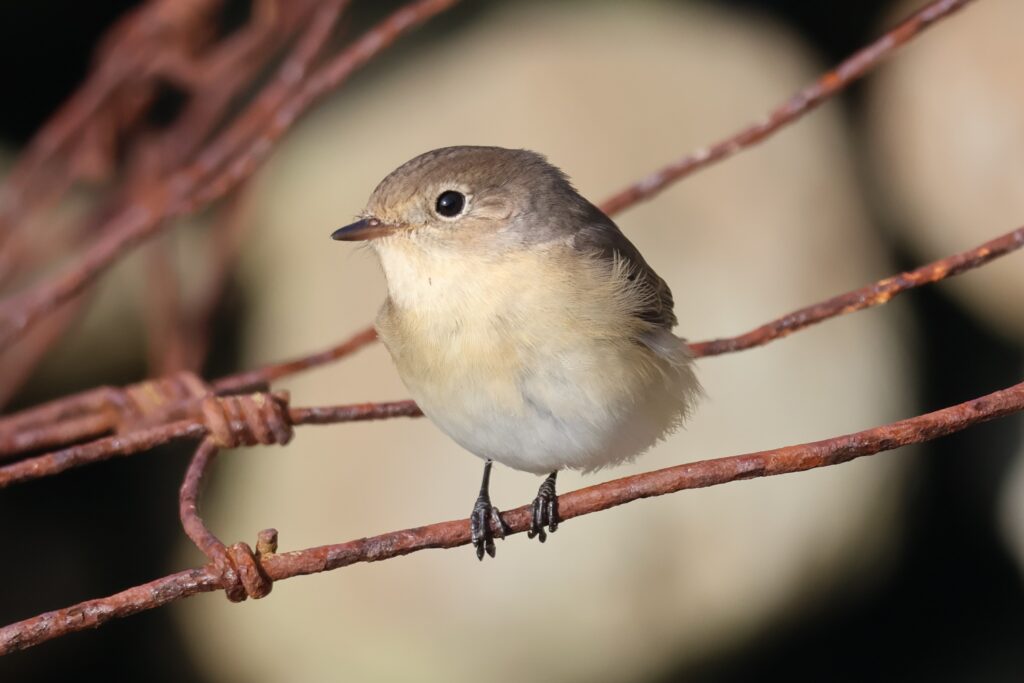
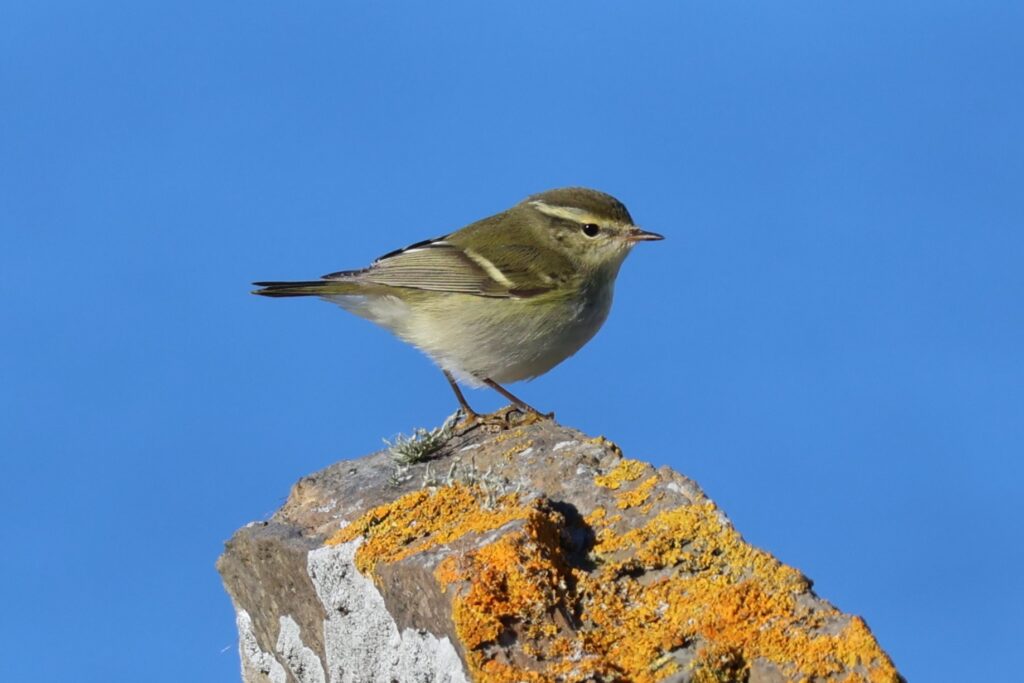
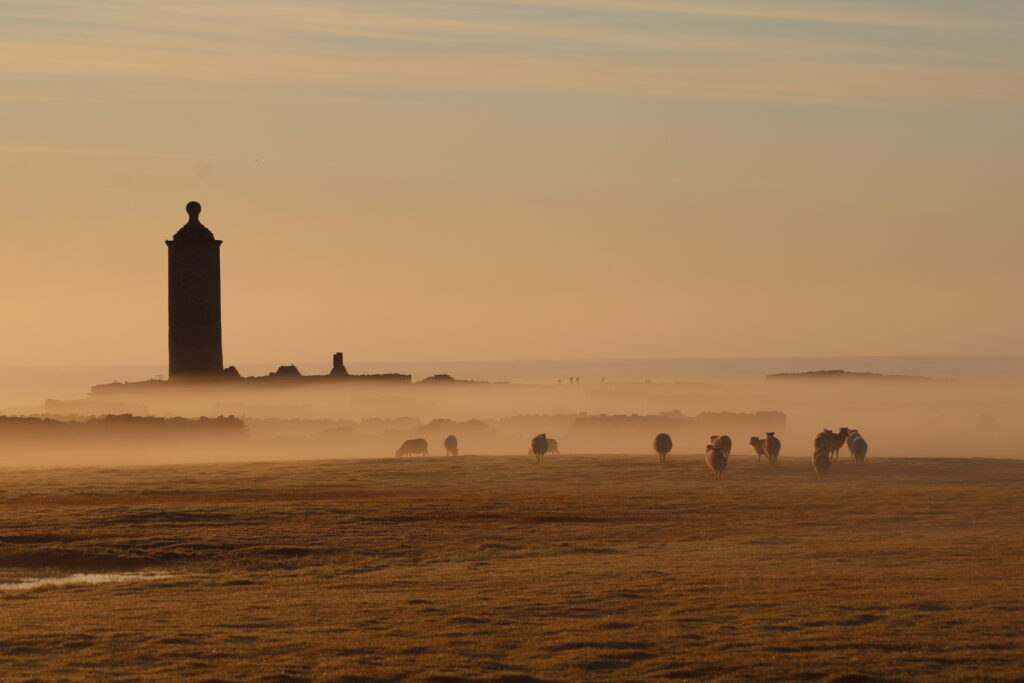
This exciting itinerary takes us to the famous migration outpost of North Ronaldsay, where we will be staying at its wonderful Bird Observatory. The Observatory has been monitoring bird migration since 1987, and is the perfect place to base ourselves to witness autumn bird migration at its best, while soaking up the atmosphere and buzz of one of Britain’s finest Bird Observatories; a unique experience! With a track record for impressive falls of migrants, the island has attracted some outrageous rarities in recent past years (Red-winged Blackbird, Cretzschmar’s Bunting and Siberian Blue Robin to name a few). A good level of physical fitness is required for this tour, which involves a lot of walking over uneven and occasionally wet ground in search of our own birds. Of course for a trip of this nature, the correct weather conditions are essential for producing migrants. During September & October, good falls of flycatchers, Common Redstart and Northern Wheatear can bring scarcities such as Yellow-browed Warbler, Eurasian Wryneck, Barred Warbler, Common Rosefinch, Red-breasted Flycatcher and Bluethroat. Birds can appear anywhere from drystone walls to sheltered crofts and ditches so we must leave no stone unturned! The evening log call gives us the chance to socialise with other birders staying at the Observatory and contribute to the islands records as well as find out what others have seen ready for the next day!
We will also spend time birding on Mainland Orkney searching the islands best migrant hotspots for newly arrived birds from the continent. Winds from the east may result in an arrival of migrants taking refuge amongst the plantations and gardens on the island, and there is a real chance that scarce and rare species could be found as we bird East and West Mainland. The islands many sheltered bays and quiet lochans for divers, grebes and wildfowl. Large flocks of Long-tailed Ducks, Slavonian Grebes and Great Northern Divers can feature, and occasionally host rarities such as Surf Scoter, White-billed Diver and Smew. Twite, Hen Harrier and Merlin can be noted frequently as we bird amid some of the most spectacular scenery in the British Isles, and around some of its most fascinating historical and archaeological sites. Your tour leader will be Ashley Saunders and you can expect to see around 110 species on our North Ronaldsay Autumn birding tour.
DAY ONE
We travel to Scrabster to catch the 1900 ferry crossing to Stromness on Orkney. We will have dinner on board the ferry and should arrive at 2030. We will transfer directly to our accommodation.
DAY TWO
We spend the morning birding on the Orkney East Mainland, checking some migrant hotspots and large shallow bays for gathering divers, grebes and seaducks. We take the short flight to North Ronaldsay in the afternoon. Overnight North Ronaldsay Bird Observatory.
DAYS THREE – SEVEN
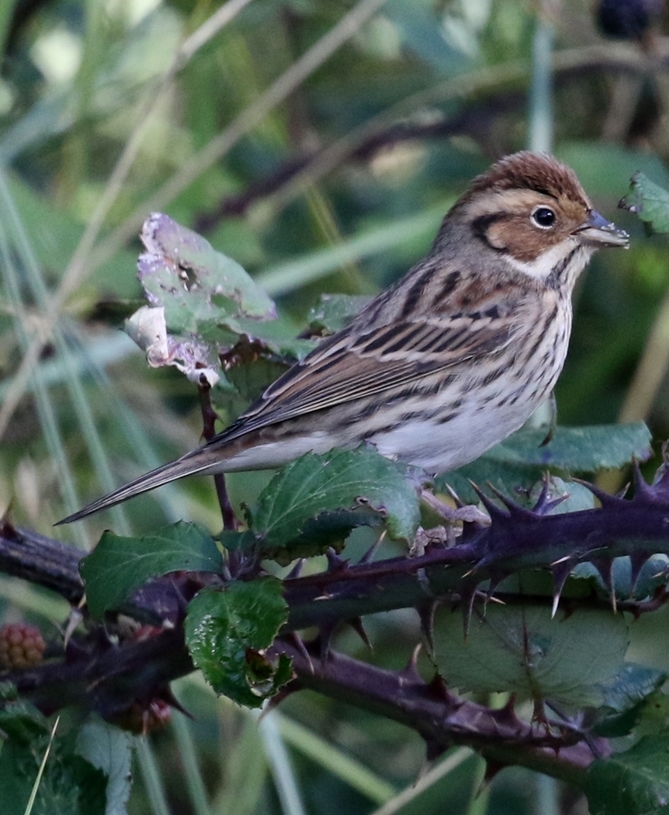
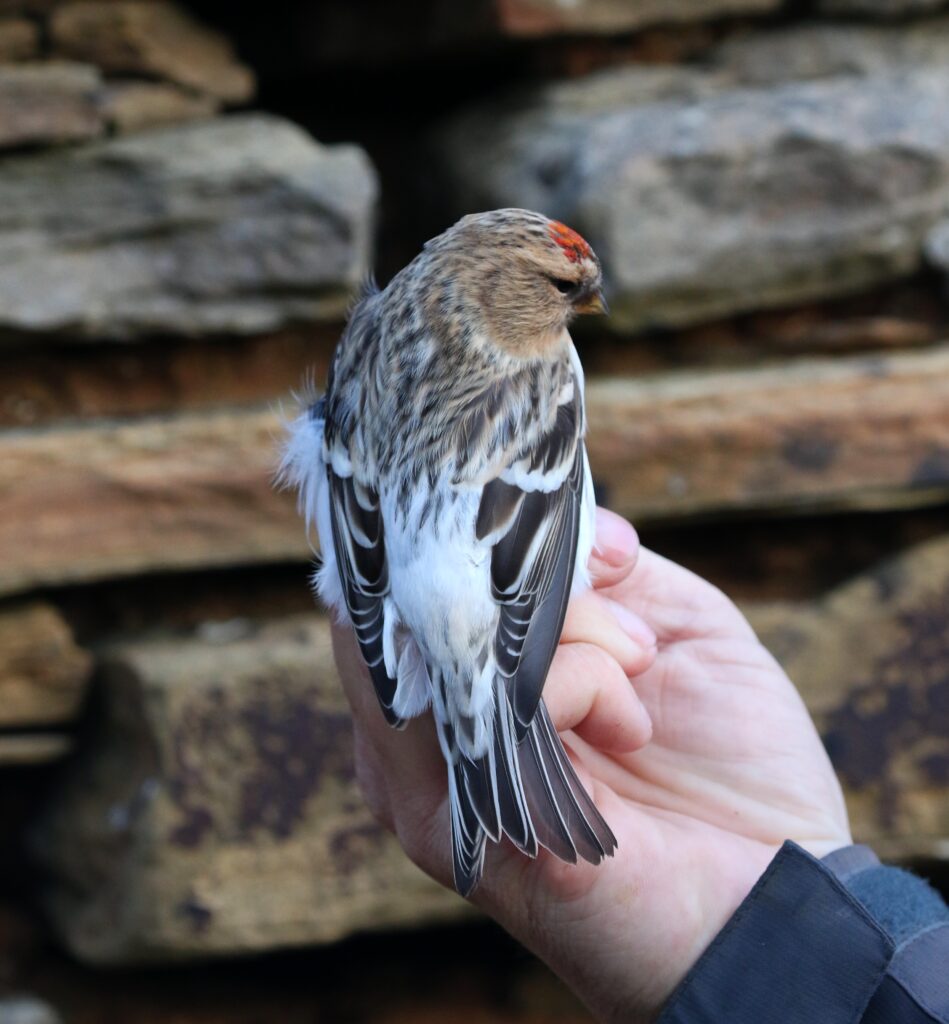
North Ronaldsay in autumn is all about bird migration, and we will be at the mercy of the winds throughout our time here. Light, wafting easterly breezes under cloudy skies bring huge promise of Siberian vagrants, but tumultuous weather from the west can also bring surprises such as American shorebirds and wildfowl. Each day will be spent exploring the island with a combination of walking and using the obs minibus to reach the more distant parts of the isle. When trapping is taking place, a pre breakfast excursion might involve joining the wardens to see what species have been caught for ringing, and there could be chances to observe a range of species in the hand. Our ethos during the day will be to go out and try to find our own birds, but we will also remain in contact with obs staff who will alert us if any rare birds are found, and we will do our very best to see them! At this latter stage of the autumn, we will be hoping for arrivals of thrushes and ‘crests from Scandinavia, and with them a scattering of warblers, pipits and buntings. Species such as Yellow-browed and Pallas’s Warblers, Little Bunting and Olive-backed Pipit are typical vagrants, but of course North Ronaldsay can produce the unexpected, such as the recent male Siberian Blue Robin! Due to the presence of a series of small lochans, waterbirds can also feature, and a variety of ducks, geese and waders can also be seen. Sheltered bays, particularly at the south end of the island, often harbour resting divers, and even more pelagic species during rough weather. In the evening we can relax in the obs bar, and maybe join in with bird log before an early night! Overnights North Ronaldsay Bird Observatory.
DAY EIGHT
Today we return to Kirkwall on the Orkney Mainland on the morning flight. After collecting our van, we have the remainder of the day to catch up with any good birds present and to check sheltered areas for migrants and bays for wildfowl, grebes and divers.
Overnight on Orkney
DAY NINE
We have a full last day to explore Orkney Mainland. Perhaps there will be some lingering rarities to go for, and if not then we will work areas of west mainland for migrants and waterbirds, as well as perhaps visiting a historic site such as the Ring of Brodgar. In the afternoon we take the ferry back to Scrabster and drive to Inverness, with our last overnight stay in this area.
DAY TEN
After breakfast we embark on the drive south with with drop-offs en route.
**Please note, complimentary lifts to and from Scrabster are possible, with pick up points en route. Enquire when booking**
WHAT’S INCLUDED
Return ferry crossings Scrabster – Stromness, return flights Orkney to North Ronaldsay, two nights on Orkney, six nights at North Ronaldsay Bird Observatory, all meals from breakfast on day two, to lunch on day nine, overnight near Inverness on a bed and breakfast basis, services of leader and transport in Orkney.
WHAT’S NOT INCLUDED
Meals on board the ferry are not included. Return travel to and from Scrabster and any overnight costs are not included, but we are happy to assist with free lifts if you require from our base in Norfolk. Drinks, tips, and any other items of a purely personal nature are not included.
WHAT TO BRING
Binoculars, telescope (optional), camera, clothing for all weathers, walking boots & wellingtons (essential as ground/long grass is often very wet), small rucksack, alarm clock and field guides.
THE PLANE
Please note that the plane only seats 9 people max and we will most likely have the whole plane to ourselves. Loganair that operate the service state a 15KG luggage allowance but in reality this is only an upper limit and the chance of getting all the luggage over with a group is unlikely. The runway is short on North Ron and the pilot decides based on the weather, wind strength and air pressure what the maximum take-off weight will be. We strongly recommend wearing your essential birding kit and clothing, taking a toothbrush and spare underwear about your person, plus any medication you can’t be without. What often happens is that passengers are all taken but luggage is left behind and comes on the next flight, normally the same day or the next day. But, you do need to be prepared to live with minimal supplies and of course, take as little as possible in your luggage in order to maximise everyone’s chances of getting their essential kit over with them! The plane is tiny, so there is no ‘hand luggage’, everything goes in the back. It is also immense fun and a brilliant way to see the archipelago from the air. It’s also distinctly possible, that fog or high winds can cancel the plane – we would try to use the ferry as an alternative, but you also need to be mentally prepared for potential extra nights away if the weather dictates, so don’t book an operation for the day after the tour!!
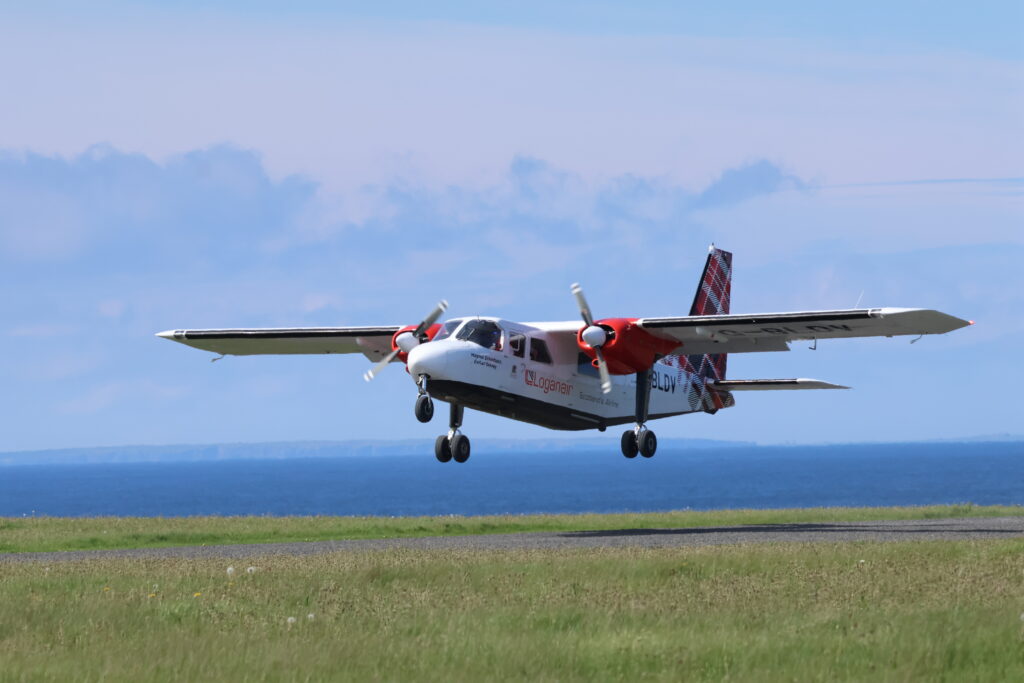
One of the two Britten-Norman Islanders on Orkney’s inter-island routes, landing at North Ronaldsay airstrip