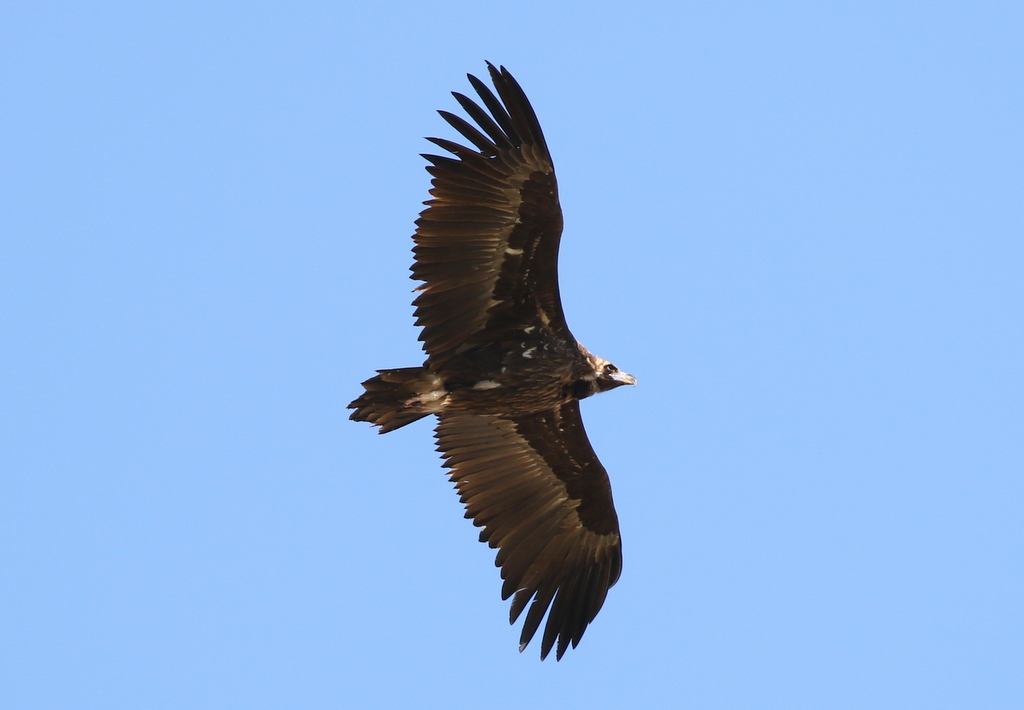
A rich combination of inland waters, acorn-laden dehesa (open grazing woodland) and cereal crop fields makes Extremadura an ideal wintering site for many migratory species, the most spectacular being the Common Crane. To the south of the Sierra de las Villuercas, surrounded by sweeping Holm-oak dehesa and crop fields, lies Sierra Brava Reservoir. In recent years it has proven to be an extraordinary wildfowl refuge, serving as home each winter to over 120,000 birds. Sierra Brava is a small reservoir straddling the provinces of Cáceres and Badajoz where approximately 8000 Common Cranes spend the winter. Nobody so much as dreamt that this small reservoir, lost among dehesa and crop fields to the north of the celebrated Orellana Reservoir, might harbour such a huge concentration of birds. Indeed many of the reservoirs in the region play host to large concentrations of wintering wildfowl, and we will spend time looking out for the more interesting species at the newly created Embalse de Alcollarin. Here in 2016 we saw Ring-necked and Ferruginous Ducks, showing what is possible here. In this patchwork landscape we will find huge flocks of Common Cranes, Little Bustards and geese feeding on the fallow land as well as sizeable flocks of European Golden Plovers, plus passage and/or wintering groups of Black-Tailed Godwit, Eurasian Curlew, Common Snipe, Common Redshank, Eurasian Spoonbill and Great White Egret. On the fringes of the dehesa we may find Black-shouldered Kites which are often easier to find at this time of year, and Golden, Bonelli’s and Spanish Imperial Eagles and Black Vulture are among the other raptors to be found.
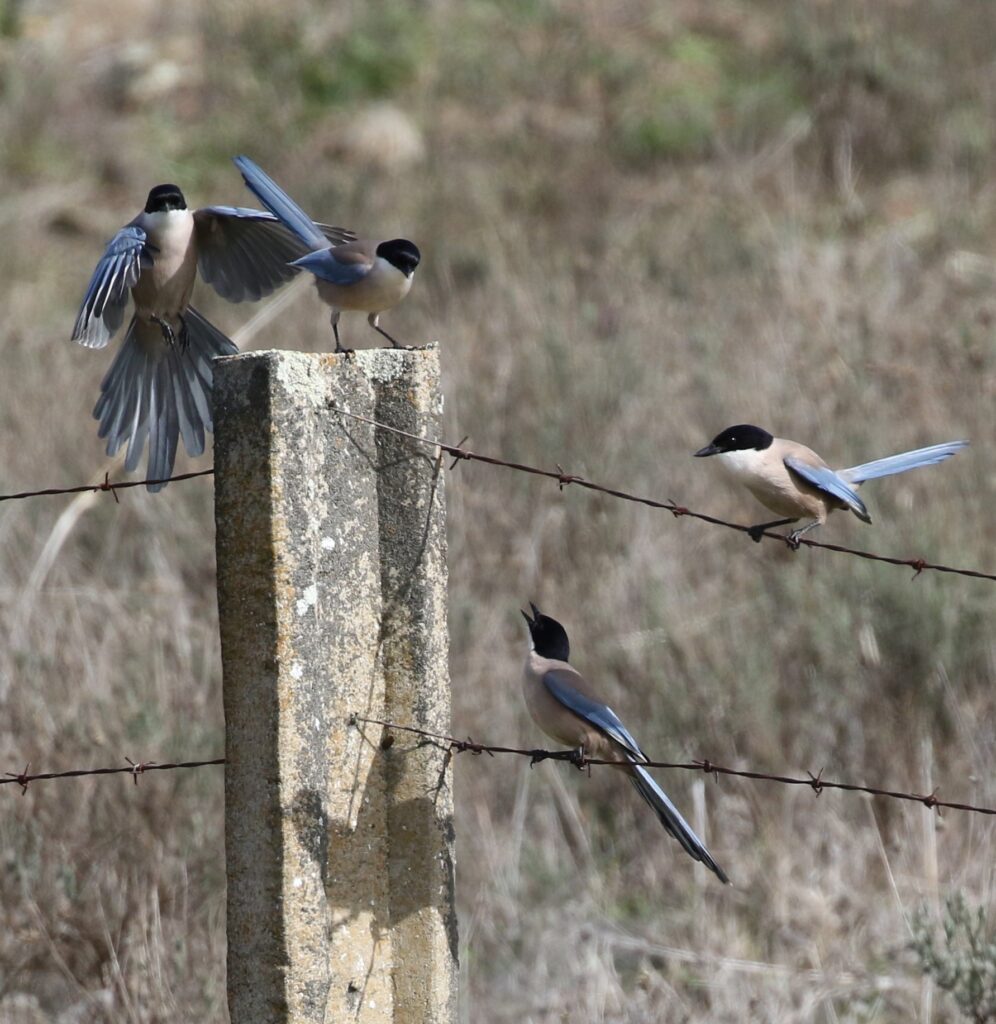
In the foothills of the Sierra las Villuercas, montane species such as wintering Alpine Accentor can be found, and of course the rolling plains play host to spectacular Great Bustard. The Little Bustard form flocks at this time of year and sandgrouse might include both Pin-tailed and Black-bellied. It is the huge flocks of Common Cranes though which create the biggest spectacle, as tens of thousands feed by day beneath the cork oak trees of the dehesa before flying in to favoured roost sites in the evening, a sight which we will be hoping to see. Other resident species which can be easily seen include Azure-winged Magpie, Southern Grey Shrike, Rock Bunting, Calandra, Wood and Thekla Larks, Red Kite, Griffon Vulture, Stone Curlew, Crag Martin, Blue Rock Thrush, Penduline Tit and Rock Sparrow. On two tours previously, we have also managed to connect with wintering Sociable Lapwing – more regular here than previously thought. Your tour leader will be Andrew Kinghorn and you can expect to see 115 species.
DAY ONE
Fly UK/Madrid. On arrival, we drive south-west into Caceres Province, towards historic Trujillo. We will break the journey of approximately three hours with a lunch break at a motorway service area near Oropesa. Suitably revitalised, we will take a short drive in the locality, hoping to kick start our list, finding typical species such as Iberian Grey Shrike, Black Redstart and Iberian Magpie, along with a variety of raptors, including Griffon Vulture, Red Kite and Black Kite, with this also being a known area for Black-winged Kite. With luck, our first Common Cranes will be present and flocks of Northern Lapwings will throng suitable fields. Roughly half an hour down the motorway is the excellent Embalse de Arrocampo, where we will spend the rest of our available birding time. A wide variety of wetland birds is possible, including Western Swamphen and Penduline Tit, while raptors such as Black Vulture and Western Marsh Harrier will be much in evidence. The surrounding terrain should deliver Eurasian Hoopoe, Spanish Sparrow, Zitting Cisticola, Common Stonechat and Spotless Starling, among others. From here, it is a forty-minute drive to our hotel near Trujillo, our base for the next five nights.
DAY TWO
Today the majority of our time will be spent exploring the plains between Trujillo and Cáceres, a productive area, where all the steppe-loving species can be found. Flocks of both Great and Little Bustards are likely, while nomadic groups of Pin-tailed and Black-bellied Sandgrouse are possible. Raptors are very common here, with circling vultures and Red Kites as far as the eye can see, while both Spanish Imperial and Golden Eagles are a distinct possibility, too. Flocks of Calandra Lark and Spanish Sparrows should be obvious, while our identification skills will be tested separating Thekla’s Lark from the very similar Crested Lark. Heading north through Santa Marta, we will investigate a couple of river crossings. Here the rocky ravines could yield Crag Martin, Rock Bunting, Cirl Bunting, Sardinian Warbler and European Serin, plus the outside chance of Black Wheatear. Finally, we will call in at an area of mixed farming east of Monroy, where Black-winged Kite is often present. Before dinner, we will complete our checklist, reflecting on our first full day’s birding in Extremadura.
DAY THREE
Monfragüe National Park lies in rugged country at the confluence of the rivers Tiétar and Tagus and is justifiably renowned as one of the prime birding sites of the region, holding good numbers of all the characteristic species, except for steppe birds. At the vertiginous Castillo de Monfragüe incredible eye-level views of passing Griffon Vultures are likely, while scanning further afield could bring Bonelli’s Eagle and Golden Eagle. Red-billed Chough are sometimes present, along with a variety of rock-loving species, including Blue Rock Thrush. The famous Peña Falcón
viewpoint is a great place to study the comings and goings of the Griffon Vultures at the large colony on the crags here, with Peregrine Falcon, Black Stork, Rock Bunting and Short-toed Treecreeper possible. Moving further into the park, Black Vultures will be frequently seen and we will hope to observe territorial Spanish Imperial Eagles. Eurasian Eagle Owl are present, but we will need a slice of luck to connect. Sardinian and Dartford Warblers are frequent in scrubby areas and we will keep an eye out for Hawfinches elsewhere. Leaving the park behind, our return route will take us through Belén Plain, where we will search for all the steppe species. Iberian Grey Shrikes are particularly common here, while a wintering Hen Harrier could occur. Finally, we will briefly visit a small pool in Trujillo, where we hope to find Water Pipit, Little Ringed Plover and Black-winged Stilt.
DAY FOUR
The relatively new reservoir at Alcollarín has quickly established itself as one of the premier wetlands in the region, partly on account of its relatively shallow depth profile, while the surrounding dehesa adds further interest. Huge rafts of duck (most numerously Northern Shoveler) will be checked for scarcer waterbirds, such as Black-necked Grebe, Ferruginous Duck and Red-crested Pochard, while Ring-necked Duck has occurred on more than one occasion. Glossy Ibis, Eurasian Spoonbill, Great White Egret and a smattering of waders could inhabit the extensive shoreline. Bonelli’s Eagles are often present. Woodlark, Eurasian Hoopoe, and Iberian Magpie should be seen in the hinterland, while marginal scrubby habitats can be checked for Cetti’s Warbler and the like. From here, we will head for Campo Lugar, taking the road east through an area of plains, where Great Bustards are often present. However, we shan’t pause for too long here, as we wish to spend the rest of the day exploring the huge plains of La Serena, to the south, harbouring some of the largest concentrations of steppe birds found in Spain. Slowly driving some of the quiet tracks and roads here should give us ample opportunity to connect with both of the sandgrouse and bustards, along with a host of other interesting species. Time permitting, we will visit a Castillo at the south of the area, where Black Wheatear and Red-billed Chough are possible.
DAY FIVE
Heading south, our first port of call will be Embalse de Sierra Brava. The reservoir itself can hold large rafts of Northern Shovelers, especially, although we will concentrate our efforts on the adjacent areas, which often hold good numbers of Common Cranes at this time of year. Continuing on beyond here to the nearby rice fields of Madrigalejo and Vegas Altas, we will check any vegetated ditches for Bluethroats, Penduline Tits, Common Waxbills and Red Avadavats. Wet paddies here can hold Western Cattle Egret, Great White Egret, Greylag Geese and waders such as Spotted Redshank, Common Greenhank and Black-tailed Godwit. Birds of prey may include Western Marsh Harrier, Hen Harrier and Black-shouldered Kite. Turning north past Obando, we will pass through the rice fields of Moheda Alta, where spectacular gatherings of thousands of Common Cranes can occur. A reservoir here can be worth visiting for wildfowl and waders, depending on the water levels. Weather and time permitting, we will continue north and visit Sierra de las Villuercas, a highly scenic mountain range, west of Guadalupe. Roadside stops here could yield species such as Crested Tit, Firecrest, European Nuthatch and even Lesser Spotted Woodpecker, while Golden Eagle can occur along the ridges. At Cabañas del Castillo we will search for rock-loving species around the castle ramparts. Alpine Accentors can occur and there have been recent records of Wallcreeper, although these are by no means guaranteed.
DAY SIX
After checking out we begin our journey northwards, calling in at a couple of birding stops along the way, depending on which species we have not seen. The heath at Jaraicejo is an easy location to find Dartford Warbler, while the nearby high pass at Casas de Miravete could bring Crested Tit, Woodlark and Short-toed Treecreeper. Any remaining available time might be spent revisting Arrocampo, possibly picking up a few new species, maybe a Little Bittern or Black-crowned Night Heron, for instance. We arrive back in Madrid early afternoon to check in for our flight back to London, where the tour concludes.
Return flights UK/Madrid, en suite accommodation for five nights, meals from dinner on day one to packed lunch on day six, ground transport within Spain, services of tour leader and reserve entrance fees.
Transport to/from UK airport and any overnight stay that might be involved, travel insurance, drinks, lunch on day one and any items of a purely personal nature.
“This was the first of many trips I intend to take with you. Every aspect of the trip was very enjoyable, the birds were great, the guides fantastic and the food out of this world”
I.B, Watford
“Both our guides were very knowledgeable, friendly, kind and considerate. We thoroughly enjoyed everything about the trip; the hotel and family were lovely and the food and attention to detail were excellent. A brilliant holiday!!
P & D.L, Watford