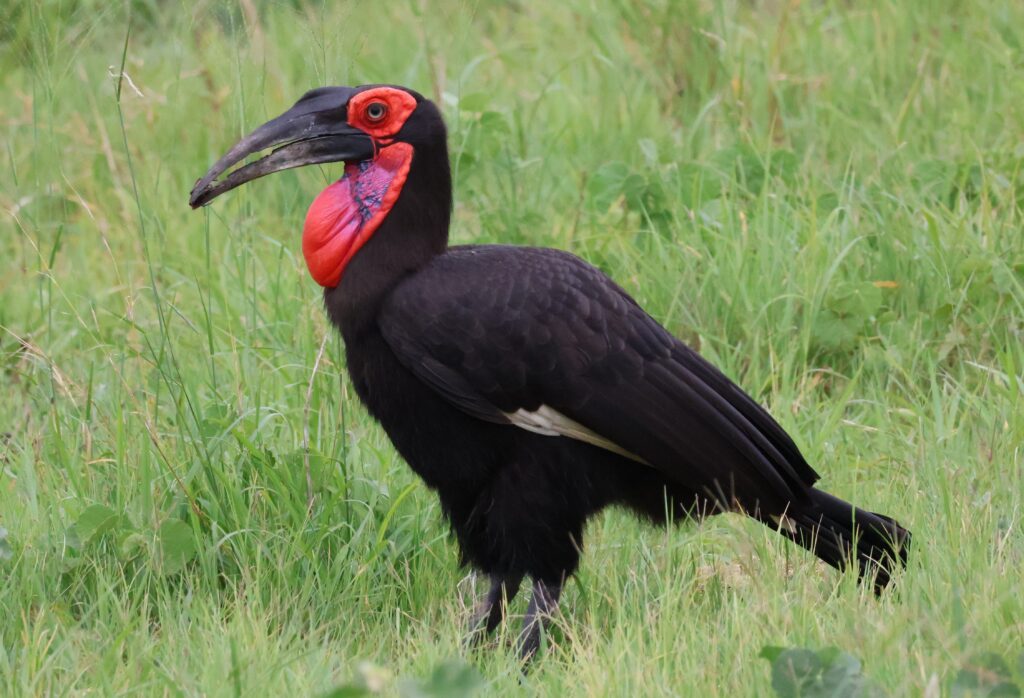
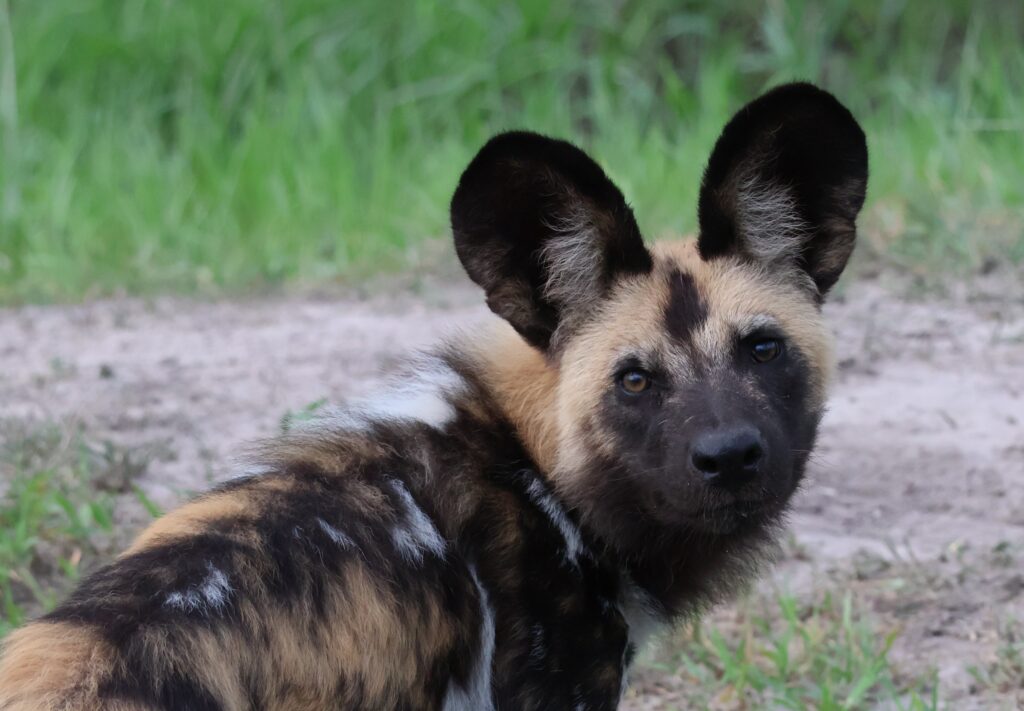
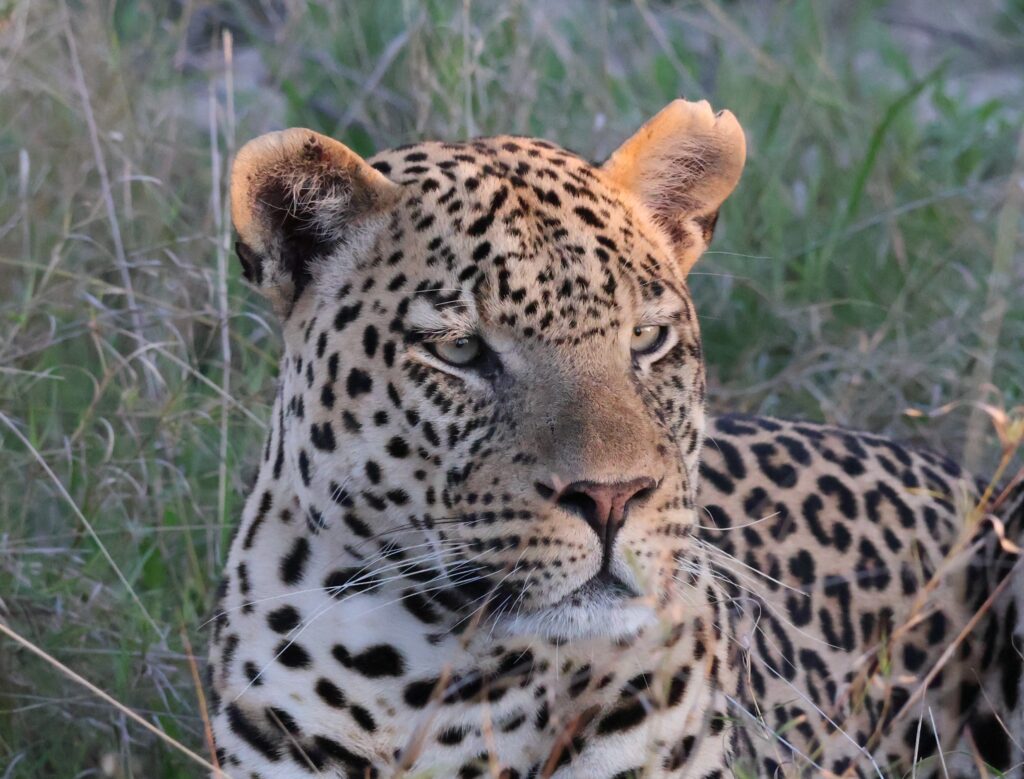
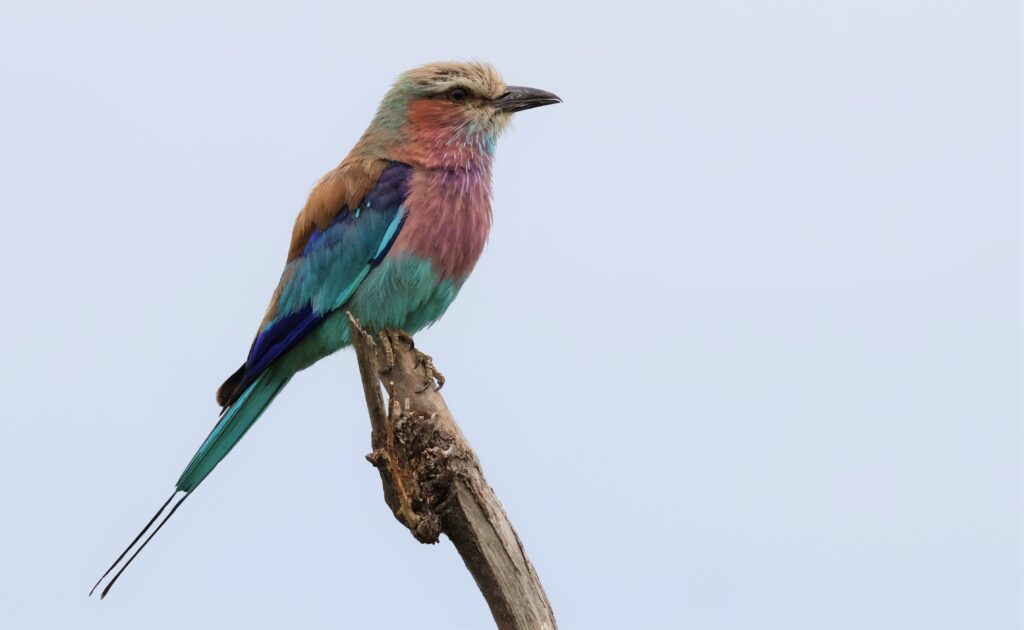
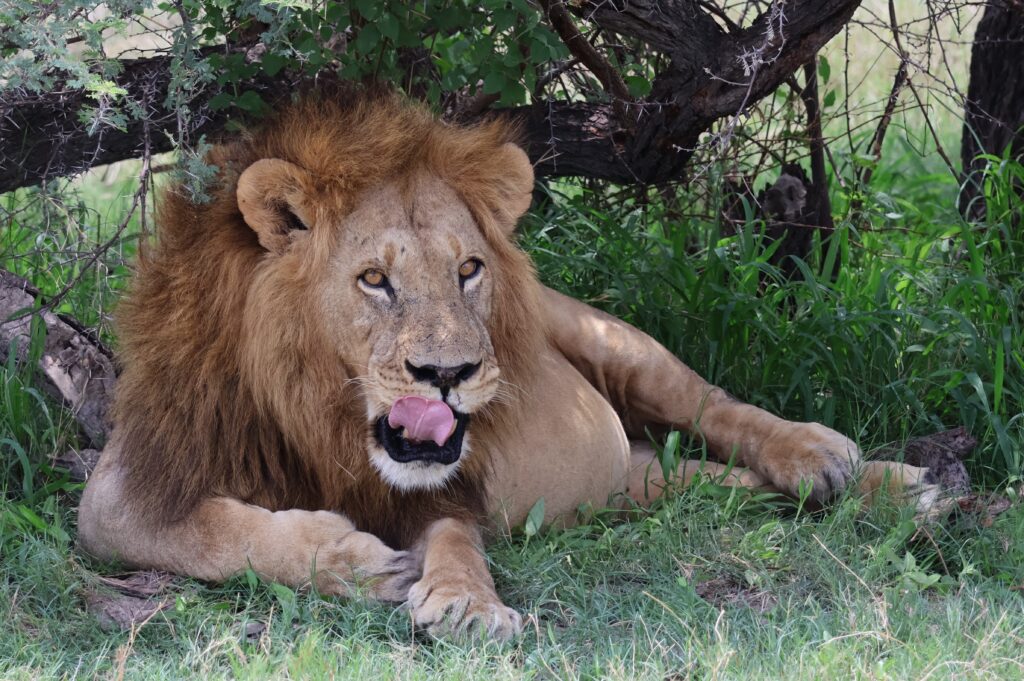
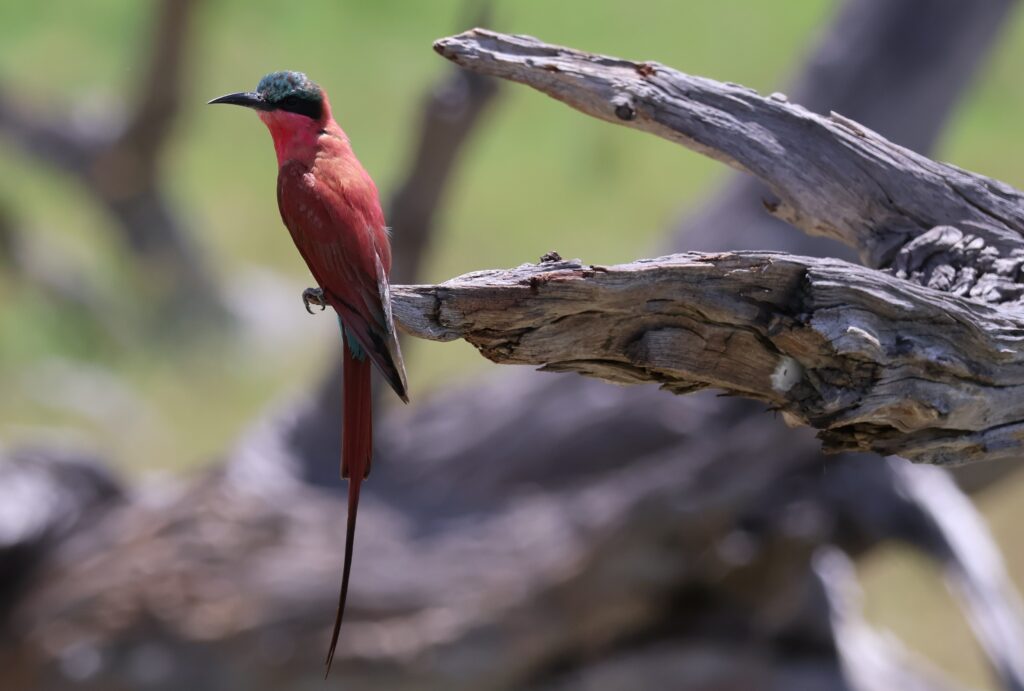
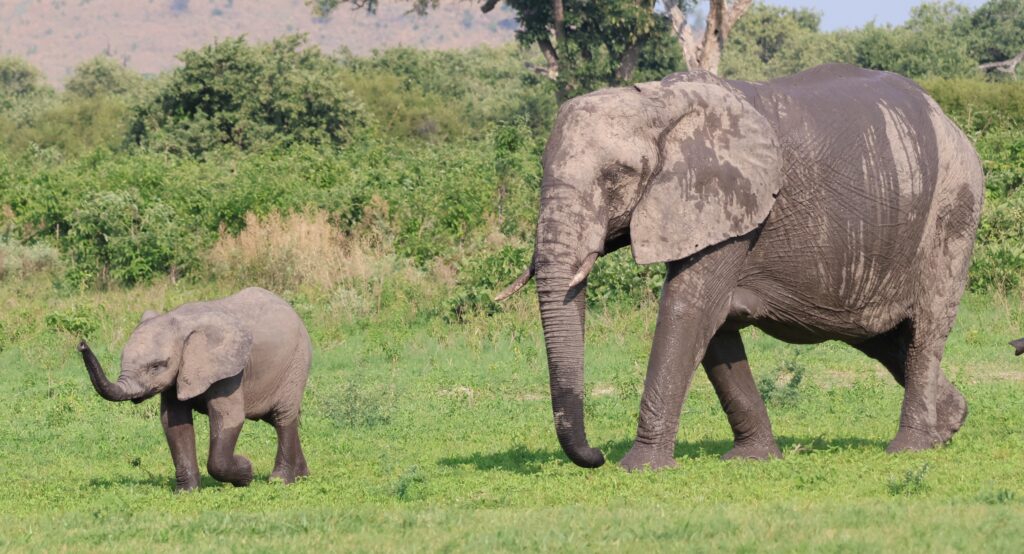
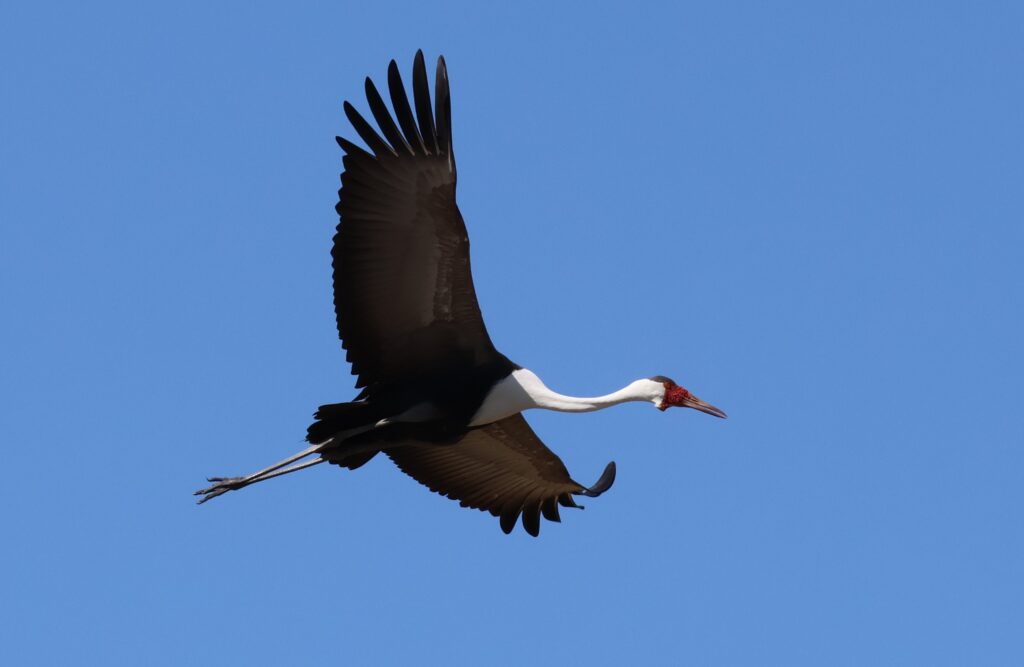
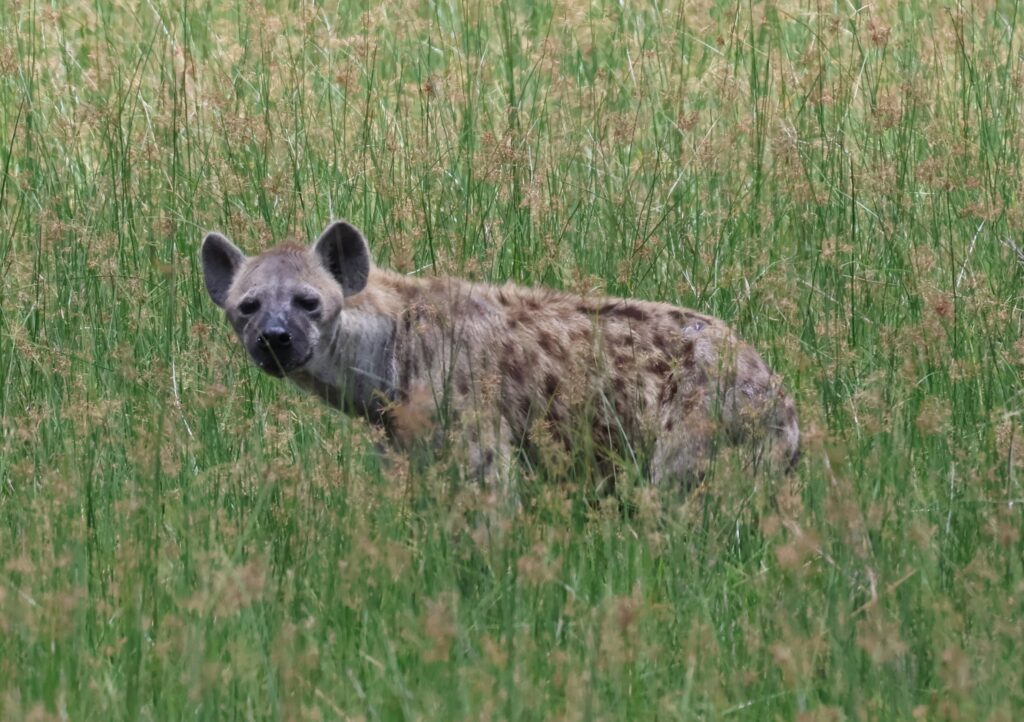
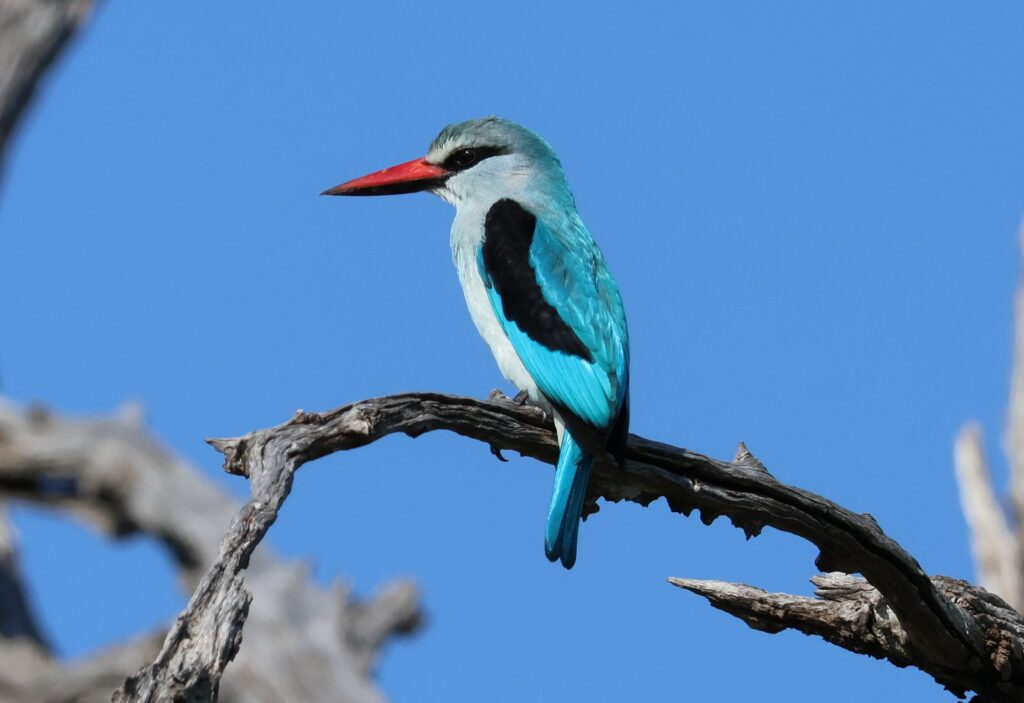
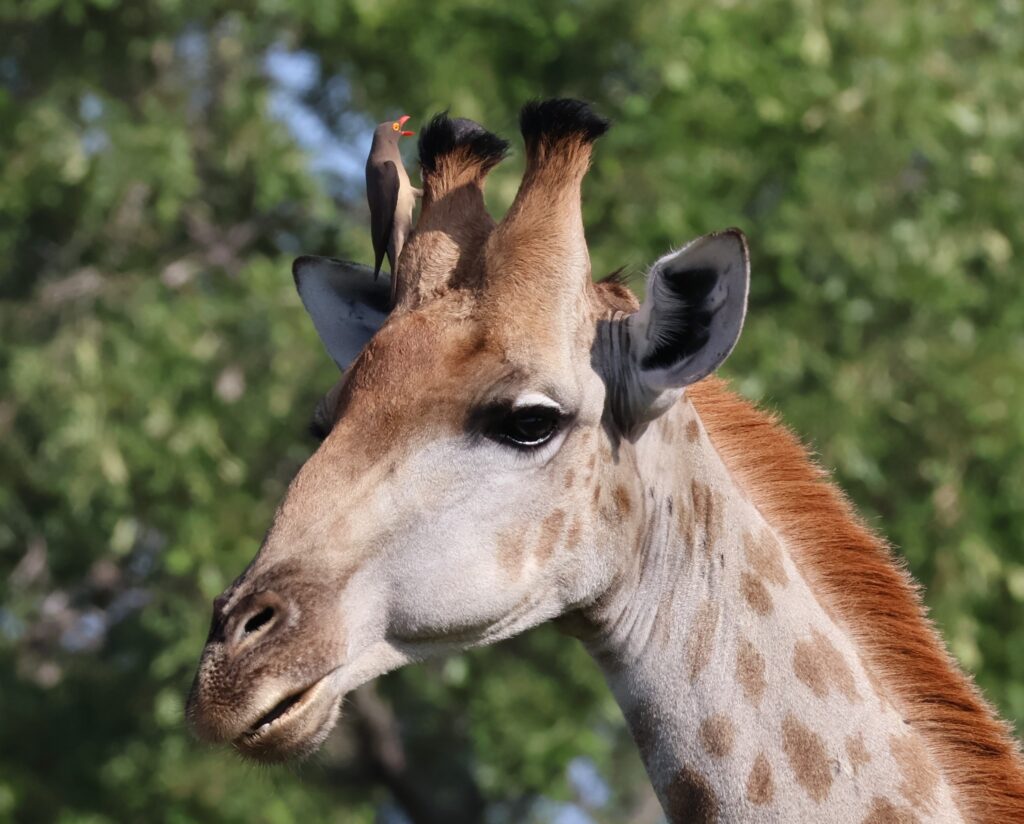
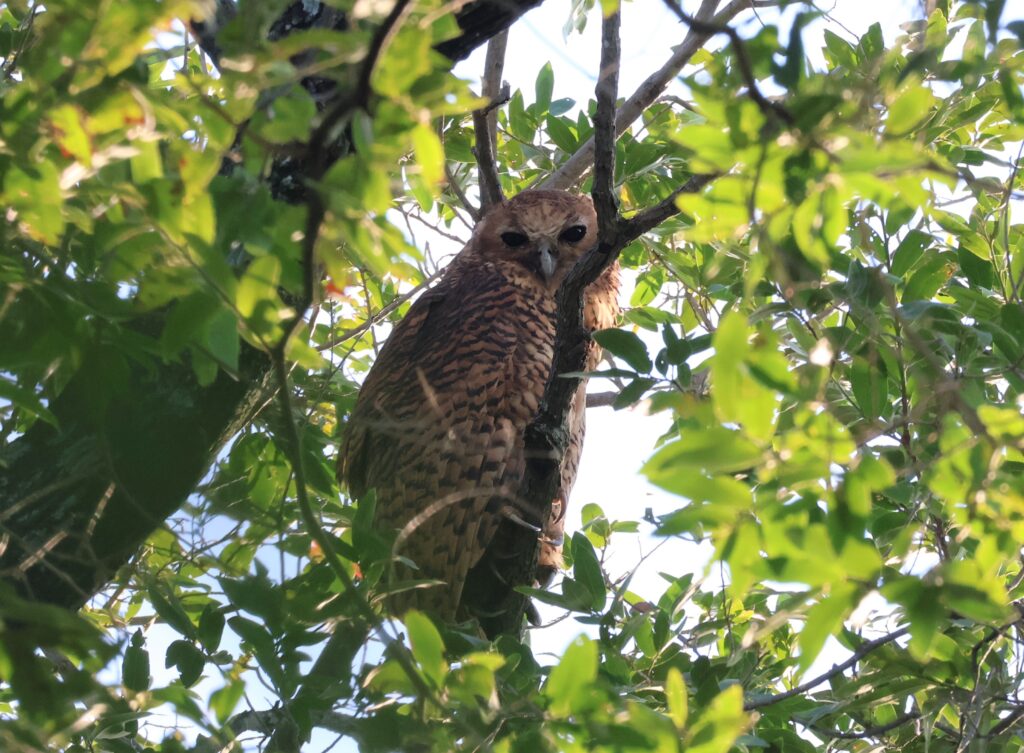
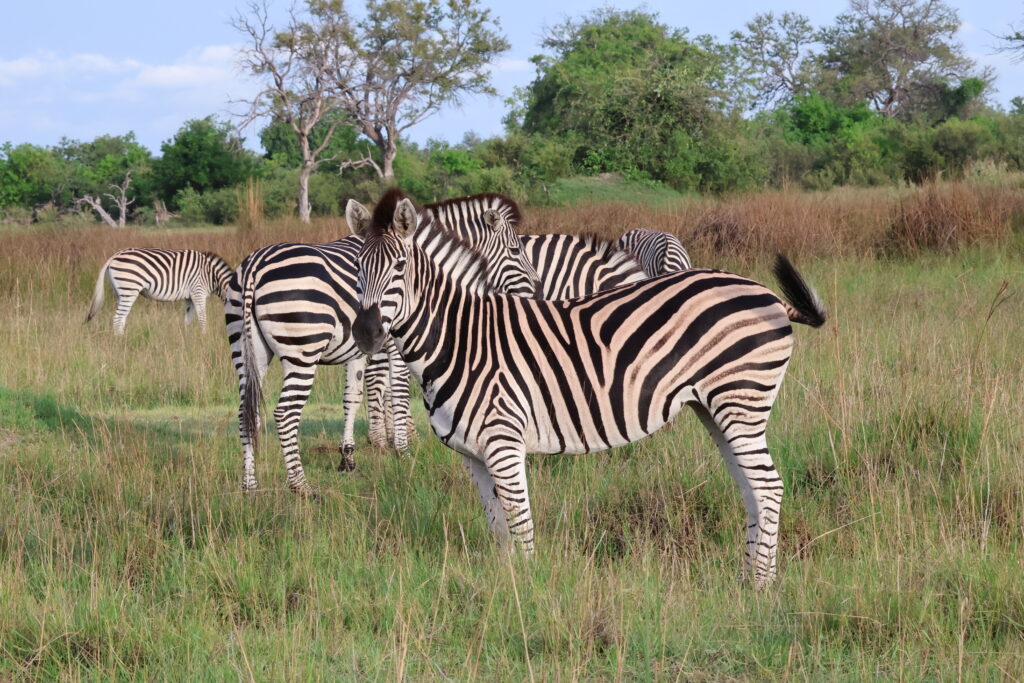
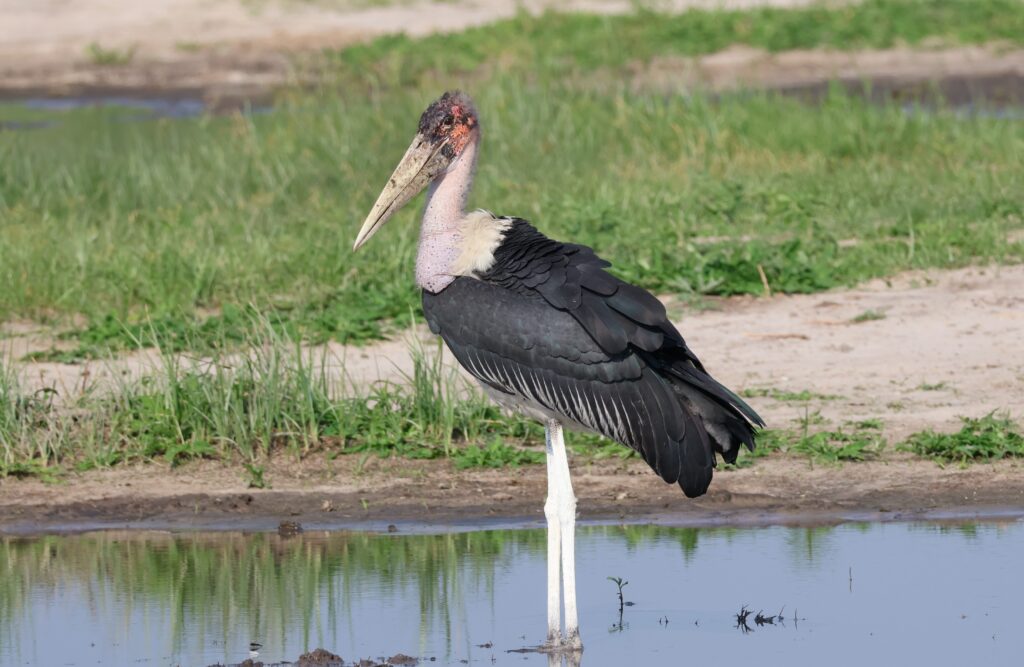
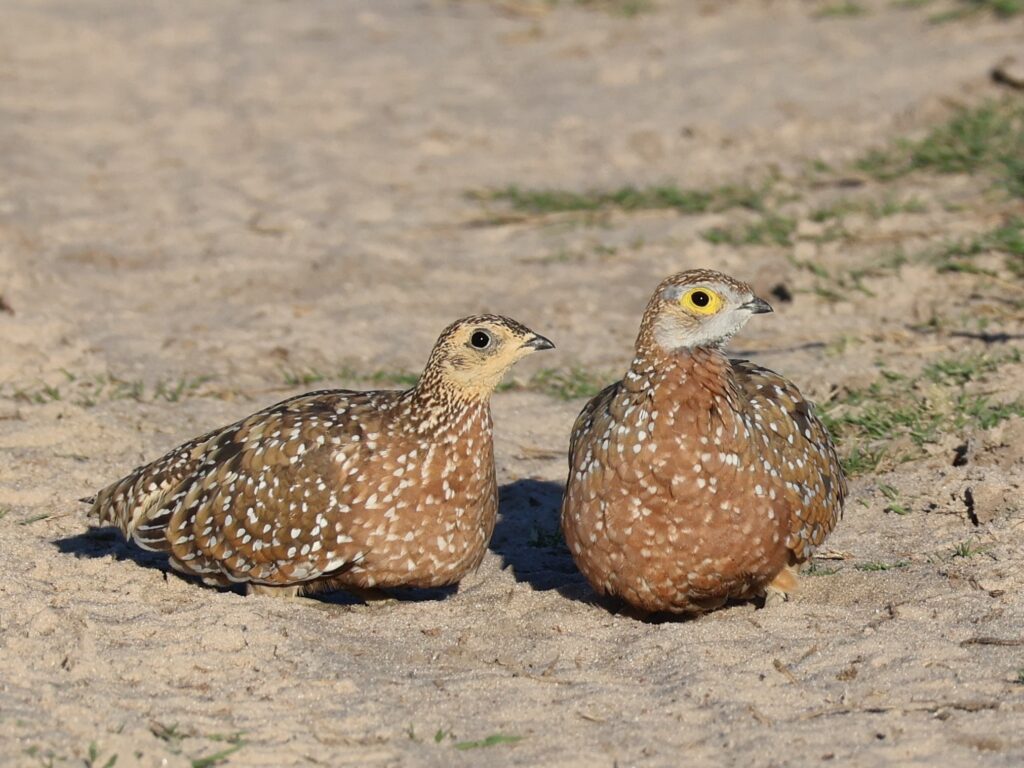
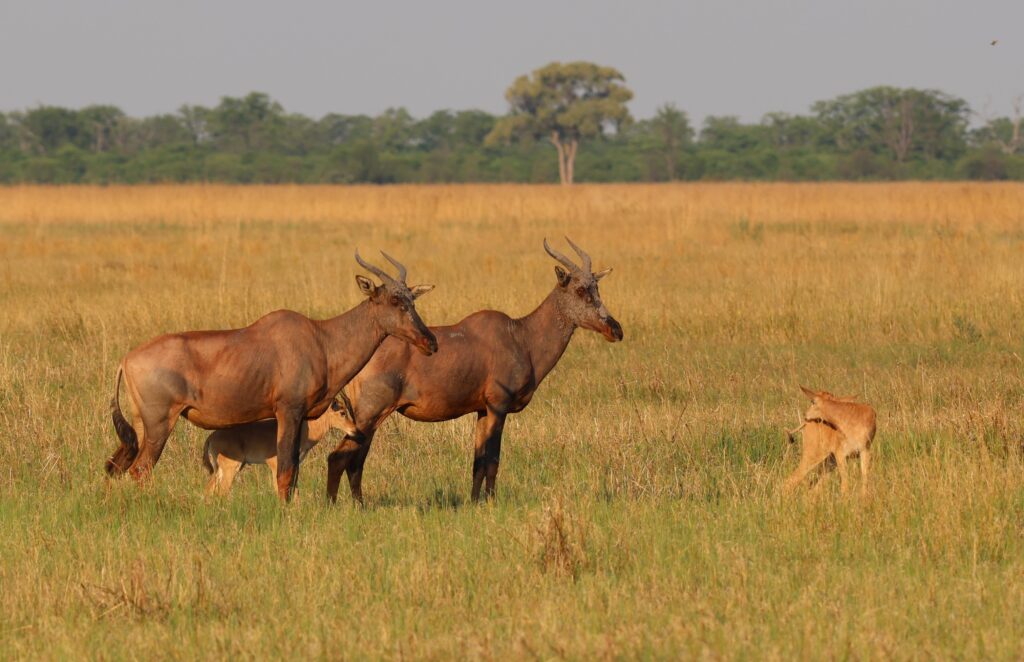
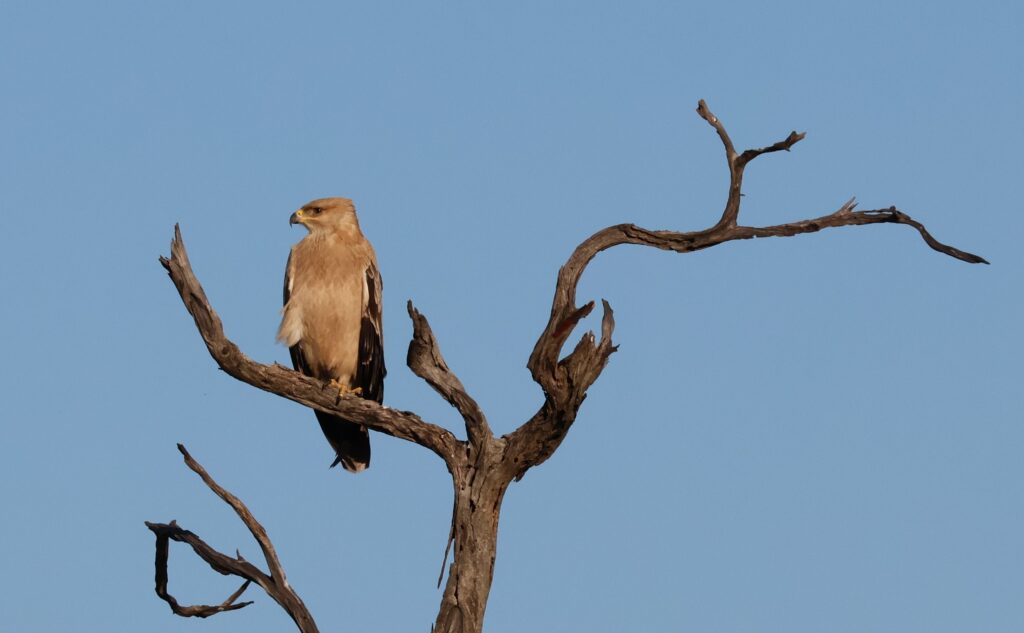
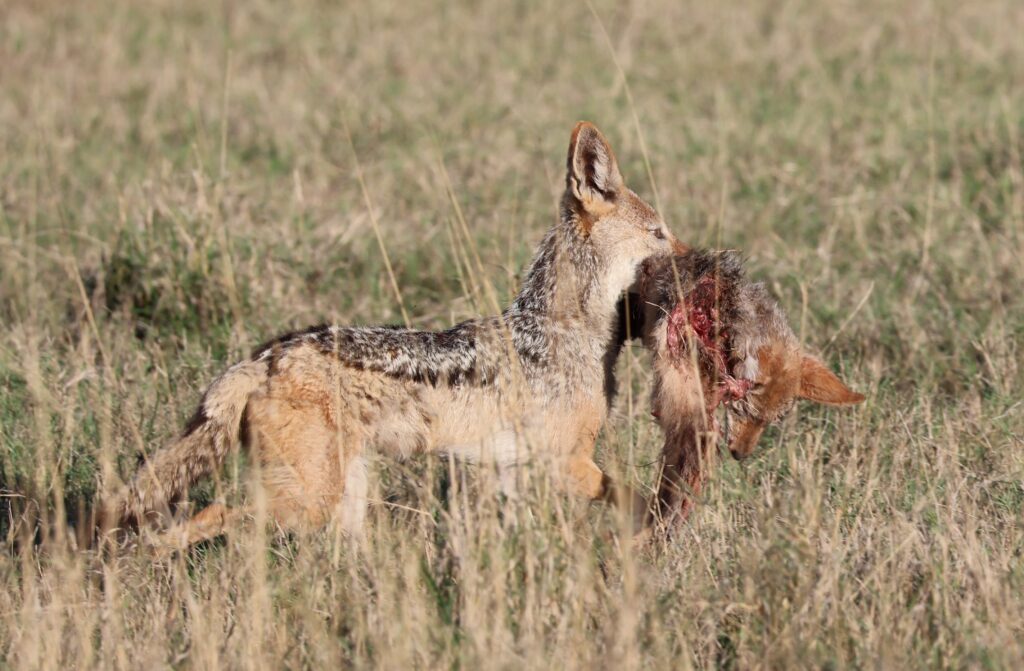
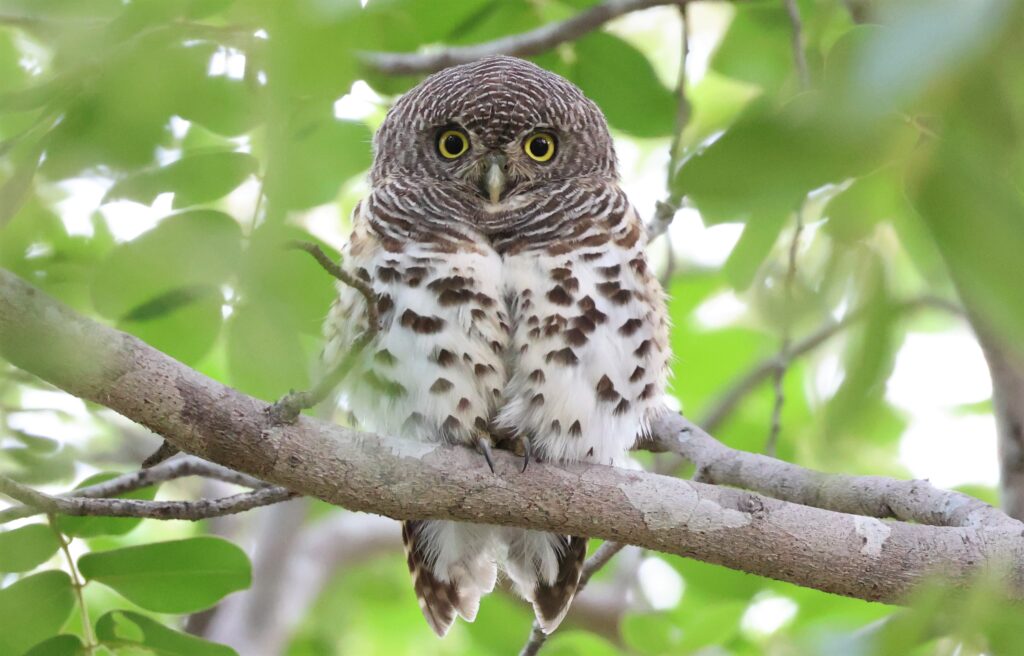
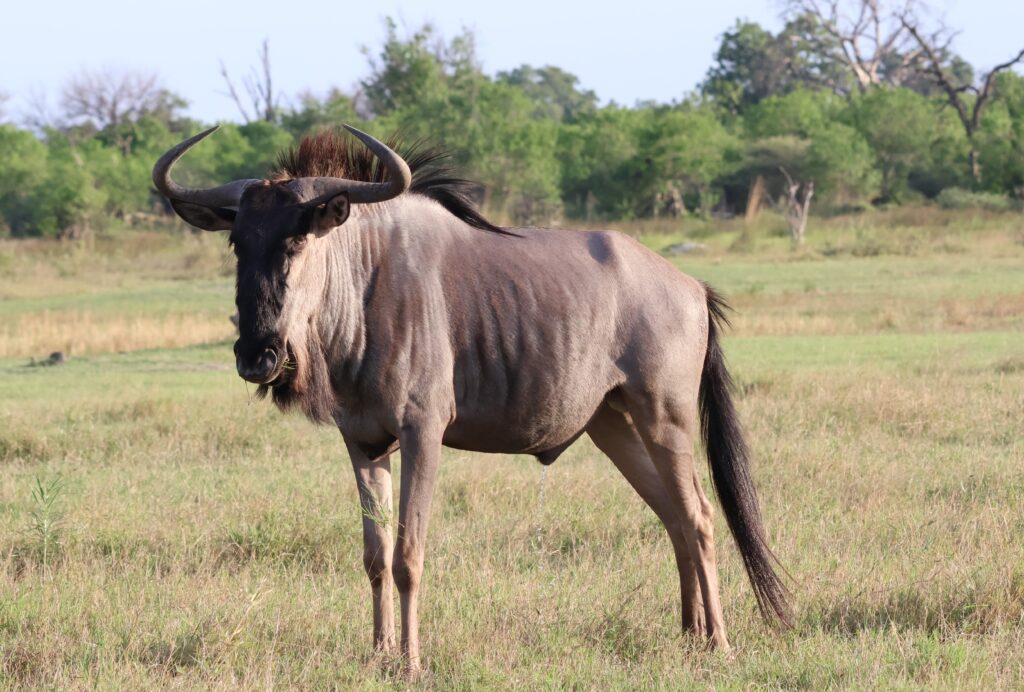
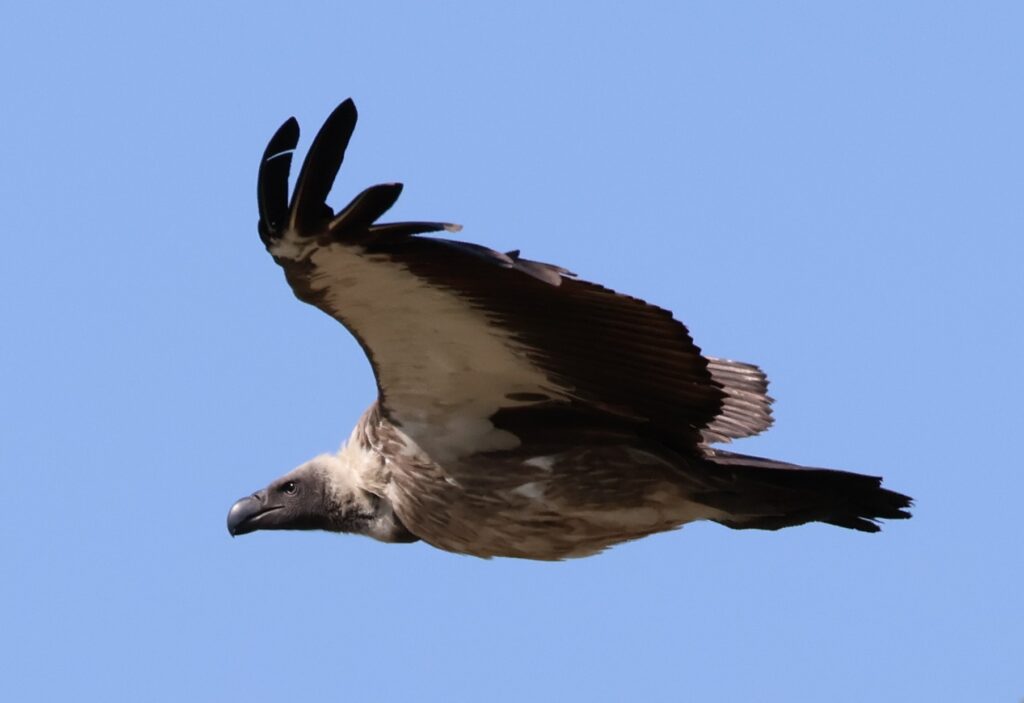
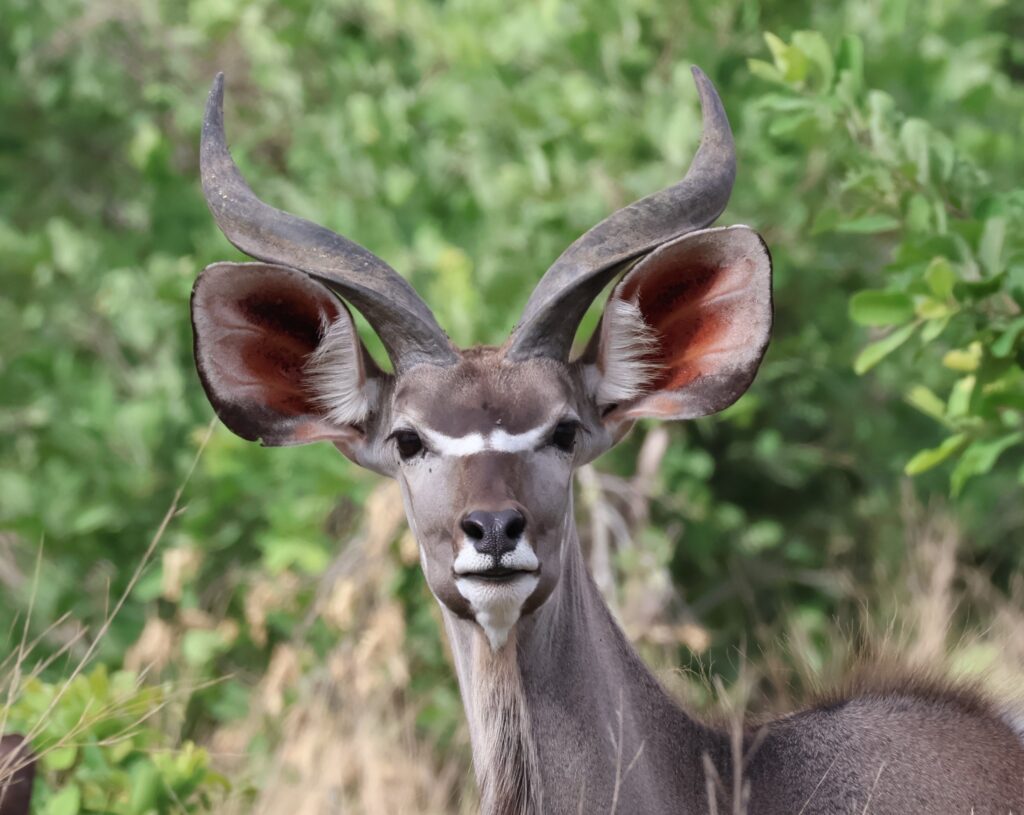
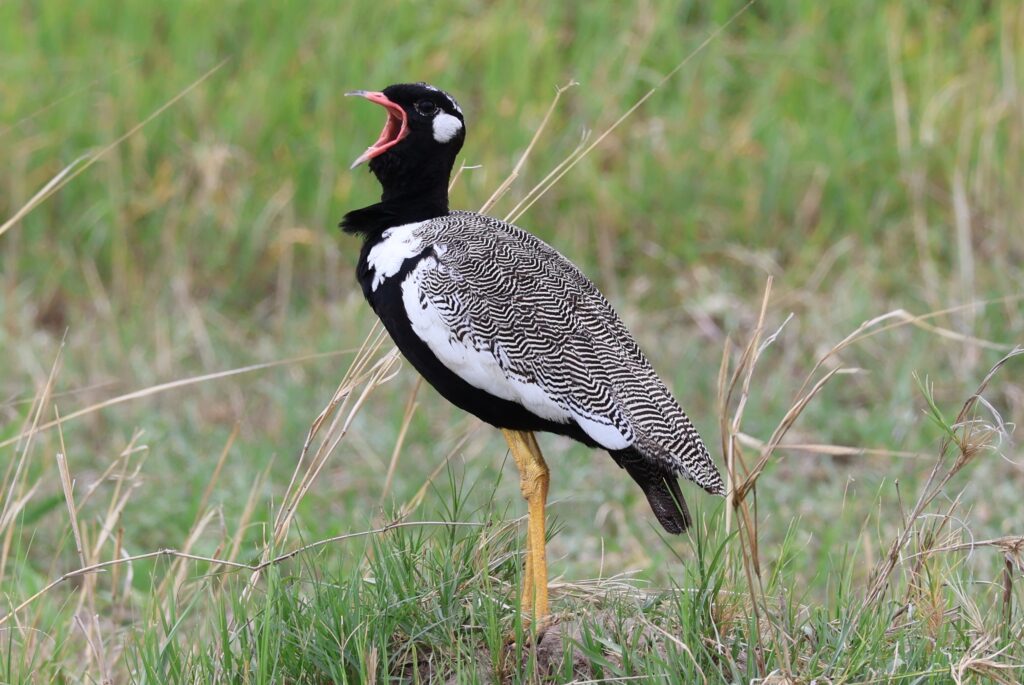
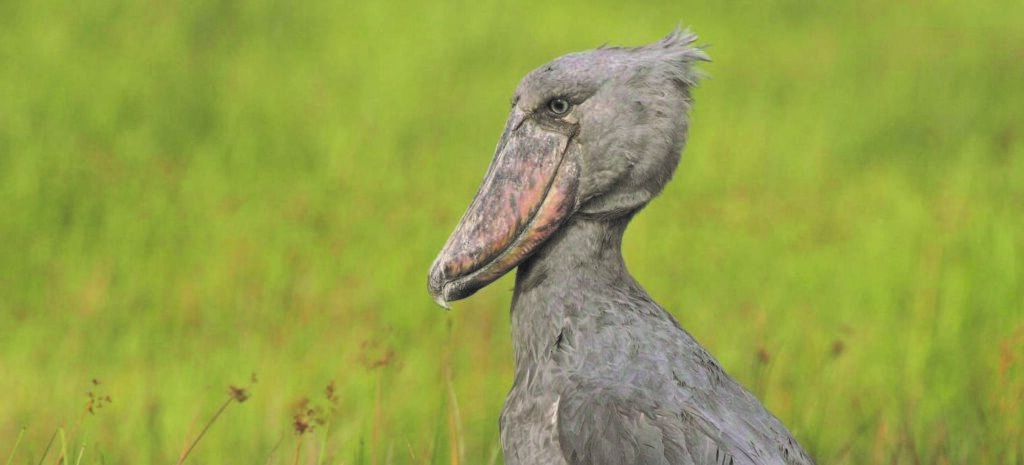
Following a breath-taking inaugural tour to the region in 2022, we are delighted to offer this truly once-in-a-lifetime trip covering Botswana’s Okavango Delta. We visit at the start of the rains – the best time of year for birding here, and we combine some time in lodges with an 11-night mobile tented safari immersing ourselves in the true African bush experience and seeing up close some quite extraordinary wildlife spectacles. Primarily a birding tour, mammals also feature highly too of course and we can expect many sightings of Lion, African Elephant, Southern Giraffe, Burchell’s Zebra, Black-backed Jackal, Hippopotamus and Blue Wildebeest, with more luck required to see Leopard, Spotted Hyena, the declining Cheetah, and nomadic African Wild Dog (all seen on our 2022 tour). Some special birds of the delta include the Wattled Crane (here with it’s highest population density in Africa), Slaty Egret and magnificent Pel’s Fishing Owl, which we target with a two night stay in the so-called ‘panhandle’, one of the best places in the World to see it. A plethora of kingfishers, rollers and bee-eaters provide a backdrop to our birding throughout the tour, and there are raptors galore too with Tawny eagle, Amur Falcon and the mighty Lappet-faced Vulture among the highlights. We visit vast colonies of Collared Pratincoles, watch Marabou and Wooly-necked Storks gather to feed on hatching termites, witness the displays of Northern Black Korhaan and massive Kori Bustard, and are serenaded to sleep at night by calling African Scop’s owls and African Barred Owlet. Small birds include such gems as Green-winged Pytilia, Brown Firefinch, Luapula Cisticola, Swamp Boubou and Violet-backed Starling, and of course there are wetlands brimming with herons, egrets and waders too. Scroll down to ‘Additional Information’ for more details about the tour logistics and what to expect – this is a big tour, but it is conducted at a fairly relaxed pace and includes little walking. There are many elements to the tour logistically too but along with our partners on the ground at Letaka Safaris, we will manage everything seamlessly so you can truly enjoy the most incredible African safari experience. You can expect to see 260-290 bird species and 30-40 mammals.
Please see under ‘Tour Reports’ below for a photo album from the 2022 tour
DAY ONE
Take an evening flight from London Heathrow airport to Johannesburg, arriving the following morning.
DAY TWO
After arrival into Johannesburg, we connect onwards to Maun in Botswana (flight time around 90 minutes). On arrival, we are transferred the short distance to our overnight hotel. There will be some time for a birding walk along the river in Maun next to our hotel, with a chance to familiarise ourselves with many common Southern African birds. Grey Go-Away Bird, Golden Weaver, Black-collared Barbet, Burchell’s Starling, Blue Waxbill, Red-faced Mousebird, Jacobin Cuckoo and a whole host of wetland birds including African Pygmy Goose, may be seen. We will probably see our first Hippo’s too! Overnight Maun Lodge.
DAY THREE
We have a leisurely start to prepare ourselves for long days ahead, and after our long flight the previous evening. During the morning, we head back to Maun airport and take a charter flight to Shakawe, transferring on to Xaro Lodge by a combination of road and a short boat ride along the Cubango River. The Okavango panhandle is home to some 350 species of bird and Xaro Lodge is situated in this focal point of avifaunal diversity. Many special Okavango birds can quite easily be seen here. It is arguably one of the best places to see Pel’s Fishing Owls and sightings are very reliable; a guided walk in the right area of undisturbed riparian forest will invariably produce views of one of these majestic owls from its shady diurnal roost and this will be a key target for this leg of the tour. African Skimmers arrive in late winter when the sandbanks in the river start appearing and almost every exposed sandbank will have a nesting pair during spring. The water level is at its lowest now and large numbers of waterbirds congregate along the main river channel and its surrounding floodplains. These floodplains are then frequented by almost every species of southern African heron and egret. The papyrus swamps are home to the Greater Swamp Warbler and the Coppery-tailed Coucal too.
Overnight Xaro Lodge.
DAY FOUR
The quiet backwaters of the Ngarange channel just downstream of Xaro is another extraordinary birding area not to be missed. The backwaters in the channel are covered with water-lilies and attracts a multitude of waterbirds which includes large numbers of African Jacana and the occasional Lesser Jacana, the beautiful Pygmy Geese are also plentiful in these habitats. The secretive Allen’s Gallinule is also regularly seen here. Numerous species of Bee-eaters and kingfishers occur in the area. Colonies of White-fronted Bee-eaters are present in spring both upstream and downstream of Xaro Lodge and Little Bee-eaters are common residents throughout the year. Kingfishers are plentiful too with Pied, Malachite and Giant often seen around the lodge frontage.
The remaining specials are to be found mainly in the riparian forest. The lodge grounds and its immediate surrounds are the best place to start looking and to explore the surrounding forest and woodland on foot as part of a guided walk. You won’t have to go far to see Violet-backed Starling, Swamp Boubou, Hartlaub’s Babbler and even Brown Firefinch. Xaro Lodge is truly a bird watching and bird photographers haven where special sightings and unique photographic opportunities are certainly the order of the day. After dark, Hippo come out to graze the lawns around our cabins! Overnight Xaro Lodge.
DAY FIVE
Maun to Xakanaxa / Travel Day / 140km (4 hrs)
We will depart by charter flight from Shakawe to Xakanaxa airstrip in Moremi Game reserve, Okavango Delta. Our first three nights are spent in the Xakanaxa region where we explore the surrounding wilderness on morning and afternoon game drive excursions. Every type of mopane habitat is well represented in this drive from the towering cathedral woodlands to the classic climax mopane woodland and in the drier and harsher habitats, extensive stretches of scrub mopane. The San-ta-Wani region has scattered ephemeral water pans with large floodplains and camel-thorn woodlands. 40 km of the drive is in Moremi Game Reserve with a further 40 km in areas designated for wildlife management where animals roam freely to and from the Game Reserve. This is a good area for raptors with African Hawk-Eagle, Gabar Goshawk, Shikra, Tawny Eagle and Brown Snake-eagle all inhabiting the mopane and adjacent woodlands. Other birds common along this route includes most of Botswana’s hornbills including Red-billed, Southern Yellow-billed, African Grey, Bradfield’s and the Southern Ground Hornbills. A large number of brood-parasites may also be seen. Diederick Cuckoo, Levaillant’s Cuckoo, Jacobin Cuckoo, Great-spotted Cuckoo, African Cuckoo, Common Cuckoo, Shaft-tailed Whydah, Pin-tailed Whydah, Eastern Paradise Whydah, Greater Honeyguide, and Lesser Honeyguide all being present.
Overnight Letaka Tented Camp
DAYS SIX & SEVEN
Xakanaxa Exploration Days – Moremi Game Reserve
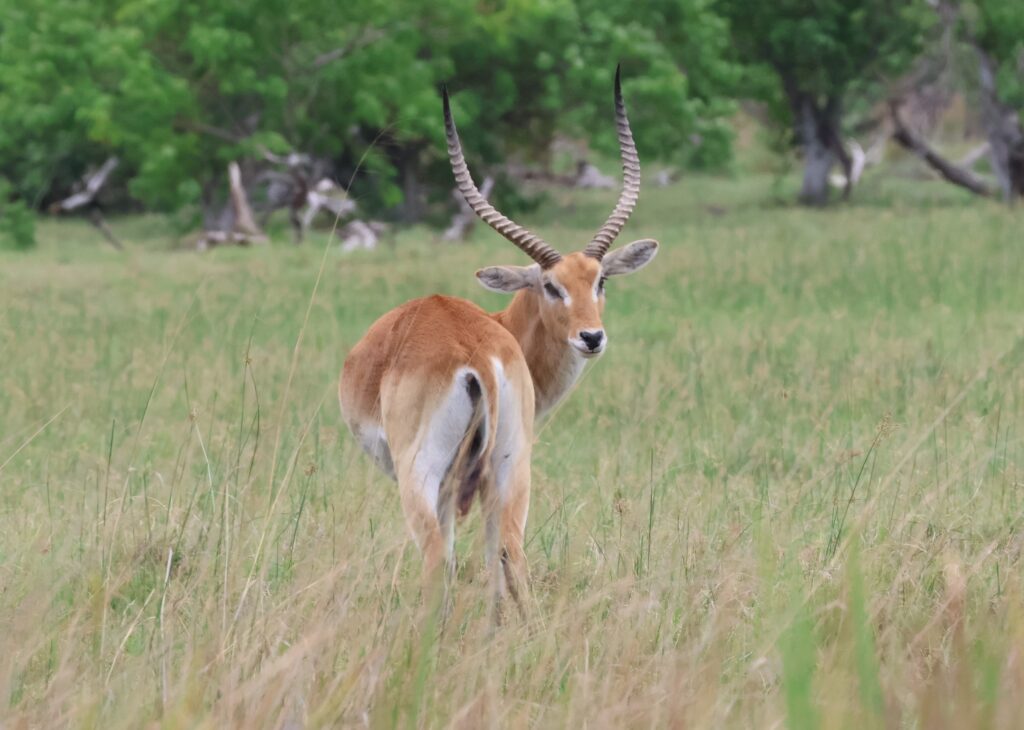
Moremi lies on the eastern extremity of the Okavango Delta. Habitats here range from wide-open floodplains, marshes, lagoons, papyrus fringed channels, vast stands of Miscanthus and Phragmites, woodland and savannah. As a result of the extremely variable habitat the diversity of both wildlife and birdlife is excellent. Moremi is amongst the best game reserves in Africa for viewing the endangered African wild dog. Xakanaxa is home to a resident herd of several hundred buffalo whose range covers the territories of at least 4 prides of lion which may often be seen flanking the ever moving herd. Breeding herds of elephant move between their browsing areas in the mopane forests and the fresh water of the Okavango. Red lechwe are one of the more unusual antelope species and commonly found here. The swampy areas of Xakanaxa are home to African Rail, Coppery-tailed Coucal, Black Crake, Chirping Cisticola, Luapula Cisticola, Purple Swamphen, Allen’s Gallinule to name but a few. The open waters attract African Skimmer, Saddle-billed Stork, Yellow-billed Stork, Intermediate Egret, Goliath Heron, African Fish Eagle as well as the globally threatened Slaty Egret and Wattled Crane.
Overnights Letaka Tented Camp
DAY EIGHT
Xakanaxa to Mababe/ Travel Day / 60km (full day of extended game drive and journey time with picnic lunch between camps)
Following an early morning breakfast you take a slow drive through Moremi Game Reserve north-east towards the Mababe Private Reserve. The Manuchira Channel is known as the Khwai River at its eastern most extremity. The day’s journey follows this water course, with the track weaving from the riverside and floodplains into the mopane veld and the woodlands that make this one of the most scenic areas of the Okavango.
The area is teaming with large and small mammals, birds, plains game and predators, including elephant, giraffe, buffalo, hippo, wildebeest, impala, kudu, waterbuck, zebra, steenbok, warthog, leopard, lion, hyena, jackal and even eland and oryx in the western areas of the concession being dubbed as the “mini-CKGR”.
From open grasslands to cathedral Mopane forests, riverine habitats and Kalahari scrub, this area boasts a large variety or differing habitats, flora and fauna.
The concession allows walking and night drives up until 10pm and coupled with the lower vehicle capacity means a much more private experience. Walking is done in areas that have been set aside specifically for walking safaris where no vehicles are allowed. This ensures a much more enjoyable walking experience for our guests when we do our walking activities and also opens up the opportunity to offer multi-day walking safaris in this pristine wilderness.
In the mopane woodlands African Hawk-Eagle, Tawny Eagle, Gabar Goshawk, Little Sparrowhawk, African Harrier Hawk and Shikra are common raptors. Mixed bird parties move through the canopy and include Red-headed Weaver, Stierling’s Wren-Warbler, Scarlet-chested Sunbird, Neddicky, Yellow-breasted Apalis, Chin-spot Batis, Diederik Cuckoo to name but a few. The verges of the swamp form breeding grounds for the Rosy-Longclaw and Kori Bustard.
Overnight Letaka Tented Camp
DAYS NINE & TEN
Mababe Exploration Days
The Khwai River forms a boundary between the reserve and the community area. We spend the following two nights camping at an exclusive campsite perched on te banks of the Khwai River, exploring the Khwai floodplains on game drives both during the day and at night. Exploring after dark with spotlights offers you an opportunity to experience some of the nocturnal animals that are rarely encountered during the day. We will also have the opportunity to explore the surrounding wilderness on foot and mokoro and enjoy an up close and personal encounter with Botswana’s flora and fauna. It is important to note that night drives and guided walks are not permitted within the national parks and reserves. We spend our time between the dry-land habitats of the lead-wood and camel-thorn woodlands and savannahs and the riverside and marshy back-waters of the Khwai. The region boasts excellent populations of both bull elephant as well as breeding herds. Lion, leopard, serval and African wildcat are common predators of the region with wild dog and cheetah being less common. Buffalo use this area seasonally with large herds moving in during the summer rains. The swampy areas in the west are home to red lechwe. Other ungulates include tsessebe, blue wildebeest, giraffe, kudu, sable antelope, roan antelope and impala. This is truly one of Botswana’s birding Mecca’s. The western reaches are prime habitat for the uncommon Rosy-throated Longclaw. The entire length of the river is hunting domain for the Bat-Hawk. Other interesting raptors here are Cuckoo Hawk (rare), Long-crested Eagle and Black Sparrowhawk. More commonly Tawny Eagle, Steppe Eagle, Martial Eagle, Bateleur and African Hawk-Eagle. The waterways host Africa Rail, Greater Painted Snipe, Allen’s Gallinule, Lesser Jacana and Lesser Moorhen.
Overnights Letaka Tented Camp
DAY ELEVEN
Mababe to Central Chobe / Travel Day / 100km (full day of extended game drive and journey time with picnic lunch between camps)
We head further north en-route to Chobe National Park today, were we spend the following three nights camping in an exclusive wilderness campsite in the Central Chobe region. A fascinating days drive looking at some of the evidence of the Paleo-Lake Makgadikgadi that dried up some ten thousand years ago. The most challenging part of the trip is crossing the Magwikwe Sand-ridge that formed the shoreline for this massive inland sea. The winding track through this deep sand makes for interesting travel in the early summer! The old lake bed is now the Mababe Depression. The dense clay floor of the depression result in high protein feed for wildlife and the area teams with game after the rains. During the rain season the depression is impassable due to the “cotton soil” and alternative routes must be used. The range of habitat that is covered encompasses most of the habitat types of northern Botswana. We pass through excellent lion country and some of the best cheetah country that our safari will cover. Elephant occur throughout the drive but are more common at the start and end of the drive where permanent surface water can be found. The Mababe Depression is a birder’s paradise in itself too. The nutritious grasses that grow on the rich soils provide excellent seed for an impressive array of estrillids and viduids. Among these are the magnificently coloured Violet-eared Waxbill, Black-cheeked Waxbill, Village Indigobird, Shaft-tailed Whydah and Paradise Whydah. These in turn provide a good food source for small raptors such as the Little Sparrowhawk, Shikra, Gabar Goshawk, Red-necked Falcon and Lanner Falcon. It is not only the small birds that feed on the grass seeds, but rodents too. There are annual outbreaks of huge numbers of rats and mice. As a result huge numbers of Secretary Bird, Tawny Eagle, Black-shouldered Kite, Steppe Eagle, Lesser-spotted Eagle, Wahlberg’s Eagle and Steppe Buzzard can sometimes be found.
Overnight Letaka Tented Camp
DAYS TWELVE & THIRTEEN
Central Chobe Exploration Days
Unlike the vast majority of the country, Central Chobe is not a totally flat landscape. Large outcrops of volcanic rock reach up out of the Kalahari sands, towering over the endless savannah. These hills provide habitat for a completely different array of small wildlife, birds and plants. The Savuti Marsh has been the stage for many of the most dramatic wildlife documentaries in Africa. The wide open country, good ungulate populations and particularly strong prides of lion and hyaena clans make for dramatic wildlife interaction and excellent viewing opportunities. The now dry Savuti Channel runs through this landscape linking the dry sand-veld, the waterholes, the hills and the grassland that was the (now dry) Savuti Marsh. The area is inhabited by a huge pride of lions with numbers fluctuating from 20-30 members. These remarkable lion have learned over the years how to hunt elephant that are supposedly above predation. Launching their attack under darkness and using their numbers, they manage to kill adolescent and even young adult elephant. The marsh is prime cheetah country too and in the wet season it is not unusual to have the wild dog hunting here in Central Chobe. The surface water that is pumped by the Government here provides a major attraction for birdlife. Red-crested Korhaan are common in the Kalahari Apple-leaf (Lonchocarpus nelsii) veld. The marsh is the summer home for good numbers of Caspian Plover and Montague’s Harrier as well as Chestnut-backed Sparrowlark, Grey-backed Sparrowlark, Northern Black Korhaan, Rufous-naped Lark, African Pipit and Desert Cisticola. Dickenson’s Kestrel, Amur Falcon and Red-necked Falcon are found along the perimeter of the marsh and Pallid Harrier is an increasing summer visitor. hatches of winged termites here can be spectacular as a whole range of species takes advantage of the bounty – huge flocks of Collared Pratincoles, Lilac-breasted and European Rollers, Blue-cheeked, European and Southern Carmine Bee-eaters, Marabou and Wooly-necked Storks, Amur Falcons and Tawny Eagles can often be seen!
Overnights Letaka Tented Camp
DAY FOURTEEN
Savuti to Chobe River / 170km (full day of extended game drive and journey time with picnic lunch between camps)
We will leave Savuti early to travel north towards the Chobe River stopping along the way for lunch before arriving at our final campsite near the Chobe River. The habitat on today’s drive takes us through the stunted mopane scrub of the Goha clay basin, across the sand-ridge and through the wonderful Zambezi teak woodlands of the Chobe Forest Reserve and along the Chobe River itself. The Chobe floodplain is tens of kilometers wide and in years of exceptional rains the water stretches as far as the eye can see. While there are community areas that we pass through that are settled by local tribes, for the vast majority of the day’s drive we pass through wild country where wildlife moves un-inhibited by fences or man. Roan and sable antelope thrive in the teak woodlands where the low density of predators and lack of competition for food by other ungulates makes this prime habitat for these larger species. Leopard occur in these woodlands in low numbers but they are highly secretive and seldom seen. The Goha region has natural waterholes that hold water well into the dry season and herds of buffalo, Burchell’s zebra, greater kudu and elephant come down to drink. The most unusual bird species are to be found in the teak (Baikea plurijuga) woodlands. This broad-leafed woodland, or miombo as it is locally known, provides good pickings for insectivorous birds that favour canopy habitat. Grey Tit-Flycatcher, Ashy Flycatcher, Paradise Flycatcher, Pallid Flycatcher, Scarlet-chested Sunbird, Amethyst Sunbird, Yellow-throated Petronia, Red-headed Weaver and Violet-backed Starling are only some of the species that move around in the “bird parties” in the canopy. Dickenson’s Kestrel, Red-necked Falcon, Peregrine Falcon and Lizard Buzzard are some of the raptors to keep an eye out for, while the diminutive White-faced Owl can often be seen roosting in the road-side vegetation. Flappet Lark, Fawn-coloured Lark, Dusky Lark, Icterine Warbler and Neddicky are among the species likely to be enjoyed.
Overnight Letaka Tented Camp
DAY FIFTEEN
Chobe Exploration Day (Chobe National Park)
The Chobe River is presided over by an impressive sand-ridge. Along this sand-ridge broad-leafed woodland is the dominant vegetation. As you move into the valley the impact of the high elephant population is felt with the paucity of large trees that typically line the rivers of sub-tropical Africa and the dense tangled masses of knobbly combretum Combretum mosambicense and wooly caper bush Capparis tomentosa that appear impervious to the constant onslaught of browsers. The river itself is broad and meandering and in the flood season it is an impressive sight. To the east, outside of the park lie the riparian forests that are home to so many of the more tropical species whose ranges end abruptly in north-eastern Botswana. Much of the Chobe’s wildlife come to drink in the latter half of the morning and early afternoon when the heat excites their thirst. Breeding herds of elephant seem to be around every corner here and the massive herds of buffalo are constantly flanked by the ever-hungry lions of the Chobe. This is one of the highest lion densities of any National Park or Game Reserve in southern Africa. Puku antelope occur nowhere else in southern Africa except here on the Chobe floodplains. With the diminishing woodlands and thickets the magnificent Chobe bushbuck is becoming ever-more scarce. The western Chobe supports strong herds of Burchell’s zebra too. Bat-Hawk, Cuckoo Hawk, Eurasian Hobby and Ovambo Sparrowhawk are some of the more interesting raptors. Luapula Cisticola, Malachite Kingfisher, Quail Finch and Rosy-throated Longclaw are found on the edges of the floodplain. Much larger flocks of the nomadic Collared Pratincole and also Black-winged Pratincole, numbering in their thousands, can sometimes be found on the dry floodplains. The woodlands support Racket-tailed Roller, Stierlings Wren-Warbler, Tree Pipit and Miombo Rock-Thrush.
Overnight Letaka Tented Camp
DAY SIXTEEN
Kasane – Safari ends
Our last day on safari will find you up early to make your way towards Kasane for a 3 hour boat cruise on the Chobe River. This river forms the border with Namibia and provides some excellent birding and photographic opportunities. Half-collared Kingfisher is the main target bird but we might also expect Lesser Jacana, Luapula Cisticola, Levaillant’s Cuckoo, African Snipe, White-backed Night-Heron, Black Egret and Brown-hooded Kingfisher. From here, we transfer the short distance (half an hour) to the Zimbabwe border crossing where we are collected by another tour company on the Zim side of the land border and drive a further hour to Victoria Falls. We arrive at our accommodation for the next two nights, which is close to the falls, during mid afternoon with time for some birding from the hotel’s observation tower, which distantly overlloks the falls and mighty Zambezi River. Gazing across into Zambia, we might see Sacrlet-chested and Amethyst Sunbird, African Yellow White-eye, Violet-backed Starling, Little Swift, Bronze Mannakin and Yellow-fronted Tinkerbird.
Overnight Shongwe Lookout
DAY SEVENTEEN
Victoria Falls
We have a free day today where we will arrange our visit to Victoria Falls. This will involve a half day birding excursion through the ‘rainforest’ woodland overlooking the falls, a unique habitat created by the constantly humid conditions fuelled by the spray from the falls. It is important to note that we visit when the falls are at their lowest, and some sections may be completely dry, but there is always water in the main falls and it is still spectacular. Indeed, levels of spray are also at their lowest now, so that the views of the falls are far less impeded than during peak flow season. Birdwise, we will have three min targets – the extremely localised endemic Schalow’s Turaco, and both Trumpeter Hornbill and Rock Pratincole, the latter breeding on islands in the Zambezi river. The afternoon will be a chilled out affair at the hotel, in preparation for our long journey home.
Overnight Shongwe Lookout
DAY EIGHTEEN
Transfer to airport
We will fly from Victoria Falls back to Johannesburg to catch our late evening flight back to London.
DAY NINETEEN
Arrival back in the UK
WHAT’S INCLUDED
Return flights London to Johannesburg, internal flights up to Maun, on to Shakawe and back to Johannesburg from Vic Falls at end of the tour. One night in Maun, two nights at Xaro Lodge, the 11 night tented safari (with all meals) and two nights at Shongwe Lookout. All meals, transfers, guiding, reserve entry, boat trips,
bilingual birding guide also included.
WHAT’S NOT INCLUDED
Travel to and from London and any overnight stay that may be required. Visa for entry to Zimbabwe ($55), tips for the guide and safari crew (allow £275 per person), drinks while staying at the lodges (all-inclusive on safari element) and any items of a purely personal nature.
FLIGHTS
We plan to use a British Airways direct flight overnight to Johannesburg from London Heathrow. On arrival, we have to clear customs and collect our baggage, before checking in again for the onward flight to Maun (this is because it is a different airline). For the ‘bush flights’, we use a company called MackAir who operate a fleet of 12-seater planes and the luggage allowance (total including hand baggage) is billed as 20KG. This is very tight for taking lots of optical and camera equipment but it is manageable – laundry service is available throughout the safari which helps. The flight up to Shakawe and the flight down to Xhakanaxa are both around one hour duration, and provide incredible views of the Okavango from the air. Both these sites are merely an airstrip with no ‘terminal’ or other facilities.
PRICING
This is a big trip, and you will no doubt be comparing pricing between companies offering a similar package. Some important points to bear in mind when considering the cost, which may be more expensive than some of our competitors. Firstly, we will take a maximum of SIX clients, though due to tent configurations, this may well be just five. Secondly, we will always send a UK tour leader so you wont be managing tricky flight logistics on your own. It will also give a 2-1 client-guide ratio on tour. Our trip also includes a two night extension at the start, to the panhandle to find Pel’s Fishing Owl – you won’t see this bird without this ‘add-on’. Finally, the overall length of the trip is 16 nights in Botswana/Zimbabwe, plus the two overnights on flights, so longer than most other similar trips. This gives you the best possible chance to connect with all the birds and mammals on offer.
SAFARI
The mobile tented portion of the tour is a truly wonderful experience to get you in amongst the African bush and it’s wildlife. But it’s important to understand what it entails. Tents are spacious and robust with a camp bed (surprisingly comfortable and all bedding provided of course) and small table but nothing else. Each tent has it’s own adjoining outdoor bathroom area which is open air. This includes a long-drop toilet and overhead bucket shower which is filled each day after lunch with warm water for washing. None of the camping spots are fenced in any way and wildlife can (though rarely does) walk through the camp. Most wild animals will avoid human contact so encounters in camp are highly unlikely though you may hear Hyena, Lion and Hippo in particular, close by. Three camp staff stay with us at all times and look after you throughout your stay with replenished hot water, making up beds and tidying tents, building a camp fire for each evening and cooking fantastic food which is all cooked over hot coals. This amazingly includes fresh bread and cakes every day, and delicious desserts all from the ‘safari oven’. All your drinks on safari, including alcoholic beverages, are included. You are not required to play any part in the setting up and taking down of the camp, which will be moved four times during the safari. Temperatures are likely to be very warm, so tents can be hot for rest during the day, but are pleasantly cool at night.

Safari vehicle and camp dinner table
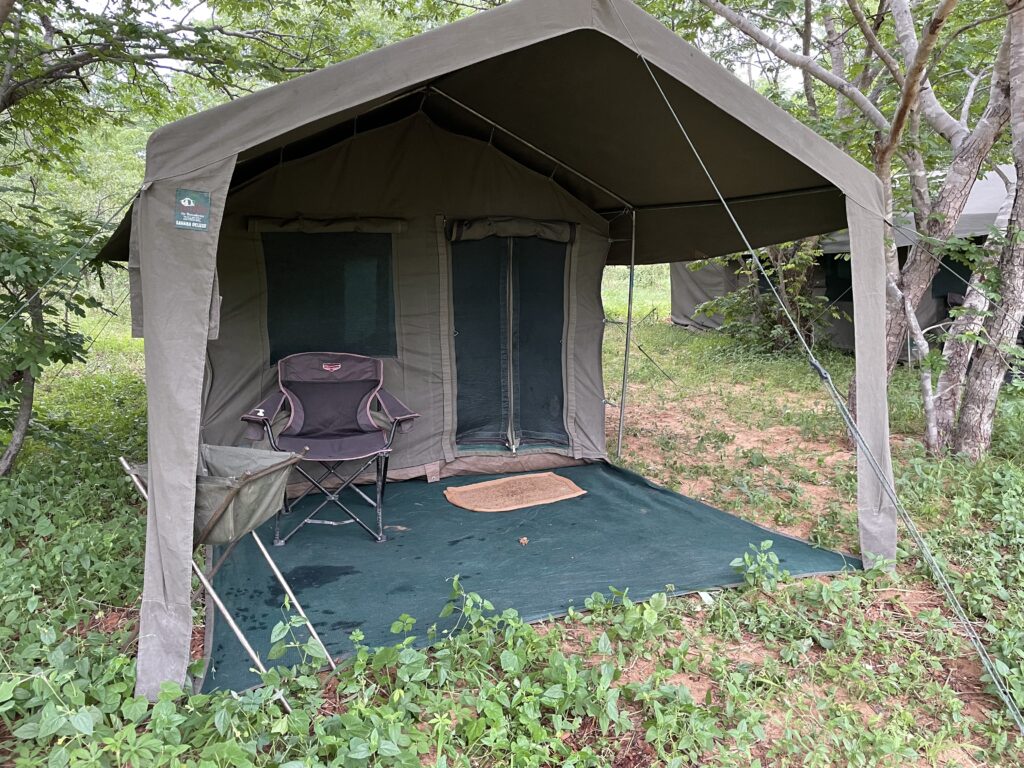
Example of type of African safari tent used
WEATHER
We visit at the start of the rains – though these are of course rather unpredictable and can be early or late arriving. The reason for this timing is that this is the best time of year for birding – the primary focus of this tour. Birds are breeding at this time and intra-African migrants also arrive with the onset of the rains, bolstering the species list. The end of the dry season means that tracks and roads are passable and getting around the delta area is easier. daytime temperatures can be as high as 40C+ but cloud and afternoon heavy rain is likely, reducing temperatures to c20C on those days.
VEHICLE
There is little to no walking on this tour. In most of the parks, it is not permitted to get out of the safari vehicle and so most of our observations will be made during a morning and afternoon drive in an open safari vehicle (Toyota Landcruiser). This means you can spend 10hrs per day sitting down! In all the parks there are so-called ‘stretch points’ where disembarkation is permitted and we will use these opportunities wherever possible.
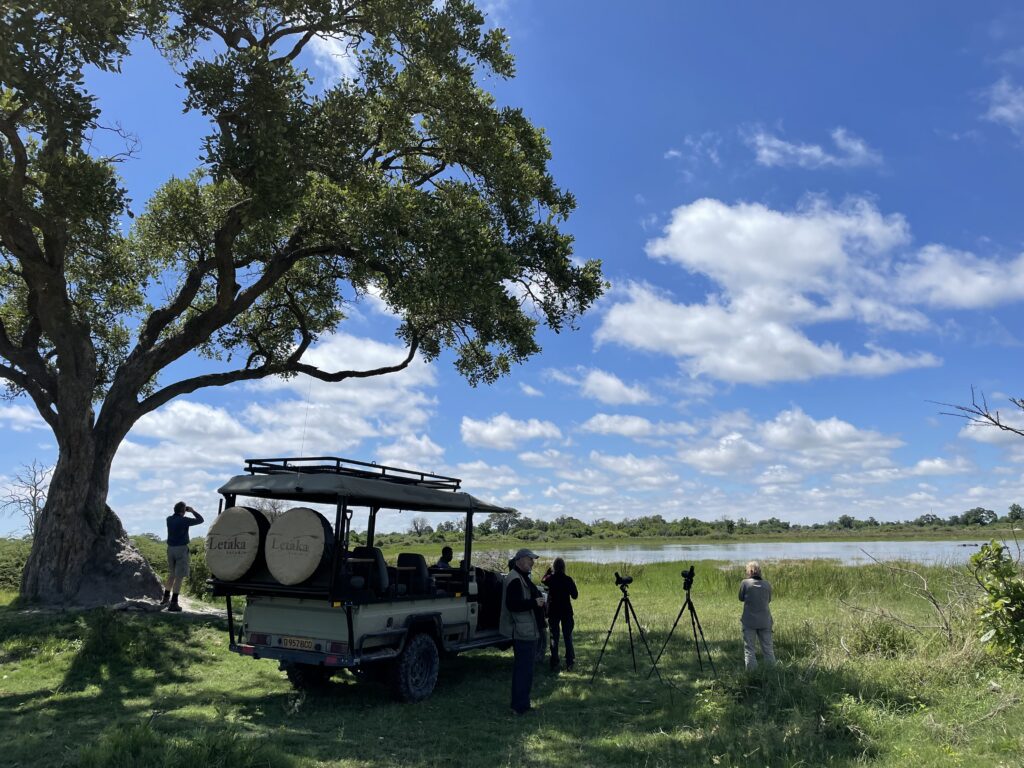
Our safari vehicle in the Okavango
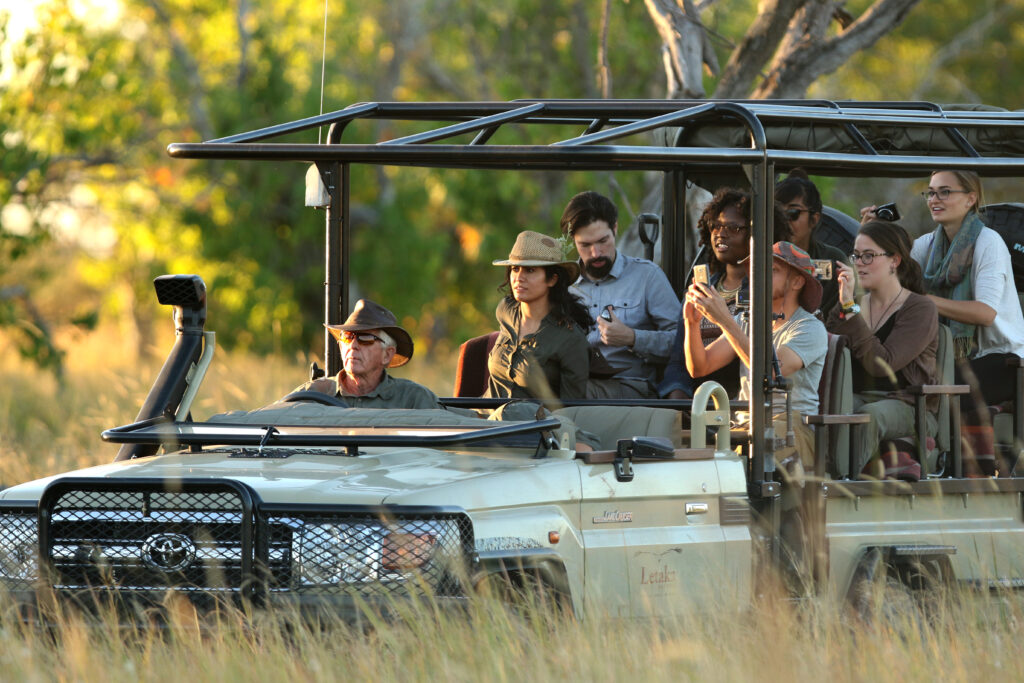
An example of the type of Landcruiser safari vehicle used
WILDLIFE WATCHING
Seating in the vehicle will be strictly rotated though because we only take a small group of 6 clients, everyone in our group will have a ‘window seat’ for best viewing (please bear this in mind when comparing costs with other providers). We will often be able to get very close to wildlife (the majority of the mammals and birds are oblivious to vehicles in a way they would not be were you on foot). This means excellent photographic opportunities though this is not a dedicated photographic tour and ensuring everyone see’s all the bird’s and mammals is our primary focus, rather than prioritising one or two people getting their photos. The Flickr album for the trip in 2022 is all from photos taken by the tour leader and gives a flavour what is possible even with incidental photographic opportunities.
HEALTH
Malaria is present in Botswana and anti-malarial medication is required. Otherwise, make sure you are up to date with your standard vaccinations. Ample drinking water is provided throughout the tour.
VISA AND PASSPORT
No visa is required for Botswana, or for the transit through South Africa. A Visa is required for entry to Zimbabwe, but this is purchased at the land border and costs $55 (payable in cash). Your passport should have a minimum of 6 months validity.