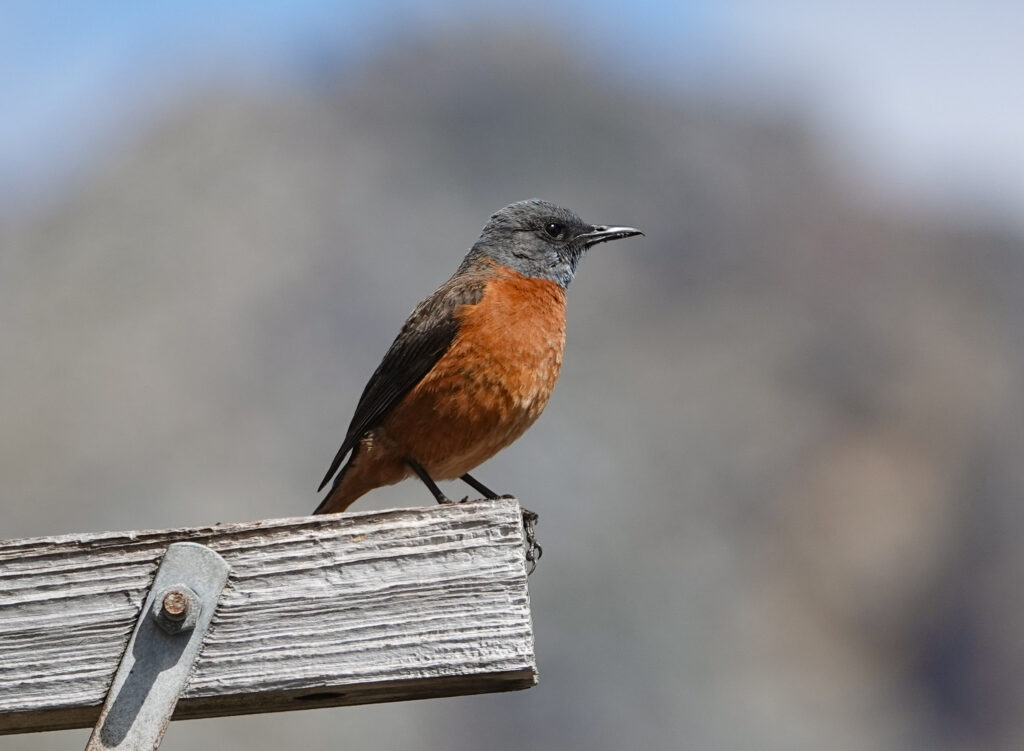
This magical tour around South Africa’s south-west corner is a feast of stunning scenery, great birding and once in a lifetime wildlife experiences, starting in the southern peninsular of the beautiful Western Cape. Boulders Beach and its African Penguin colony is close to our hotel, and we can expect stunning views of these charismatic (if not a little smelly!) birds. Endemic Cape Sugarbird, Orange-breasted Sunbird, Ground Woodpecker, Cape Bunting and Cape Siskin frequent Cape point, and the endemic marine Cormorants (including Bank Cormorant) and African Black Oystercatcher are among a variety of other birds here. Our exciting pelagic trip to the continental shelf approximately twenty five nautical miles south of Cape Point gives us an amazing opportunity to view large numbers of seabirds of twenty+ species at close quarters including three species of Albatross. White-chinned Petrel is often the commonest seabird around the trawlers, with Sooty, Great and Cory’s Shearwater, Wilson’s Storm-Petrel, Sabine’s Gull, Arctic, Subantarctic and Pomarine Skuas, Arctic Tern, Northern & Southern Giant Petrels and Shy, Black-browed and Atlantic Yellow-nosed Albatross all possible. Cetaceans could include mighty Humpback or Southern Right Whales and Common or Dusky Dolphins. The Cape Mountain Fynbos specials including the fantastic Cape Rock-jumper, Cape Rock Thrush & Victorin’s Warbler can be found as we bird around Rooi Els. Cape Grassbird, Cape Batis and endemic Ground Woodpecker, Black Saw-wing Swallow, Bully Canary, Cape Siskin, Yellow-rumped Widow and the gorgeous Malachite Sunbird all occur while nesting Black Eagle keep us scanning the skies here. Some of the more elusive birds of western South Africa – including Swee Waxbill, Fiscal Flycatcher, Bar-throated Apalis, the endemic Forest Buzzard and the inconspicuous Protea Canary can also occasionally be found nearby at the delightful Harold Porter reserve.
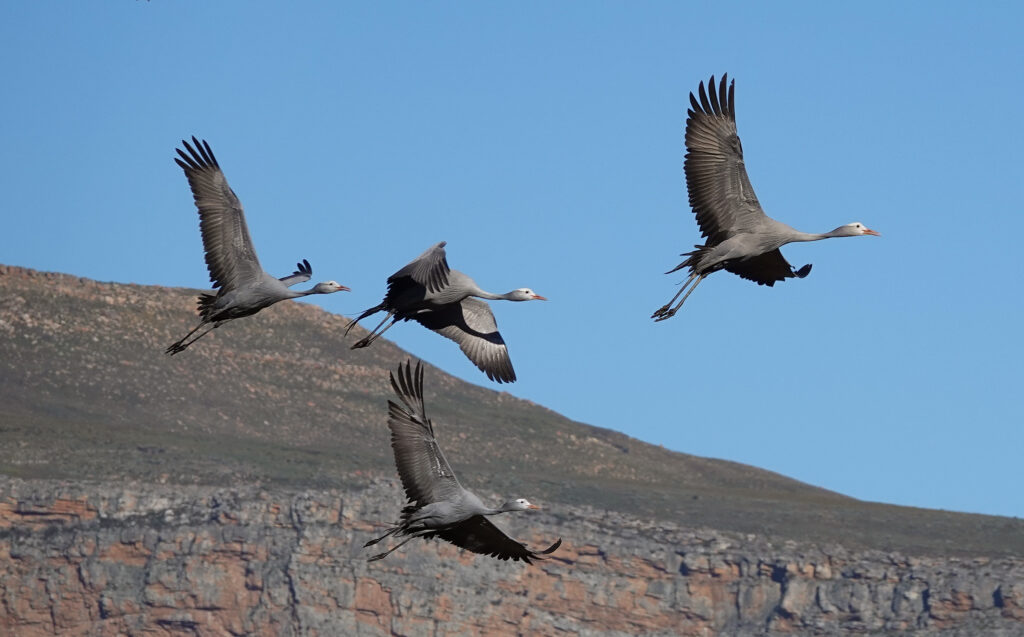
North of Cape Town, the wheatlands of Philadelphia can add a variety of Larks, Pipits, Bishops and Weavers as well as South Africa’s National bird – the Blue Crane. The West Coast National Park’s Langebaan Lagoon provides shelter to visiting shorebirds from the northern hemisphere, supplemented in style by the beautiful Marsh Sandpiper & South African Shelduck and an outside chance of Terek Sandpiper or Greater Sand Plover. The strandveld here supports Grey-winged Francolin, White-backed Mousebird, Layard’s Titbabbler, Grey-backed Cisticola, Sickle-winged Chat, Bokmakierie and Long-billed Crombec while we will also look out for Cape Penduline Tit, Southern Black Korhaan and the superb Black Harrier. From here we head eastward through the mountains to the Tanqua Karoo, a remote area of semi desert with stark, geologically interesting landscapes. Of the birds seen about thirty five will be Southern African endemics, including all the desert chats as well as Rufous-eared Warbler, Karoo and Yellow-bellied Eremomela’s, Pale Chanting Goshawk and Cinammon – breasted Warbler. Our next base in the Grootvadersbos State Forest – the westerly extent of a number of South African forest birds—is absolutely delightful and a fantastic opportunity to look for the stunning Narina Trogon along with a host of other desirable forest birds such as Knysna Warbler. Finally we spend a day birding the Agulhas Plains on our way down to the Indian Ocean where the Damara Tern colony rounds off our fabulous exploration of this stunning country.
DAY ONE
Fly London/Cape Town
DAY TWO
Following our arrival in Cape Town on our overnight flight from London, we are met by our local guide for lunch before organising our kit ready for our first afternoons birding at the Strandfontein Sewage Works! This is an excellent site for getting to grips with most of the waterbirds found in the cape, and we can expect close views of all of the ducks – Red-billed and Cape Teal, Yellow-billed Duck, Cape Shoveler, Shouthern Pochard, Maccoa Duck and the stunning Hottentot Teal. Flocks of Greater Flamingo, Caspian Terns, Hartlaub’s Gulls, Spotted and Water Thick-knees, Purple Swamp-Hen and much much more can also be expected. Certainly we will see many species here that we will become familiar with during the tour, such as Pied Crow, White-necked Raven, Yellow-billed Kite, Sacred, Glossy and Hadeda Ibises, Pin-tailed Whydah, Cape Canary and Levaillan’t Cisticola. From here we will be transferred to our accommodation at Woodbridge Lodge, Milnerton.
DAY THREE
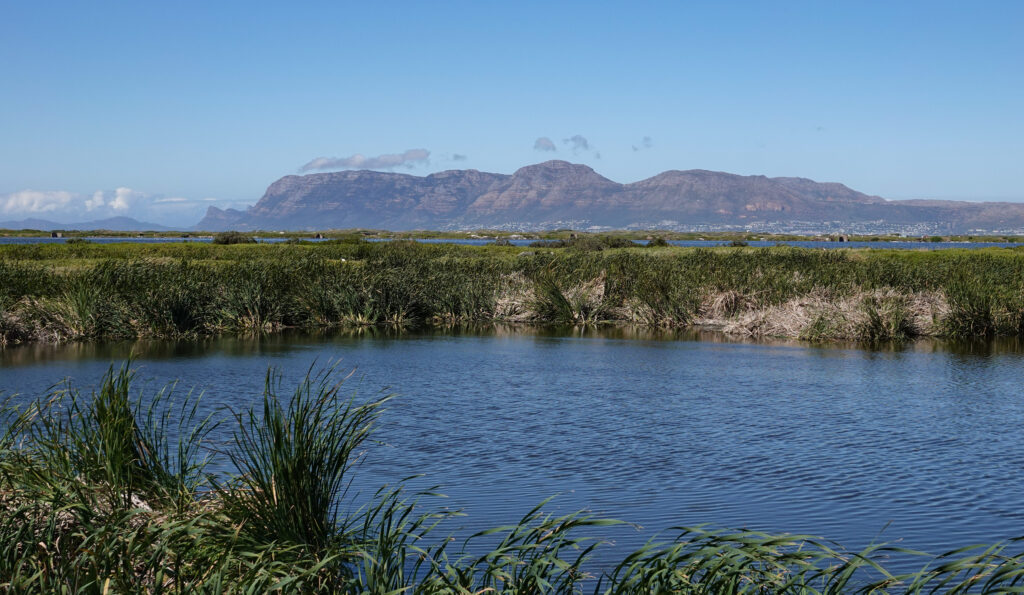
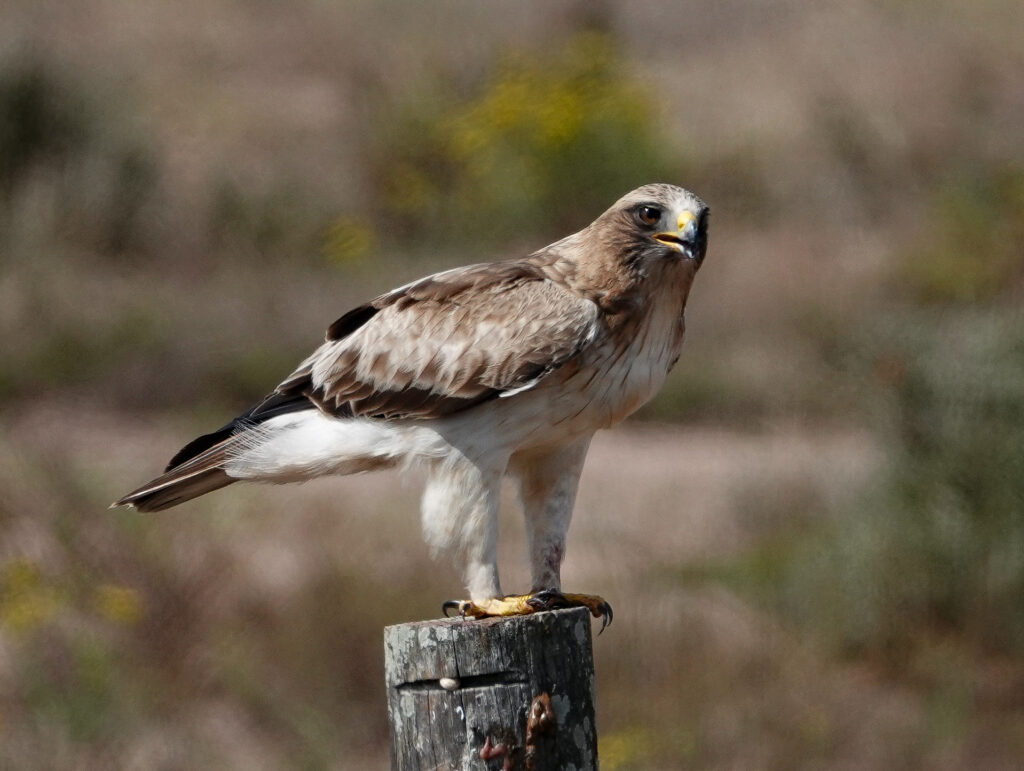
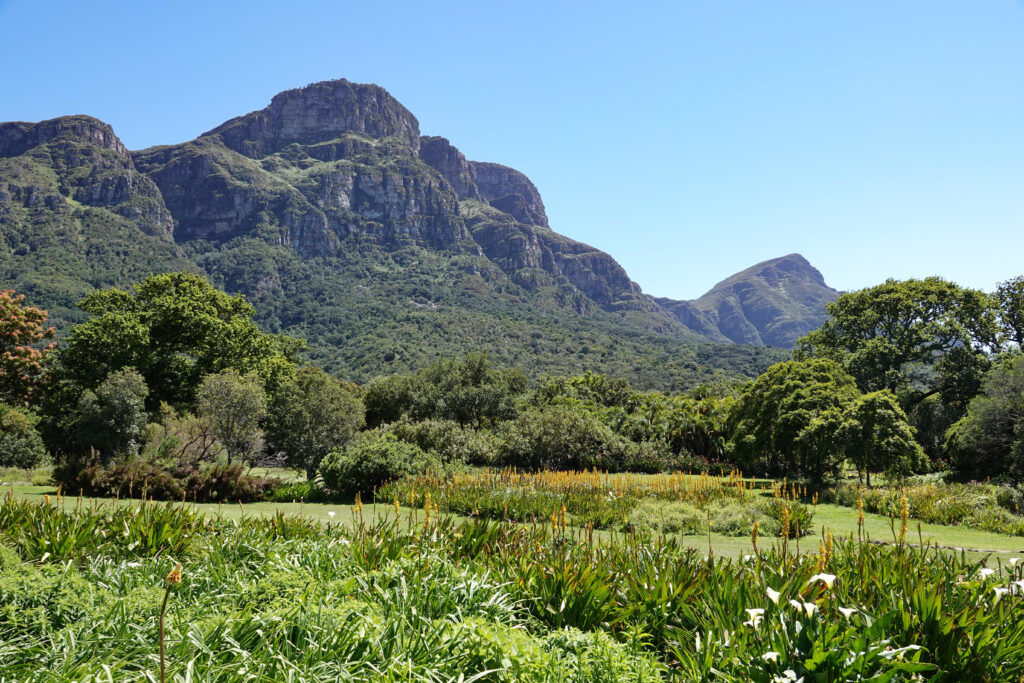
Today we visit Kirstenbosch Botanical Garden. Nestled on the lower slopes of Table Mountain it offers some superb birding and the chance to get close views of many of the sought-after cape endemics. This includes the canaries – Forest, Brimstone and Cape Canary are all here, and the sunbirds – Orange-breasted, Southern Double-collared and Malachite. The impressive protea gardens are also home to the wonderful Cape Sugarbird, and flocks of Swee Waxbills might also be found. The gardens are good for raptors, with Booted Eagle, Forest and Steppe Buzzards, African Harrier-hawk, African Goshawk, Black and Red-chested Sparrowhawks all being possible. A pair of Spotted Eagle Owls often nests in the gardens – not what you would expect to find sat on the ground amongst a flower border! From here we head north, through some excellent saltwater habitats north of Cape Town. The iconic views back to Table Mountain provide a backdrop as we bird around marshy pools for Purple and Black-crowned Night-Herons, Black Crake, Lesser Flamingo, Reed Cormorant, Red Bishop and the scarce White-backed Duck. Little and White-rumped Swifts also nest nearby, and the whole area is great for ibis, wading birds and wildfowl in general. We return to Cape Town via the wheat lands of Philadelphia – see a variety of Larks (including Large-billed), Pipits, Bishops and Weavers. These lands are also home to South Africa’s National bird – the Blue Crane – as well as Capped Wheatear, Banded Martin and endemic Jackal Buzzard. Overnight Woodbridge Lodge, Milnerton.
DAY FOUR
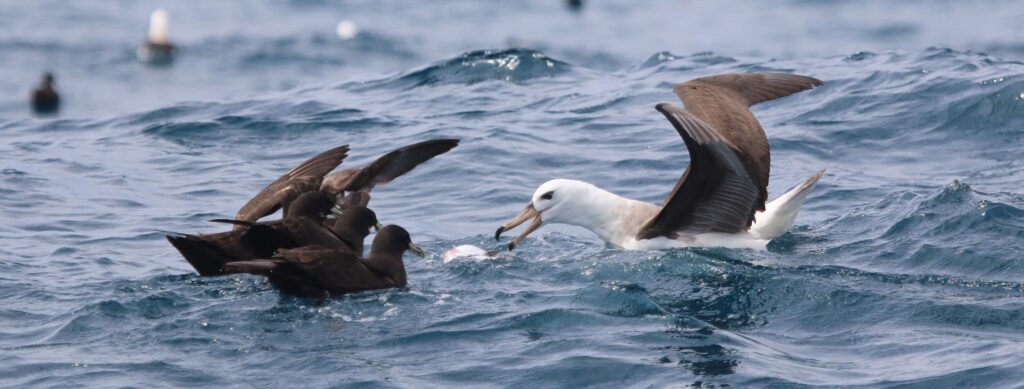
Subject to weather an early start today will see us set out from Simons Town on an exciting pelagic trip to the continental shelf approximately 25 nautical miles south of Cape Point. This is a full day pelagic with lunch taken on board and gives us an amazing opportunity to view large numbers of seabirds of 20+ species at close quarters including three species of Albatross. White-chinned Petrel is often the commonest seabird around the trawlers, with Sooty, Great and Cory’s Shearwater, Wilson’s Storm-Petrel, Sabine’s Gull, Arctic, Sub Antarctic and Pomarine Skuas, Arctic Tern, Northern and Southern Giant Petrels and Shy, Black-browed and Atlantic Yellow-nosed Albatross all possible. Cetaceans are also likely and we could encounter mighty Humpback or Southern Right Whales and Common or Dusky Dolphins. We depart Simonstown at 07. 00 and return at approximately 15.30. Overnight Woodbridge Lodge, Milnerton.
DAY FIVE
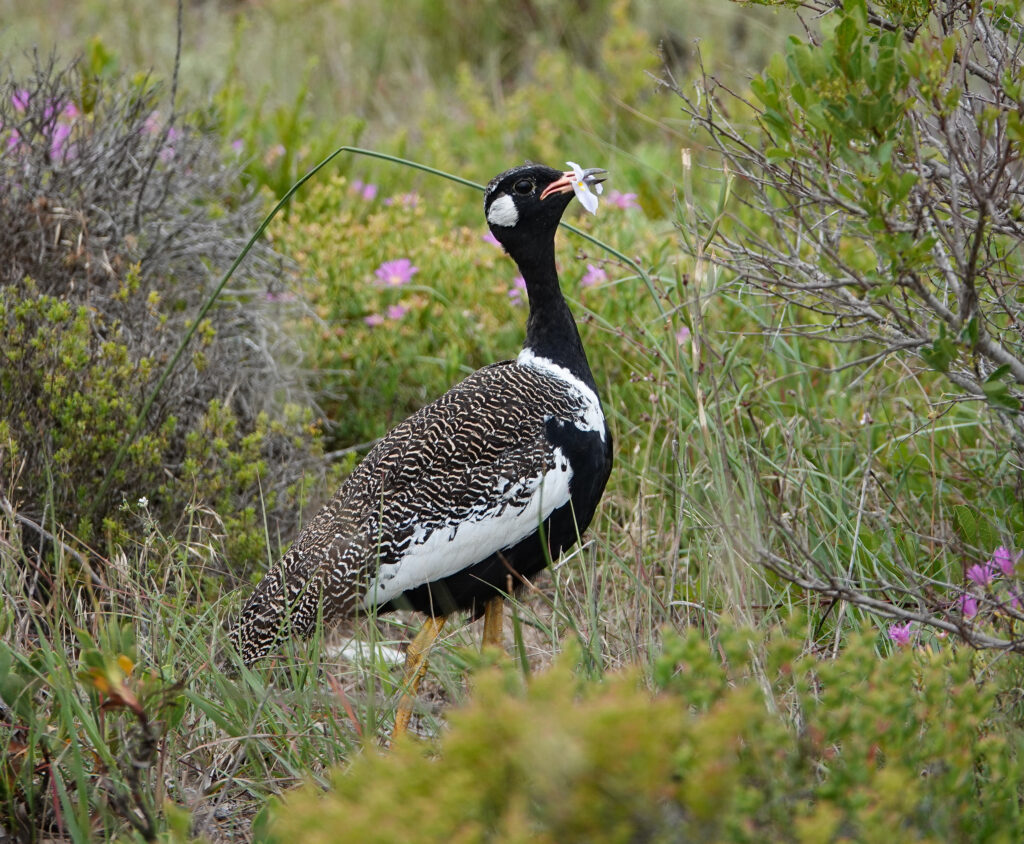
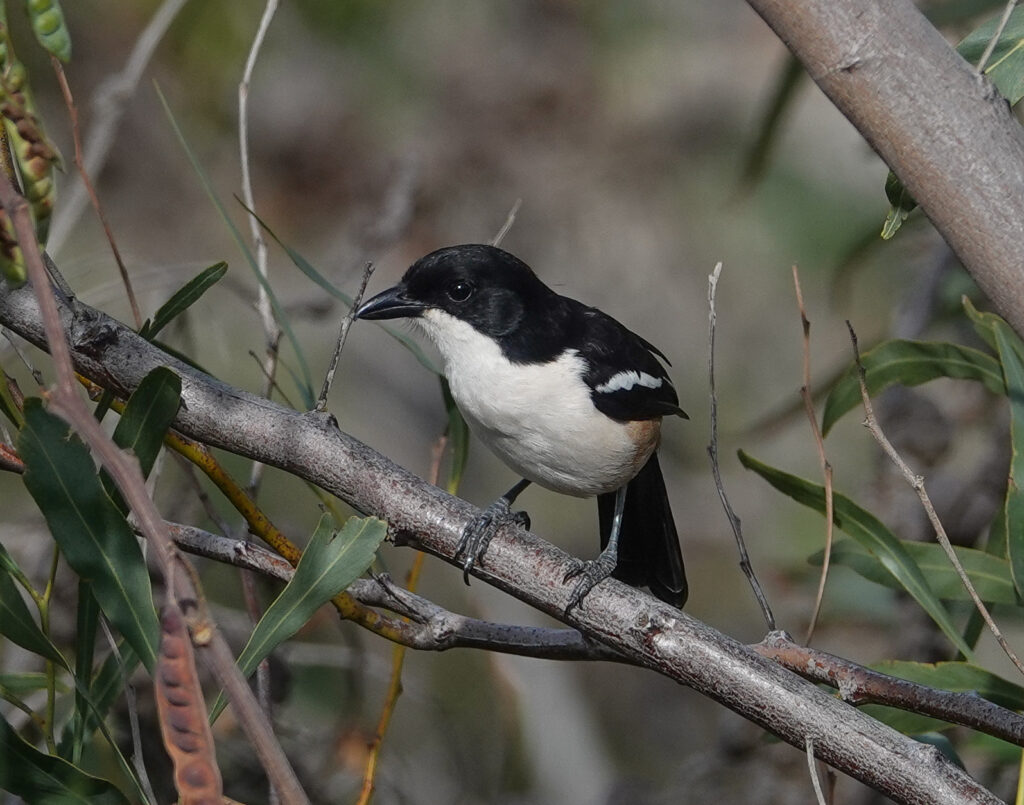
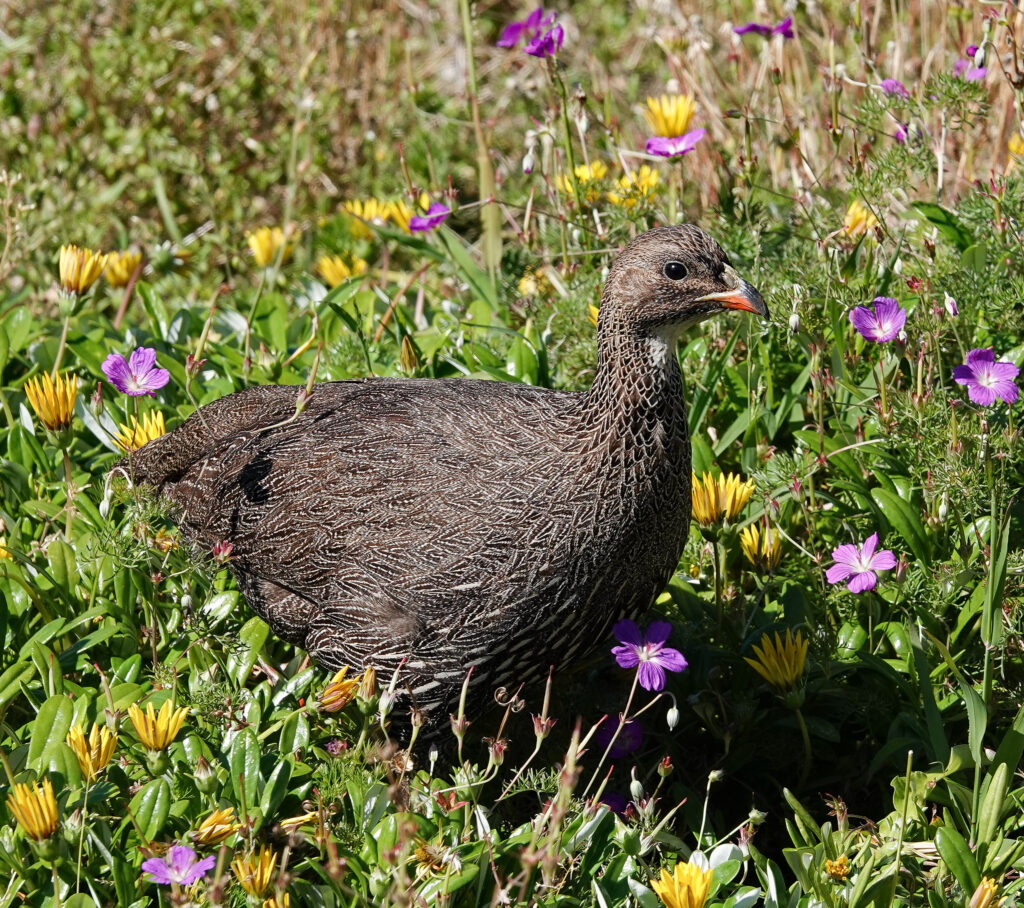
Today we head north and have a chance to revisit some areas from yesterday for waterbirds in the Malkbos area, and in particular checking a couple of beaches for White-fronted Plover, and the endemic Cape and Crowned Cormorants. The Strandveld is our main destination for the first part of the morning though, a coastal dune belt with low shrubby vegetation which supports another selection of birds including several endemics. White-throated and Yellow Canaries, Chestnut-vented Tit-babbler, Red-faced, Speckled and White-backed Mousebirds, Yellow Bishop, Karoo Scrub Robin, Cape Robin-Chat and Bokmakierie are all found in this coastal terrain. Grey-winged Francolin can also be found in a couple of locations here. Heading north we will enjoy some excellent birding at the West Coast National Park. Here an extensive area of Coastal Fynbos encircles the Langebaan Lagoon which at its southern end has South Africa’s largest salt marsh. In summer Langebaan hosts the largest number of migrant shorebirds in South Africa which can be conveniently viewed from the well-positioned hides. Curlew Sandpiper, Little Stint, Sanderling, Knot, Turnstone and Greenshank will be familiar visitors from the northern hemisphere, supplemented in style by the beautiful Marsh Sandpiper, South African Shelduck and an outside chance of Terek Sandpiper or Greater Sand Plover. The strandveld here supports White-backed Mousebird, Layard’s Titbabbler, Grey-backed Cisticola, Cape Penduline Tit, Grey-winged Francolin, Sickle-winged Chat, Bokmakierie and Long-billed Crombec. Two of the most sought-after birds in the park though are the endemic Black Harrier and Southern Black Korhaan, both of which we will spend time looking for before we arrive at our accommodation in Langebaan. Overnight Albatross B&B, Langebaan village.
DAY SIX
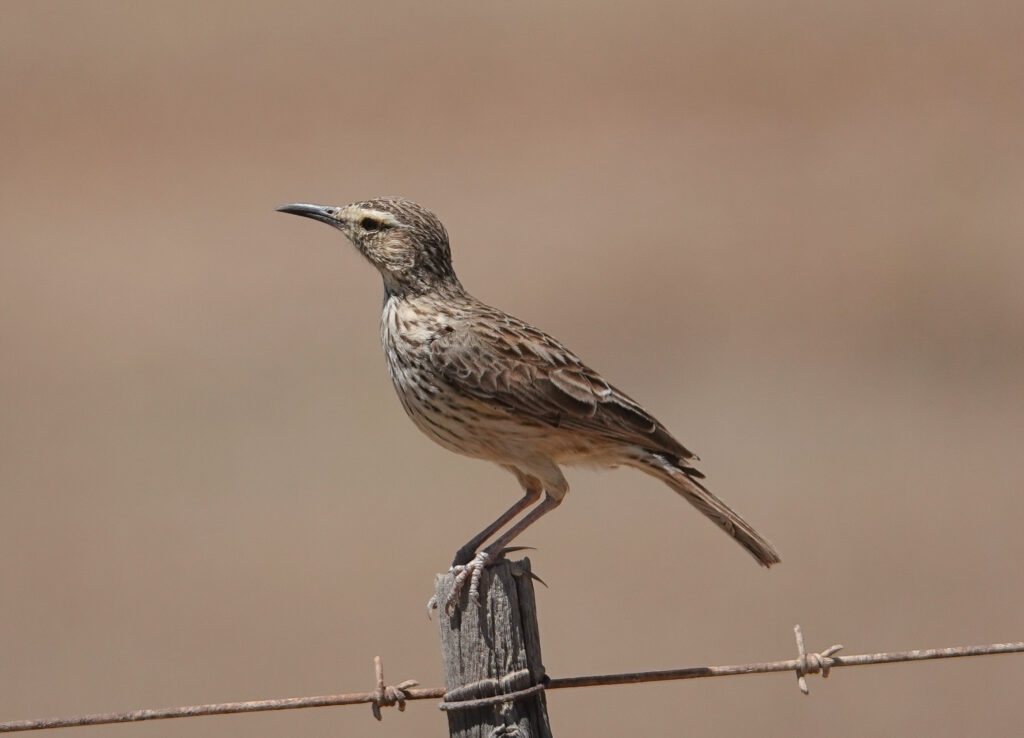
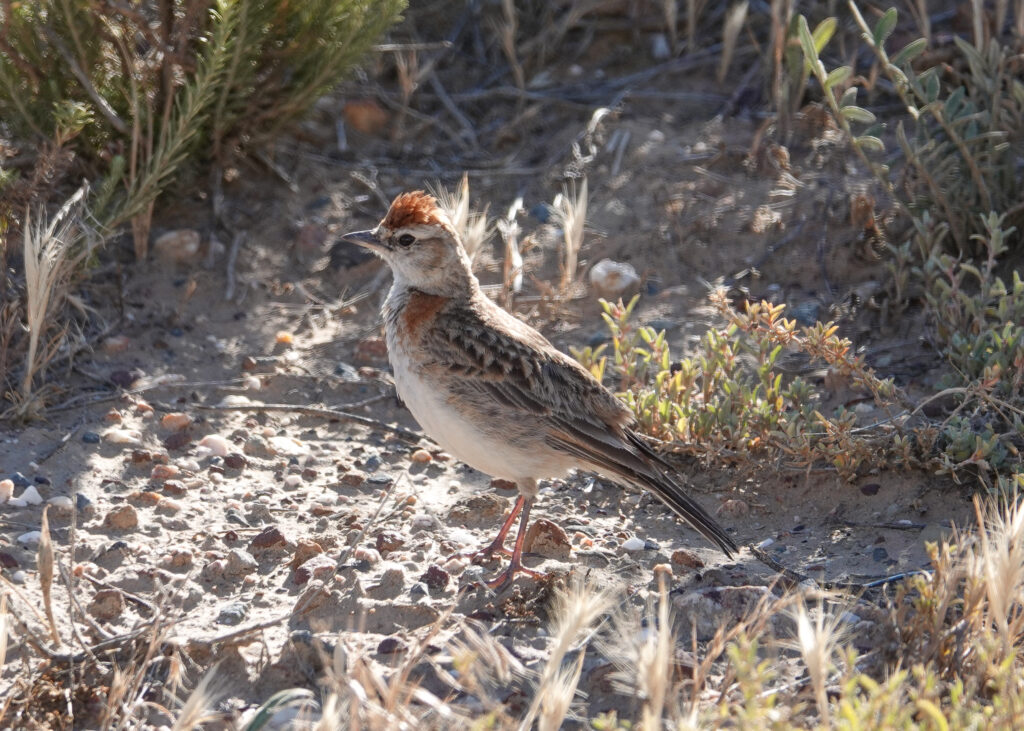
After checking a local quarry for a breeding pair of Black Eagles this morning, we head into the wheat fields of Vredenberg in search of the highly localised Cape Long-billed Lark, with a supporting cast of Large-billed Lark, Anteating Chat and Jackal Buzzard. We also visit a grassland reserve managed by the Kirsetnbosch Botanical Garden, and here we might find such specialised birds as Cloud Cisticola and Cape Longclaw as well as lots of Large-billed and Red-capped Larks, Capped Wheatear, Banded Martin, Blue Crane and even Secretary Bird! The Berg River Estuary at Velddrift has a large saltworks and we round off the morning here looking for the localised Chestnut-banded Plover. Other species noted here might include Kittlitz’s Plover, African Fish Eagle, African Hoope, Little Stint, Curlew Sandpiper, Water Thick-knee, Lesser Flamingo, Black-winged Stilt, Pied Avocet and European Bee-eater. After lunch, we spend the afternoon on the road, heading to Ceres which will be our next base. Overnight Village Guest House, Ceres.
DAY SEVEN
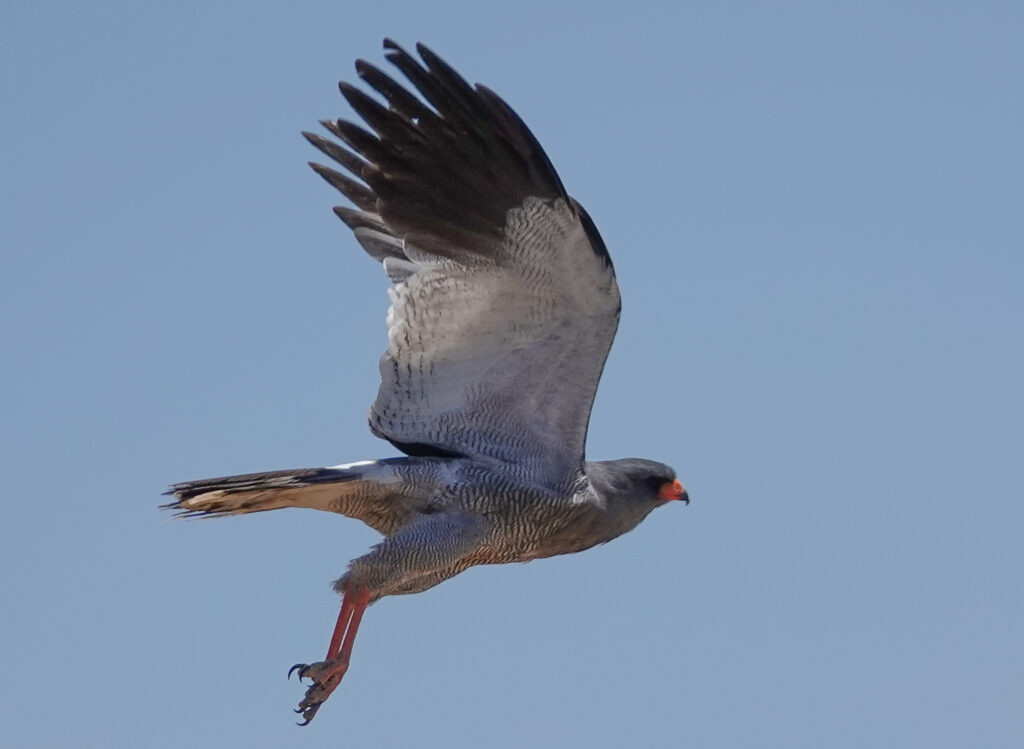
Today we head eastward through the mountains to the Tanqua Karoo. The word Karoo is derived from a Khoi word meaning thirst land which perfectly describes a remote area of semi desert with stark, geologically interesting landscapes. The succulent Karoo is comparatively rich in birds – particularly after rains – and botanically has the highest diversity of succulent plant species in the world. Of the birds seen, about 35 will be Southern African endemics, with about 20 of these endemics which are not seen on Cape Peninsula. The desert chats – Tractrac, Sickle-winged and Karoo Chat are all possible as are Rufous-eared Warbler, Karoo and Yellow-bellied Eremomela’s, Pale Chanting Goshawk, Thick-billed, Karoo, Spike-heeled and Red-capped Larks, Karoo Korhaan, Ludwig’s Bustard, Cape Penduline Tit and Cinnamon – breasted Warbler. We will need a dawn start with a packed breakfast to get the most of this habitat, as it can get very hot in the Karoo. Hopefully we will be in position to see the Cape Clapper Lark performing its display flight over the plains and small birds will be more active – Black-headed Canary is sometimes to be found here. A dry river bed hosts African Reed and Namaqua Warblers, and in dry gorges we should seek the wonderful Fairy Flycatcher and elusive Pirit Batis. We drive into the Karoo as far as an incredible ‘cafe bar’ which is 200km from the next town but offers and excellent lunch and free Wifi! Spike-heeled Lark is often to be found in the low karoo scrub around this area. It will be very hot by early afternoon, so we return to Ceres for some downtime before heading out into the field again before dusk. Brian has a drinking spot in the nearby hills where we can hopefully see Protea Seed-eater coming to drink as well as Streaky-headed Seed-eater, and several other species of small fynbos passerines. If present, we will round off the day by viewing a roost of Lesser Kestrels, long distance migrants from Southern Europe.
Overnight Village Guest House, Ceres.
DAY EIGHT
Today is essentially a travelling day but with several birding opportunities along the way. If we have missed any species in the Karoo, we do have the opportunity to revisit some areas there this morning to try again. Otherwise we will begin making our way south to Swellendam, and we can expect around four hours of driving to get there. Arriving early afternoon, we will check in to our accommodation at Honeywood Farm, which lies on the fringe of the Grootvadersbosch State Forest and offers some excellent birding opportunities. We will take a birding walk around the forested grounds, to look for Greater and Lesser Honeyguide, Greater Double-collared Sunbird, Fork-tailed Drongo, Cape Crow, Olive Thrush, Amethyst Sunbird, Cape Batis, Olive Woodpecker, Fiscal Flycatcher and Rameron Piegon. After a hearty meal of local cuisine on the verandah of the main house, overlooking the forest, we will take a stroll by torchlight to listen and look for the local African Wood Owls. Overnight Honeywood Farm, Swellendam.
DAY NINE
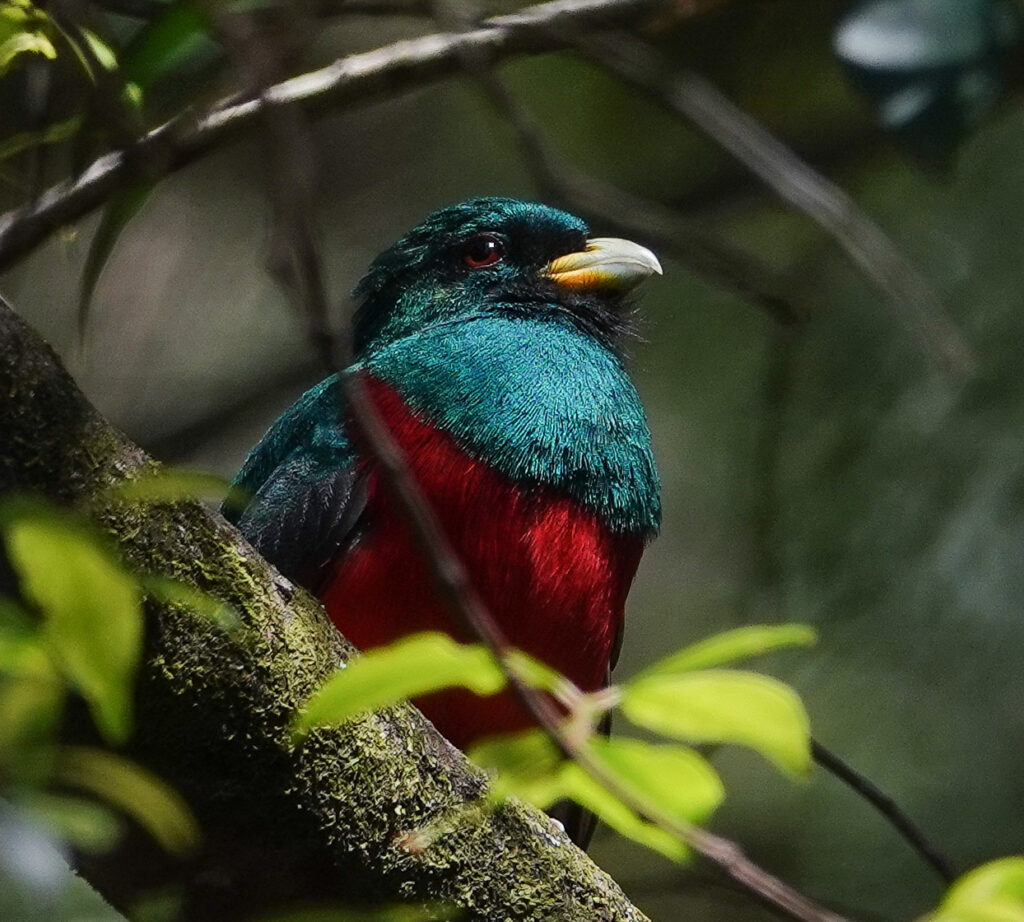
This morning we rise early and enter the forest park to look for some of its specialist residents. Marginal habitats support Neddicky and Black Saw-wing while the forest edge is a great place for Bar-throated Apalis and Olive Bush-shrike. Once inside the forest, slow walking along the trails, listening carefully and looking for movement is the tactic most likely to yield results. Blue-mantled Crested Flycatcher is a star attraction, but we also have a chance of the elusive Narina Trogon here. Yellow-throated Woodland-warbler, Knysna Woodpecker, Knysna Warbler, Red-necked Francolin, Sombre Greenbul, Cape Batis and Forest Canary are all possible. We return to the farm for lunch, and to take a short break before our afternoon birding session which will take us south into a very different habitat – the Agulhas Plains. Brown-hooded Kingfisher, Red-chested Cuckoo and African Crowned Eagle [which has a nest here] can be looked for on our way out of the park. Once on the plains, we will be looking for open ground birds such as Blue Crane, Denham’s Bustard and Karoo Korhaan. We might also find the endemic Cape Vulture and riverbeds may host Klaas’s and Diderick Cuckoos attracted by large numbers of breeding birds. Cape Weaver, Red and Yellow Bishops are likely to be common, but we should also keep a lookout for Grey-backed Sparrowlark, Namaqua Dove and Larklike Bunting. We return to the farm for dinner and a good nights sleep! Overnight Honeywood Farm, Swellendam.
DAY TEN
Staying in the forest gives us the opportunity for an early morning walk again if we have missed any key species on the previous outing. Likewise we can revisit part of the plains if we have failed to find, for example, the Agulhas Long-billed Lark, Denham’s Bustard, Karoo Korhaan or Secretary Bird. Mid morning we leave Grootvadersbos though and make our way slowly westwards. We aim to arrive at Harold Porter Botanical Garden near Betty’s Bay, in time for lunch. We can then spend time exploring the garden in the afternoon – an excellent place for African Paradise Flycatcher, Victorin’s Warbler, Cape Siskin and Swee Waxbill among others. Sometimes Giant Kingfisher or African Black Duck can be found along the river here. Nearby at Stoney Point, the African Penguin colony is sure to delight – despite the smell! This is a beautiful location, where we should also see all the endemic marine cormorants – Cape, White-breasted, Crowned and Bank Cormorant. We continue back to Cape Town and on to Simon’s Town, where we will sleep tonight. Overnight Wild Olive, Newlands
DAY ELEVEN
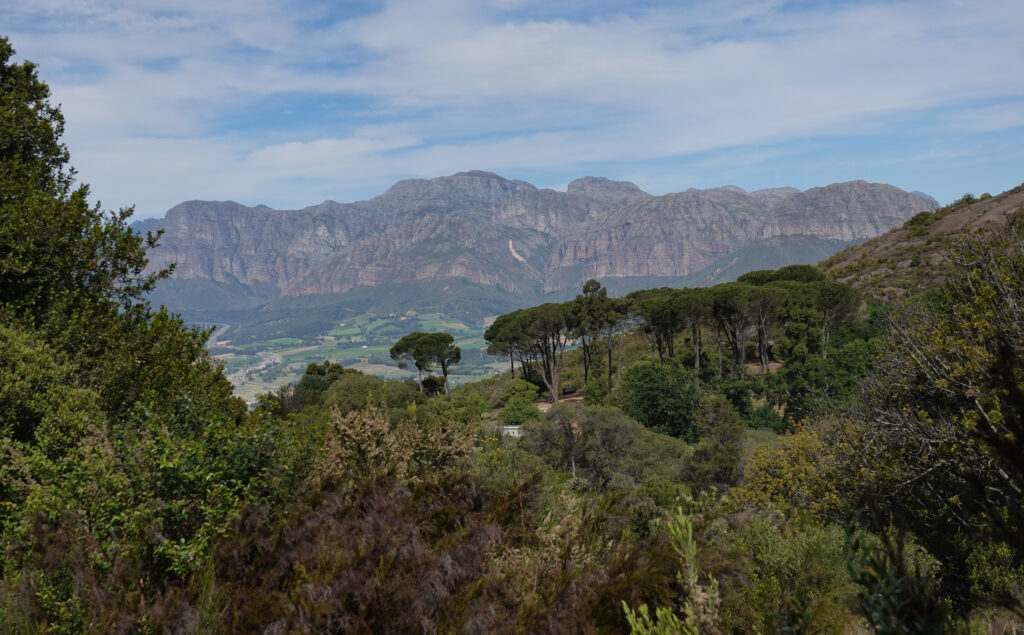
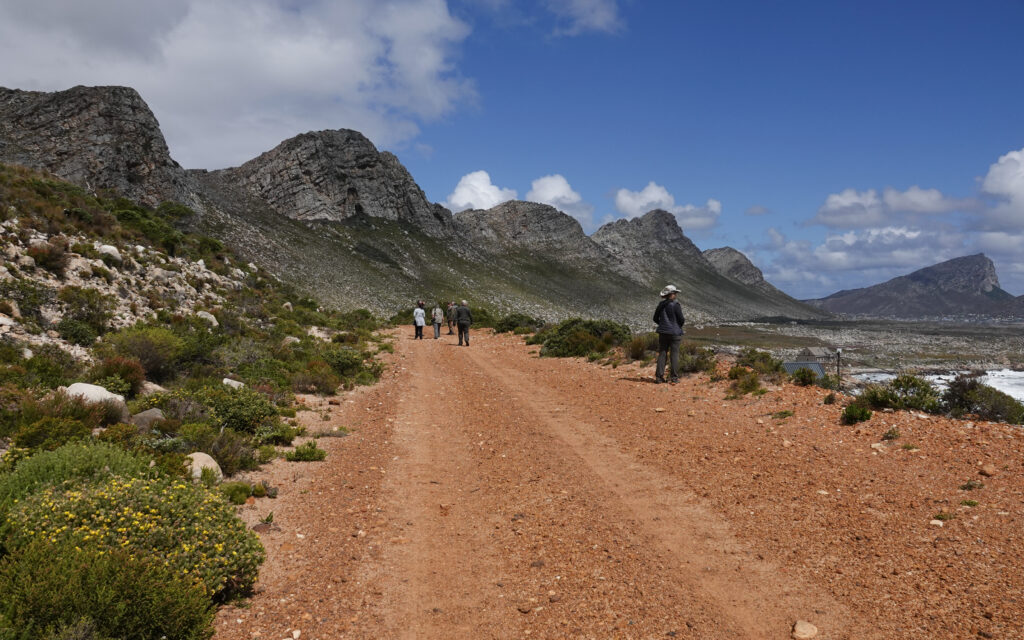
If we failed to make the pelagic trip due to weather, then this will be our next opportunity. Alternatively, we will head east again past Somerset West and visit Hottentots Holland and undertake a two/three hour easy mountain walk in search of some of the Cape Mountain Fynbos specials including the fantastic Cape Rock-jumper and Victorin’s Warbler. At Rooi Els the mountains literally come down to the sea and provide us with probably the best opportunity on the trip for Cape Rock Thrush, as well as being a superb area for Cape Siskin, Grey-backed Cisticola, Neddicky, Red-winged Starling, Malachite and Orange-breasted Sunbirds. The endemic Ground Woodpecker can sometimes be seen here, too. There is a deliberate element of flexibility in the itinerary at this point, to allow for any other sites around Cape Town to be revisited if necessary for missed species. We may, for example, revisit Kirstenbosch or even make our Table Mountain trip in the afternoon if winds are light. Overnight Wild Olive, Newlands
DAY TWELVE
We will stay close to Cape Town today and have a fairly leisurely day including a trip on the Table Mountain Cableway if the winds permit. The views from the top, across the city and out to Robben Island, are stunning. There are also Orange-breasted and Malachite Sunbirds, Familiar Chat and Ground Woodpecker on the mountain, as well as the Rock Hyraxes. Table Back down at ground level we will visit the small wetland reserve at Rondevlei. Here a number of hides and screens give the opportunity for close views of waterbirds, including many wildfowl species – Southern Pochard included. Sometimes it is possible to glimpse Little Rush Warbler, and a Malachite Kingfisher is often to be found. At the other end of the scale, Goliath Heron is an occasional visitor! We will enjoy a late lunch at Kirstenbosch before our transfer back to Cape Town for the evening flight back to the UK.
DAY THIRTEEN
We arrive back in London where the tour will conclude.
Return economy flights London/Cape Town, specified luggage allowance, ten nights accommodation in a variety of hotels and guest houses of a good standard (some shared bathroom facilities), all meals from in-flight meals on day one to in-flight meals on day twelve, ground transport in South Africa, Table Mountain trip, pelagic boat trip, services of leaders and reserve entrance fees.
Transport to/from London airport and any overnight stay that might be involved, travel insurance, drinks, optional guides tips and any items of a purely personal nature.