The subtropical island of Madeira is one of Europe’s farthest outposts, in the Atlantic Ocean one thousand kilometres south-west of Portugal, situated between the Azores to the north and the Canary Islands to the south. Thankfully, it has escaped many of the worst excesses of the tourist industry that afflict other Atlantic islands and has retained a relaxed atmosphere. The Madeiran landscape is often spectacular and its vegetation is lush. The island rises sharply from the sea along most of the coast. Terraced hillsides of banana plantations quickly give way to steep forested hillsides. Madeira boasts the largest surviving area of laurel cloud forest on the planet. The forest zone often mists up in the afternoons but is typically clear in the mornings, giving breath taking views of the high volcanic peaks. The precipitous central mountains rise to around nineteen hundred metres and invariably poke out to well above the cloud base. Besides the main island, the Madeira archipelago includes nearby Porto Santo Island and the Desertas Islands. Our Madeira seabirds & endemics tour covers all bases and is quite simply the best available!
Madeira supports fewer than fifty species of breeding birds, but the small number of species is easily compensated for by their fascinating nature and often-extreme rarity. Birding the land habitats on Madeira is a wonderful experience, but the island’s open-ocean position means that the greatest prizes are awarded to those who look seawards. Put simply, Madeira’s collection of seabirds is unique and outstanding. The principle aim of our tour is to search for the much sought after selection of seabirds that are present in the region and to this end we will make three offshore pelagic trips and chum in known hot spots for the optimum results. The aim is to get up close and personal with these enigmatic species.
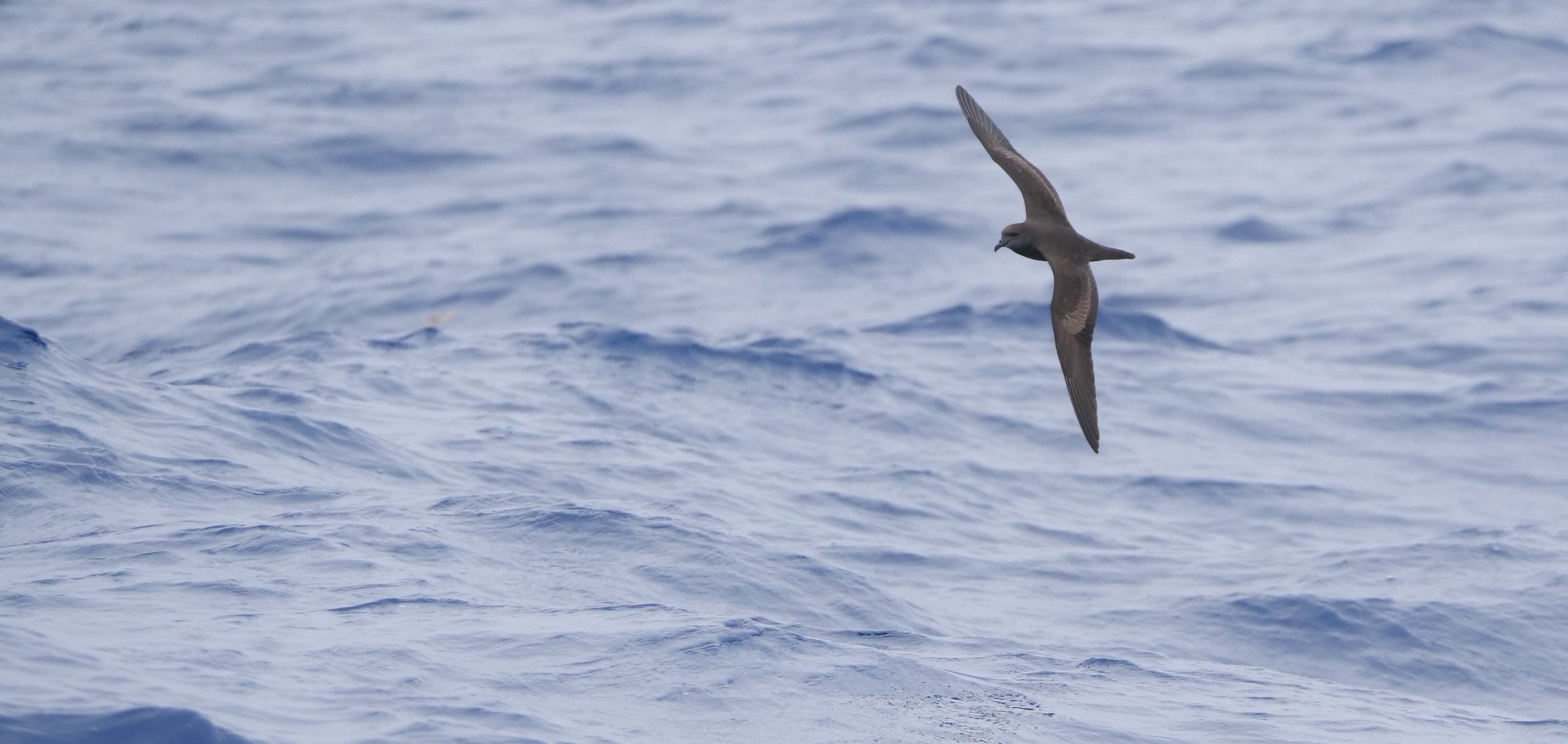
The almost mythical Zino’s Petrel and its equally enigmatic sister-species Desertas Petrel both grace Madeiran waters. Following recent studies using our crew and their vessel, both are identifiable at sea using up to date criteria – criteria that your tour leader helped to pioneer. By taking to the sea during the day and visiting the Zino’s Colony at night (the Desertas colony is completely inaccessible), we aim to gain the best possible encounter that a birder could have with these two very, very special petrels. We expect to see both species multiple times and get very close and sometimes prolonged views as the birds inspect and fly around the chum slick. Often views are so good that binoculars are not needed!
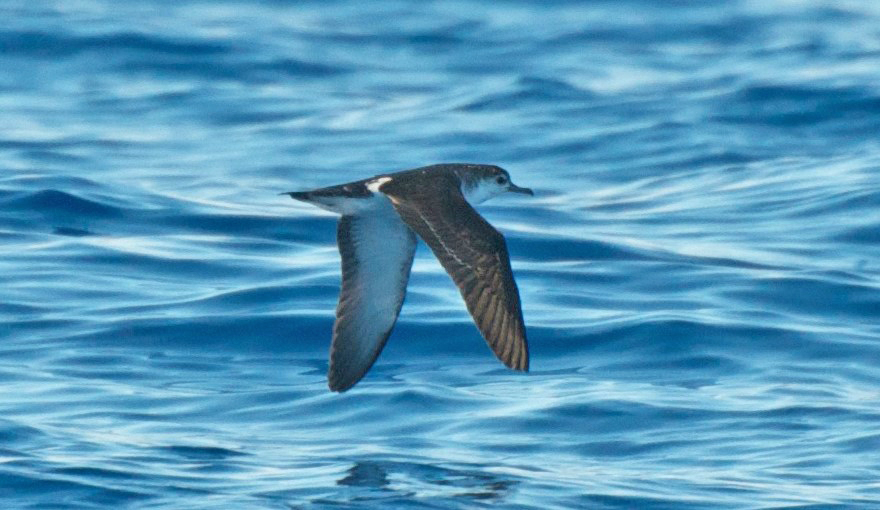
There are several other highly sought-after seabirds, some we expect to see, others we have a fair chance of seeing. The common seabird in Madeiran waters is Cory’s Shearwater and we will encounter good numbers on each trip to sea, sat in rafts on the ocean and visiting the chum. Manx Shearwater is fairly common and it should be noted that the Madeiran form differs morphologically from northern breeders and may represent an ecologically significant form. We have seen Great Shearwater on our trips. The biggest prize in respect to shearwaters is Barolo Shearwater (aka Little Shearwater). Although it breeds nearby, it is an elusive species, though one was seen during our 2019 tour. One of the most graceful seabirds of all, Bulwer’s Petrel, is another common bird off Madeira. Again, we will see Bulwer’s on all three trips to sea and see them in the chum slick at point blank range. They perform wonderfully well for the photographers. Storm-petrels can be fickle but we expect to see Madeiran Storm-petrel (the summer breeding form), Wilson’s Storm-petrel, possibly European Storm-petrel, and hopefully White-faced Storm-petrel (though in recent years this has become much rarer off Madeira). White-faced breeds in the nearby Selvagens Islands with perhaps 10,000 pairs and are occasionally seen over the three days of pelagic trips. Each year there are additional seabirds that we chance by, such as Great Skua, Sabine’s Gull and Roseate Tern, but these are bonus birds. There is always a chance of a rarity. Our crew on their vessel have seen and documented with photographs Black-bellied Storm-petrel, Swinhoe’s Storm-petrel and South Polar Skua. Your tour leader was present for the last two species and was central to their identification.
The seabirding is wonderfully complemented by the land birding that Madeira has to offer. We have plenty of time to catch up with Madeira’s endemic land birds. We will find the endemic Trocaz Pigeon in Madeira’s laurel forest, along with the endemic Madeiran Firecrest and the island’s distinctive endemic form of chaffinch, the ‘African Chaffinch’. These are stunningly beautiful birds. Plain Swift, Spectacled Warbler, Canary and Berthelot’s Pipit are all common in the right places, places that we will visit. We will look for Rock Sparrow at the harbour from where the pelagics depart. Many other birds, including Common Buzzard, Grey Wagtail, European Robin and Blackcap are represented by distinctive subspecies. For the gull-fans, the atlantis form of Yellow-legged Gull is very common and we are likely to see them alongside Lesser Black-backed for comparison. One of the joys of Madeira is the commonly encountered Monarch Butterfly. Madeiran Wall Lizard is always good value.
Your tour leader will be Dr Robert Flood, who has vast experience of leading pelagic tours all over the world and is an internationally recognized expert in his field. The itinerary is subject to changes depending upon local conditions and flight times. You can expect to see approximately forty species, plus several dolphin species, one or two whale species, Loggerhead Turtle, and other sea creatures.
Fly London/ Funchal. Once everyone has arrived at the airport, we make the short transfer to our hotel.
We will have an easy introduction to birding Madeira this afternoon as we search for endemic Madeiran land birds Trocaz Pigeon, Madeiran Firecrest and African Chaffinch. Depending on speed of success in getting the endemics, we will also search for Roseate Tern, common waders, Common Buzzard, Plain Swift, Grey Wagtail, Berthelot’s Pipit, Spectacled Warbler, the dark-plumaged form of Blackcap, Canary, Rock Sparrow and the self-sustaining population of Waxbills. After dinner, we will venture to the mountains for a visit to the Zino’s Petrel colony. These critically endangered and much sought after bird’s eerie calls can be heard echoing around the high ravines of the Pico de Areirio, Madeira’s third highest point at 1800 metres. Sometimes the birds can be seen in silhouette as they flutter overhead. Occasionally, on moonlit nights, plumage details can be noted, but this is unusual. Singing Manx Shearwaters are often heard. The whole experience is unforgettable, though it can be rather cool, so wrap up warm. Hot tea will be served before we return to our hotel at approximately 01.00.
Overnight Solar do Bom Jesus, Santa Cruz.
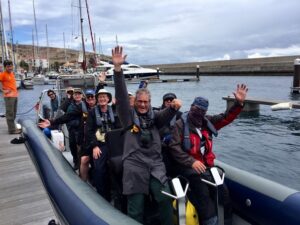
Following breakfast, we will search for land birds not seen yesterday. Following lunch at the hotel, we will head to our boat for our first pelagic excursion, departing from south east Madeira. Rock Sparrow is often seen at the marina. We spend approximately eight hours on board as we head out to our first chumming point, approximately one hour away. We will chum for about four hours. The direction in which we head will be determined by the weather, but normally we steam to the north where we expect to find Zino’s Petrel. Identification of this species at sea is complicated and we are very fortunate to be in the very best of hands to enable us to learn the features that make this possible. Any of the anticipated seabirds may be seen tonight. Clients must take sandwiches or other provisions for dinner on board the boat. We return to reach the marina about 10.00 pm and the hotel half-an-hour later.
Overnight Solar do Bom Jesus, Santa Cruz.
Following a long and tiring day yesterday, this morning will be free, so that you can rest a bit. For those keen to bird, there is a storm channel with sidewalk that leads a short distance to habitat that holds Trocaz Pigeon, Madeiran Firecrest and African Chaffinch. After having lunch at the hotel we will be transported to the marina and then head out to sea. The direction we head will be determined by weather and results at sea yesterday. Normally we head south in search of Desertas Petrel. The south is the best direction for storm-petrels, but again we may see any of the regions seabirds. Clients must take sandwiches or other provisions for dinner on board the boat. The timings are similar to yesterday and so we expect to be back at the hotel at around 10.30 pm.
Overnight Solar do Bom Jesus, Santa Cruz.
Another free morning followed by lunch at the hotel. The afternoon will be spent at sea chumming for any missing seabirds. The direction that we head will be determined by weather and results at sea the last two days. Clients must take sandwiches or other provisions for dinner on board the boat and we expect to be back at the hotel at around 10.30 pm.
Overnight Solar do Bom Jesus, Santa Cruz.
After breakfast at the hotel we will check-out and be transferred to the airport. The tour will conclude upon arrival in the UK.