DAY ONE
Fly London/Tenerife. Drive to our hotel in the North-west of the island, via the El Teide Volcano road, a scenic highlight and the highest peak in Spain, stopping at some spots to observe the Tenerife Blue Chaffinch. The Atlantic Canary, Tenerife Goldcrest and the notably different local subspecies of the Great Spotted Woodpecker will be additional targets in the forested slopes of Canarian Pine. Berthelot’s Pipit should be easily found and provide excellent views. Overnight Los Realejos.
DAY TWO
Today we will explore the western part of Tenerife, with a special focus on the endemic pigeons, Laurel and Bolle’s Pigeon. These birds are notoriously difficult to connect with, and often its only possible to obtain flight views. however with many sites close to our carefully chosen accommodation, we have a good chance of finding some. In doing so we will have good chances to connect with Barbary Falcon. Visiting Punta de Teno may reveal Spectacled Warbler, Barbary Partridge, Cory’s Shearwater and Berthelot’s Pipit and many more special species. Overnight Los Realejos.
DAY THREE
In our second full day in Tenerife we will visit the north-eastern parts of the island, including the Anaga Peninsular, where its wet Laurel forest sloped may offer further opportunities to see both endemic Pigeons, and also the African Blue Tit, Atlantic Canary and perhaps some lingering Plain Swifts. Overnight Los Realejos.
DAY FOUR
Before transferring to Fuerteventura by internal flight we will have some time for birding in the northern coast of the Island for sea-watching. Cory’s Shearwaters will be present in good numbers. If necessary, we will focus and getting additional views of the local endemics too.
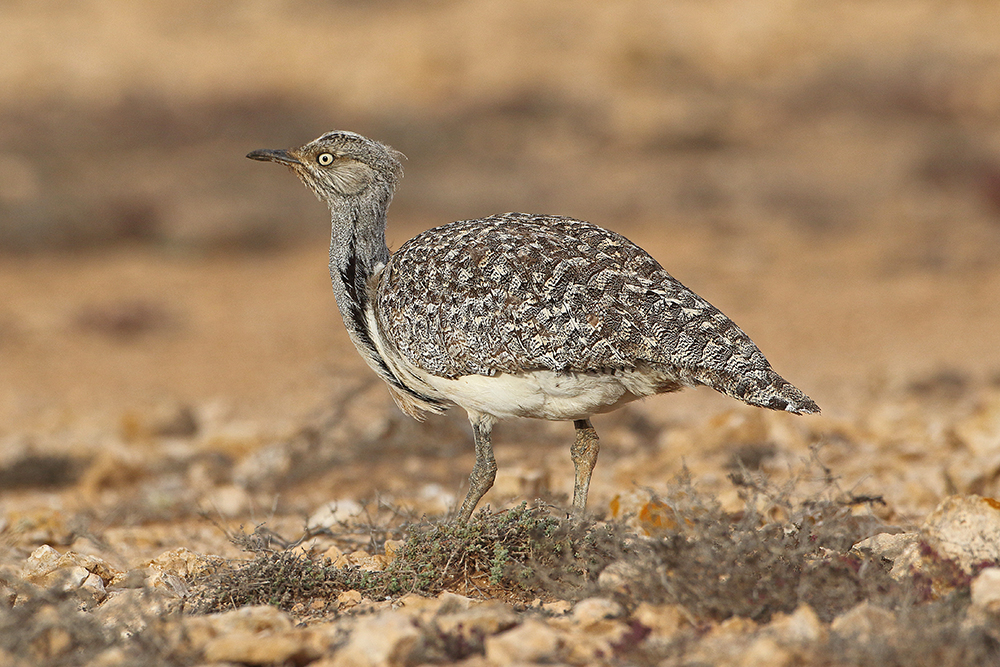
During the second part of the day we will change scenery and fly to Fuerteventura. Once on the new island we will drive to our hotel in La Oliva area (30km). In the afternoon, we will go to Tindaya, driving along semi-desert trails. Here we will look for Cream-coloured Coursers, Houbara Bustards, Lesser Short-toed Larks, and Southern Grey Shrikes (subspecies koenigii). We will also approach sea-cliffs where Barbary Falcons occur and, in recent years, red-billed tropicbirds have settled an incipient breeding population [though they probably wont be around at this time of year]. Overnight near Casillas del Angel.
DAY FIVE
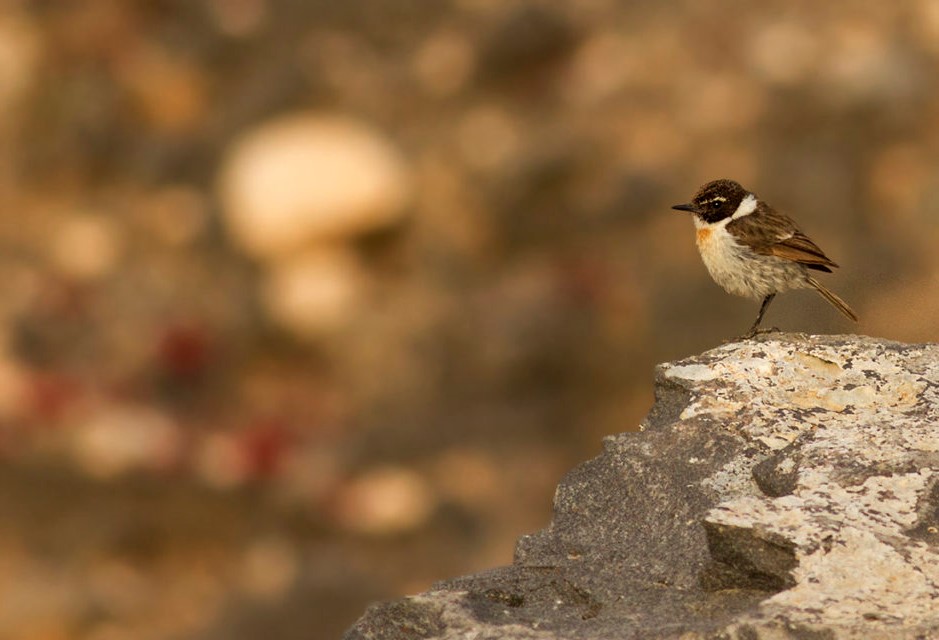
In the morning we will visit the picturesque town of Betancuria, where the endemic subspecies of African Blue Tit (ssp. degener) occurs. Nearby, we will find the access to the trail along Barranco de Las Peñitas, a lovely hike where we can find some passerines, including the aforementioned Blue Tit, the scarce Fuerteventura resident, Eurasian Linnet, European Goldfinch, Island Canary and with a bit of luck Fuerteventura Stonechat. During the second part of the day we will visit the reservoir of Los Molinos, and neighbouring regions, which are good for Black-bellied Sandgrouse, Ruddy Shelduck, and Trumpeter Finch. Egytpian Vulture is also quite easy to find on Fuerteventura, and the birds here are of the subspecies majorensis. An early evening drive in suitable terrain locally could well produce more sightings of Southern Grey Shrike, Barbary Partridge and Houbara Bustard which often emerge to feed in agricultural plots late in the day. Overnight Casillas del Angel.
DAY SIX
We will start the day visiting the Fimapaire Barranco targeting Fuerteventura Stonechat, Barbary Partridge and Trumpeter Finch. Next we will head southwards to the Alares pond, El Carmen Salt-pans and Barranco de la Torre. These site are of interest for waders and passerines. A short walk in La Torre would give us the chance to find Trumpeter Finch and Laughing Dove. Overnight Casillas del Angel.
Time permitting, we will drive to the southern end of the island, visiting Cofete beach, a scenic highlight, and Morro Jable, where some exotic species hold sustainable populations. Later, we will stop in Costa Calma, which in the past has provided rare birds for the region, like Olive-backed Pipit, Yellow-browed Warbler, etc. Overnight Casillas del Angel.
DAY SEVEN
On the last morning in Fuerteventura, we may pay an early visit to Tindaya, following a similar route as in our first day in the island but with early morning light.
Alternatively, we will dedicate the rest of the day to look for the eventual presence of previously found rarities keeping fluid contact with other local birders in the region, or get additional views of other local specialties or endemics. In the afternoon, we return to the airport for the flight back to London, where the tour will conclude.