
FRIDAY 4TH OCTOBER – Overcast with a fresh southerly wind, 12C
Today we had a fairly leisurely day exploring Orkney’s West Mainland, ahead of our afternoon departure south on the Hamnavoe ferry to Scrabster. We started at Loch of Stenness just a short drive from our hotel, and here we found our first Common Scoters of the trip, plus a selection of other wildfowl including a nice close female Long-tailed Duck. Up at Aikerness beach overlooking the sound towards Eday, we had a superb view of a Red-throated Diver still in summer plumage, plus an assortment of other seafowl including diving Gannets, Red-breasted Mergansers and lots of Shags. Working our way around the top of the island anti-clockwise we checked some large Golden Plover flocks carefully from the roadside, but couldn’t find anything more interesting with them. Lunch in the hide at The Loons produced a fly-by ringtail Hen Harrier, but not a lot else in the cool wind.
Bay of Skaill on the west coast was surprisingly sheltered and a nice selection of close waders including some lovely juvenile Sanderling, lots of Ringed Plover and a couple of Dunlin. Loch of Skaill held three more Goldeneye but then better still from an island perspective, we bumped into the Great White Egret which had been seen the previous day elsewhere, on Loch of Clumly. A nice herd of Whooper Swans were here too, perhaps twenty or more. We called next at Ring of Brodgar and then just as we were leaving, an adult large gull with white wingtips flew alongside the van as we were driving – a Glaucous Gull! We had good views as it crossed the road in front of us, clearly showing grey upperparts with a distinct white trailing edge and wingtip. Its bulk also helped to rule out the possibility of a leucistic Herring Gull and we managed a few photos as it flew off across the fields. As it turned out, the bird had been around on 5th September and previously, so maybe over-summered in the islands. That bit of excitement was our last as we made it down to Stromness for the 1645 departure, and eventually made it to our overnight at Inverness around 2100.
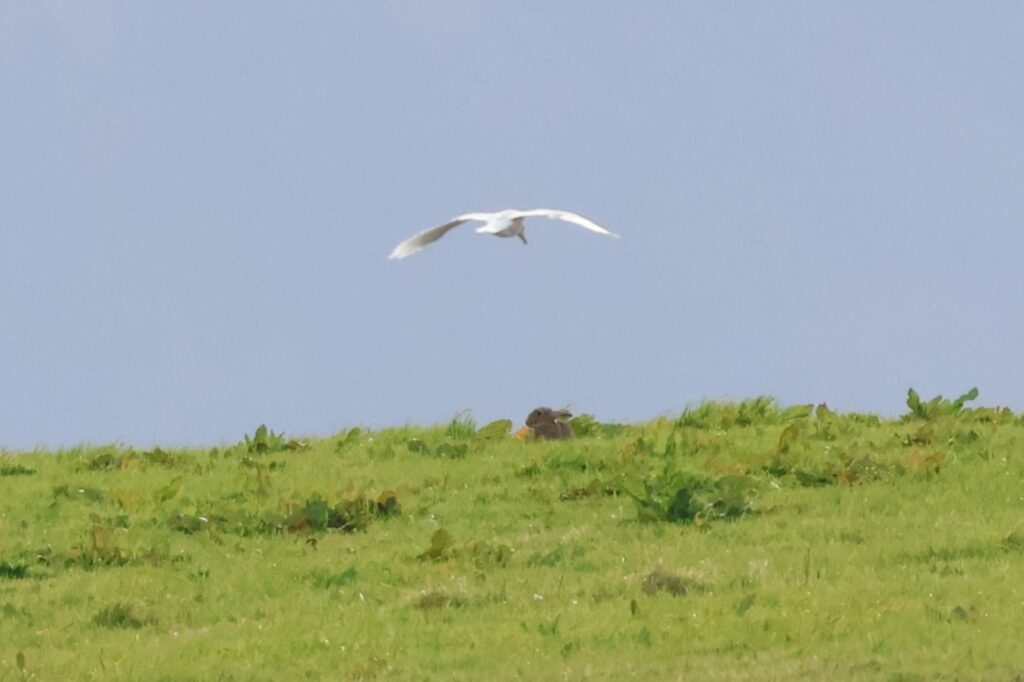

Distant record shots of the adult Glaucous Gull at Stenness
THURSDAY 3RD OCTOBER – Fine and sunny in a light southerly wind, 11C
We may as well start with the elephant in the room – we were off on the early flight this morning and before we had even touched down in Kirkwall, a Pallas’s Grasshopper Warbler had been extracted from the Holland House nets. If this wasn’t painful enough, a Lanceolated Warbler was found at Senness in the afternoon! Of course whenever you visit an island like North Ron, you run the risk of something good turning up the day you leave but this double bill felt harsh! We were in Kirkwall by 8.30 picking up some bits for lunch so we thought we might as well check the Peedie Sea, which now held thirteen Whooper Swans including one family party with four cygnets. We then headed along to Muddisdale, which is a sort of community woodland on the edge of the town. A Yellow-browed Warbler was calling emphatically but we didn’t see it, and four Redwing and three Redpoll were also seen.
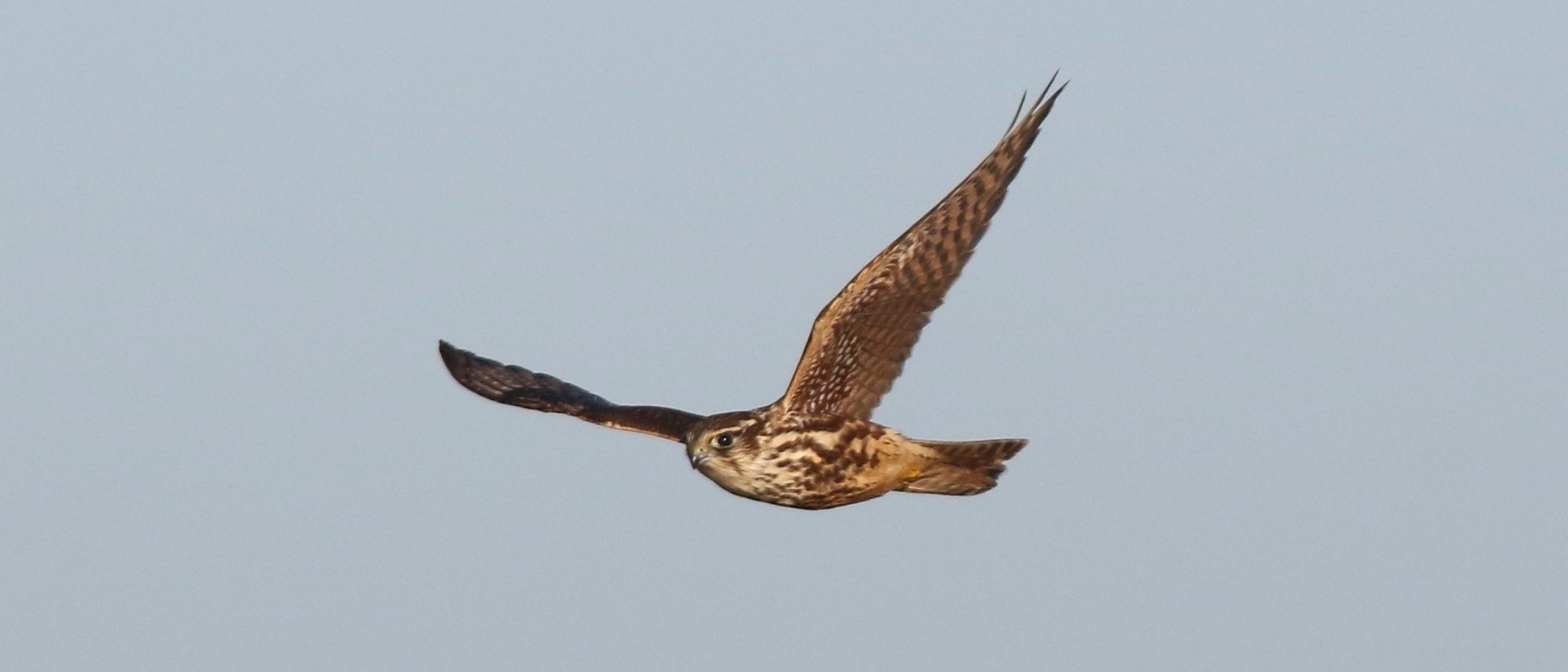
Next we headed out to Orkneys East Mainland and the Deerness peninsula, to see if we could dig any migrant passerines out. The Sandside willows held another calling Yellow-browed Warbler, and a male Merlin unexpectedly flushed out and gave good flight views. We saw two or three ringtail Hen Harriers in the broader area too, and the sheltered beach held a couple of Stonechats and a Wheatear. East Denwick plantation was not especially birdy, but it was better than last week when it held nothing! Today we got a Song Thrush, Robin, Chiffchaff and Goldcrest and there was another pair of Stonechats knocking about too. As we headed south towards Burray, a fine adult male Hen Harrier cruised alongside us briefly. Lunch was taken at Echna Loch and it was lovely and calm here for scanning the sea. We had superb views of four Long-tailed Ducks including two drakes just coming into full plumage. Two Slavonian Grebes, a female Scaup, several Black Guillemots, three Red-throated Divers, and numerous Red-breasted Mergansers, Eiders and Common Guillemot were also seen, with a female Goldeneye on the loch behind.
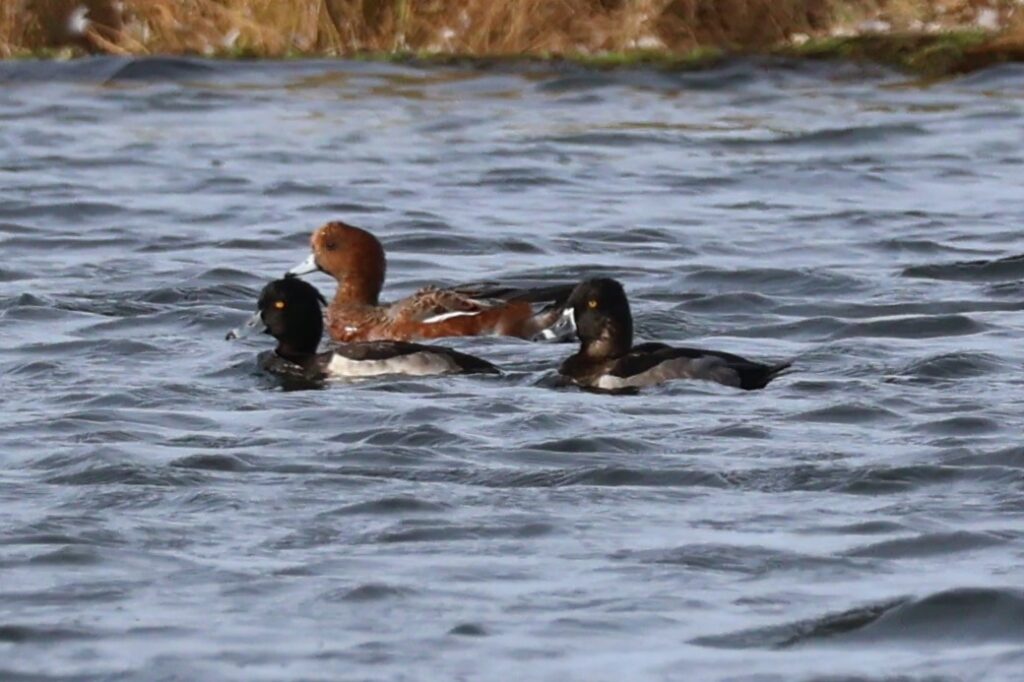

Drake Ring-necked Duck at Loch of Ayre, 3rd October
Crossing onto South Ronaldsay, we birded the beautiful sheltered copse at Olav’s Wood. We had another Yellow-browed Warbler here, this one very vocal and we actually saw it too. Another Chiffchaff was about and we heard a few Goldcrests too. We now wanted to start working our way back towards Kirkwall and Loch of Ayre was next on the agenda. We had stopped here a week ago but it was so windy then we could barely stand up! Much different today and superb light too for checking the ducks. Almost the last Tufted Duck checked turned out to be a splendid drake Ring-necked Duck – one had been reported over two weeks ago but it was a surprise to see it as it wasn’t here when we had looked previously. A fine bird, it gave some really nice views as it bathed and preened, even giving us a short flight to show the ‘Nearctic duck’ wing pattern. Four Goosander were with three Red-breasted Mergansers, which made for a great comparison to have them side by side. That proved pretty much our last action of the day as we wanted to check into the hotel early to give ourselves a bit of a break and chance to sort our rather chaotic gear out after the week away.
WEDNESDAY 2ND OCTOBER – Calm and sunny day in light winds, 14C
A beautiful day of weather (possibly the warmest day on the island this year!) and more great birding gave us a fitting finale on our last day on North Ronaldsay. We started early with a pre-breakfast drive up to the Beacon, but there was a low mist shrouding parts of the island making for a really stunning sunrise, especially with our first Redwings of the autumn ‘seeping’ over the Obs as we stepped out. We checked the punds at the beacon and the area around the masts and lighthouse, noting another Redwing and a Merlin but little else – the misty sunrise scenes more than making up for the relative lack of birds. Our plan for the morning was to head into recording area ‘B’ which we had thus far not covered, and so we drove down and parked outside the sheep dyke at Bride’s Ness (enjoying mega views of the Obs Barred Warbler on the way out!). A Grey Wagtail flew north and the loch held Little Grebe and a whopping 11 Moorhens! A quiet circuit along the beach and up to Bewan produced only a few pipits and a single Wheatear, but things pepped up at Cursiter with a single Twite mixed in with the Linnet flock and a Chiffchaff and Blackcap in the garden.
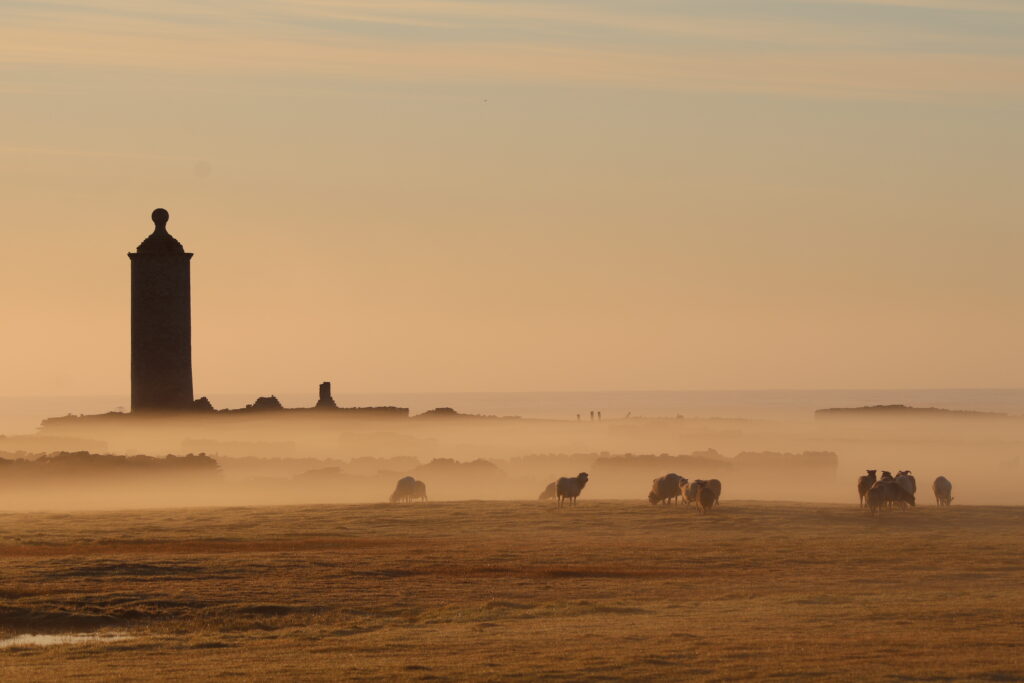
Misty sunrise at the North Ron Beacon
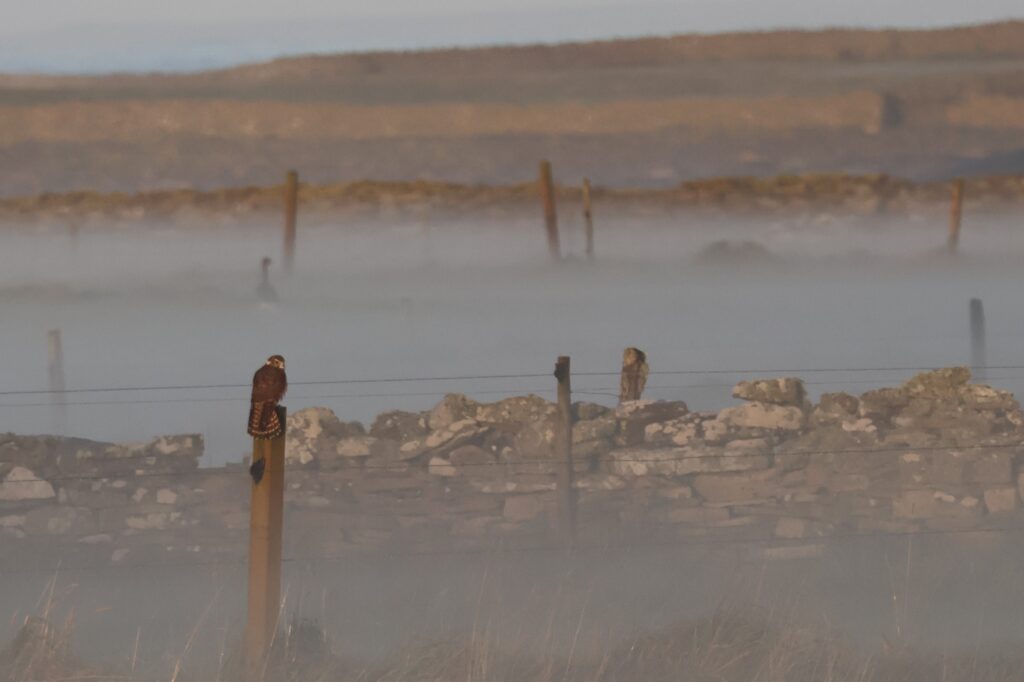
Merlin at first light, 2nd October
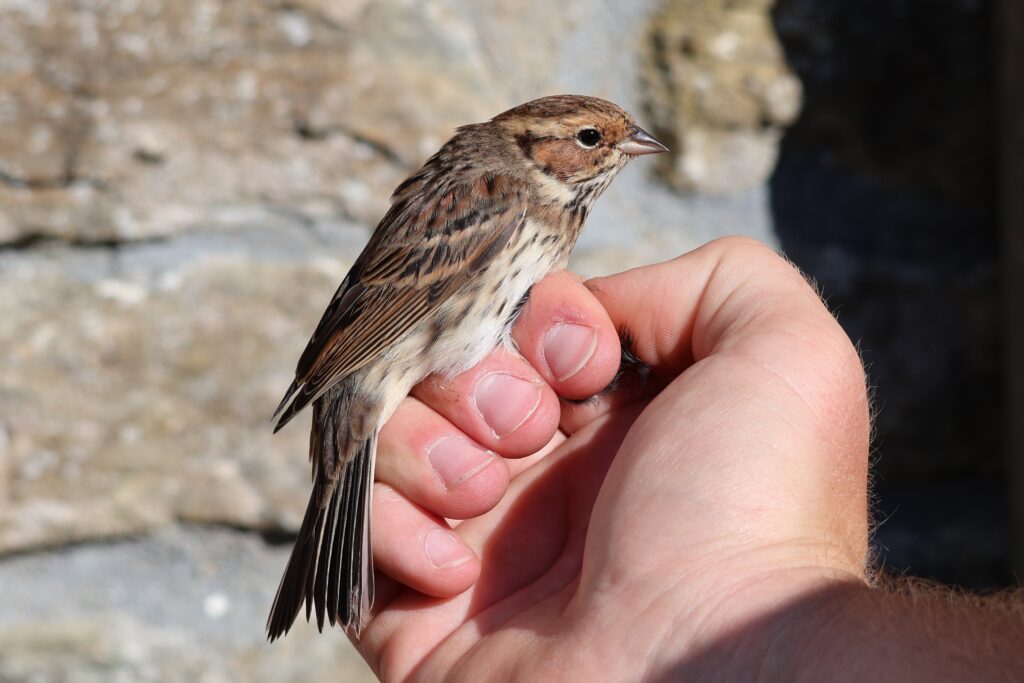
Little Bunting trapped at Holland House, 2nd October
We then reached the road and decided to walk down to Kirbest, which proved a good move. As we stood looking into the garden, stripping off layers in the now baking sunshine (!), a ‘tick’ call overhead alerted us to a Little Bunting flying in from the direction of Nouster. The bird called a few times as it continued back over Cursiter and dropped somewhere beyond that croft towards the Mill. We hot-footed it back up the road and just reached the far side of the croft when five Redwing barrelled out of the garden calling and the Little Bunting flushed with them. This time we followed it as it went long beyond the school. Racing up there, we walked the field margin but there was no sign of the bird. Less than ten minutes later, and it had found its way into a Holland House mist net and thankfully we got to see it in the hand – along with two Yellow-browed Warblers together! A great end to the morning!

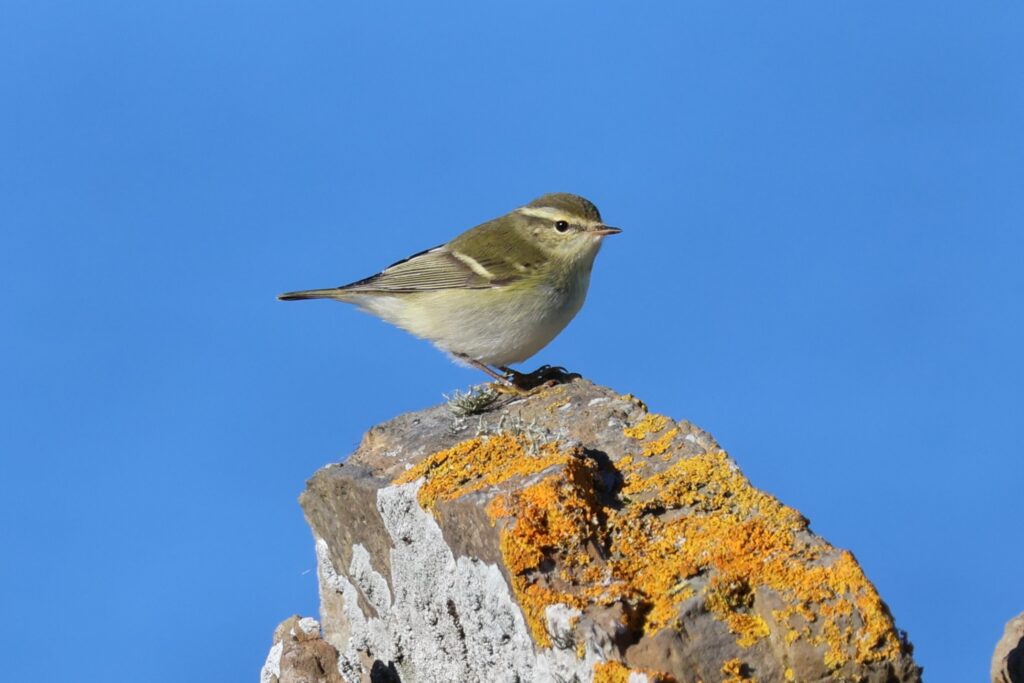
One of the eight Yellow-browed Warblers seen this afternoon
After lunch we went on foot around the Obs, walking out to Lurand. Two Yellow-browed Warblers were together by the double dyke trap, with two more around trap three below the Obs when we walked directly back there. A female Brambling came in calling and dropped briefly into the rosa by the traps before continuing, and a couple of Blackcaps were still about. We then headed back to Bride’s Ness, to try and run into the Rosefinch which had been seen again in that area. No luck, but we did see a brace of ringtail Hen Harriers in that area, another Wheatear and three smart Redwing. Another Barred Warbler had been found at Newbiggin and we saw it distantly in a dead elder from the van as we drove past. Further Yellow-browed Warblers followed at the post office and surgery, and there were a couple of Blackcaps at North Gravity where 14 Pink-footed Geese also came in from the west and circled. These were the last action of another top day – we’d been so lucky with the weather!
TUESDAY 1ST OCTOBER – Overcast with some rain in morning, sunny in afternoon in east winds. 12C
A great days birding again despite that lack of real quality (while Fair Isle ‘just up the road’ was dripping in rarities!) saw us start with a walk up to Holland House before breakfast. We only had time for a very quick rattle through and we didn’t see the Brown Shrike (though it was retrapped again later) or anything else much for that matter. After breakfast we headed straight to Ancum where 4 Song Thrush, Goldcrest and Chiffchaff were noted, while nearby North Gravity had two Willow Warblers – one un-ringed and the other ringed. We then walked up past Nether Linnay to the Shooting Gallery which produced singles of Robin and Chaffinch, and at this point quite heavy rain set in for about half an hour or so. As it cleared, almost immediately more birds started appearing around the island. We ran right into a lovely Siberian Chiffchaff in docks by the entrance to Nether Linnay track – one had been around here yesterday, but while we left this one feeding at Burray we then saw two more together at Upper Linnay, along with a smart blythi-type Eastern Lesser Whitethroat and Goldcrest. Back at the Obs, another Lesser Whitethroat was present but one of the days highlights over lunch was a young male Hen Harrier which made its way into one of the Heligoland traps and was brought into the dining room!
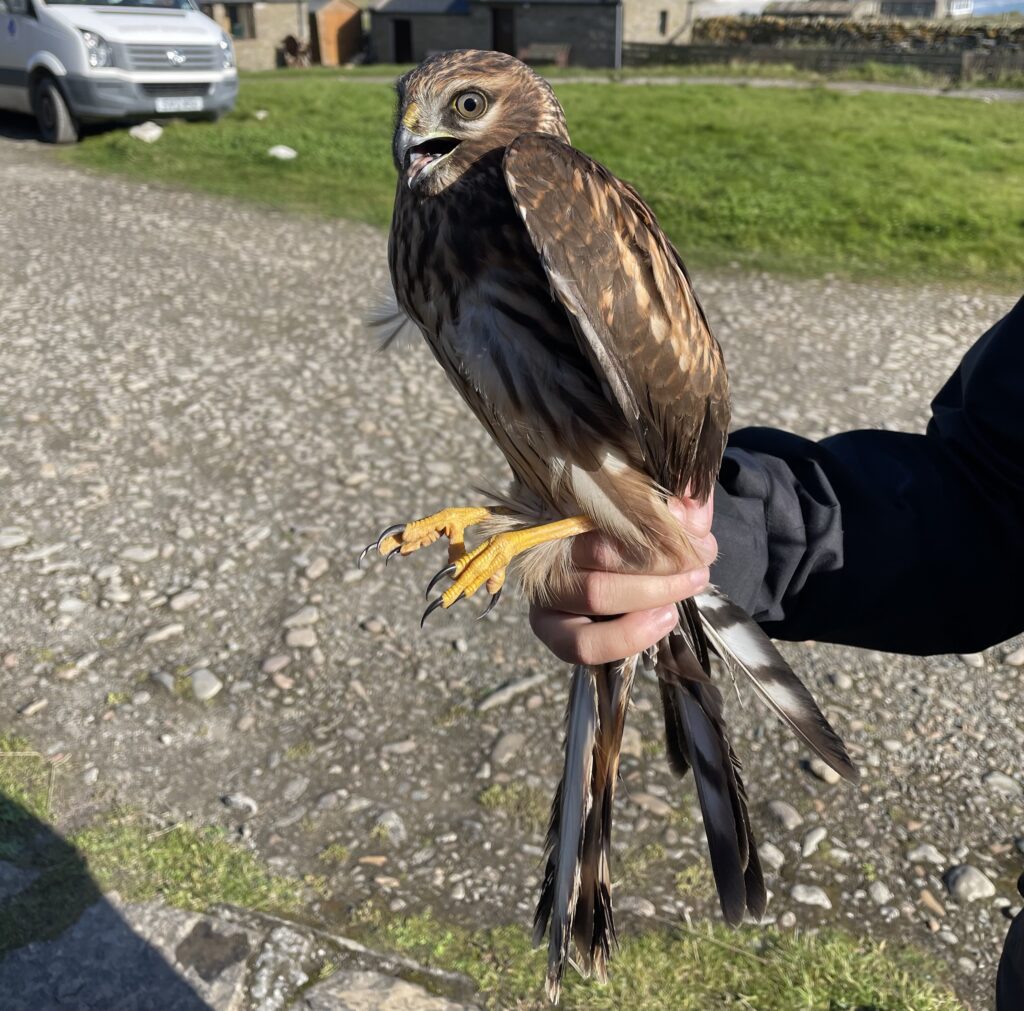
1cy male Hen Harrier trapped at the Obs
After lunch we planned to head up the isle cherry-picking some sites to see what had dropped there after census had already been done. A Black Redstart was around Holland House, feeding happily on the rooftops of the outbuildings, and then up at Trebb next to the airfield, we saw a Barred Warbler found earlier by George but it had now been joined by a smart Yellow-browed Warbler. There were Blackcaps and Robins in most places we looked this afternoon too and Goldcrest were also clearly arriving with odd singles in a few croft gardens. We finished the day up at Sennes, where another Yellow-browed Warbler was found in the docks there along with another Blackcap and Robin, and another Lesser Whitethroat just along at Lochend. A lovely selection of bits and bobs but it felt like we were a little hard done by not to get more! Tomorrow we go again!
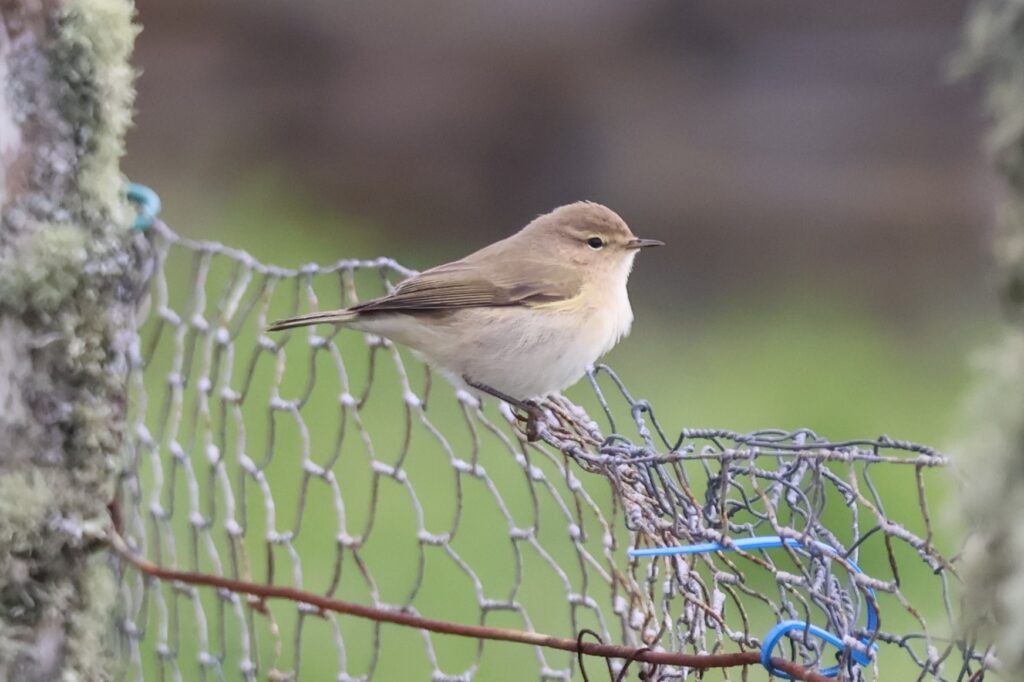
Siberian Chiffchaff, 1st October
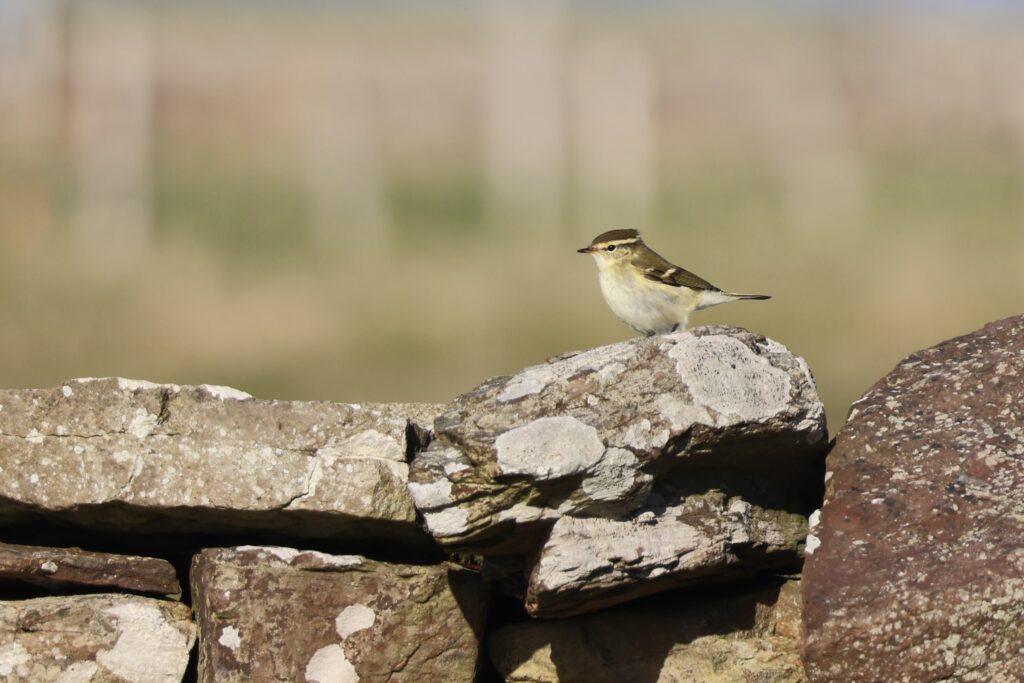
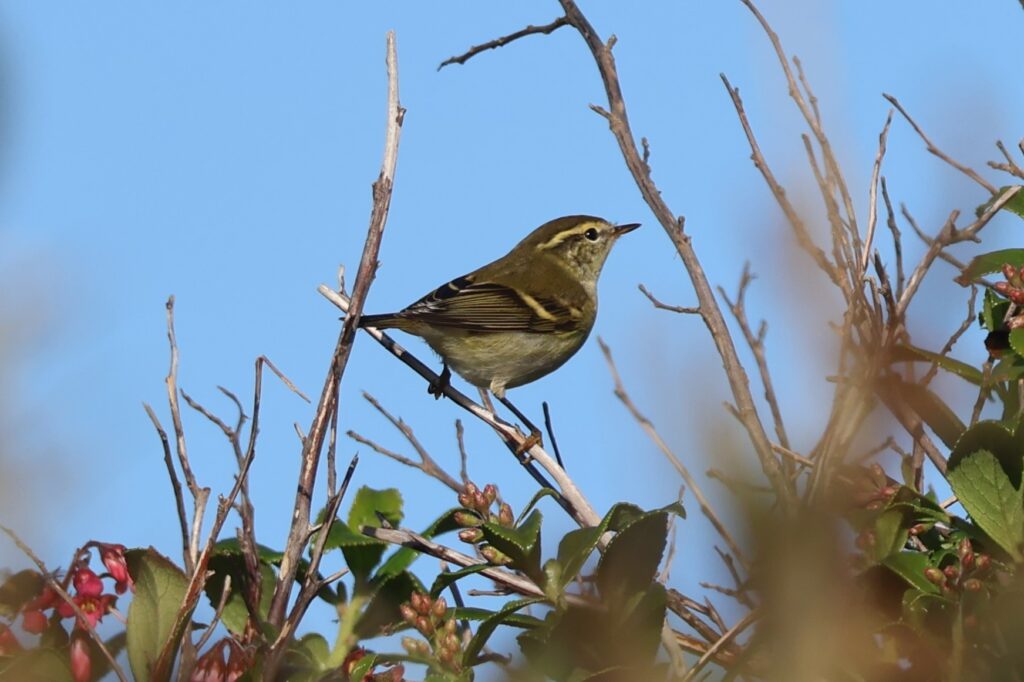
Yellow-browed Warblers
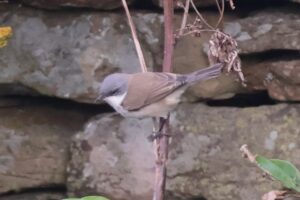
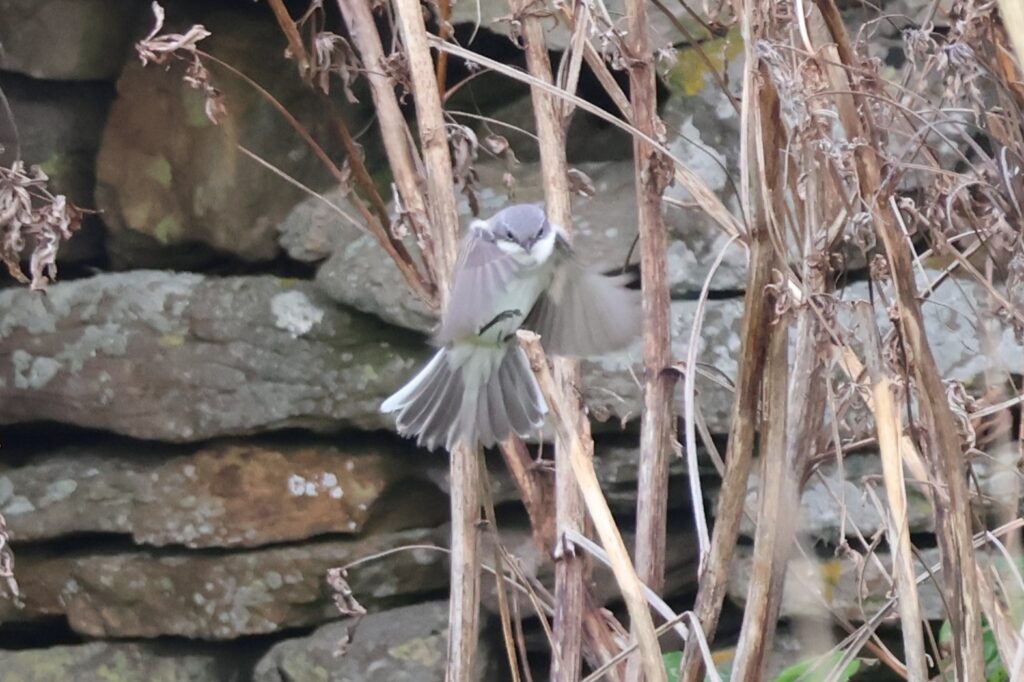
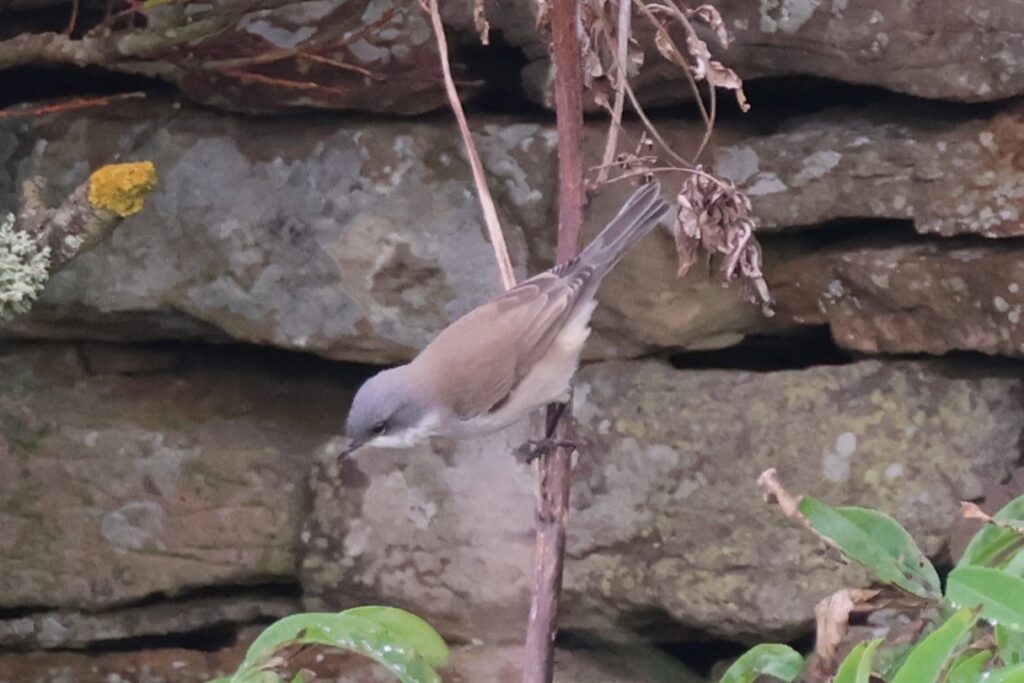
Eastern Lesser Whitethroat (probably blythi) at Upper Linnay. Note the sandy flanks, quite uniform head with ear coverts lacking in contrast with crown, earthy brown mantle with brown washing up onto the nape and extensive white in the tail.
MONDAY 30TH SEPTEMBER – Moderate SE wind and overcast, 11C
A switch in the wind spelt promise for the day ahead but our pre-breakfast preamble around the Obs and down to Nouster didn’t really reflect this – one Blackcap being the sole migrant noted! We did however enjoy brilliant views of an adult female Hen Harrier hunting around the Obs while we ate breakfast. Our plan for the morning was to head up to the North-west of the island and visit Westness, but we called in at Ancum willows on the way up – a single Song Thrush came out here. We had just got parked at Westness when a message came through from Maddy on the whatsapp group to say she’d found a Red-breasted Flycatcher at the beacon – change of plan! Thinking it may not linger there without much cover in the vicinity we made haste and parked by Bewan loch, then walked up to the punds around the beacon itself. The Red-breasted Flycatcher was still there and it flicked up onto a stone dyke nicely for us as we arrived. However for the next half hour or so it remained elusive – we would get a quick flash of it but it would disappear behind a wall and completely vanish. It was clearly nipping through holes in the wall and then flying off along the blindside. Eventually it reappeared in the spot where we’d first seen it and we had really super views – a great location in which to see a scarce migrant passerine!
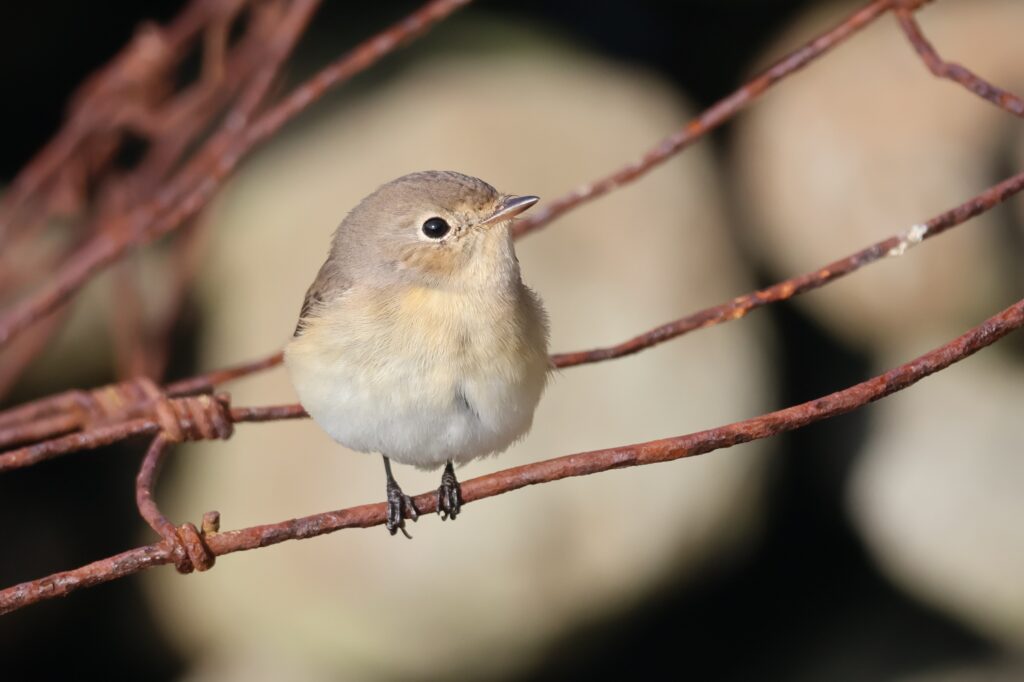

Red-breasted Flycatcher, 30th September
Buoyed on by this we returned to Westness where a ringtail Hen Harrier greeted us. We worked the irises and wet patches but found only a single male Blackcap, and not the hoped-for Jack Snipe. A Chiffchaff was in the thistles up behind the croft where another Blackcap and a Dunnock were seen briefly, plus a brief single Redwing. Not much else on offer here though so we drove back down to Holland House for a short wander there before lunch. The Brown Shrike was still present and flicked ahead of us, and further singles of Chiffchaff and Blackcap were seen. At the south end we flushed something into the sun which doubled back around us – small duck? Rail? Another birder had seen it come out and had the same impression and we wondered about Corncrake. Water Rail would have seemed the most plausible option but we didn’t see a long bill on it in the quick silhouetted views and it looked more solid. We wandered back through but not surprisingly, we didn’t see whatever it was again.
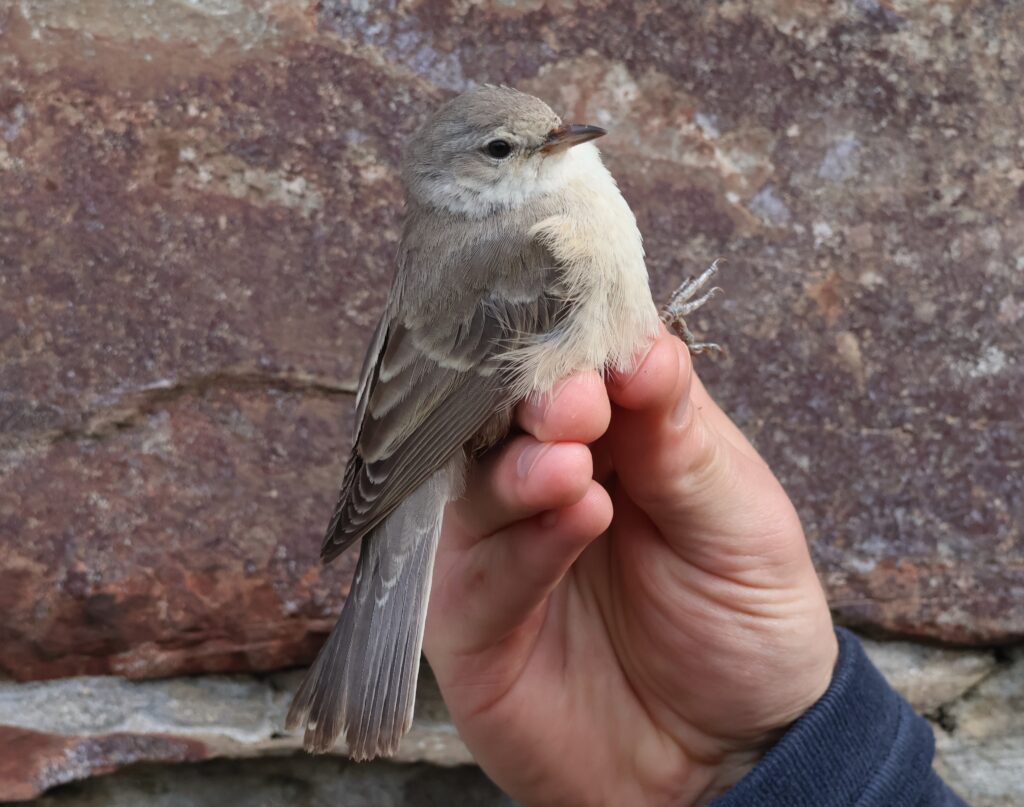
Barred Warbler
After lunch we planned a bit of a break but this was broken by the news that the Barred Warbler had been trapped at the Obs! We headed outside to enjoy this big sylvia in the hand, which was a first experience for all of us. For the next part of the afternoon we parked near the post office and headed down onto the links. There was a good selection of waders on show here, with a decent flock of Bar-tailed Godwits probably the highlight. Offshore, we saw a superb full summer Great Northern Diver, plus a couple each of Red-throated Diver and Red-breasted Merganser. The rest of our route back round was really quiet though – lots of Snipe, Golden Plover and Black-tailed Godwits and several more nice views of a second (juv) Hen Harrier, but that was about it. Back to the Obs then for an early finish after what felt like a long day!
SUNDAY 29TH SEPTEMBER – Moderate SW wind and heavy rain clearing to calm and sunny, 10C
We woke to heavy rain this morning so abandoned the pre-breakfast walk and instead stuck around the Obs until 1015 by which time we had commandeered the island minibus for the next four days and at least could head out with some form of shelter. We drove slowly up the island scanning wet fields for waders – the overnight rain had created a lot of temporary pools and there were Snipe, Lapwing, Curlew and Golden Plover all over the place. A Whooper Swan on Gretchen was most likely the first of the autumn, but it didn’t stick around for long. Our main quarry for the morning was to try and see the long-staying Long-billed Dowitcher which one of the volunteers had seen on Trolla Vatn late yesterday and we now knew one or two pools it favoured. Nevertheless we checked all the pools on our way north with one flash in a field below Upper Linnay holding 31 Black-tailed Godwits. We were slightly surprised the dowitcher wasn’t with these but we needn’t have worried as we found it on the next pool we checked, up at Scottigar. The Long-billed Dowitcher showed really well and a break in the weather enabled us to get out of the van and set the scopes up for even better views. It eventually flushed and flew over us calling, which was great to hear, before dropping out of view beyond Dennishill. With mission accomplished, we continued on to check Bewan, noting a single juv Knot among the assorted waders and wildfowl. A Great Northern Diver powered south-east and landed in Linklet, trailing its enormous feet behind it. The grassy areas near the lighthouse held lots more Golden Plover, Turnstone and Ringed Plover, but the rain really closed in again so we gave up and headed back for lunch – though there was time to squeeze in a scan of Nouster on the way which held another Great Northern Diver.
Our plan for the start of the afternoon was made easy by news of a Barred Warbler outside the Obs! The sun was now shining and the wind had dropped right off so clearly a few birds had dropped in. We had excellent views of the very mobile Barred Warbler, which was feeding on the rosa rugosa berries between the Heligoland traps and perching along the tops of wooden pallets in the open. A female Blackcap was also present and the ringtail Hen Harrier which had been knocking around flew low past us. From here we drove up to the post office and parked before walking down to check the scattered crofts on the eastern side. A Reed Bunting was seen and there were yet more Golden Plover and Snipe in all the wet fields. A Yellow-browed Warbler was flitting in a lone sycamore in the garden of an abandoned croft and we were able to scope it from a distance though somewhat against the light.
Heading out through the sheep dyke onto the west side of the island, with such a beautiful afternoon this now seemed as good a time as any to take a walk on this side of the island. A cracking adult male Hen Harrier flew low along a stone dyke and disappeared, but we would see it again later on. Out on the moorland, Golden Plovers were the order of the day with a large flock of several hundred which were begging to be checked for something rarer. We had good views of them all and there was nothing with them on this occasion, but they were great to see nonetheless. Heading back through Nether Linnay we rejoined the road and made our way south, bumping into the male Hen Harrier again at Ancum. A male Greenland Wheatear was by the war memorial and proved our last action of the afternoon as we drove back to the Obs for 6pm.
SATURDAY 28TH SEPTEMBER – Moderate NW winds and rain showers, 11C
An excellent autumn days birding for our first full day on North Ronaldsay! We headed out before breakfast for a short walk down around the Obs to Nouster Bay. It was fairly calm here despite the strong wind still whipping in across Gretchen and we saw a few bits in the bay such as Razorbill, four Kittiwakes and a couple of Eider. There were one or two Snipe and Golden Plover about too but it was certainly quiet on the passerine front. After breakfast we had a lift arranged up to the lighthouse (the minibus was out of commission today as it was being used for an island funeral) and so by 9.30 we were bedded in at the seawatching hide! There wasn’t a massive amount of passage but we did succeed in getting some good views of Sooty Shearwaters, with 22 seen heading north, along with two Manx Shearwaters, a few Razorbills and Kittiwakes and a steady trickle of Gannets. A Purple Sandpiper flew in and landed on the rocks right in front of the hide giving excellent views, and outside on the grass were lots of Ringed Plover and Golden Plover. We walked up to the lighthouse to scan Trolla noting a single Dunlin, and then made our way south along the dyke to Bewan. As usual there were lots of ducks here, including two Pintail, and a male Snow Bunting flew around us a couple of times calling before landing briefly on the beach. Most of the rest of the walk back along the island towards Garso was punctuated by Snipe and Golden Plover but not a lot else.
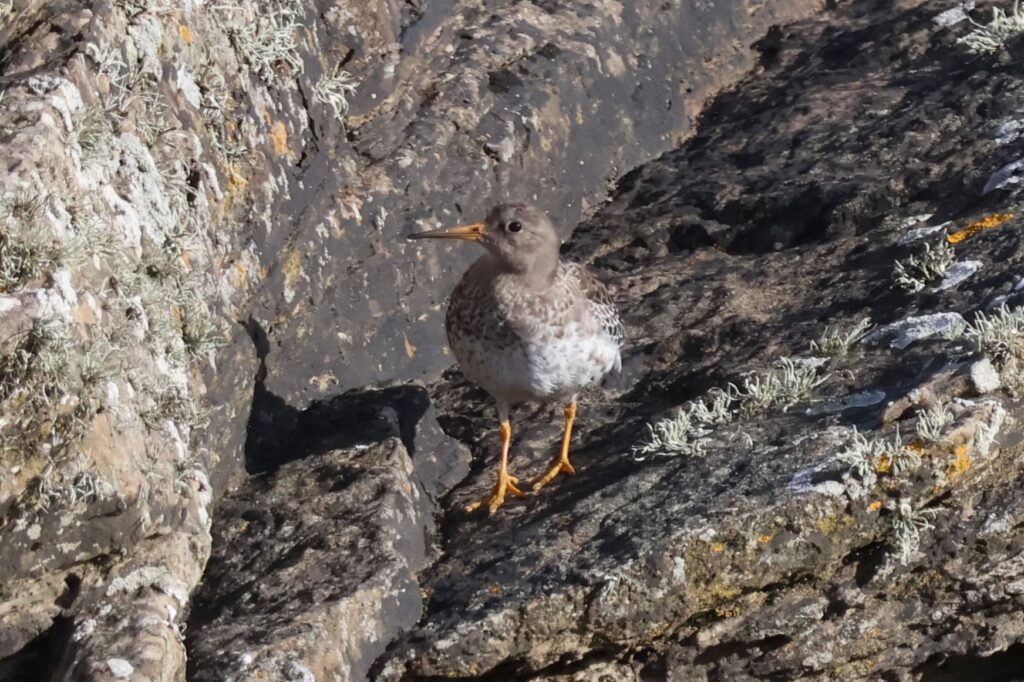
Purple Sandpiper at the seawatch hide
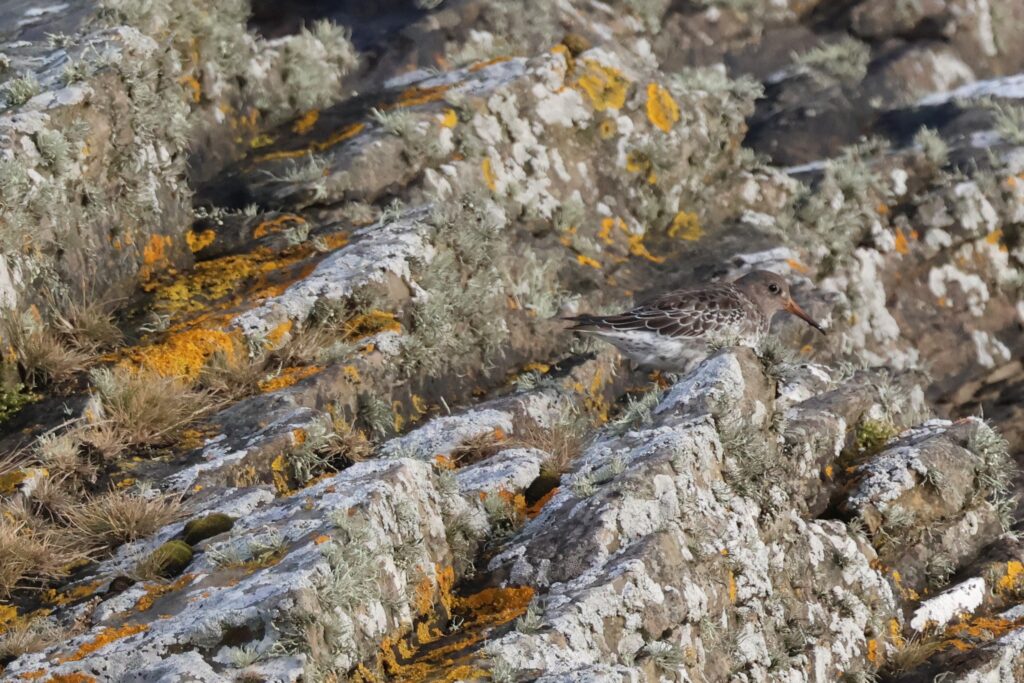
Purple Sandpiper showing off its camouflage!
After lunch we had one target for the afternoon, which was to try and see the Brown Shrike which was elusive but had been seen again briefly a couple of times in Holland House Gardens this morning. We knew it wasn’t going to be easy to see it but with little else about migrant-wise, it made a lot of sense to put a shift in to try and get it today in case it departed! A juvenile Hen Harrier swept past at close range as we walked up the road to start our vigil. Essentially for 2.5hrs we staked out the southern edge of the garden, with the group standing in the field and Ashley periodically walking in through the garden to try and tickle it up so folk could see it. This resulted in two split second views for Ashley but no views for the rest of the group – the bird simply wouldn’t come out of the dense fuschia! Eventually we tried relocating to the southern end of the gardens and then we found it was perching occasionally on the northern edge along the road side. We saw it perched and in flight briefly and then it flew down onto the ground where we were just about to scope it when a car passed and flushed it! We had almost given up when George arrived and with the wind now dropping, he opened the nets. Within half an hour the Brown Shrike was caught and we were treated to views of it in the hand – we were glad we had stuck it out! The birds contrasting blackish mask, buttery-washed underparts, short primary projection and short outer tail feathers were all observed while it was processed and released.
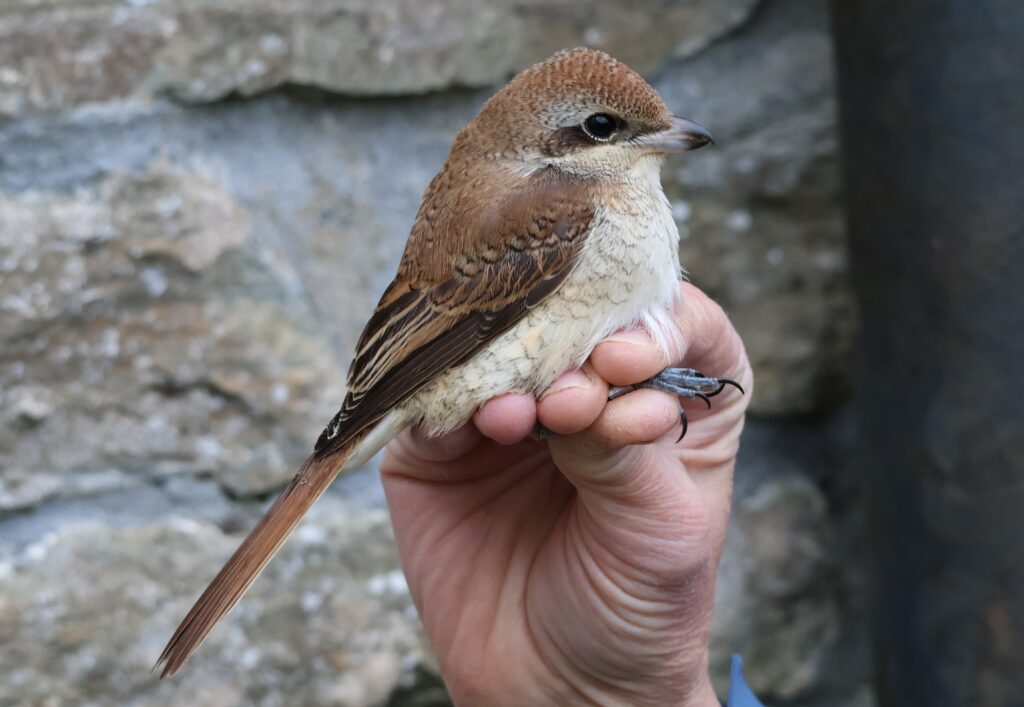
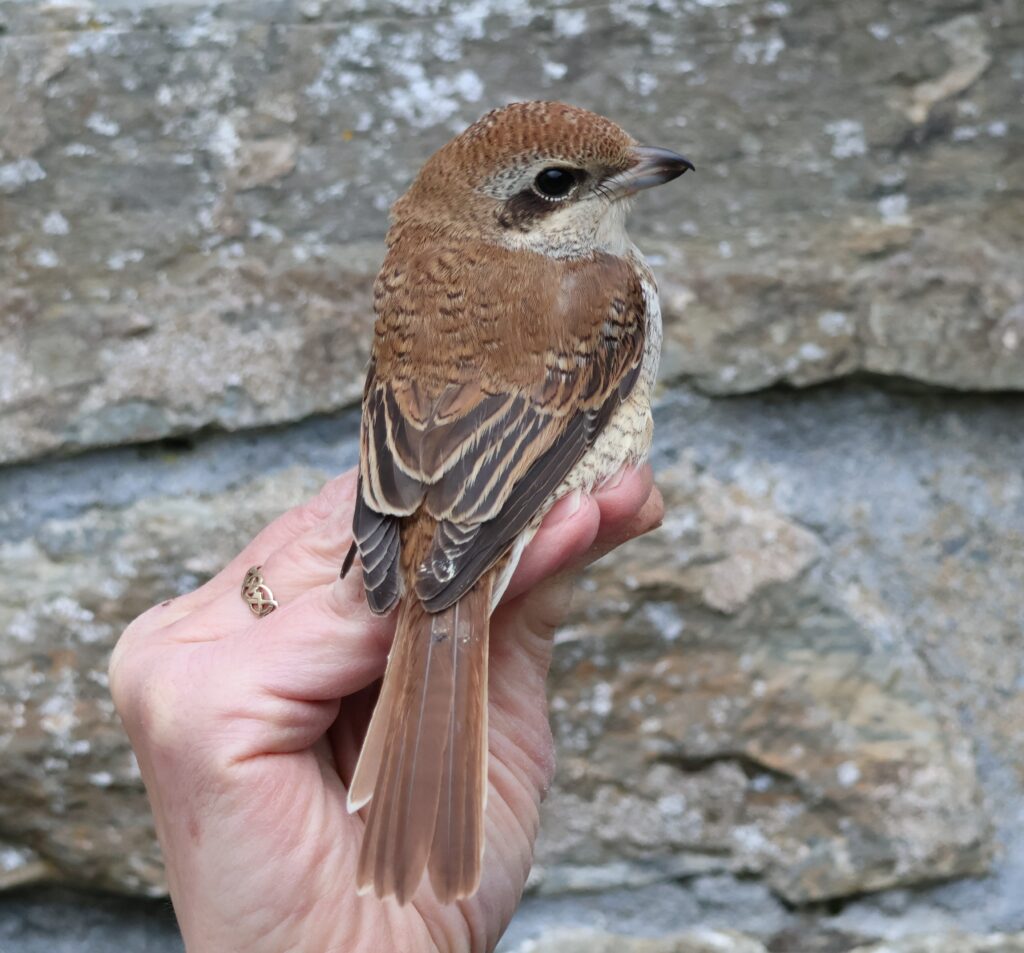
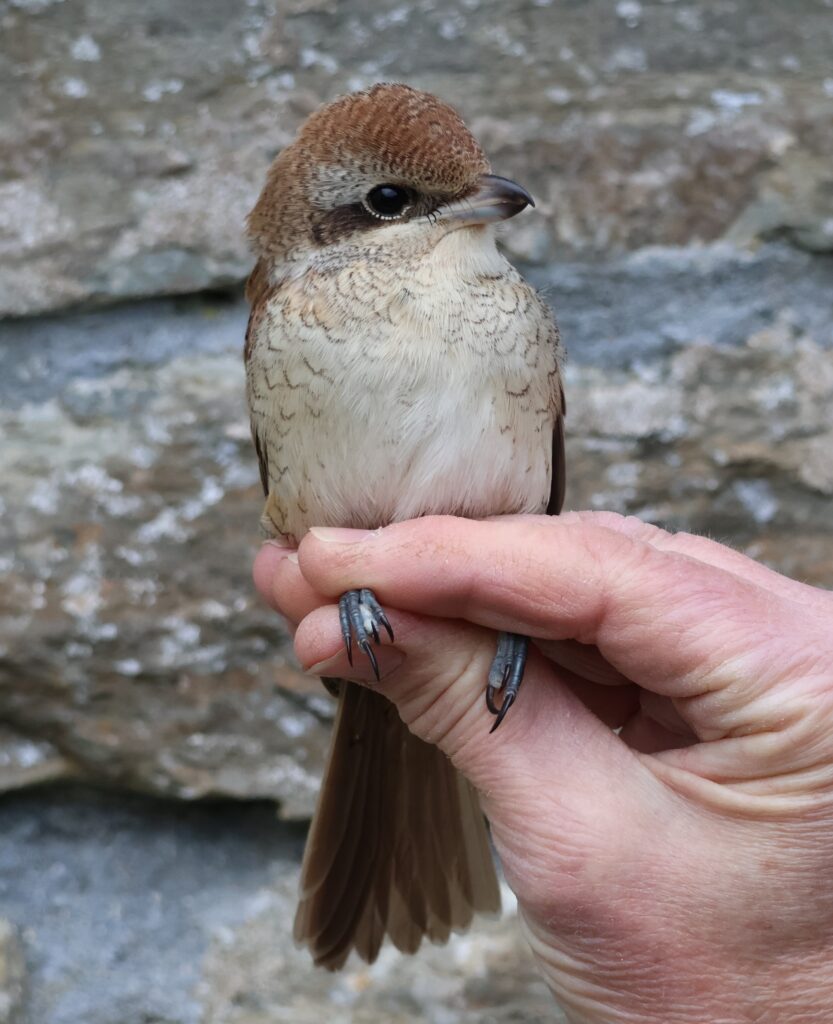
Brown Shrike, Holland House 28th September
A fabulous end to the day was then provided firstly by a Merlin which was perched on the telegraph wires like a Kestrel! It relocated to the pole and then flew off low over the fields towards Gretchen periodically darting at rabbits which seemed odd behaviour for a Merlin! On the lochan itself a smart juv Grey Plover was standing in the grass at the edge of the water increasing our variety of waders for the day. Finally in Nouster, a Black-throated Diver had been found and we had good views of this juvenile bird feeding in the shallows with a couple of Shags around the far side of the bay. Three Red-throated Divers were present too, making a great comparison. We all rather wearily trudged up the hill back to the Obs in time for a shower and roast mutton dinner!
FRIDAY 27TH SEPTEMBER – Strong Northerly winds and heavy rain showers, 10C
A fairly tough day’s birding on the Orkney Mainland today saw us trying to dodge the (often very heavy!) showers on the strong, cold winds. We started in the centre of Kirkwall with a check of the Peedie Sea, noting a few Shoveler and Tufted Duck but nothing ‘Nearctic’ was hiding amongst them. Heading out on the East Mainland we were heading for Bay of Skaill but a lovely adult female Hen Harrier cruised past us along the road and prompted us to take a right turn to try and follow it. This took us down to Newark Bay where a bit of sunshine and some shelter was welcome ad we saw a mixed flock of Sanderling, Ringed Plover and Turnstone, and a close Razorbill in the bay. Heading round to the east side of the bay we took a walk between the showers and saw a few Rock Pipits, a brief Wheatear and plenty of Wigeon feeding in the shallows. Overall though, it was slim pickings and even the normally trusty East Denwick plantation up towards Mull Head failed to produce, well, anything!
After a coffee stop in St Margaret’s Hope we headed back up to Burray and parked at Echna Bay for lunch. The wind was coming straight in here and occasionally lashing rain against the side of the van, so we stayed bedded in! About 100 Red-breasted Merganser and a couple of Common Eider could be seen though, plus a brief sighting of a Red-throated Diver. At Loch of Ayre, the wind was strong for using the scope but we managed to dig a Goldeneye out of the mixed flock of Tufted Duck, Wigeon and Gadwall. The bay behind held about ten Black Guillemots in winter plumage too, and a handful of Common Seals. After checking one final spot (the actually rather sheltered plantation at Toab) we made for the airport in time to catch our 1730 flight out to North Ronaldsay. Always a trip highlight, the 20 minute ride out across the isles in the Britten Norman Islander was as exhilarating as ever! Touching down at the airstrip we were met by Maddy and the Obs van, so we could load our luggage and then walk down to Holland House. George was there with three nets open trying to catch the Brown Shrike which was hiding somewhere in the dense fuschia bushes – the staff had only managed brief flight views of it today but it was still in there somewhere! We had a quick look in the fading light but accepted this was most likely one for tomorrow. Several Golden Plover and Snipe were roadside as we made the walk down to the Obs, arriving in time for tea! May the hardcore birding commence!
THURSDAY 26TH SEPTEMBER – Fresh NNE winds and sunny spells, 11C
Having travelled as far as Lockerbie yesterday we still had a long days travelling ahead of us, up to Inverness and then up the North-east coast of Scotland to Scrabster from where we would take the 1900 ferry across to Orkney. Our main planned birding stops were around the Cromarty Firth, where we arrived at lunchtime to be greeted by the sight of thousands of newly arrived Pink-footed Geese resting and bathing in Udale Bay. We parked by the hide and had lunch watching and listening to the vast hordes of geese, with perfect light as the sun had even decided to come out for us after a morning of lashing rain! We set the scopes up and worked through the flocks as carefully as we could, but there were around 15,000 birds here and most were asleep or distant! We had super views of the closer birds and it was great to see lots of fresh goslings in the flock with several groups of three. A distant Peregrine was spotted and we saw a few Teal and common waders too. Moving a bit further along the road to another pull-off, the water’s edge was much closer and here we were treated to cracking views of 80 Scaup feeding in the shallows close in, with a further 120 birds spread around in flocks further out. Wigeon were here in force too, and there was a lovely juvenile Bar-tailed Godwit, two drake Eider and another flight of Pink-footed Geese directly overhead too. We had time for one more quick stop at The Mound at Loch Fleet, where we saw three sawbills together – two Red-breasted Mergansers and a Goosander. A little further on, a handy lay-by allowed us to dive off the road, pile out of the van and enjoy great views of two adult White-tailed Eagles drifting over the road low! We then continued over the flow country to Thurso and eventually Scrabster, where the rather bumpy ferry ride into the northerly wind departed on schedule. We finally flopped into bed at our accommodation on Orkney around 21.30.
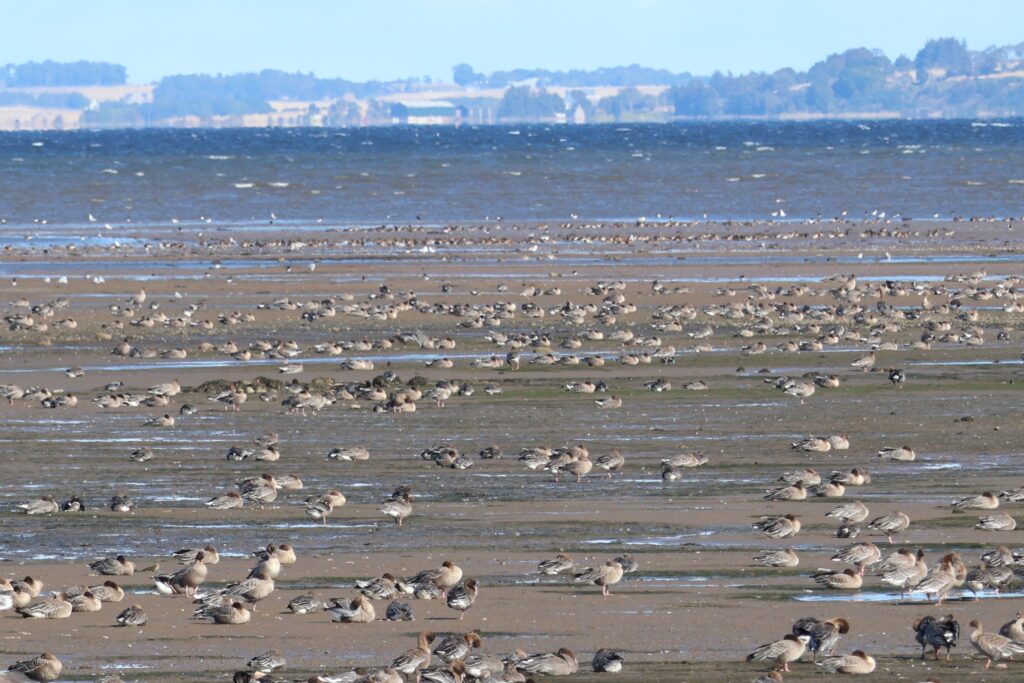

Pink-footed Geese scenes at Udale Bay, 26th September


