
Between the 1st and 8th September 2024 we were lucky to witness an unprecedented and amazing spell of birding here in Norfolk. Each autumn our attention switches to the weather charts, looking for patterns that are likely to produce arrivals of migrants drifted across the North Sea. Mostly these are fairly small events, and it is always difficult to predict how good any ‘chart’ will be and what species might be involved. In recent years, with declining bird numbers, often you might go out and only see one or two migrants but they might both be rarities that have travelled farther. The big falls of so-called ‘common migrants’ tend to be fewer and farther between – whether that is only linked to declining populations or also changing weather patterns due to climate change is hard to be sure of. The events that unfolded over the last week though were quite special and produced a fall of migrants like nothing we’ve witnessed in the last two decades at least. Read on for Ashley’s account of an amazing few days!
1ST SEPTEMBER
Nick and I headed out to the Norfolk coast on this, the first day of the spell of winds with an easterly element. A nice high pressure area had now developed over Scandinavia (the origin of our East coast drift migrants here in Norfolk) but on our side of the North Sea, we were bathed in clear blue sky and warm sunshine. Normally in these conditions, birds keep going and other than the odd thing here and there, not much is likely to make landfall. We instead normally hope for poor visibility caused by mist or rain to ground birds that have just made the sea crossing (encouraged to do so by the fine weather on the other side). But the 1st did not follow this form book!
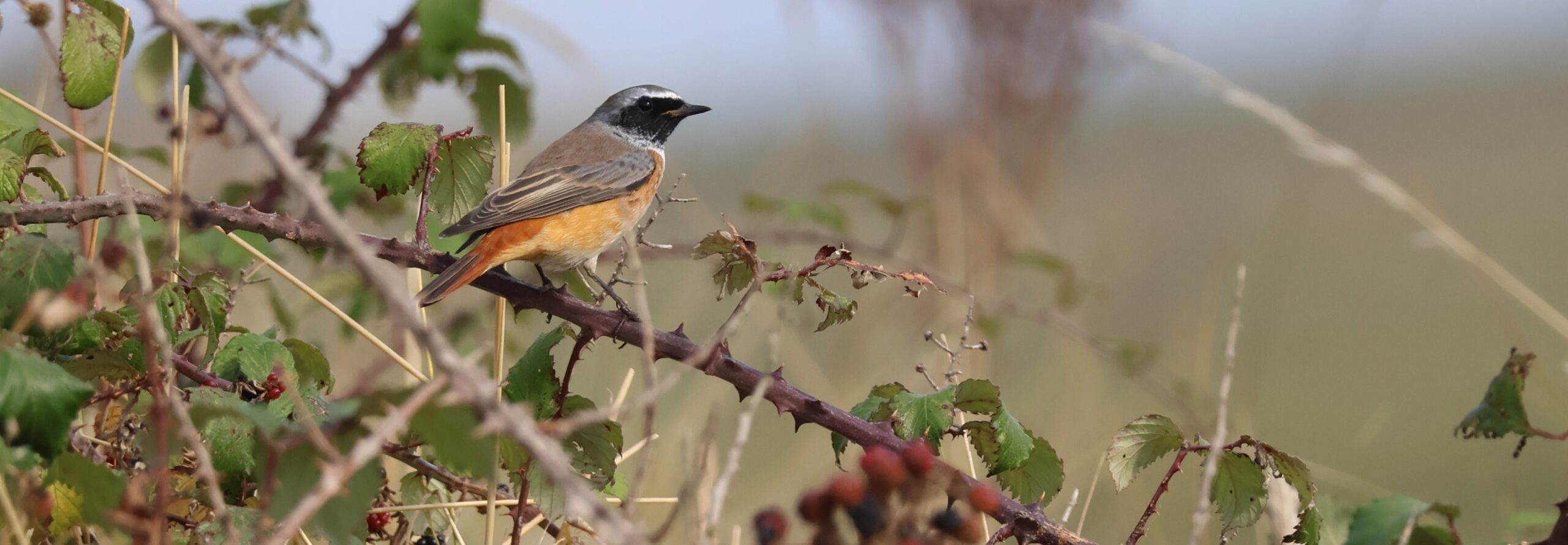
Nick and I made a leisurely start at around 1130 and made the first circuit of our chosen area of coastal dunes and scrub. 3 Whinchat, 3 Willow Warbler and singles of Pied Flycatcher and Redstart were very encouraging and a Dotterel called four times as it flew west high above us unseen in the blue sky. We felt that little tingle of excitement that maybe something was going to happen and as we walked round the same area of bushes again, an extra Pied Fly and now a Spotted Fly had appeared – game on!
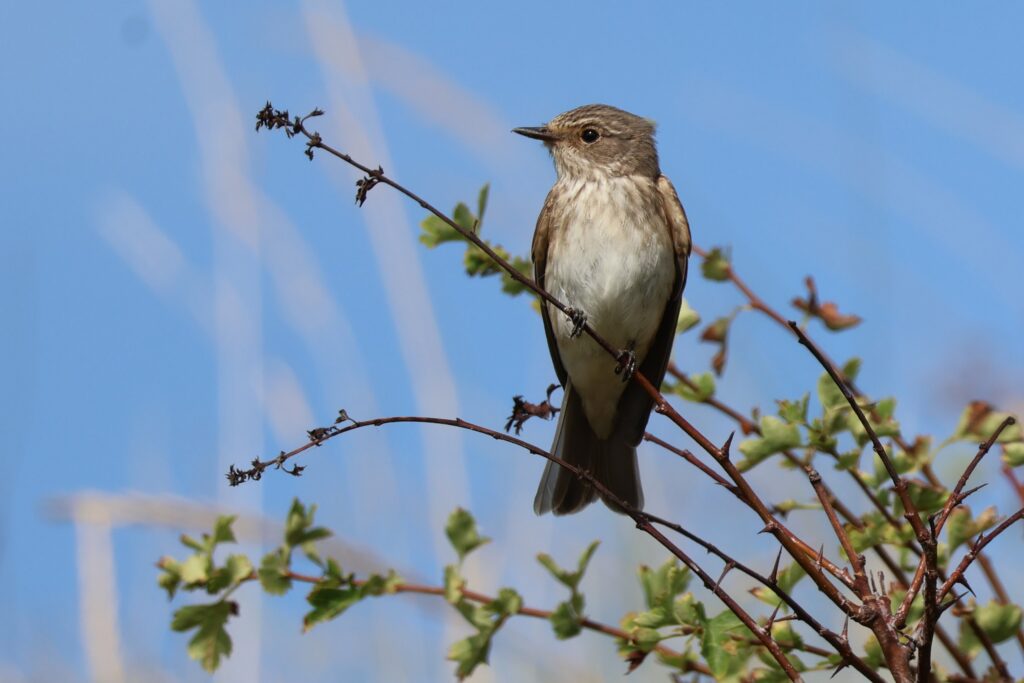
Spotted Flycatcher newly arrived under blue skies
3pm is a time of day we often think of as the magic moment of a day of east coast bird migration. Often if there are no birds about in the morning, this is about the time when migrants that set off in the morning start to reach our shores and areas that were birdless an hour beforehand can suddenly be bouncing with migrants. Wheatears started to appear, flipping in over the crest of the dunes and perching on bushes before continuing inland. The east wind was brisk and the key to success was finding areas out of the wind where newly arrived migrants might shelter. We walked slowly along the sunny edge of a dune ridge and worked a line of evergreen sueada bushes – common name Shrubby Sea-Blight – a habitat often utilised by migrants in these otherwise sparse habitats. Redstarts flicked ahead of us, and lemon-yellow juvenile Willow Warblers. We could see a couple of Spot Fly’s sallying up ahead too and then a soft ‘tic-tic’ note alerted us to another Redstart which flew up and landed on a rose in front of us – a corking male! We both looked at each other and smiled – this is what autumn birding is all about! As we walked the suaeda we continued to push birds ahead of us along the spit, with a larger bird suddenly flushing from almost under our feet – a Wryneck! The bird flew to the end of the spit, doubled back and flew right past us before pitching up in a hawthorn with two Willow Warblers for company.
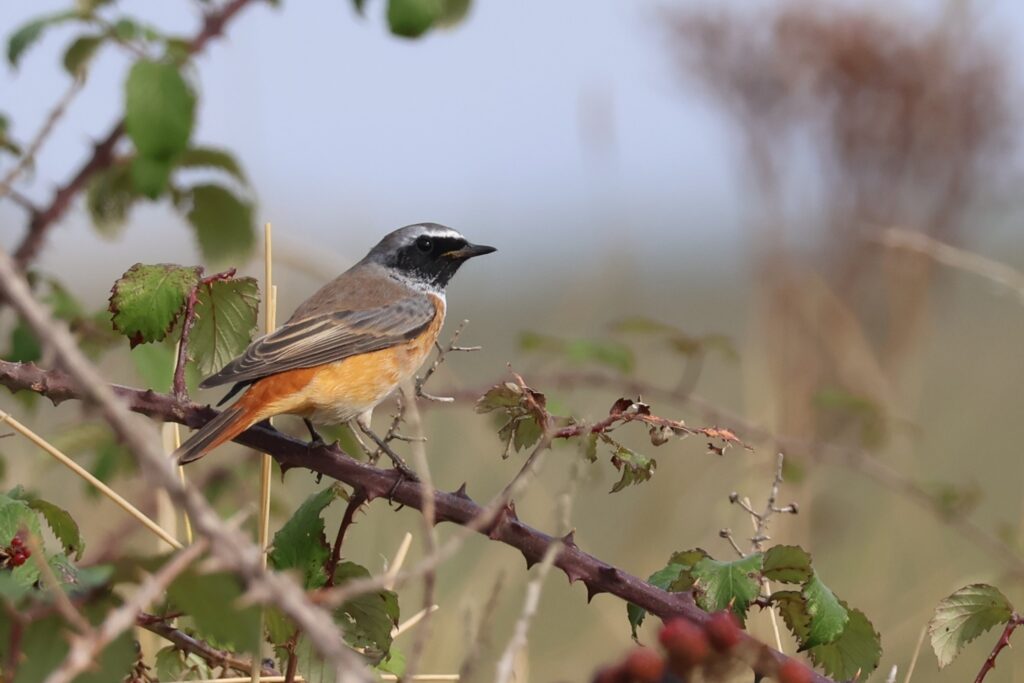
Male Redstart – this one caused us both to go ‘wow’!!
We continued birding until dark, enjoying the amazing and surreal experience of watching Redstarts, Pied Flys and Spot Flys sallying for moths by moonlight. We could not identify all the shapes by this point as it was too dark, but the wind had dropped and we could watch them sallying up into the sky and hear the audible bill snaps as they caught insects. Our final totals today were 13 Wheatear, 14 Redstart, 12 Pied Flycatchers, 5 Spotted Flycatchers, 8 Willow Warblers, a Cuckoo, 1 Tree Pipit, 8 Whinchat, 4 Whitethroat, 1 Garden Warbler and 1 Wryneck.
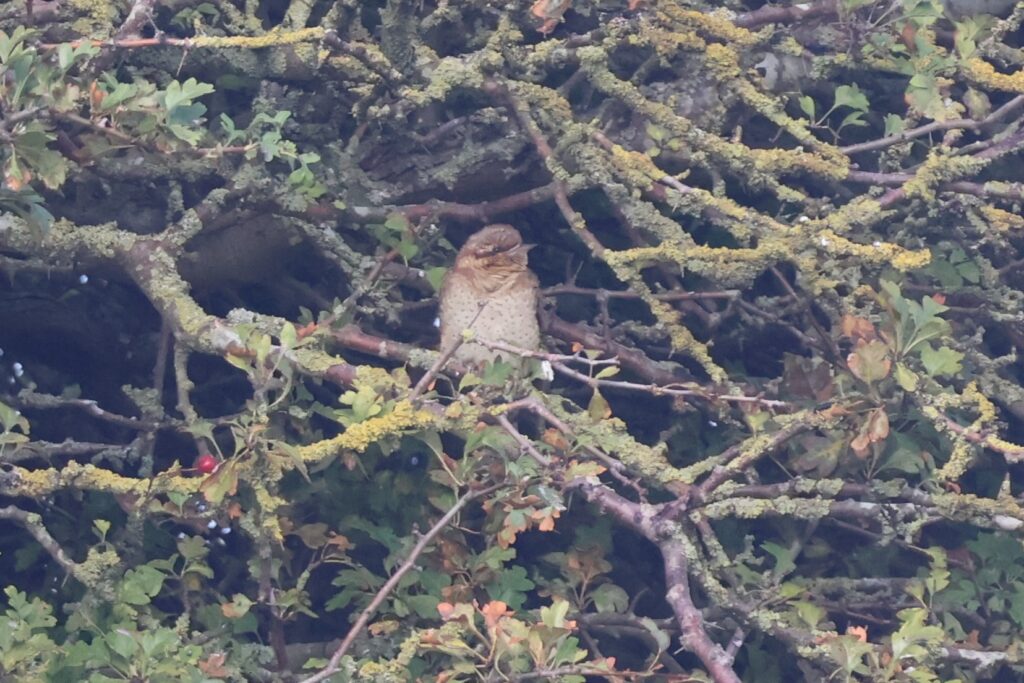
Wryneck – the top prize from todays efforts
2ND SEPTEMBER
Similar drift conditions continued today but we both had afternoon commitments so a full day in the field was not possible. I made a two hour visit to Wells Pinewoods in the morning, logging 10 Redstarts, 11 Pied Flycatchers, 15-20 Willow Warblers, 1 Garden Warbler, Crossbill and Hobby. We now had a couple of days of less suitable conditions with west and north winds over Tuesday and Wednesday but now the chart was starting to look very interesting for Thursday onwards. The high pressure system over Scandinavia was increasing in size and stretching eastwards into Russia. Whats more, an occluded front was due to push across the North Sea like an arrow and bring rain to Norfolk. Surely we would get more birds?
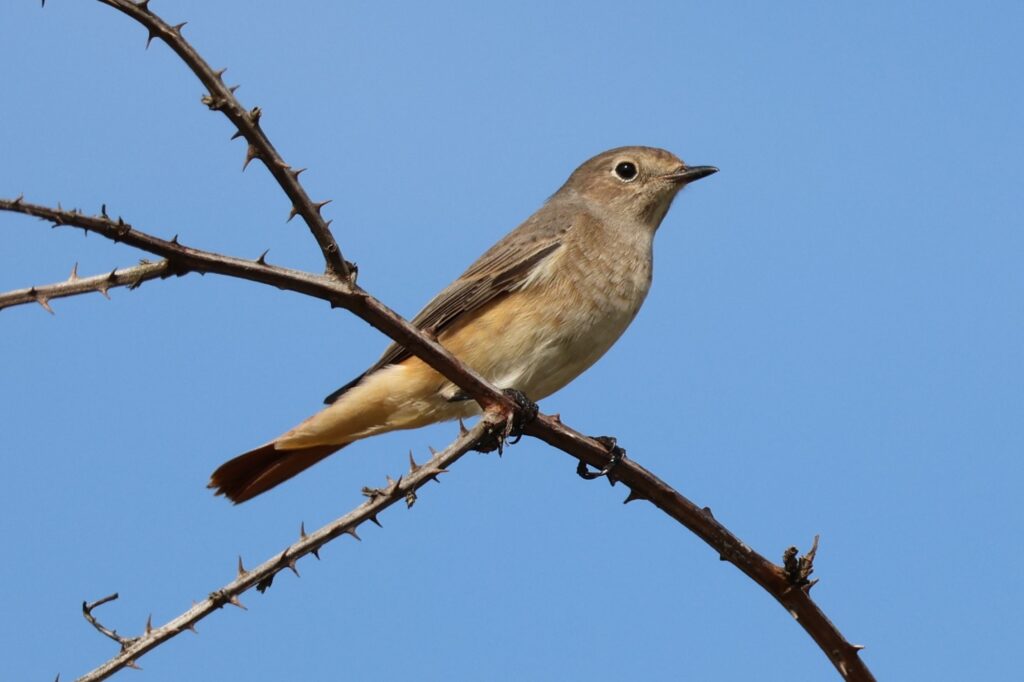
A female Redstart poses for a photo
5TH SEPTEMBER
I had to plough a lone furrow today as Nick was engaged in Wildlife Trust business. A fresh look at the chart and I was not convinced after all that we would get birds today. We now had quite a bit of rain showing as sat out in the Southern North Sea – when this happens it often ‘blocks’ the clear passage of birds over the sea and they stay put where they are. Subsequently the fresh North-easterly winds bought few passerines and I only managed to dig out 5 Wheatear, 2 Redstart, 1 Spot Fly and 1 Pied Fly so a poor return. The sea was more interesting though with small flocks of Manx Shearwaters bustling west along with the odd Arctic Skua and Kittiwake.
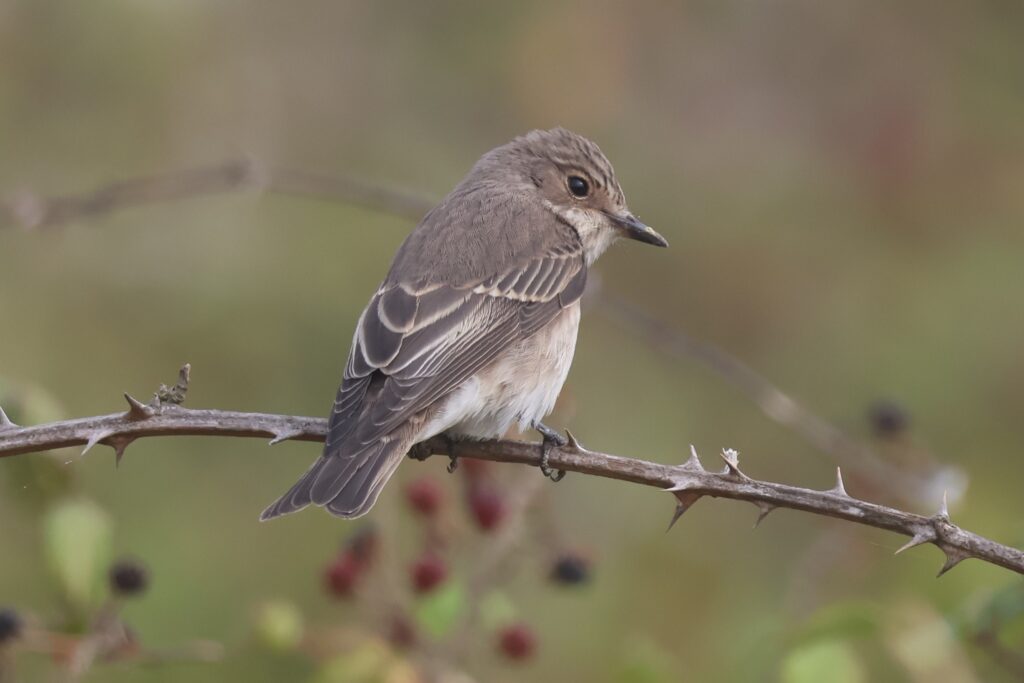
Spotted Flycatcher – only one seen on a grey day today
6TH SEPTEMBER
The big high pressure system was now well established and we had a good easterly airflow across the North Sea – clear blue skies and temperatures topping 24C though! We had already had one fall of migrants in sunny weather this week though so maybe we would get another? Nick and I teamed up and headed to Wells Woods to guage what was happening. 13 Redstarts, 4 Pied Flys, 2 Spot Flys, 15 Willow Warblers and a Tree Pipit told us what we needed to know – birds were arriving again! Arrangements were made to continue birding and we headed on to Burnham Overy Dunes – a location known to many of you as somewhere for searching for migrants on our tours.
The walk out along the track over the grazing marshes and out along the seawall does not normally produce any migrants. But by the time we reached the first bushes in the dunes we had already flushed two Redstarts out of the sueada and seen a couple of Willow Warblers and a Garden Warbler. Around the few bushes and lone apple tree at the north end of the seawall migrants were whizzing in all directions – Redstarts and Pied Flycatchers, a couple more Garden Warblers, Willow Warblers and Spotted Flycatcher. We’d just about reached that early afternoon spell I mentioned before and now birds were piling in – Wheatears were everywhere and while we counted at least 40 the number was probably double this as many were continuing quickly inland. At Gun Hill we walked an area of bushes and out came five Redstarts, two Garden Warblers and two more Spotted Flycatchers! We stopped at the end of the dunes and took stock – right, we need to try and work every bush!
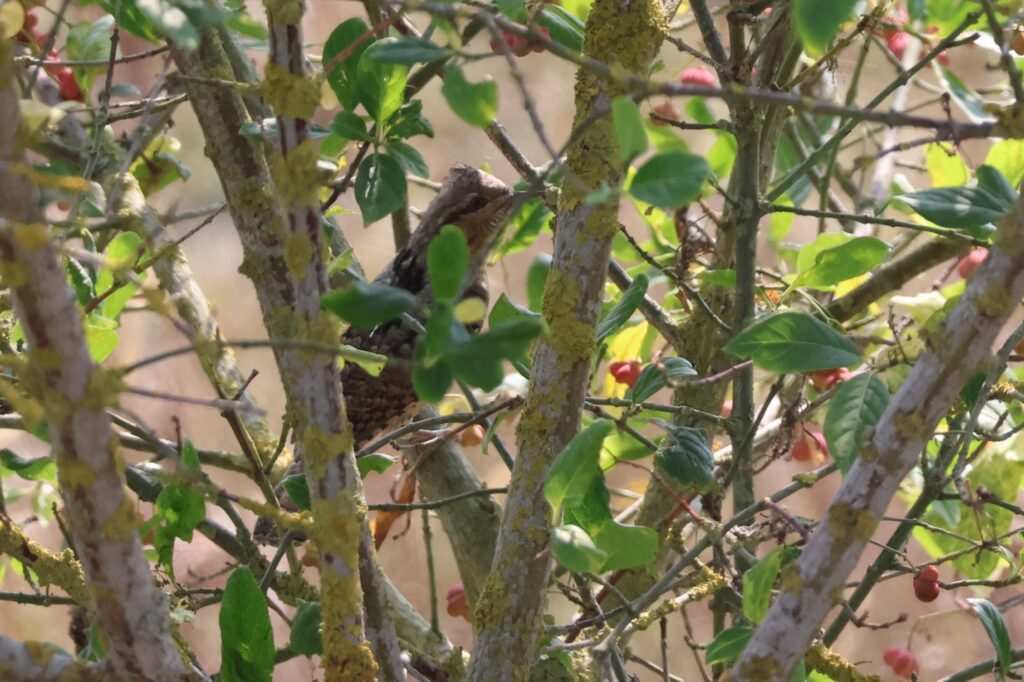
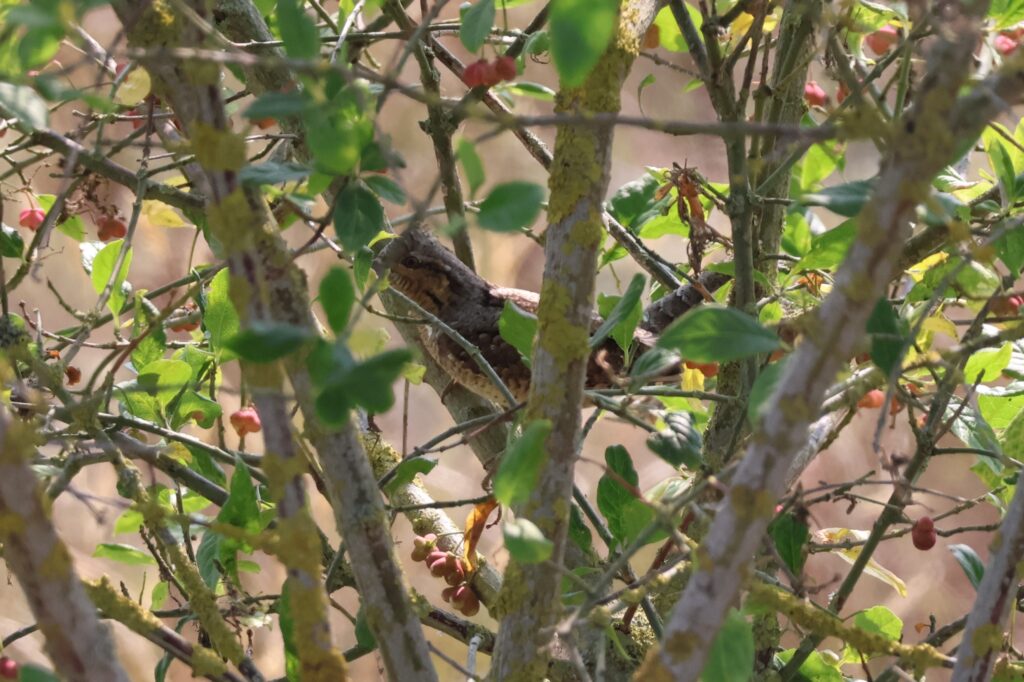
Wryneck at Burnham Overy
The eastern side of the dunes was even more birdy and while normally birds will be in only one or two spots in the large dune complex, today there was something literally in every single bush or tree and most larger bushes would hold 3-4 different migrants. We sat eating a late lunch watching Lesser Whitethroats and Spot Flys jostling for position along the leeward edge of some blackthorn scrub, the silvery-breasted whitethroats looking small and slender next to the surprisingly solid flycatchers. As we pushed on towards the pines, the shivering red tail of Redstarts was becoming more and more common, some Yellow Wagtails and a Tree Pipit flew over us calling and Whinchats started to appear along the fencelines. We were hot and tired but kept going on adrenaline, and our efforts were rewarded as we put another Wryneck up into a small privet bush. The bird sat stock still pressed against the trunk with its beautifully cryptic tail hanging down. We rattled off some photos and it flew south, into the large patch of bushes south of the fence. Our final totals today for Overy dunes were 37 Redstart, 7 Pied Fly, 10 Spotted Fly, 5 Whinchat, 30 Willow Warbler, 40 Wheatear, 10 Garden Warbler, 2 Tree Pipit, 3 Yellow Wagtails, 1 Grey Wagtail, 8 Lesser Whitethroat, 10 Common Whitethroat.
7TH SEPTEMBER
The winds at dawn today were very light, but still from the east. However a thick haze had enveloped the coast and as I drove towards Wells pinewoods the sky was grey and overcast – it had a really exciting feel to it and I was sure that there would be more birds. Today then, will go down in history for Spotted Flycatchers here – in fact these birds had all arrived late yesterday afternoon and into the evening and then the poor visibility had grounded them overnight. I walked into the birches, stood still and looked up. Normally I do this looking for any movement in the canopy that might indicate migrants feeding. But there were movements everywhere! There were so many Spotted Flycatchers sallying about that it was hard to concentrate and pick out other movements – such as the many dozens of Willow Warblers feeding among the leaves. The excitement was tangible and now it was time to focus and try to keep sharp as there must surely be something rare here. The first full sweep of The Dell area and birches to the west took 3hrs and in this time I logged a minimum of 60 Spotted Flycatchers, 25 Redstarts, 200 Willow Warblers, 15 Pied Flycatchers, 12 Garden Warblers, 4 Lesser Whitethroats, 1 Sedge Warbler, 2 Tree Pipits, 7 Blackcap, 8 Common Whitethroat and 5 rather late Swifts. The whopping numbers of migrants though made it really hard to pick anything out and I returned to the car for a sit down and regroup. I knew I had to go round again, especially as it was now raining!
The rain seemed to have actually moved a lot of birds off and as I started my second walk round about 1130 there was a clear reduction in Spotted Flys and Willow Warblers which I guess must have moved ahead of the drizzle. In the open area west of the main track and west of the tree-rimmed depression known as The Dell, I found a large birch tree dripping with birds. Redstarts flicked around in the base of the tree, Willow Warblers fed at the ends of the thinnest branches and in the canopy, Garden Warblers lolloped through with less finesse. I moved around the other side of the tree to get the light and just caught the tail end of a larger bird which seemed to fly down from a pine and disappear behind a hawthorn. I suspected Wryneck but I’d only glimpsed it, so walked towards the bush. Further away, on top of a big bramble clump, I could see a big pale warbler perched on top with a Whitethroat scolding next to it. I lifted my bins and was greeted with a bird showing a spiky bill and a lemon yellow wash on the throat and across the lores and eye ring, but no eye stripe. It was a flipping Icterine Warbler! I raised my camera but frustratingly it flew. I moved forward to try and see how far it had gone and a Wryneck flew up and perched in the birch in front of me amidst all the other migrants. Bloody hell!
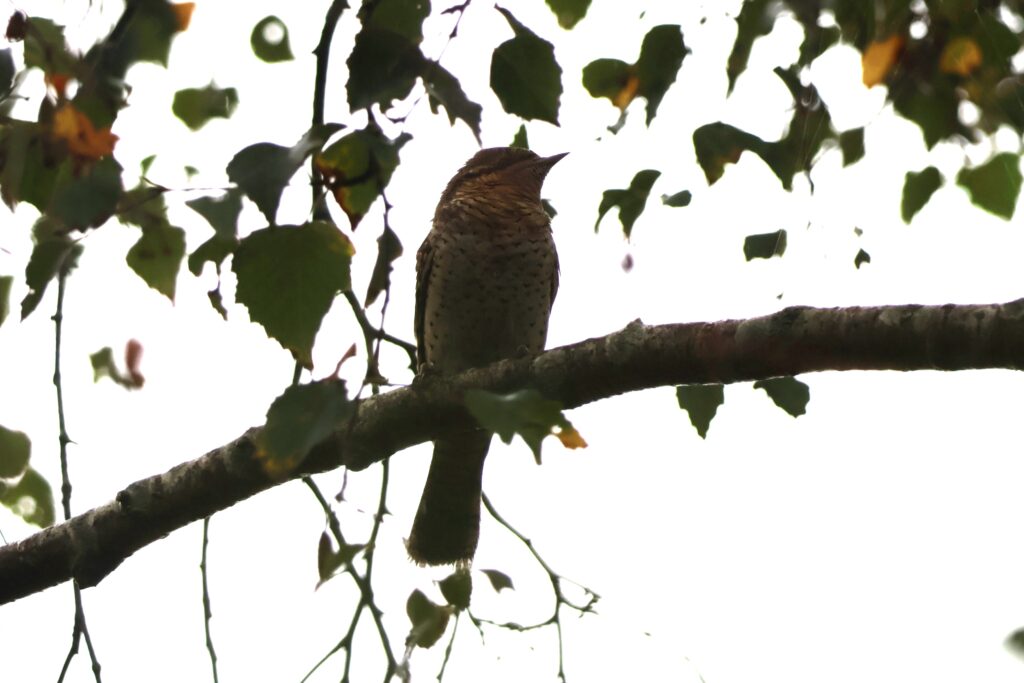
Wryneck number three of the week – sheltering with me out of the rain!
The rain set in and I had to shelter under some trees, where I was quickly joined by the Wryneck which flew in and perched above my head – it was silhouetted so I had to over-expose the photos but it reminded me of a spring day on Paphos headland in Cyprus amidst a similar fall, when a Wryneck had sat beside me in a tamarisk in a rainstorm. But this was Wells Woods – my patch – and so all the more sweet. I was irked by the Icterine though – how on earth would I see that bird again? Normally when we get them here, they move to the pines and then feed in the canopy of the birches when mixed flocks move through. So, I headed to the North-east corner of The Dell and began working through the movements in the canopy – Pied Flys, Spotted Flys, Redstarts and Willow Warblers were just everywhere!
Climbing up a sandy bank for a better view of one of the larger birches, three warblers flitted at eye level in front of me in a rose. Two were Willow Warblers and immediately flew but even with the naked eye I could see a silken white belly on the third bird. It was a stunning Wood Warbler, with bright citrus yellow supercilium and throat and moss green wings literally shining through the grey drizzle. I rattled off a few shots and it flew to the birches – my favourite British warbler and yet another buzz washed over me. What was going on!!
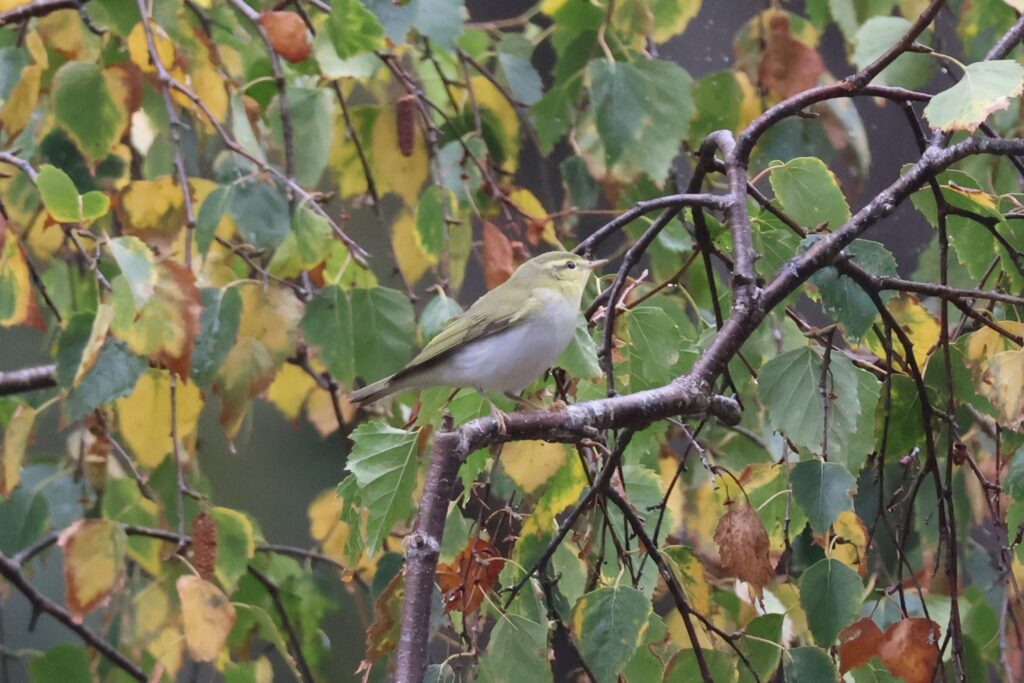
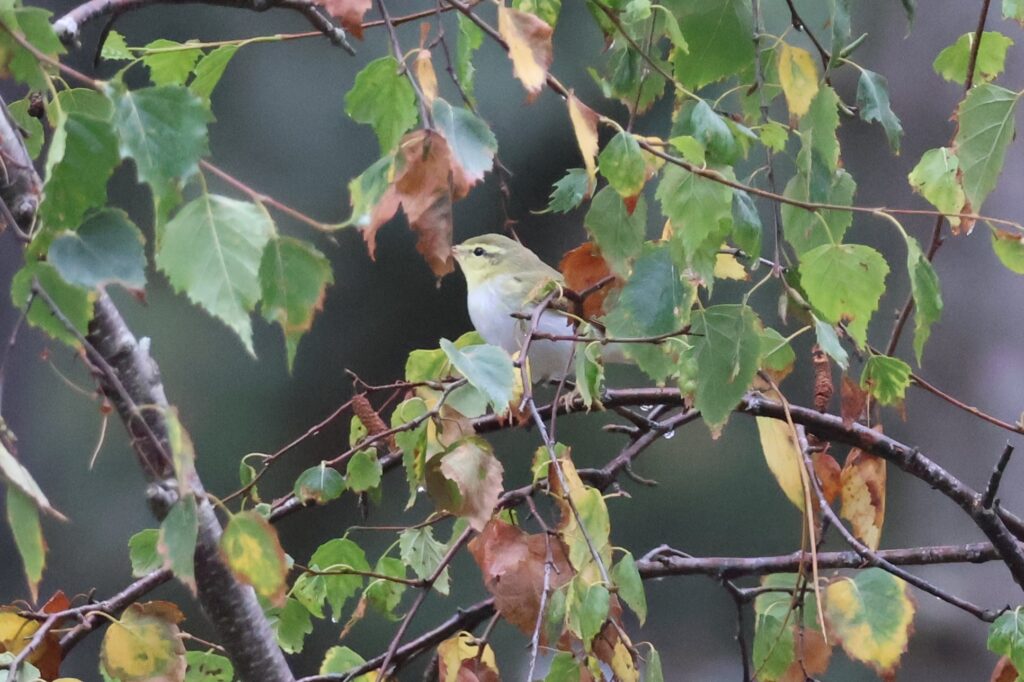
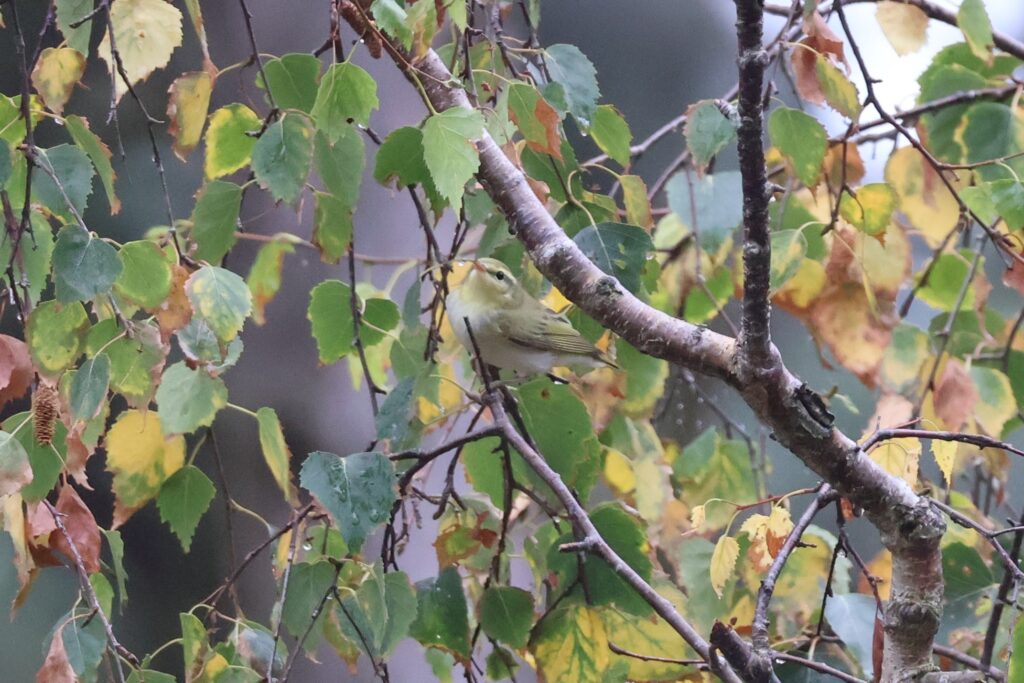
Wood Warbler – what a stunner!
The Icterine Warbler had done exactly as I thought and I eventually refound it high in the canopy of the birches bordering the pines. It was a really pale individual with a huge and obvious wing panel – still no photograph but I was pleased it was still around. They normally stay several days here so I would return tomorrow for another go. After 7hrs in the woods I was dead on my feet so it was time to head home!
8TH SEPTEMBER
The fall was over. Rain had moved through in the night and brought with it a light southerly wind and so we had a day with no new arrivals. But, with so many birds having reached our shores today was for consolidation – what might we have missed yesterday that was still here? I met up with Nick and we worked Wells woods again with a view to getting views for him of the Wood and Icterine Warblers – he’d missed yesterday for a visit to look round York University with his daughter, but thankfully we were able to put that to rights as we soon relocated the Wood Warbler and had excellent views. The Icterine was harder and took 5hrs to see four times – each of these no more than five seconds duration and never the whole bird seen at once! It was always high (typical for Icterine which is a canopy bird) and its movements subtle and stealthy. Our best views were up in a pine where we were watching Willow Warblers and suddenly saw a big pallid bird flop into view. Now we could clearly see its ultra-long primaries, silver-edged greater coverts and whopping wing panel.

Icterine Warbler showing the pale wing panel and diagnostically long primaries – my best effort on a photo!
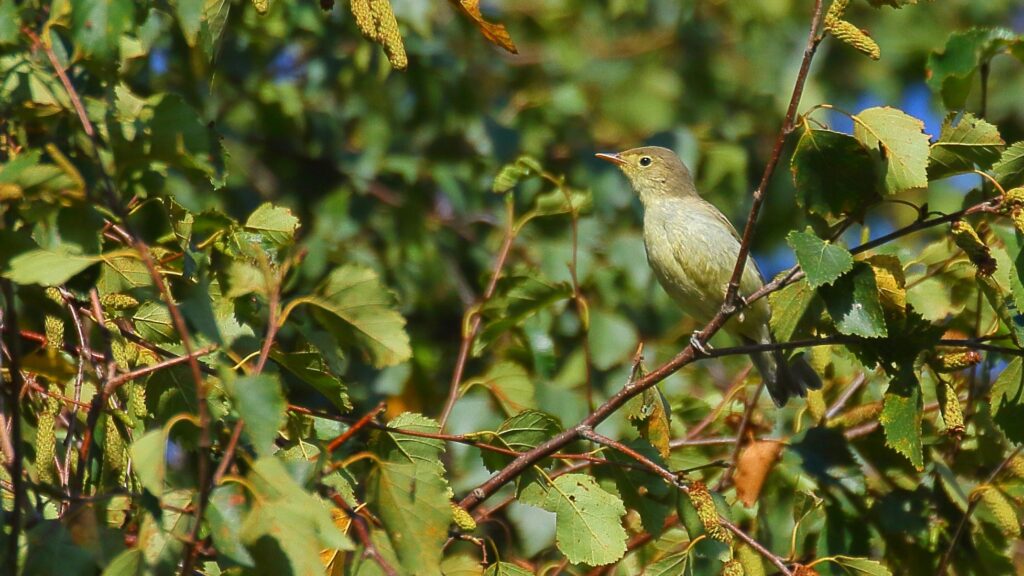
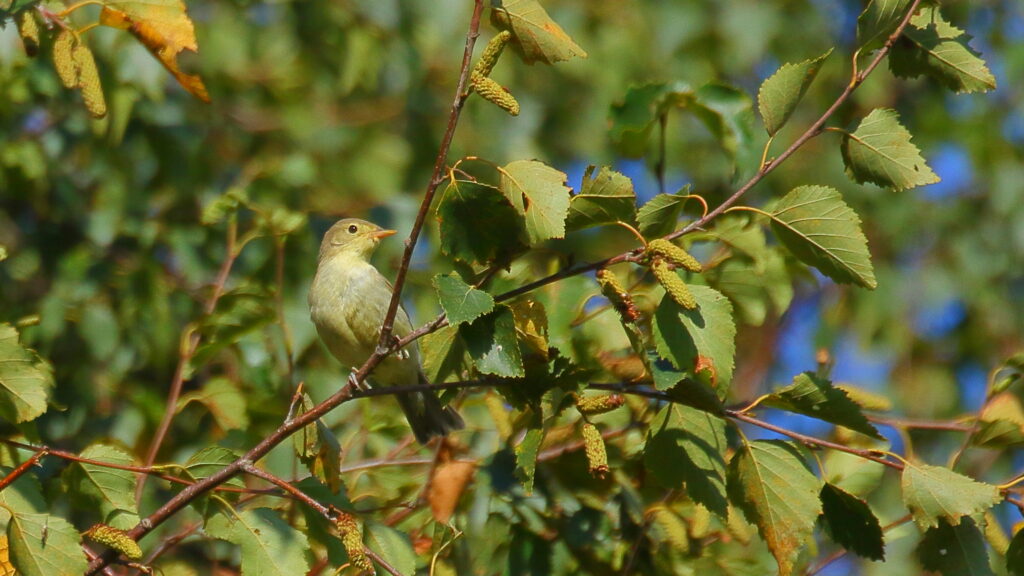
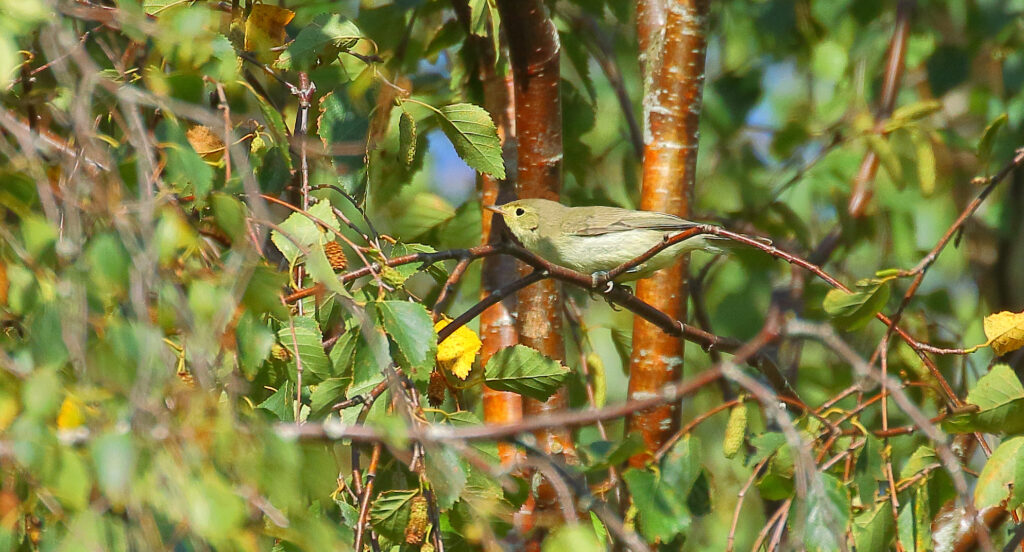
Icterine Warbler – this excellent set of photos were taken by James Hanlon on Sunday 8th. The pinky-orange lower mandible, yellow eye ring and lores and blue-grey legs and feet can be seen here.
Migrant totals were reduced today, with roughly half of everything compared to yesterday. And now as I write the winds have switched to the North-west and that, for now at least, will be that!
A truly amazing few days birdwatching!
A. J Saunders, September 2024


