
I set off on a fact-finding trip to Peru on 3rd December 2024, meeting up with my good friend Juan Carlos Figueroa who many of you will know from our Ecuador tours. Juan Carlos flew in from Quito and we made our rendezvous in Lima, ready to start what would be an adventure for both of us! My preparation levels had been pretty low due to a very busy autumn period, but we had a good ground agent on our side who had set up all the logistics – we just needed to keep everything crossed that our mission-critical internal flights went to plan! This didn’t start off particularly well, as our already once-changed flight from Lima up to Chachapoyas in Northern Peru, originally scheduled for 0840 the day after our arrival, had now been pushed all the way back to 1330, effectively meaning we’d lost the first afternoon. Never mind, we would use the time constructively by taking a taxi from the airport down to the coast to look for Inca Tern – it was only 8km, so would be fine? Wrong! We spent 2hrs sat in gridlocked traffic around the city and eventually gave up and returned to the airport having seen nothing more than a West Peruvian Dove! Hopefully that was all our logistical glitches out of the way right at the beginning!?
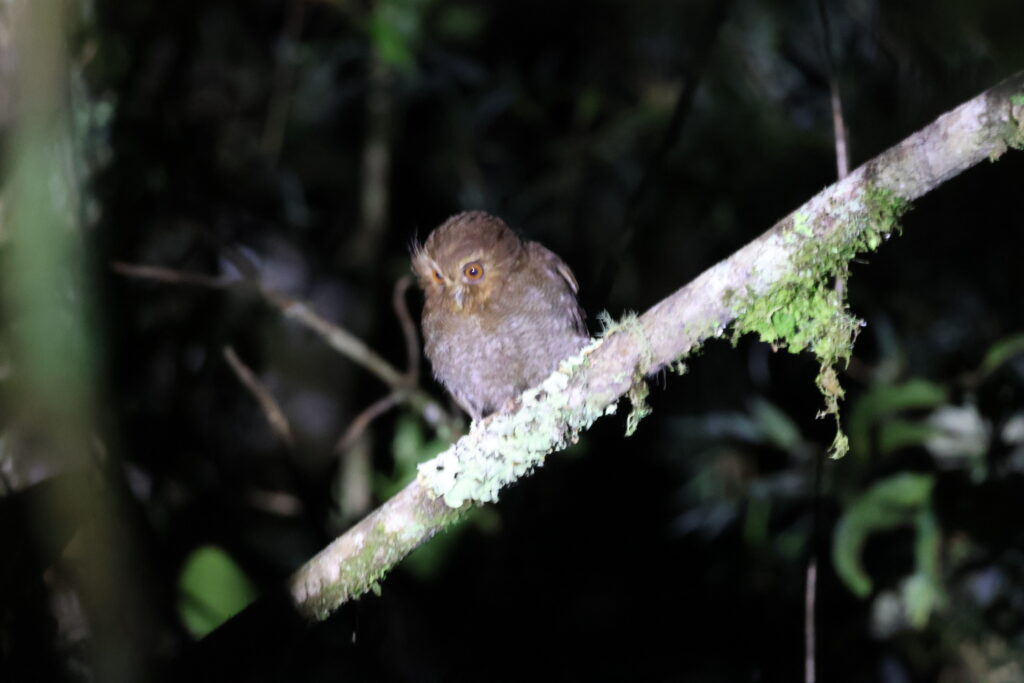
Long-whiskered Owlet – our first big target scored in the north!
The flight up to Chachapoyas with regional airline Atsa was pain-free and we were soon met by Miguel, our agent for the trip but also our driver for the northern section. The journey to Owlet Lodge, our first base, would take 3hrs and with the afternoon already written off for birding, we decided to try right away for one of our main target birds in the north – the endemic Long-whiskered Owlet. This little-known bird has a tiny range and the area around Pomacochas and Owlet Lodge is pretty much the only place to see it. However the visits to see the bird at Alto Nieva and Owlet Lodge are strictly controlled and there was no slot available there during our stay (they only call it around once every two weeks) so we had to go off piste to try another site. This involved meeting a man on a motorbike and heading up into the hills after dark – thankfully our friend, one of the rangers from Alto Nieva, knew exactly where to look and we could hear the bird calling as we arrived. A tense hour followed and we didn’t think the bird was going to move, but eventually it shifted and that heart-in-mouth moment when you put the torch onto the branch you think it’s going to be on was met with relief as we had excellent views of the bird. We still had an hour to go to the lodge, but they’d hung on to make us a late dinner which was well-received after a long day where we had essentially only seen one bird – but it was a good one!
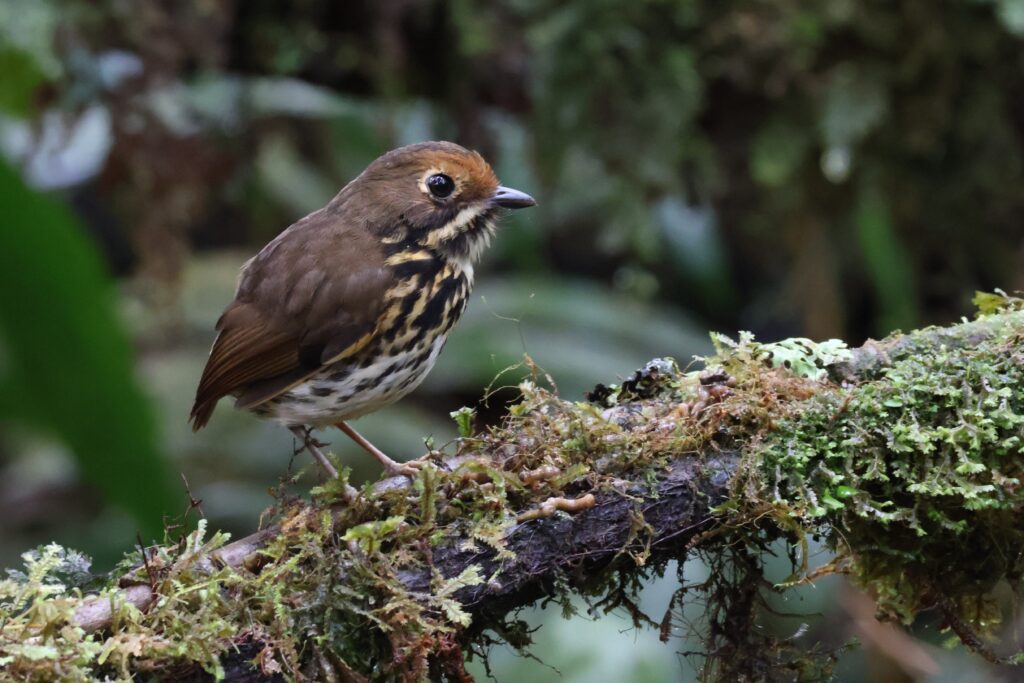
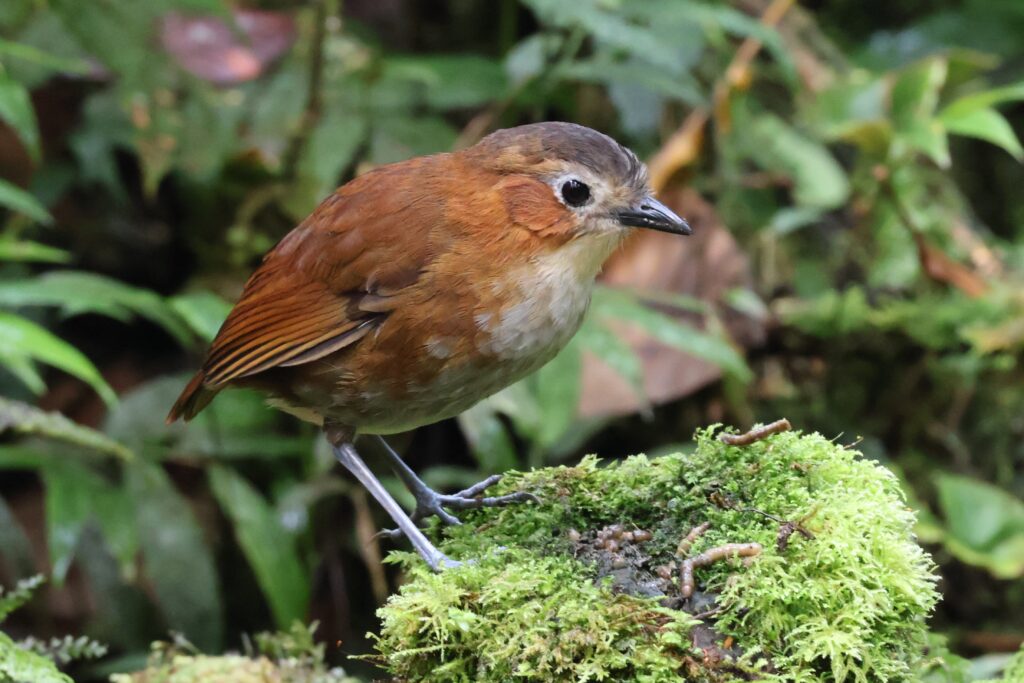
Endemic Ochre-fronted (top) and Rusty-tinged Antpittas at Fundo Alto Nieva
The next two days were spent exploring the area around the lodge and neighbouring Fundo Alto Nieva reserve. This site had a feeding site for both Ochre-fronted and Rusty-tinged Antpittas – two endemics and again with extremely small world ranges. Thankfully we were lucky and both came in and gave crippling views. The third antpitta here though we did not connect with – the Chestnut Antpitta that was fed at Owlet Lodge. In hindsight, we thought this would be a shoo-in so didn’t try on the first morning. It never came in on the second morning and then we had no further chances, so that was our own fault! Some tremendous birding was on offer in this area though – quetzals were common and we heard both Crested and Golden-headed frequently enough, seeing a fine male of the latter posing on a bromeliad-clad branch. More range-restricted birds and endemics included Johnson’s Tody-Flycatcher, the incredible Yellow-scarfed Tanager, Peruvian Racket-tail, Russet-mantled Softtail, Green and Black Fruiteater, Chestnut-crested Cotinga, White-eared Solitaire and the dazzling Blue-winged Mountain-tanager. The hummingbird feeders at Owlet were ace, and even though we didn’t spend much time on them we got the fantastic Emerald-bellied Puffleg with ease (one of our main hummingbird targets) and Sword-billed Hummingbird was a regular visitor. We wrapped things up in this neck of the woods with another trip to Alto Nieva, this time after dark, where Cinnammon Screech-Owl did the biz for us. Excellent!
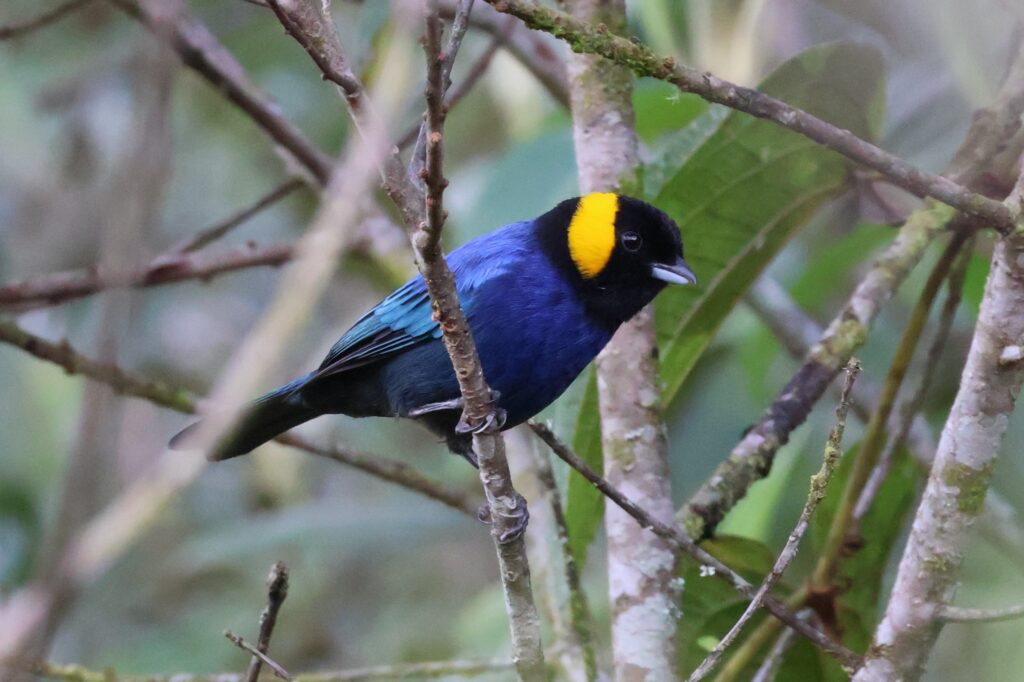
The dazzling Yellow-scarfed Tanager
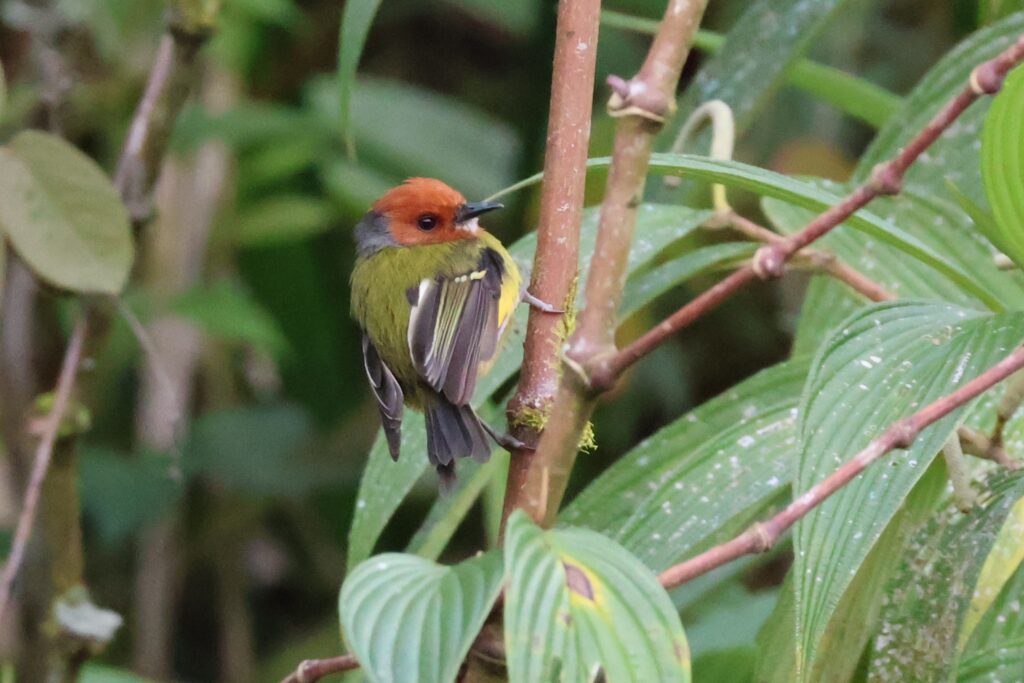
Another endemic – Johnson’s Tody-Flycatcher
Probably our biggest single target for the northern section of our trip was the endemic, mega-looking Pale-billed Antpitta. Most similar to Bay and Jocotoco Antpittas in size and colouration, this epic bird has a tiny range and most people see it at a site called Trocha Cresta de San Lorenza, just north of Pomacochas. The trek up to see it in its favoured bamboo forest habitat over 3000m has mixed reviews, and we knew it would be hard due to the elevation, potentially muddy and slippery after rain and likely to take us most of a day. We were mentally prepared for this ordeal but when Miguel had picked us up on the first day, he told us the bird had been recently found at a new site, which you could basically drive to! We were torn with what to do – the traditional site had a great track record and we knew birders who had been recently and scored. But the new site was still a bit unknown and if we blew it, we wouldn’t have chance to try again. Eventually we decided on a crazy plan to day trip the new site from Owlet Lodge even though it was much closer to our next base in Cocachimba. The plus-side of this was if we dipped, we could still go to Trocha Cresta de San Lorenza the day after. The catch? It was a three hour drive each way and we had to leave at 5am…
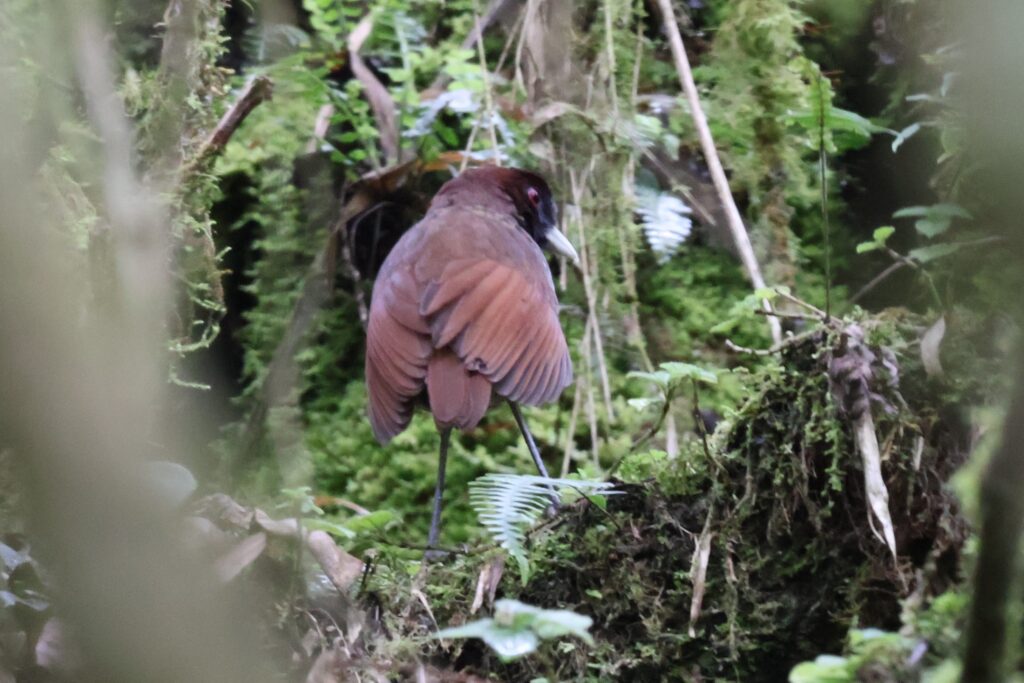
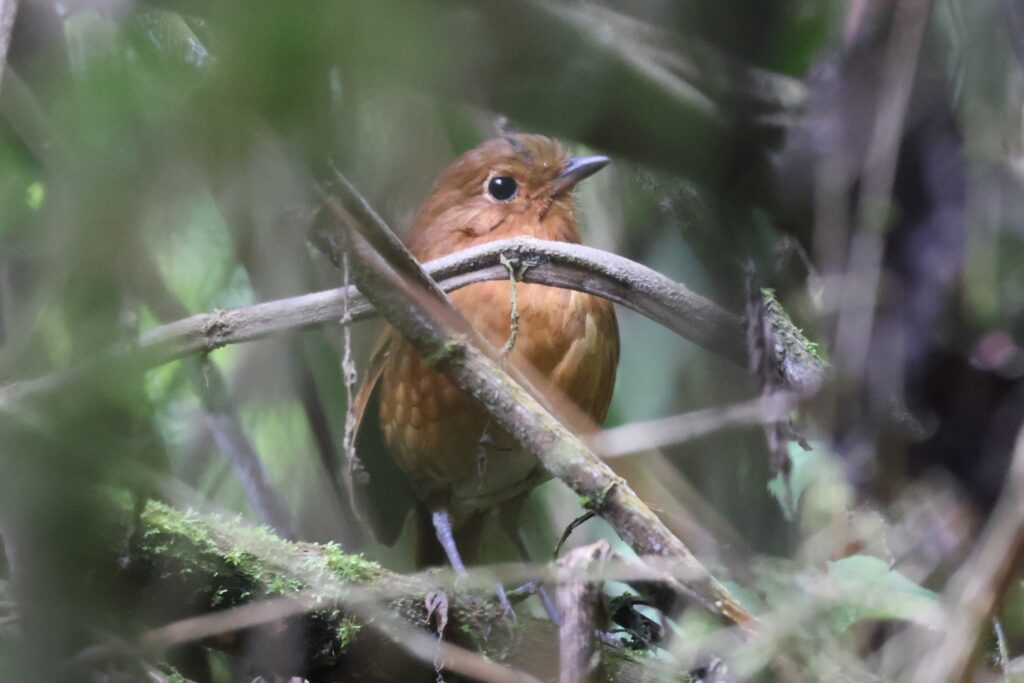
Pale-billed (top) and Chachapoyas Antpittas
As we wound our way up into the mountains approaching the site just after 8am, we were tense. We knew we would be meeting Miguel’s father on site and four UK birders that were on tour with him. The plan was to try to call the pale-billed together so we only had to do it once and hopefully everyone could go home happy. We met the lads and scrambled up the bank into the bamboo thicket, where there was just enough space for us all to squeeze in. Juan Carlos was at the back and had virtually no view, and it wasn’t going to be easy to swap round either. Miguel’s father called the bird and it came straight in, flopping through the undergrowth like a pigeon and perching, hidden from view, behind a dense tangle. We knew it was there but none of us could see it. Then a dark shape became visible and I got a quick view of that ivory-coloured bill and its chestnut wings, but not the whole bird. A couple more tiny glimpses but nothing more and Juan Carlos still hadn’t seen it. You could cut the tension with a knife but secretly I was wishing we could take out a machete and cut some of the bamboo! We played it again a few times and nothing. Then from nowhere the Pale-billed Antpitta blundered in and sat cock-on up on a mossy log right through the back. Incredibly everyone had a window where they could see it and motordrives buzzed. It did this twice, each time briefly, but long enough to drink in the features of one of Peru’s most sought-after endemics – mega!
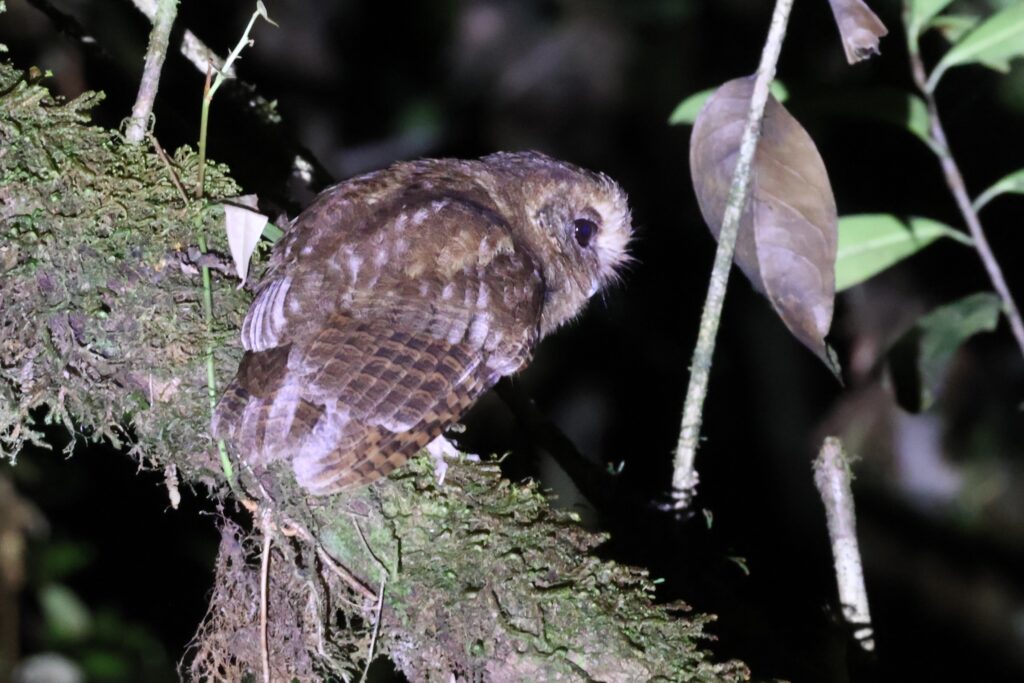
Cinnammon Screech-Owl
We scrambled back down the bank and enjoyed a picnic breakfast which Miguel had layed out for us, swapped BOC shots with the Suffolk lads and then began birding! The altitude was 3150m so there wasn’t a lot of air for the lungs but thankfully the birding was easy along the road. Mixed flocks dealt up some cracking birds – Pearled Treerunner, Peruvian Wren, Grass-green Tanager, Plushcap, Drab Hemispingus, Citrine Warbler and the sought-after Coppery Metaltail. We had another antpitta to look for though – another one with a miniscule range! Following the split of the ‘Rufous Antpitta’ into about 16 species, there are now lots to go for, many of which occupy just one mountain. Here was the Chachapoyas Antpitta, characterised by a unique trilling song. We decided to try for it in the same spot as the Pale-billed and after playing for a while with no response and no movement, it suddenly belted out its trill from somewhere right in front of us. As is often the case with antpitta’s, disbelief descended that we couldn’t actually see it given how close it was, but thankfully it took one more inquisitive bound up onto a bamboo and we had a clear shot of it. Job done!
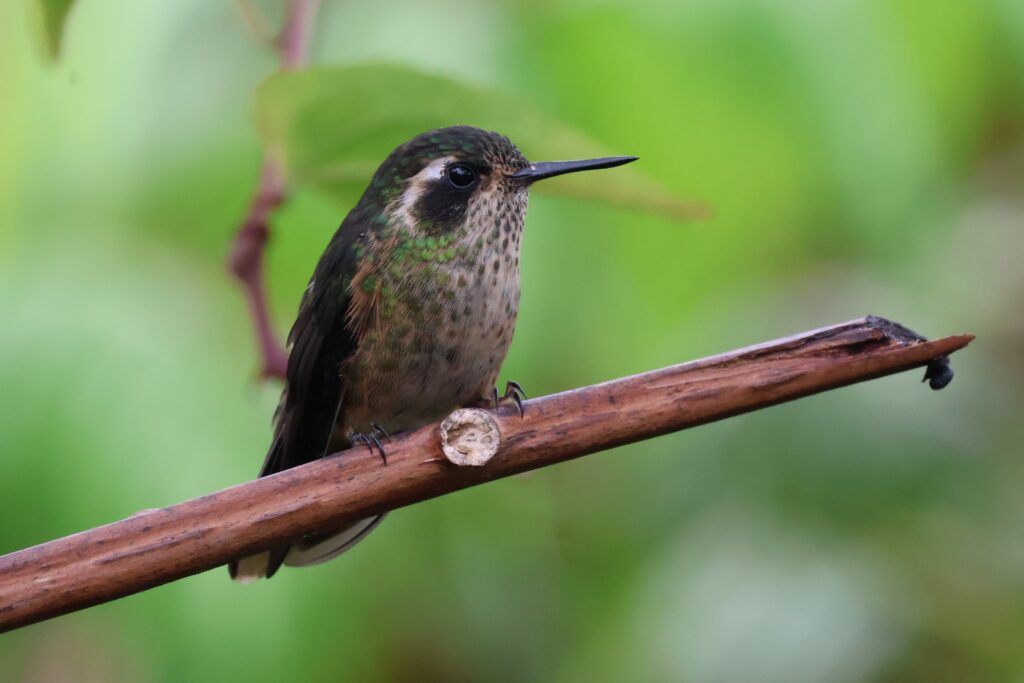
Speckled Hummingbird
With the Pale-billed in the bag we now had a rather leisurely day to transfer down to Cocachimba for an overnight stop. We did some birding on the Owlet Lodge trails first thing before heading south, picking up a superb pair of Torrent Ducks on the way. We had an afternoon appointment with the next sought-after endemic (and in Peru each seems to come more spectacular than the last) – the Marvelous Spatuletail. Afternoon had been dubbed as a good time at a new, tiny, private reserve on the edge of Cocachimba. The traditional site at Huembo had not been producing and thankfully we had Miguel’s local knowledge on this score and didn’t waste time looking for it there. The Cocachimba hummingbird garden came up trumps with insane views of a male Marvelous with full spatuletail – and what a bird! We were both blown away by it and spent about two hours trying to get photos. It came frequently to a feeder no more than two metres in front of the little viewing shelter but each visit would last only seconds. We estimated it would perch for a maximum of 2-5 seconds, and this meant moving the camera into position, focussing and taking a shot was extremely challenging! We enjoyed every moment though and celebrated our haul so far with a couple of beers in the charming town of Cocachimba, which overlooks the 16th highest waterfall in the World, Catarata Gochta.

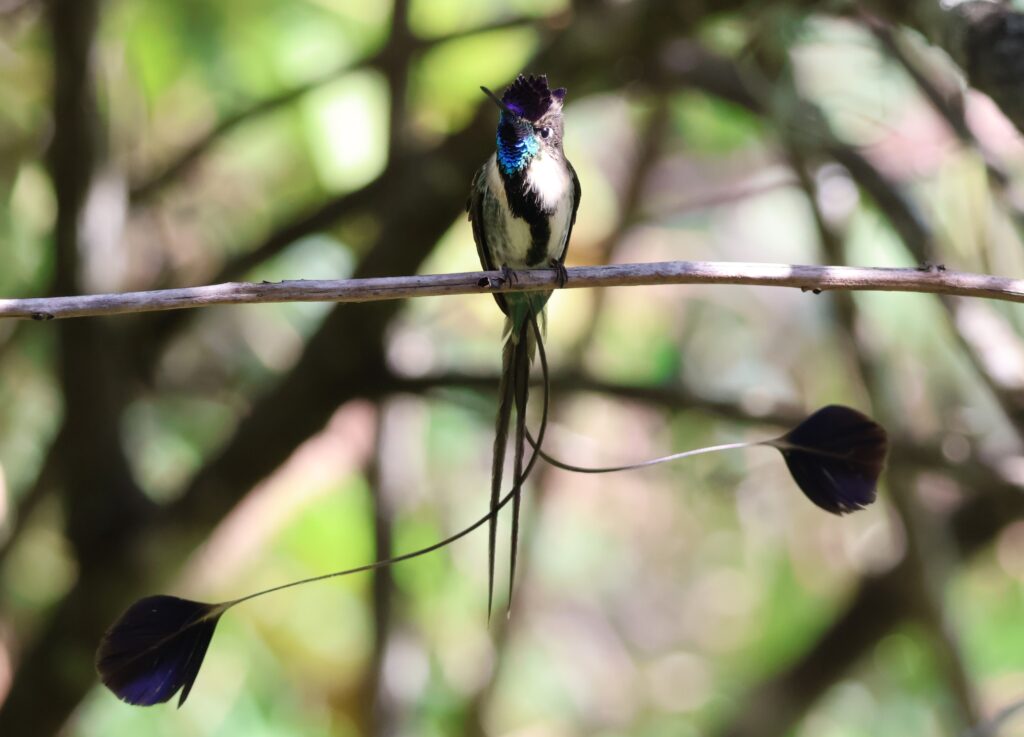
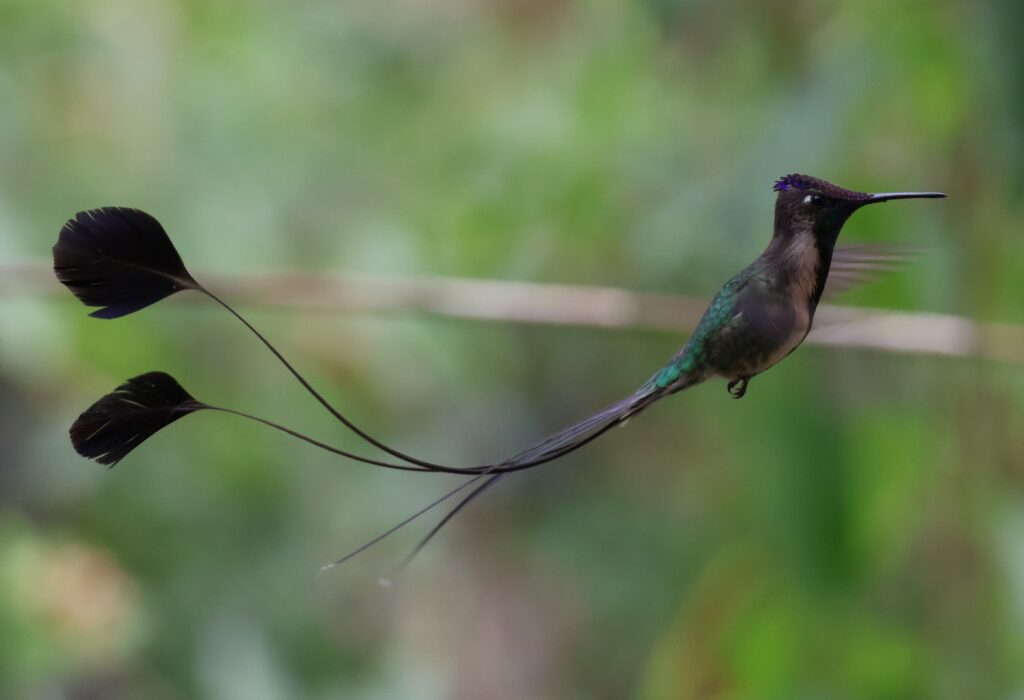
Marvelous Spatuletail – what a bird!!
Two mission-critical flights today saw us first return with Atsa to Lima, and then after collecting our luggage we then had to check back in with a different airline, Latam, for our flight down to Cusco in the southern Andes. This all went to plan and we arrived in Cusco at tea-time, to be collected by our new driver Walter for the three-hour transfer to our next lodge at Wayqecha, at the head of the Manu Road. This great birding trail that leads from the Andes down into the Amazon would be explored over the next eight days, starting at the top and working our way down. The state of the road is pretty good, having recently been tarmacked by a Chinese company – though we weren’t sure that the paper thin layer applied would last long with the big trucks that (amazingly) use this narrow, winding mountain road. There are tunnels to pass through and sheer drops to one side, not to mention the risk of landslides which frequently engulf sections of the road after heavy rain. Thankfully our passages up and down it were completely hassle-free and there is very little traffic which means it serves as a brilliant birding trail in it’s own right, getting you close to mixed flocks and canopy birds. We arrived at Wayqecha at 9pm on 7th, and retired to our rather chilly cabins ready for a big day tomorrow!
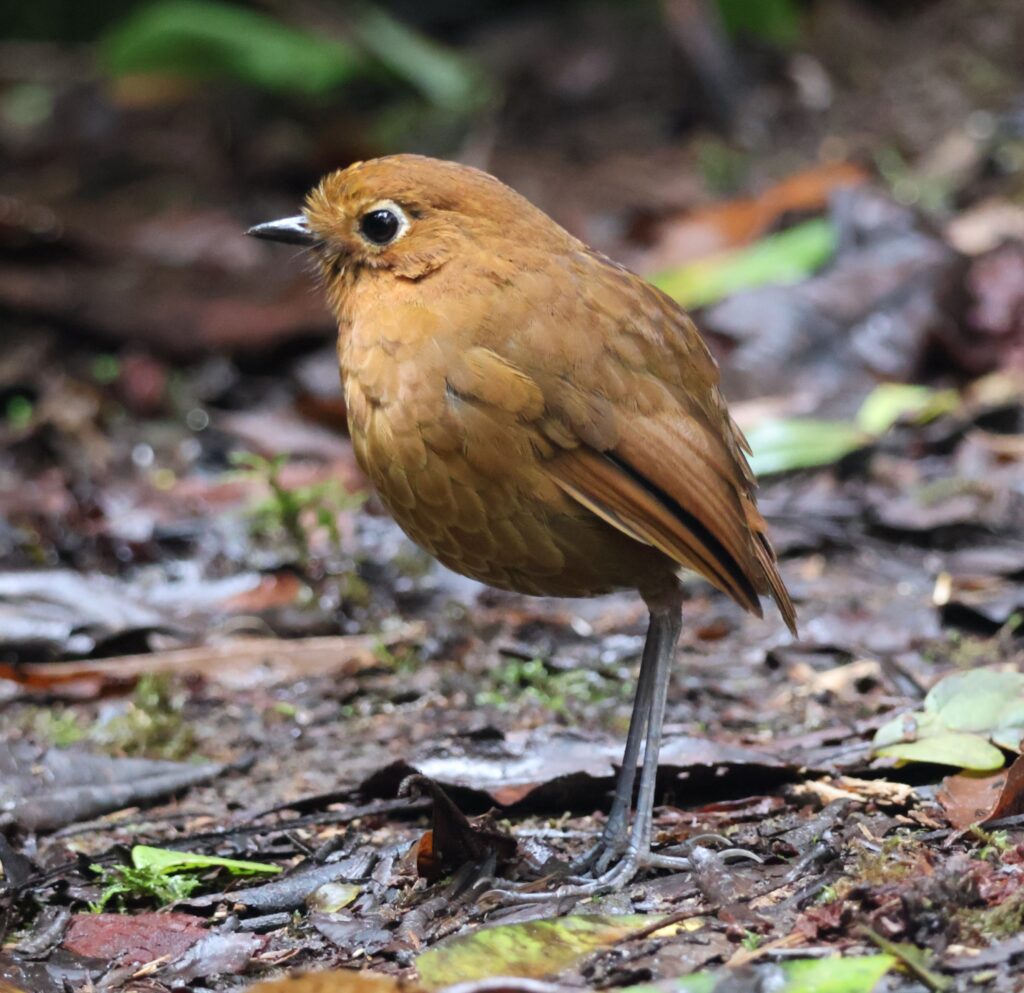
Urubamba Antpitta at Wayqecha Lodge
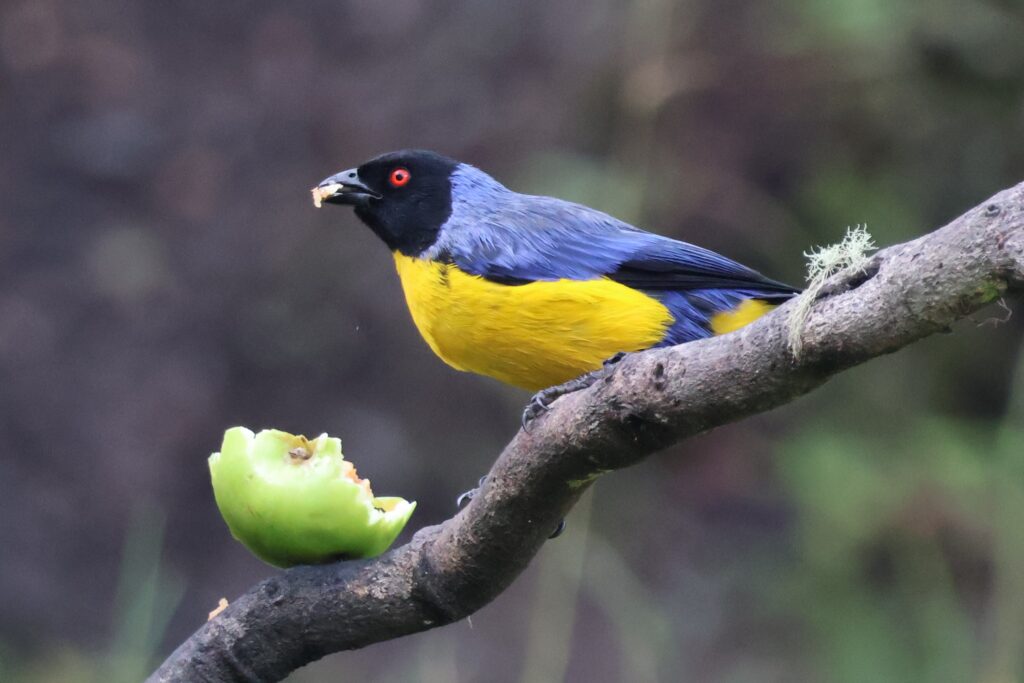
Hooded Mountain-tanager at the Wayqecha feeders
Birding over the next couple of days at Wayqecha was excellent. An Urubamba Antpitta was fed close to the lodge on our first morning and they had feeders bustling with Hooded Mountain-Tanagers, Andean Guans and a variety of hummingbirds. The trail network was really good too and we were able to easily find birds like Black-faced Brushfinch, Scaled Metaltail, Trilling Tapaculo, Pale-legged Warbler and Scarlet-bellied Mountain-tanager. Our biggest target here though was the fantastic-looking Red and White Antpitta. The information we received on it’s whereabouts was rather sketchy, and it didn’t seem to be reliable on any of the lodge trails. We were advised to try along the road lower down, and here we heard the bird easily on our first morning. However, we weren’t sure how we were going to see it – steep cliff-like banks and dense bamboo meant the bird was close, but impossible to see. We joked with Walter than we really needed a machete. He mumbled something and went off to the car, returning swinging a machete and grinning from ear to ear. So some ‘gardening’ was done, creating two small trails into the bamboo where we could climb inside and play the calls, hoping the bird would come into view. On one occasion we had it right there, but Juan Carlos glimpsed only its back and I missed it altogether. The next day we tried another trail recommended to us where they used to feed one, and apparently it would still come in occasionally if called. If it did, we were instructed to feed it and given a small bag of worms. We called the bird with no success but then I turned round and it was standing on the path in full view! It bounded quickly off up a bank and Juan Carlos never saw it – so two brief views for the pair of us but no chance for a photo – we would have to leave it be and try again on our way back up Manu Road! We did, however, get excellent views of a Leymebamba Antpitta on the same trail!
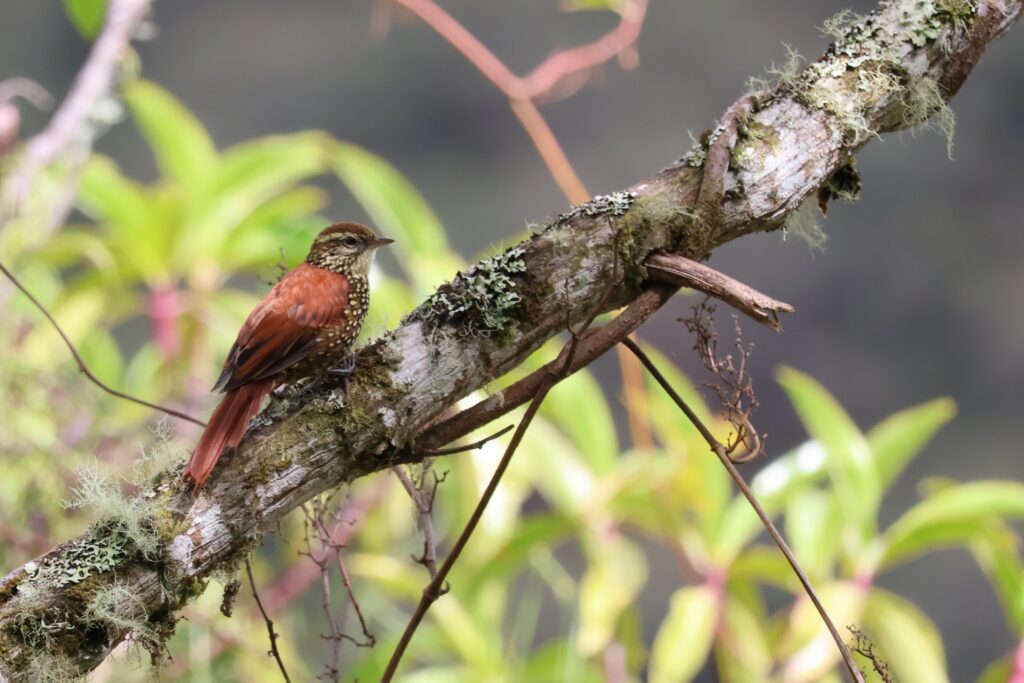
Pearled Treerunner
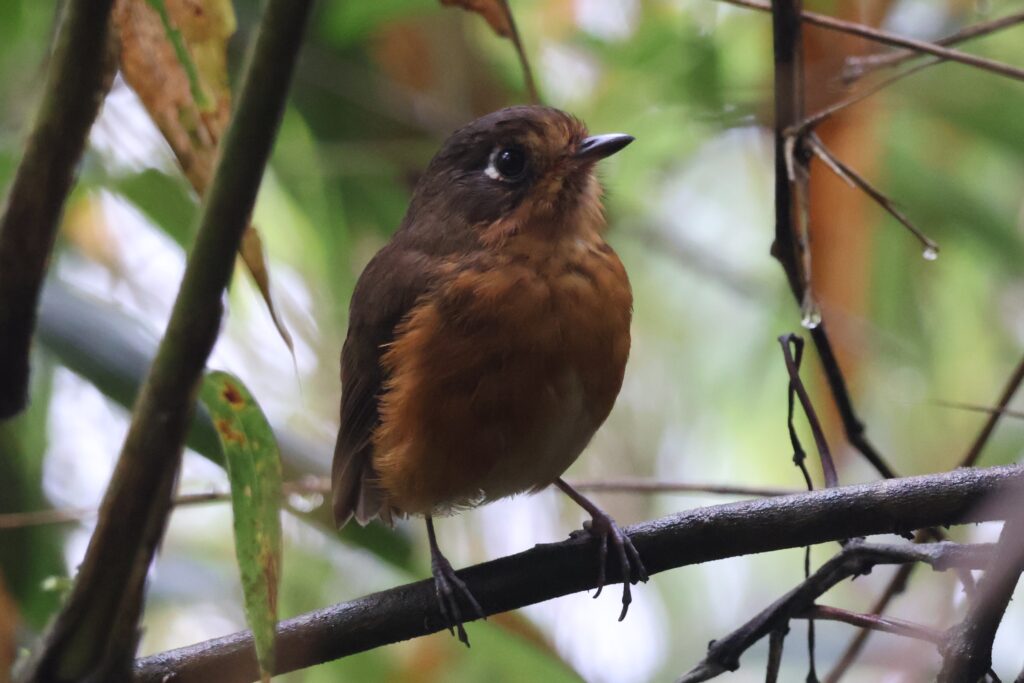
Leymebamba Antpitta
A total change of scenery was in store next as we descended all the way down to 500m, into the Amazonian lowlands of Pillcopata. We would be based for three nights at Manu Biological Station (or Villa Carmen as it is often known by birders), to explore the bamboo forest and its range of specialised, localised birds. Now other than the lads from Suffolk, we had so far seen no birders on the trip at all. Every lodge we had been in, we had been the only people staying and we had seen no-one birding along Manu Road. Villa Carmen was again seemingly available for our exclusive use – the reason for this seemed unclear. The locals said the busy season was March to October which are technically the driest months, but so far we had had really good weather – some rain, but nothing to stop us and in the Neotropics, it is always going to rain anyway at some point! Early December so far had proved to be an excellent time to visit for us, so we weren’t complaining at the lack of other people!
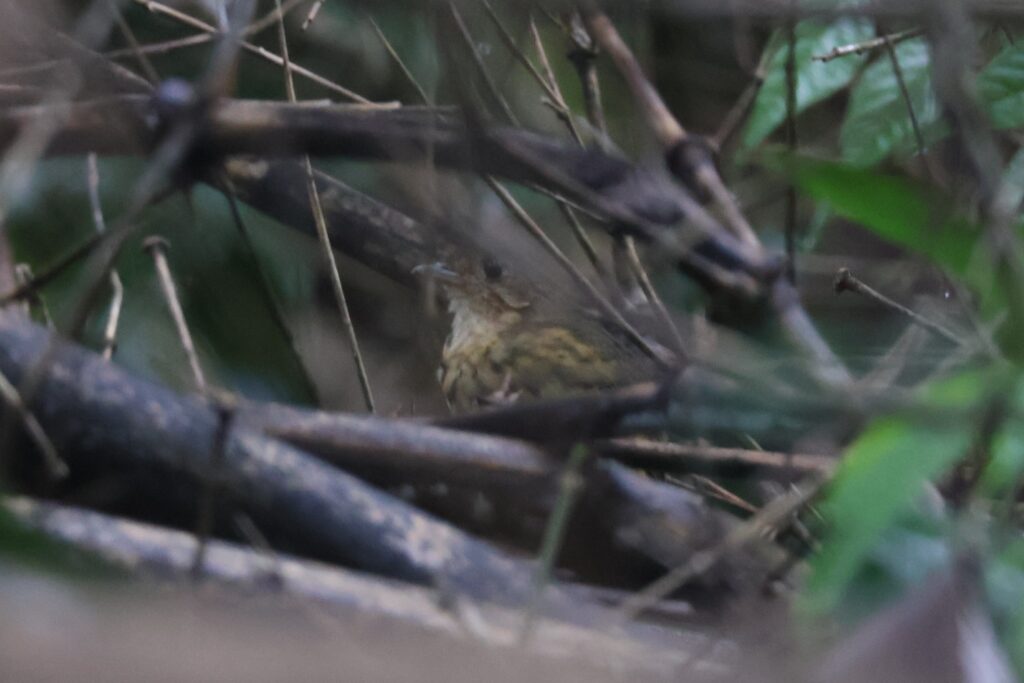
Amazonian Antpitta
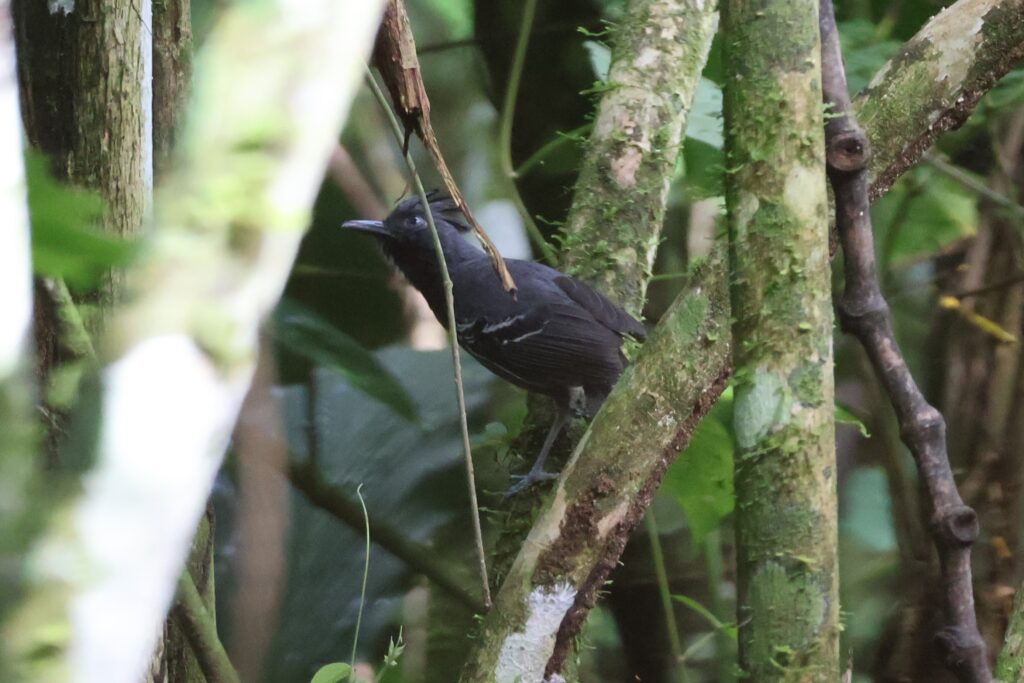
White-lined Antshrike
Lowland Amazonia of course meant a whole new set of birds – there were Blue-throated Piping-Guans at the feeders, the incredible Hoatzin clambering around in the trees outside our superb cabins (overlooking a lagoon full of birds) and the raucous calls of Blue and Yellow Macaws overhead. Because we had both seen most of the widespread Amazonian birds on general offer here, we concentrated hard on the excellent birding trails that radiated out from the lodge and through the chusquea bamboo. There were some mega birds here and we nailed virtually all of them – White-lined, Chetsnut-tailed and White-browed Antbirds, Bamboo, Plain-winged and Bluish-slate Antshrikes, Cinerous Tinamou coming to a corn feeder, a fabulous Razor-billed Currassow found calling early one morning and a late-afternoon encounter with an Amazonian Antpitta which took some seeing but became our ninth species of the trip for this family. Bluish-fronted Jacamar, Fiery-capped Manakin, Manu Antbird and Goeldi’s Antbird were also seen here.
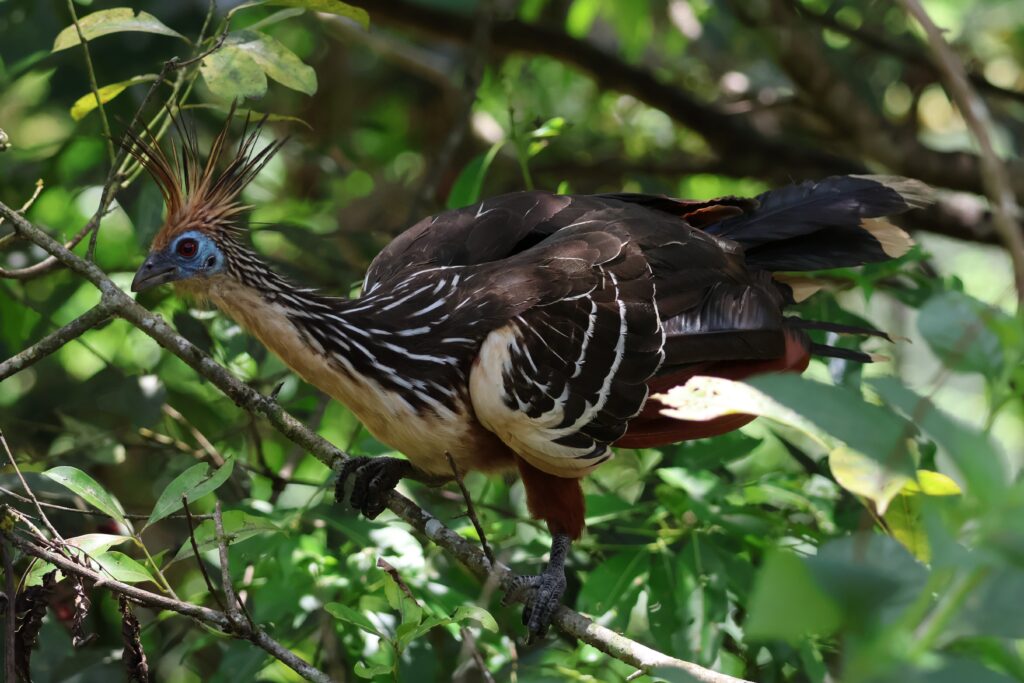
Hoatzin – right outside the rooms at Villa Carmen!
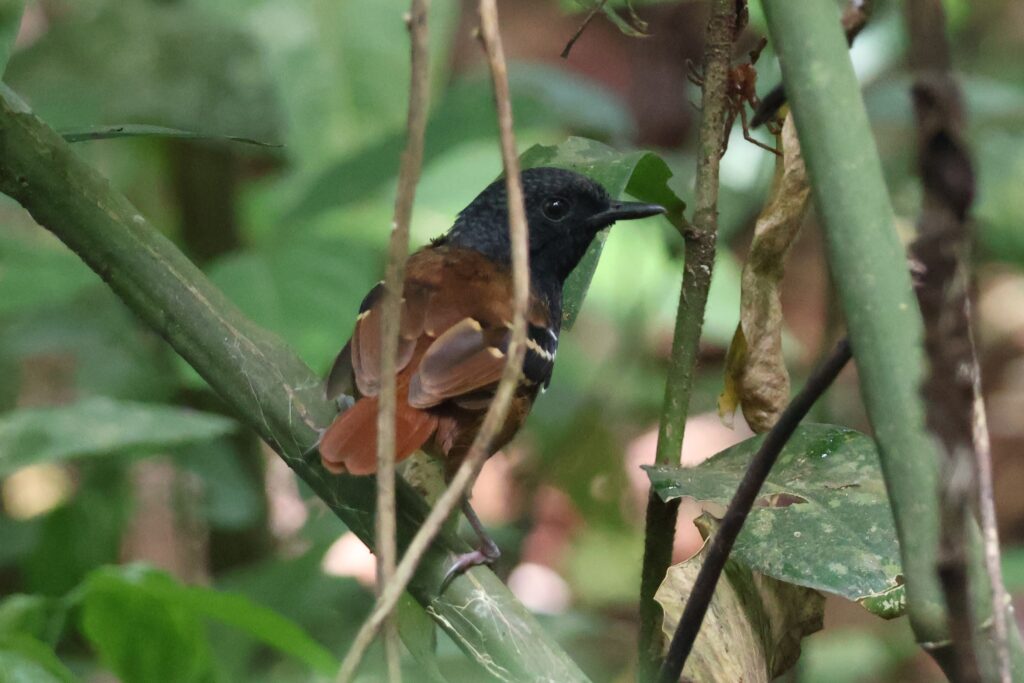
Chestnut-tailed Antbird
Our second day saw us record over 110 species and as well as more bamboo specials, we had an excursion in the afternoon to a couple of hummingbird gardens where we saw Rufous-crested Coquette and Black-throated Mango. This gave us one final morning on the trails which turned out to be a belter – we flushed a Sunbittern off the path, watched a Buckley’s Forest-Falcon try to nail a White-lined Antshrike and had a close, prolonged encounter with one of the true ghosts of the Neotropics, the Tiny Hawk. This species has probably been on the possibles list at almost every place I’ve travelled to in the region, and seems to be one of those species that you just need a slice of luck to bump into. Chestnut-capped Puffbird, Fine-barred Piculet, Ornate Stipplethroat, Red-billed Scythebill, Johanne’s Tody-tyrant, Cuzco Warbler and Amazonian Grosbeak were just some of our ton-plus haul for the day. It wasn’t even over either because after lunch, we checked out and made our way about an hour back up Manu Road to Cock-of-the-Rock Lodge…
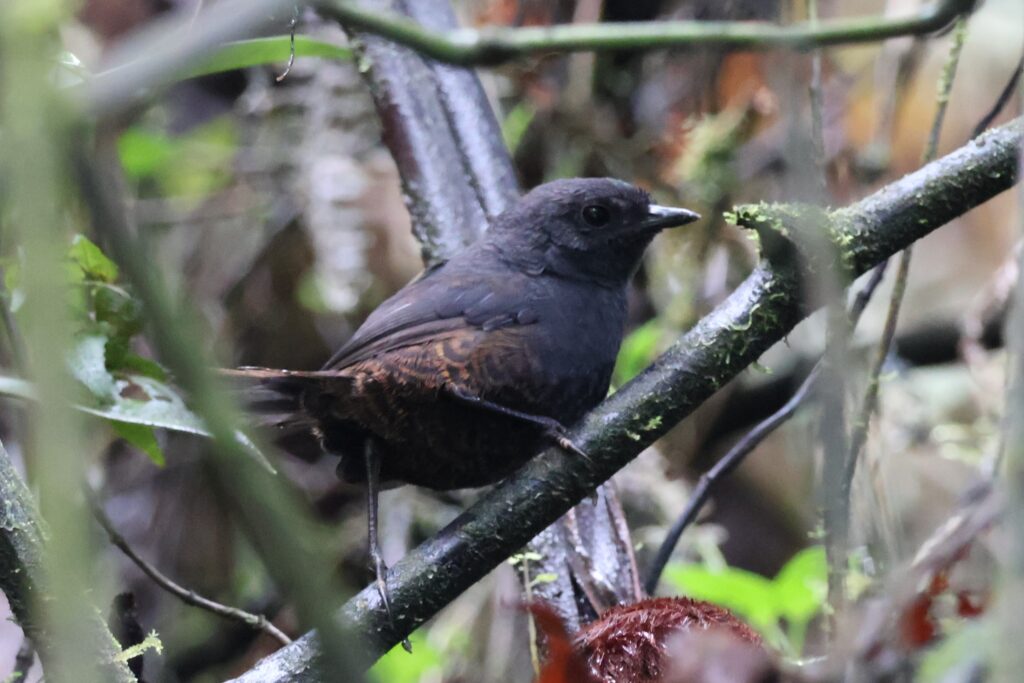
White-crowned Tapaculo (of the black-crowned form!!)
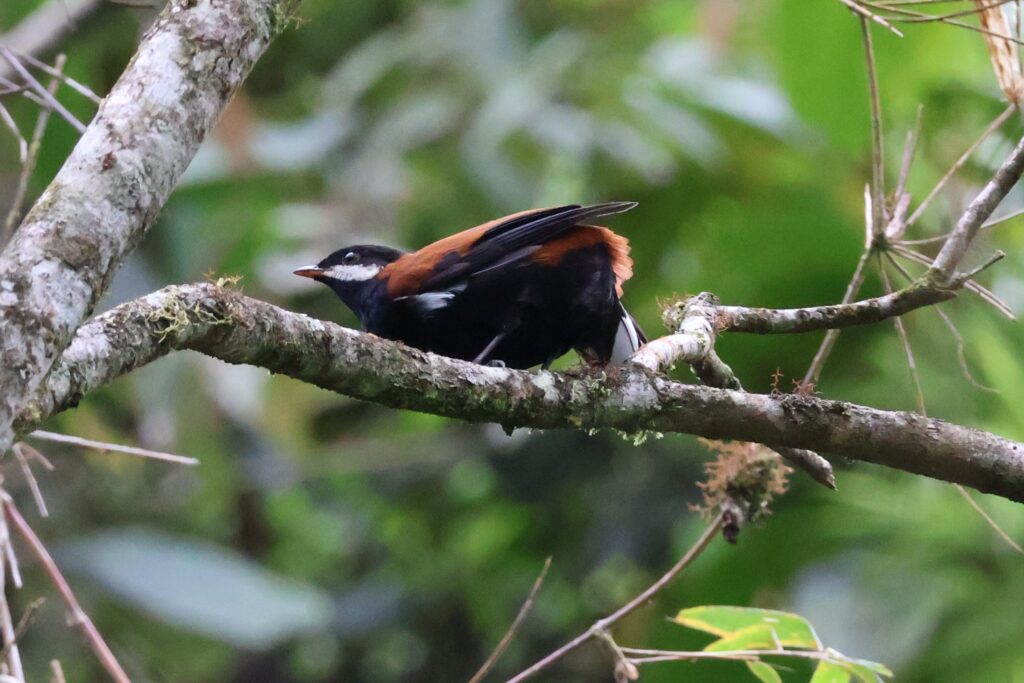
White-eared Solitaire
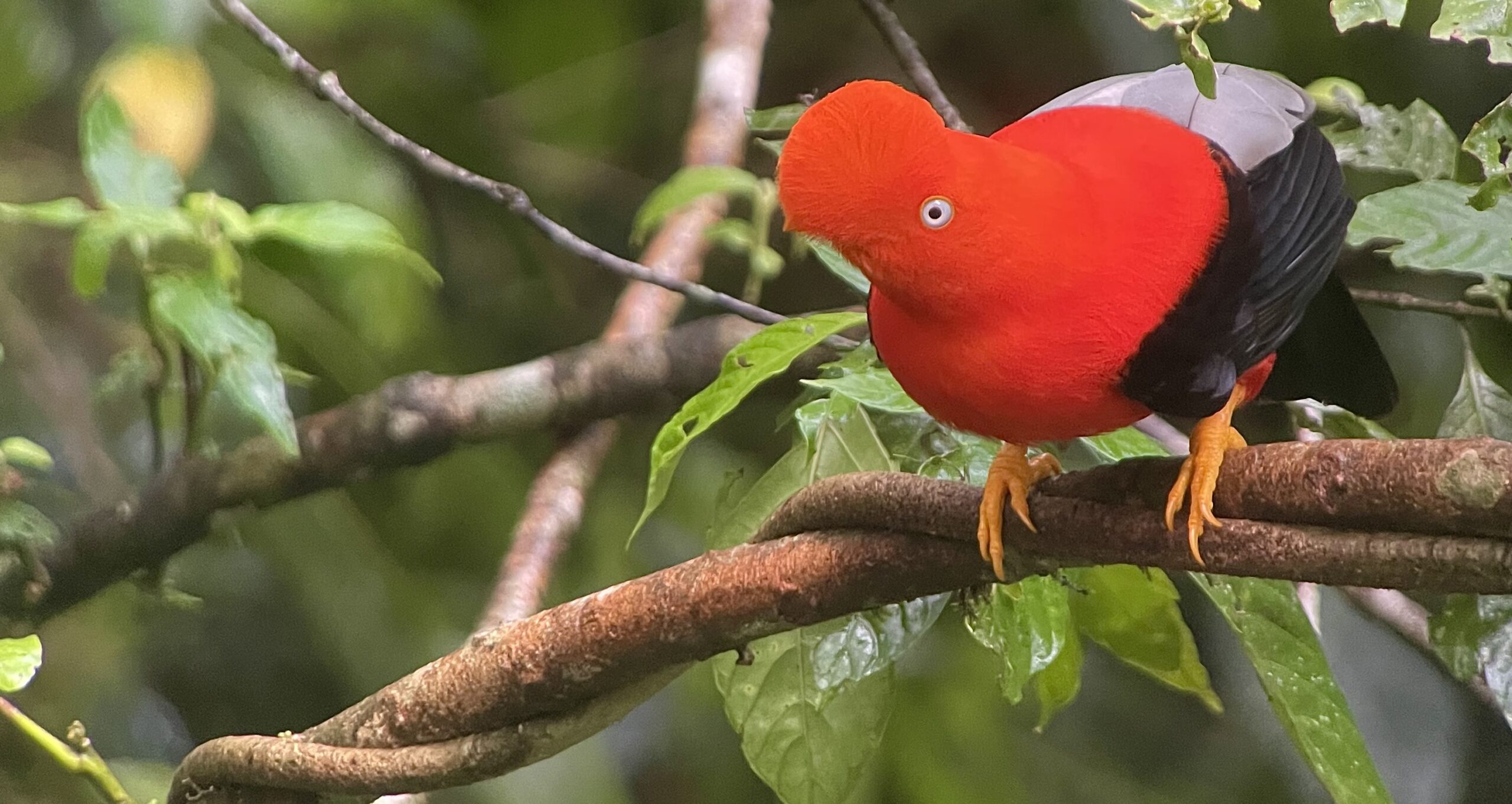
I hadn’t originally reckoned on including a visit to an Andean Cock-of-the-Rock lek on this scouting trip because I’d seen the species well enough before and I knew we were a bit tight on time to fit everything in. We were told, however, that this lek was just five minutes from the lodge and what’s more they were most active in the late afternoon, meaning we wouldn’t be ‘wasting’ that key early morning birding slot. So we went directly there after dumping our gear at the lodge, and as we walked down the narrow path off the road and through the sprung metal gate that leads onto a ramshackle platform overlooking the birds favoured ravine, we could already hear their strange calls. What followed was a mesmerising two hours watching these incredible birds lekking at times no more than a couple of metres away at eye level, right in the open on photogenic mossy branches in front of the platform. It ended up being an absolute trip highlight so we were glad we had bothered with it!!
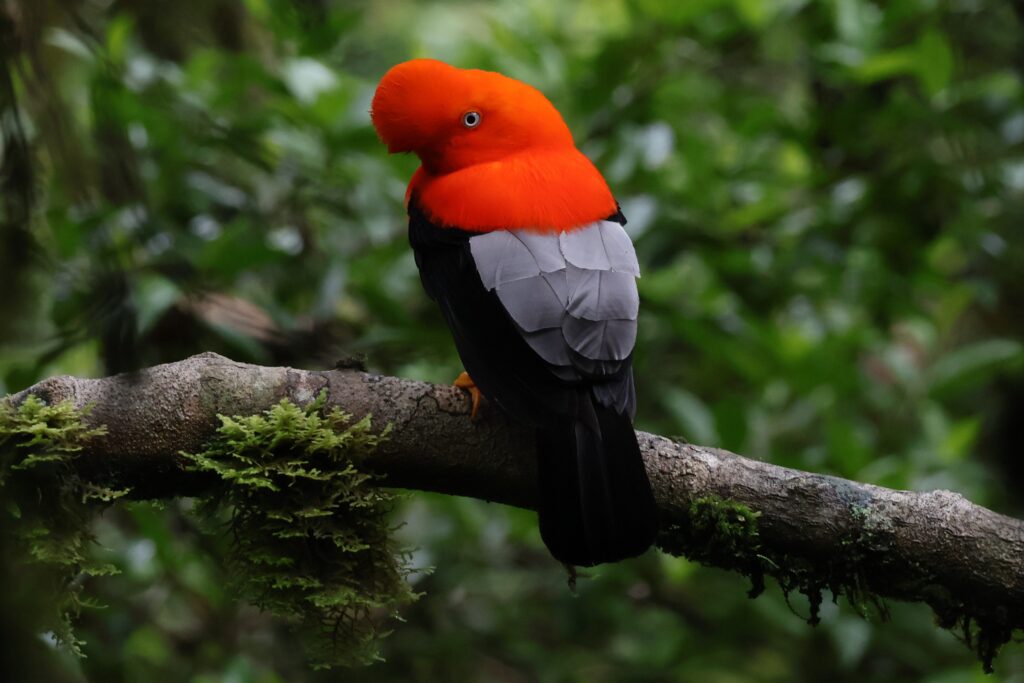
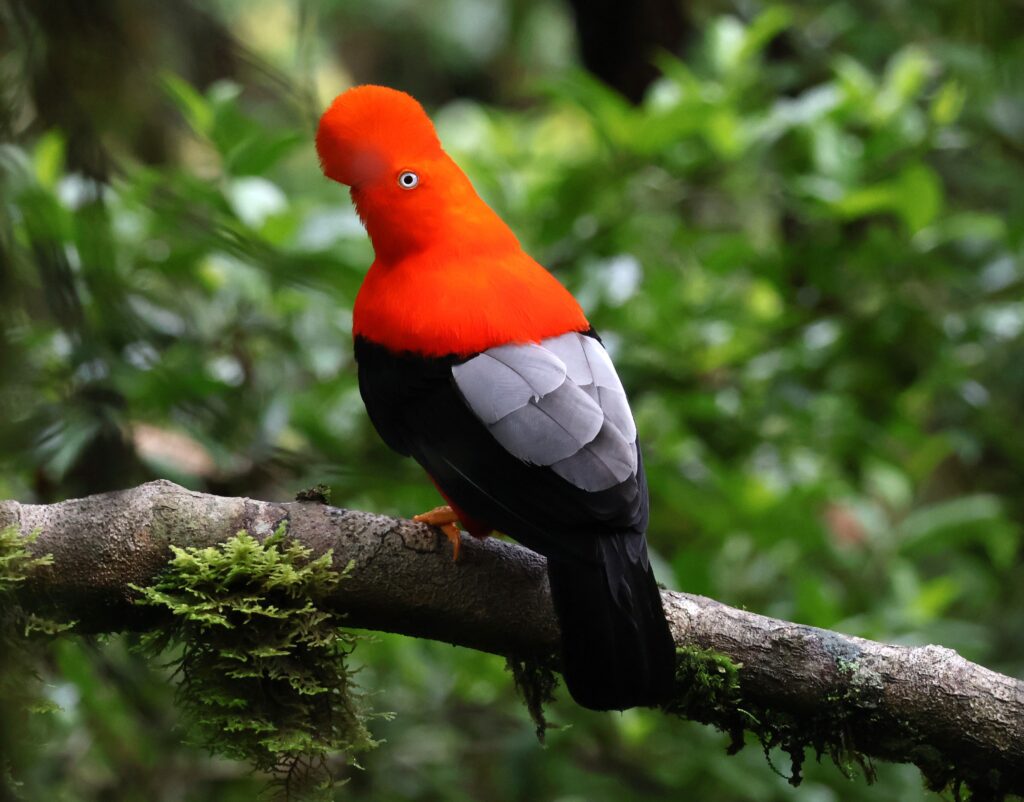
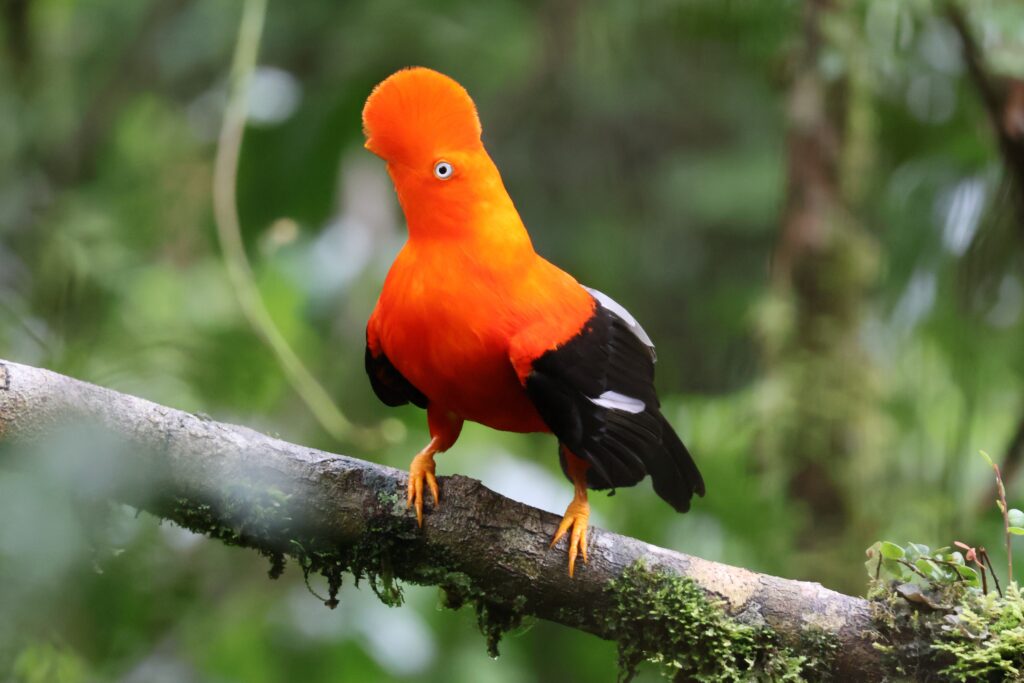
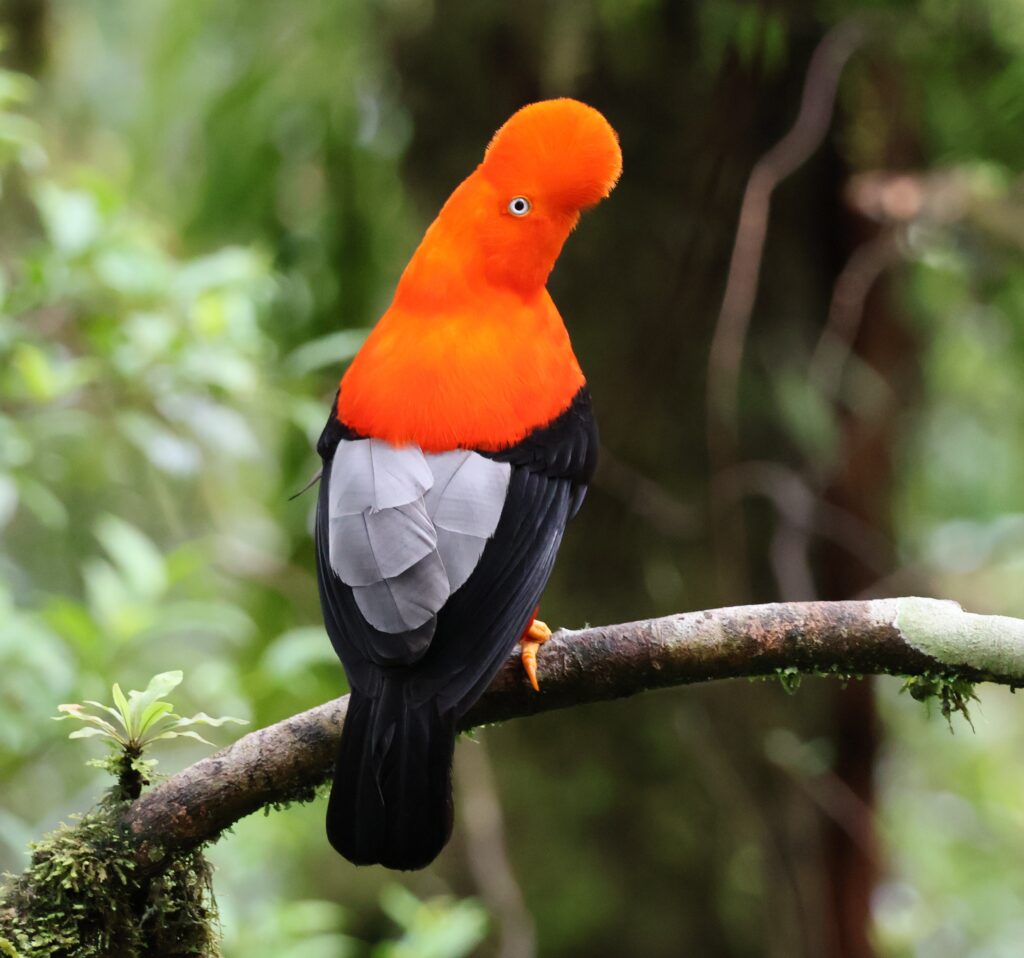
Andean Cock-of-the-Rock
Cock-of-the-Rock lodge was, once again, empty other than for us. This meant a totally undisturbed trail network and while the trails here are distinctly more difficult than at the other lodges we visited, there were some great birds to be had. On our one full morning we woke to pouring rain though and so held off going in at 6am. By 8am it was still raining so we just decided we had to go for it and donned all our wet weather gear. Essentially we had three real targets – Slaty Gnateater, Yungas Manakin and Peruvian Piedtail (plus for me, the delightful but elusive Speckled Nightingale-thrush. eBird suggested each would be difficult with the gnateater a longshot given the time available. 200yds into the trail and we’d found the manakin, which promptly shot across the trail and seemed to perch in the open. We raised our bins and saw what we initially thought was the manakin again – a small, rotund dark bird – but it wasn’t. It was the gnateater!! Juan Carlos even managed a few photos of this tricky forest denizen before it slipped away and we didn’t see it again. 100yds further and we saw the nightingale-thrush well and then while sifting a big mixed flock, I got sidetracked with canopy birds and Juan Carlos dropped back and saw the Piedtail! I only saw it whizz past me but we’d basically nailed all our targets. The superb Black-goggled Tanager, Versicoloured Barbet, Two-banded Warbler, Golden-crowned Flycatcher and a bunch of other good birds rounded off a successful time.

Rufous-crested Coquette
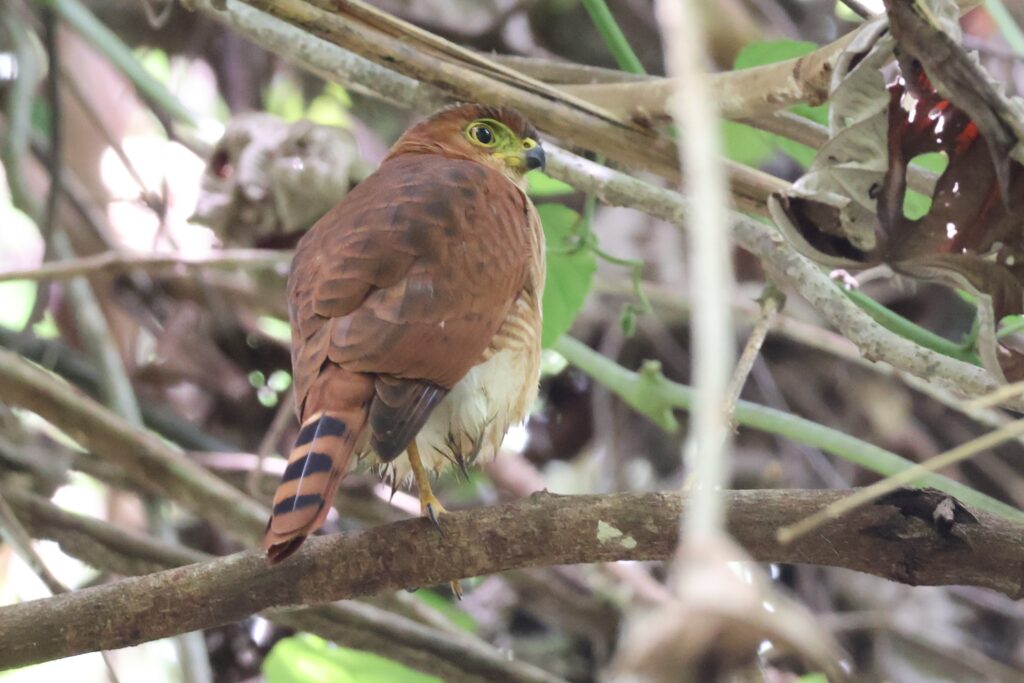
Tiny Hawk – a mega from Villa Carmen!
So then remained our final day, which essentially was dedicated to driving all the way back up the Manu Road to Cusco. We felt we had seen all our targets in the mid elevations and so decided to put all our effort now into two antpittas. The first one was a long shot. White-throated Antpitta was reported in eBird at a few locations in a very narrow altitudinal band about 500m higher up than COTR Lodge. The problem here was the steep cliff one side of the road and sheer drop the other, and none of the reports were recent. We decided to walk a 1km section of the road playing the call and see if we got a bite. We’d completed this without any success and were just rejoining the car for refreshments, when distantly, back along the road, we heard a reply. White-throated Antpitta! Armed with recording equipment and thermal imager, we raced back to where the call was coming from. The low triple-hoot was resonating from, as we feared, a very dense stand of chusquea. A tense hour followed where the bird would call quite close but then seemingly move higher up the slope. We were just about to give up when suddenly it called much closer – the thermal was put into action and a tiny heat source was picked up. The bird then bounded into a dark cave-like opening in the bamboo and we could actually both see it sat in the open calling! Brilliant views of our tenth antpitta species of the tour and one we hadn’t really thought we had a chance with!
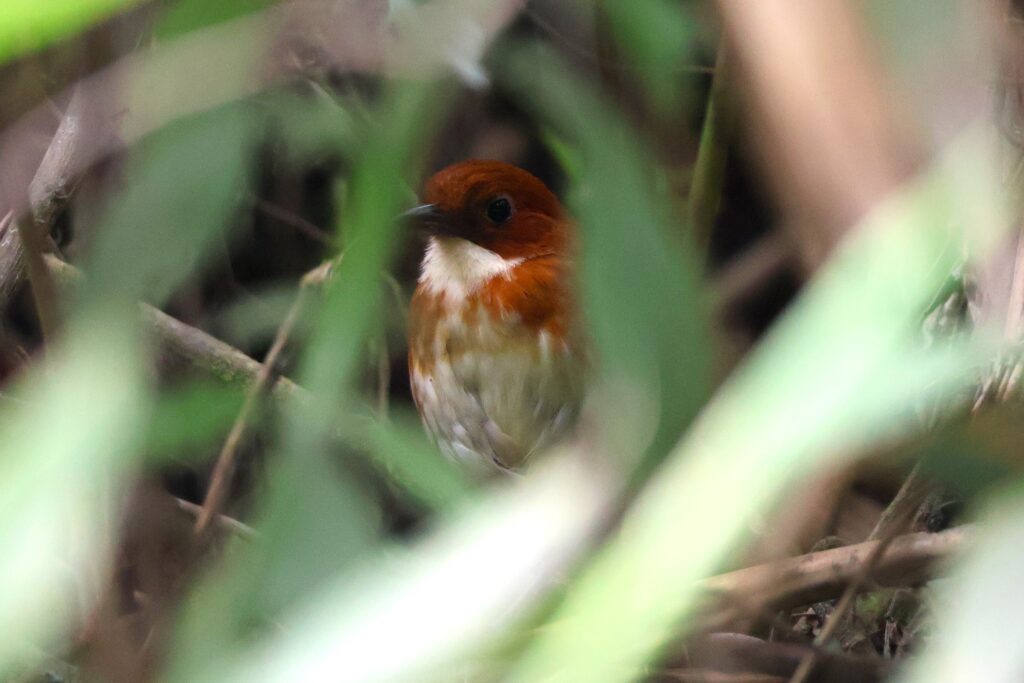
Red and White Antpitta – the ultimate trip finale
Right, the day was still young and we had one final ghost to lay to rest. We were only twenty minutes from the site where we had previously cut the two small viewing spots with the machete, to try and see the Red and White Antpitta. We knew where we were going! As previously, along the road heading up to the site we heard 4-5 individuals calling. It was clear the species was common at the exactly right altitude here, but it was just getting one close enough to the road. We tried both our stake out spots with no joy and then suddenly, a loud call from a bamboo patch right beside the road! We moved silently in position, and I tentatively lifted my binoculars to stare deep inside the shady clump. Amazingly, I could immediately see the bright rust-red colouration of this most dazzling of antpittas, and there it was. Red and White Antpitta in the bag and photos to boot. A mega end to a fantastic trip with just so many amazing birds seen.
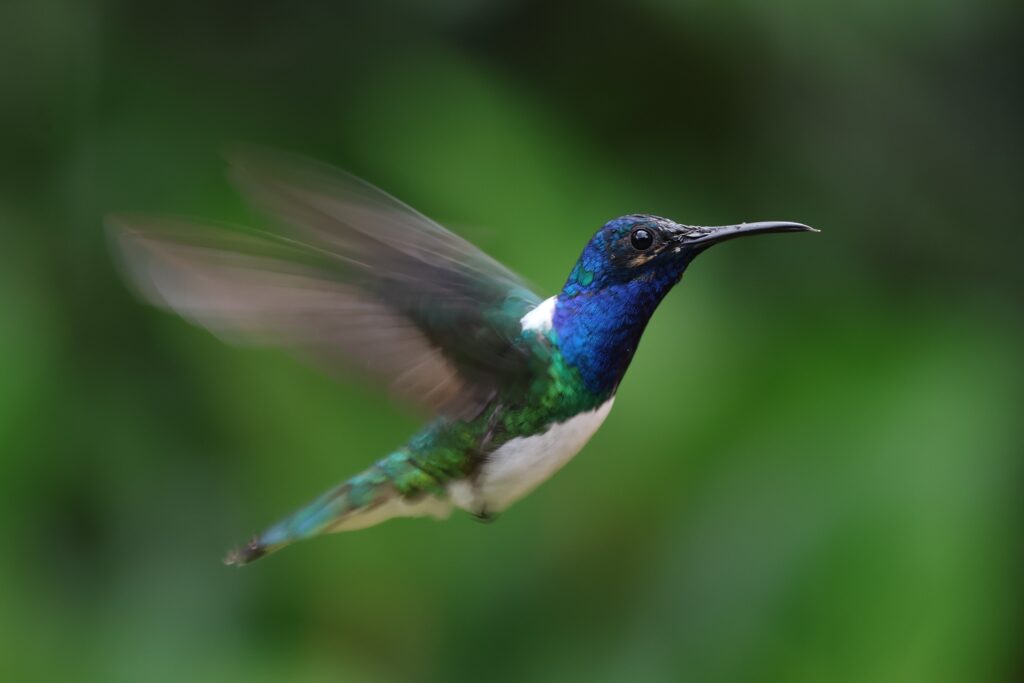
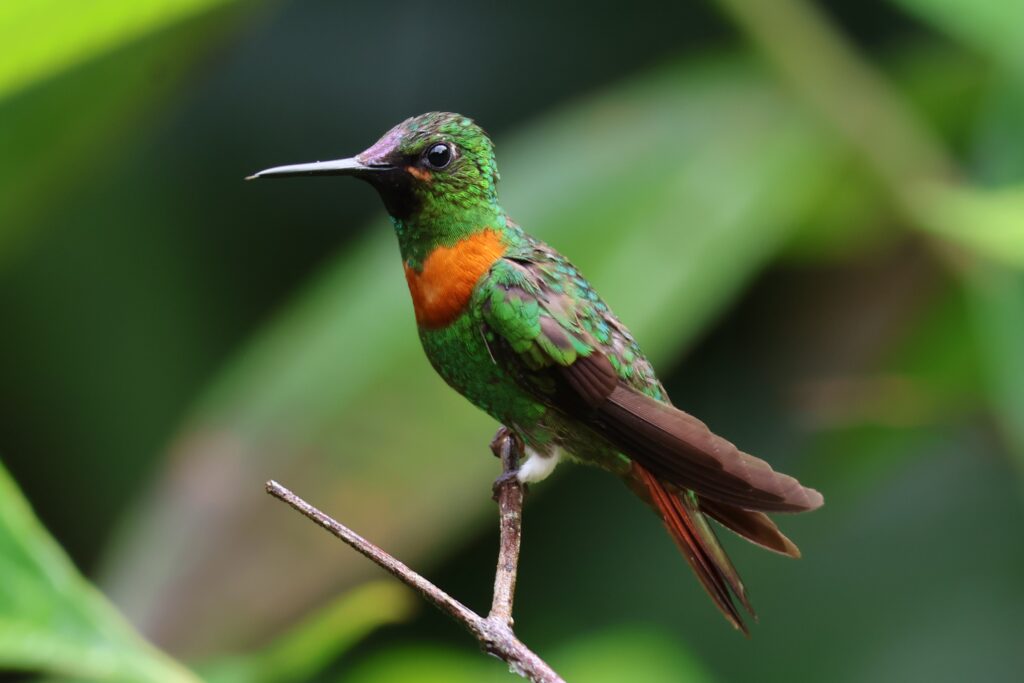
Two hummingbirds from the lowlands – White-necked Jacobin (top) and Gould’s Jewelfront
If you’d like to join me and Juan Carlos for this exciting new itinerary combining the jaw-dropping highlights of Northern and Southern Peru in one unique tour, the trip will be going up on the website in the coming days for Nov/Dec 2025. Advanced registration is now possible by dropping us an email but be quick – we will only take a small group of seven clients due to the difficulty of some of the birds and space in the small, excellently-placed lodges that we want to use. There will be some added bonusses on the actual tour which will run to 17 days – a King Vulture feeding station, an Amazonian Macaw lick and a great chance for Harpy Eagle. Don’t miss this one, it’s going to be a blockbuster!


