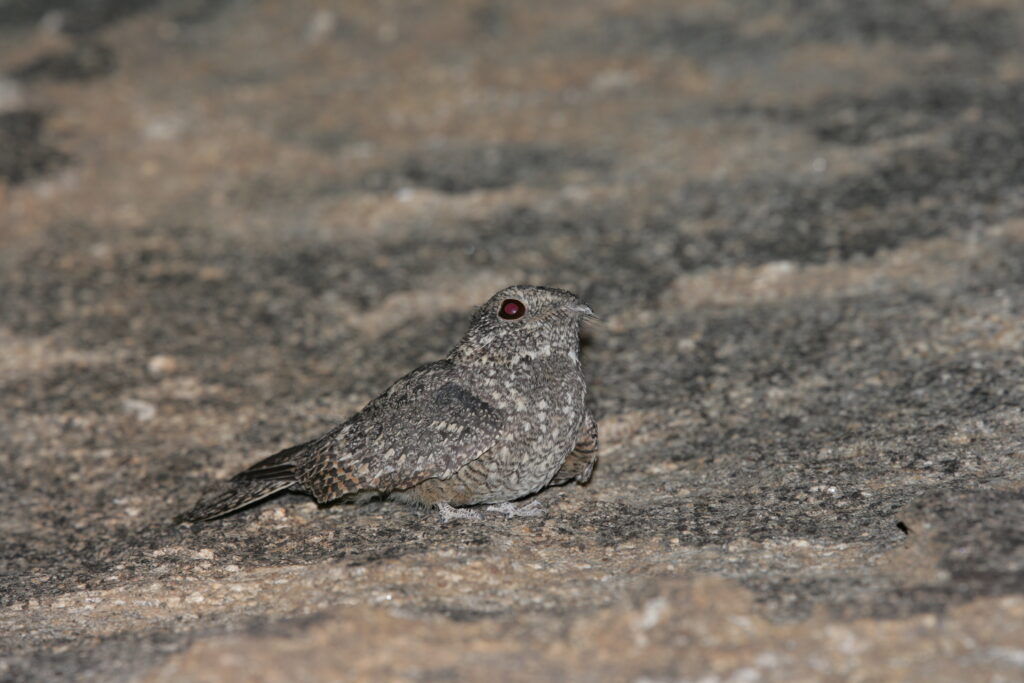
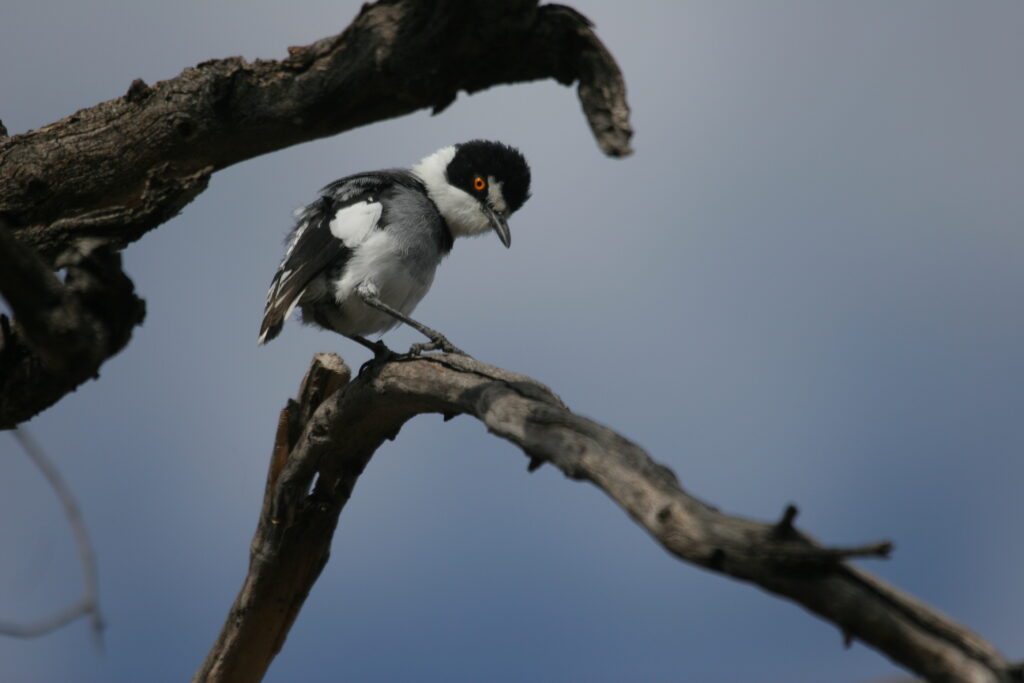
Namibia provides many examples of the best that Africa has to offer. There is abundant and approachable big game in Etosha and plenty of the birdlife is endemic to the region. There are the highest sand dunes in the world, while the harsh remote beauty of the Skeleton Coast is not to be missed. Needless to say, it offers fantastic photographic opportunities.
Namibia is still a relatively unknown and sparsely populated country that is politically stable, having achieved independence from South Africa in 1990. The infrastructure is first class, with excellent accommodation, food and transport. In Etosha, the game watching is unrivalled without the attendant crowds experienced in some parts of Africa.
The key to finding wildlife here is flexibility and knowing their ecology and habits, as unpredictable rainfall determines where, when and if vegetation will grow. Many species are nomadic and our experience of what a bird’s habitat requirements are (rather than relying on sites where a species was seen ‘last year’) is the only way to find them. Each trip brings new surprises; one year it was a wild cat extravaganza with four Leopards, several Lions, two African Wildcats and a gorgeous Caracal. Our leader has also found great rarities for the region like Franklin’s Gull, Turtle Dove, Wilson’s Phalarope and even a Great Snipe in the desert!
Since his first visit in 1994 when it was a relatively unknown birding destination, our tour leader Phil Palmer has watched Namibia develop into a leading African hot spot and his favourite African destination. Many of the TV wildlife programmes you see these days feature footage taken here as animals are abundant and approachable because poaching was rarely the issue it has been in other countries. We use the experience of Phil and local guides to find the best of them and not to waste time looking for things that will not be present either because it is too dry, too wet, or anything in between.
With many endemic birds, an amazing selection of iconic big game, some weird insects and reptiles, good quality accommodation and food, combined with excellent infrastructure and a good safety record, Namibia has seen a dramatic rise to the top. Our leader is very proud of the fine-tuned itinerary that he has developed over more than 30 years of visiting the country and we are delighted to bring it into the Oriole portfolio.
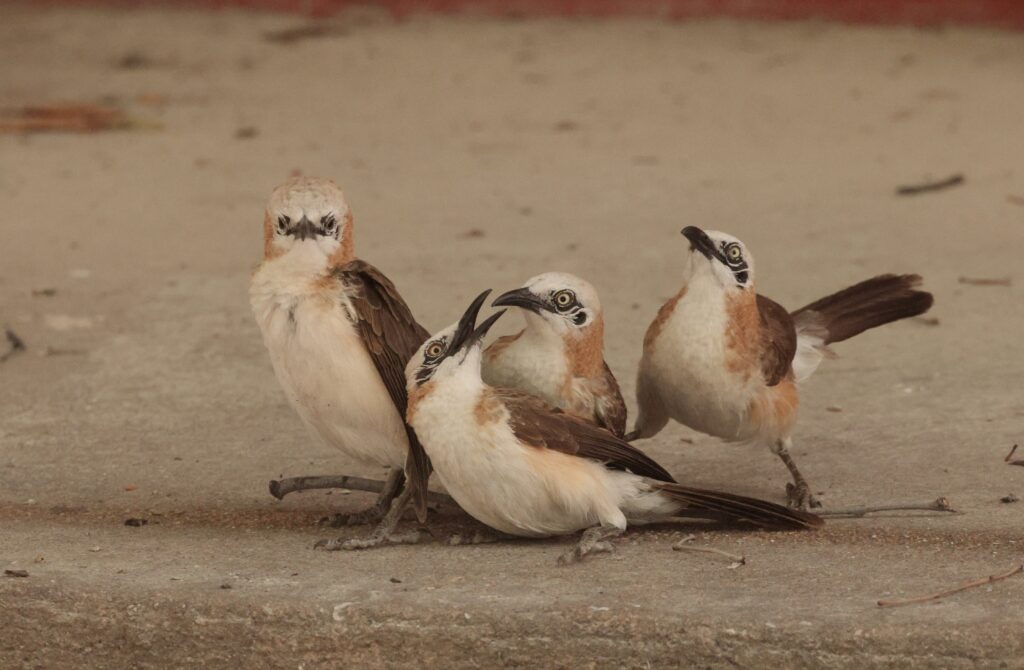
Our tour takes in a great variety of habitats from the desert to the coast with birds from Kori Bustard and flamingos to Bateleur and Crimson-breasted Shrike. The Big Game is spectacular too with elephant and giraffe, through to Bat-eared Fox or the virtually unknown Jameson’s Red Rock Rabbit!!!
Our tour is timed to see concentrations of herd animals forced to seek water and, for birds, the first flurries of breeding activity as the rains approach. In addition, the first wave of Palearctic migrants will be moving in. The high standard of accommodation coupled with birds close to your rooms means that you do not have to take part in every activity if you just want to sit with a beer and watch them come to you.
This trip is something that will always be remembered.
A note from our tour leader Phil about the wildlife watching prospects we expect in Namibia 2026:-
“Having been to Namibia almost annually for 30 years, I am really excited about 2026. Water availability is the driving factor for every bit of flora and fauna here and a decade of drought has ended as rain brought dry rivers to life and began to fill the Etosha Pan in 2025.
DAY ONE
Fly UK/Windhoek on an overnight flight, probably via Frankfurt.
DAY TWO
Arriving at Windhoek after an overnight flight, there are good birds to see in the airport car park! Our first Rock Martin will be sitting on the terminal building roof and up to 5 species of swift are possible including the endemic Bradfield’s. It is always difficult to get away from the airport as weavers, sunbirds, starlings and doves all conspire to delay us, but we will see these birds again, some on a daily basis, so our leader will cherry pick what we should concentrate on.
The same applies to our journey south to the pleasant NamibGrens guest farm, our base for the first night. We will have a packed brunch with us on the bus for anyone who didn’t enjoy the plane food so we can enjoy the presence of numerous common birds that makes this an exciting journey. On the way, we are certain to see our first Yellow-billed Hornbill, White-backed Mousebird and Grey Lourie but a special stop will be made to look for Rufous-eared Warbler; a cracking little Southern African endemic that specialises in certain saltbush vegetation en-route. Knowing its exact requirements is key to finding it and, as roadside vegetation changes annually, our leader relishes the challenge. We aim to arrive in time for a little time to relax or unpack late afternoon, but for the keener birders it is possible to see many birds in the gardens.
Night NamibGrens Guest Farm
DAY THREE
The next morning, we will spend time around the farm and on the Gamsberg escarpment overlooking the Namib Naukluft Desert, before travelling to our lodge there.
The gardens hold birds such as Scaly-feathered Finch, Cape Sparrow, Kalahari Scrub-robin, White-throated Swallow and Swallow-tailed Bee-eater and, if the rains have been kind, this part of Namibia enjoys influxes of Karoo specialists that are more normally regarded as South African species. Karoo Scrub-robin, Long-billed Lark and Bokmakierie will be listened for, but the endemic Herero Chat is something we hope to find among the boulder scree. This ‘travelling day’ has developed into one of the many highlights of the trip, as there are so many new birds to see in a strange granite kopje landscape.
Dropping down from the escarpment, a number of passes provide chance to search for mammals like Rock Hyrax, Klipspringer or some Mountain Zebra. They are easily missed among the strange quiver trees and trees with ‘paper bark’ evolved to protect them from the heat.
If we are really lucky, we may chance upon a party of Meerkats before passing our first Rüppell’s Bustard on the way to Solitaire. This ‘town’ is well-known for its lack of rainfall with any drops marked in the diary!
On deeper into the Namib Naukluft, we reach our remote little lodge nestled under a kopje just in time for dinner. The night sky is superbly clear with chance to look for the Southern Cross heralded by the sound of geckos.
Night Namib Naukluft Lodge.
DAY FOUR
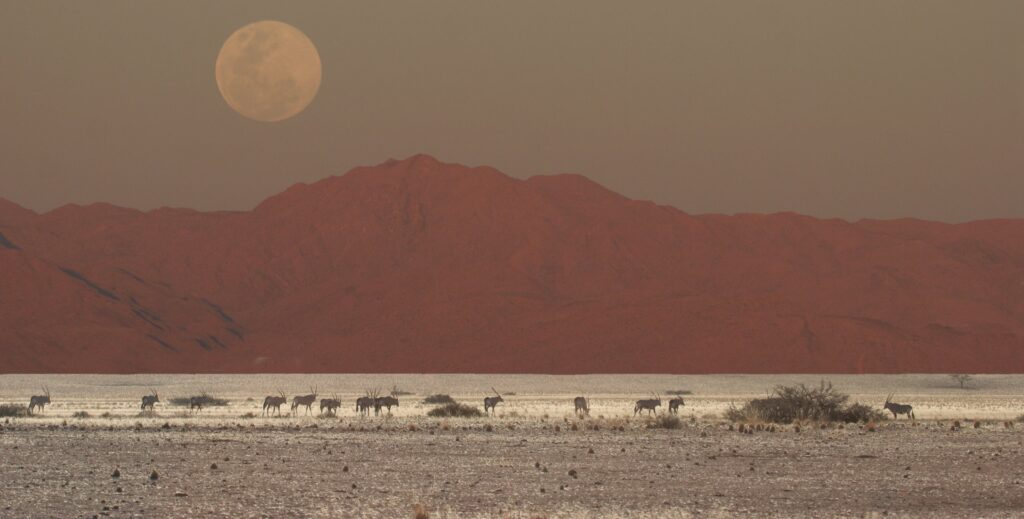
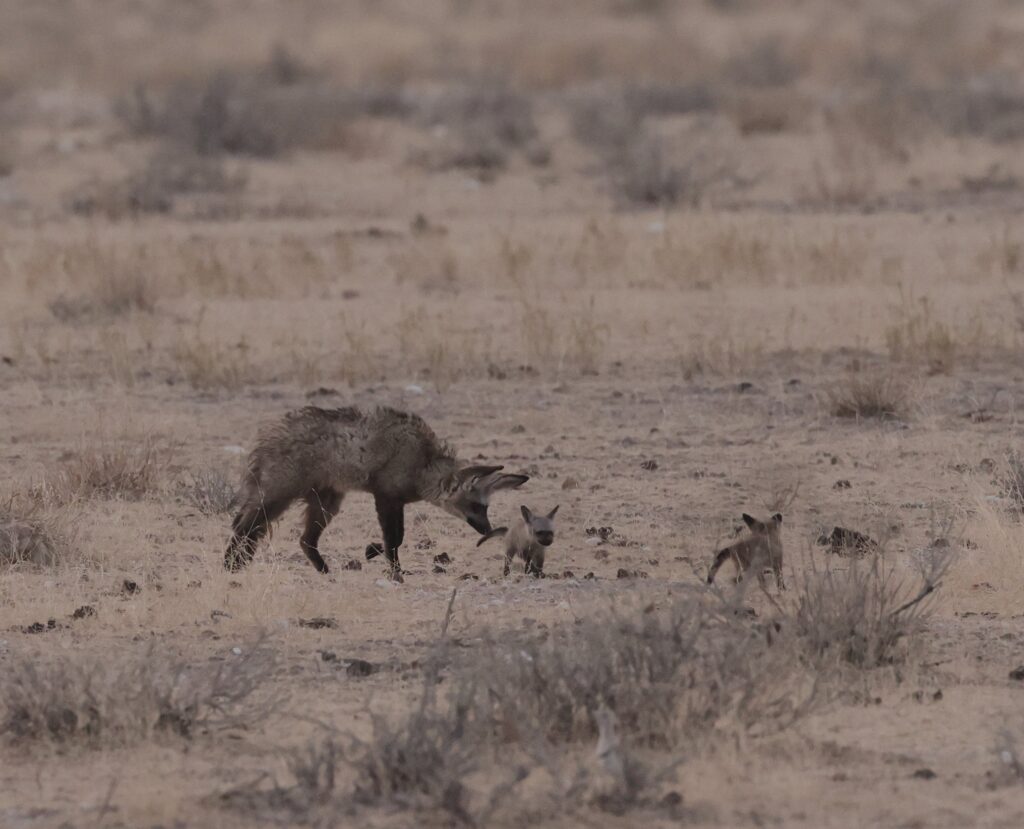
An early start into the superb UNESCO listed red dunes of Sossusvlei the next day allows us to search for Dune Lark – the only bird that can eke out a living from the red sands. It is located using knowledge of its critical habitat requirements. The dunes are the largest and most spectacular in the world. Rising to over 1000 feet above the surrounding plains, they hold transient mammals including Oryx and Springbok, with Aardwolf and Bat-eared Fox venturing out at night. The sands are littered with the tracks of the night’s animals – Tok Tok beetles, Shovel-snouted Lizards, Golden Mole and Sidewinder all live here but are tucked away out of sight.
Further into the park, we look for Ludwig’s Bustard and Burchell’s Courser before taking breakfast in the shade of an acacia where a Greater Kestrel usually nests.
If not, a Familiar Chat and Pied Crow are almost guaranteed to come for titbits.
Back to the lodge for lunch and a snooze, the photographers can enjoy the lodge’s feeders by a Social Weaver’s nest. If not too tired, in the evening we may go for a drive to watch the sunset, maybe passing an Ostrich, Lark-like Bunting or Springbok, with chance of night-time inhabitants like Scrub Hare and Black-backed Jackal on the way back.
Night Namib Naukluft Lodge.
DAY FIVE
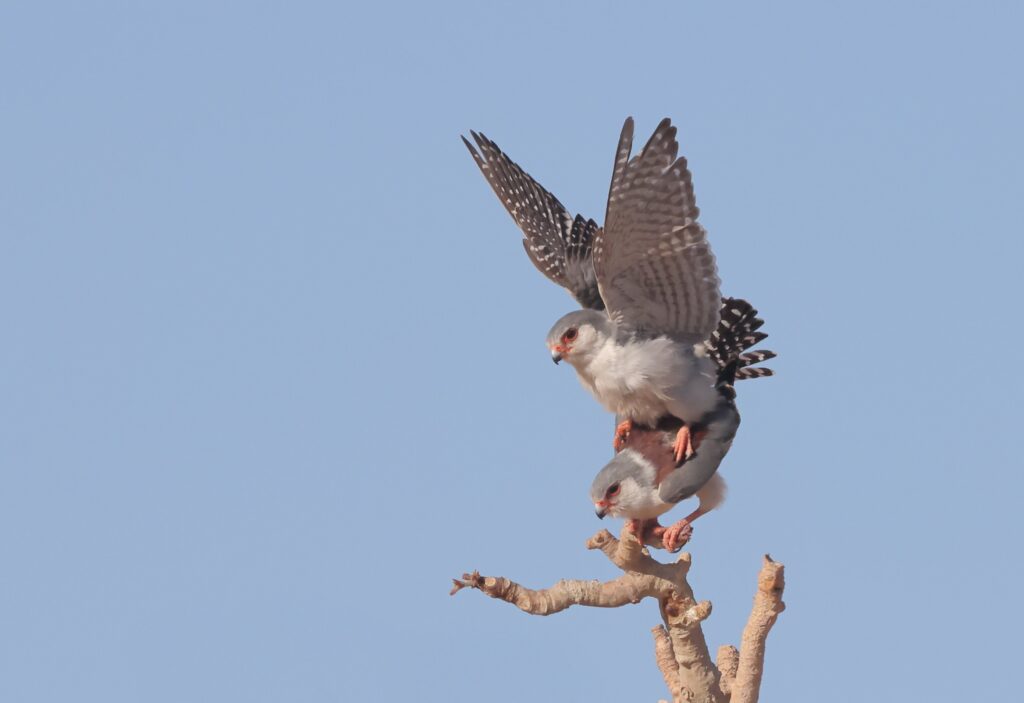
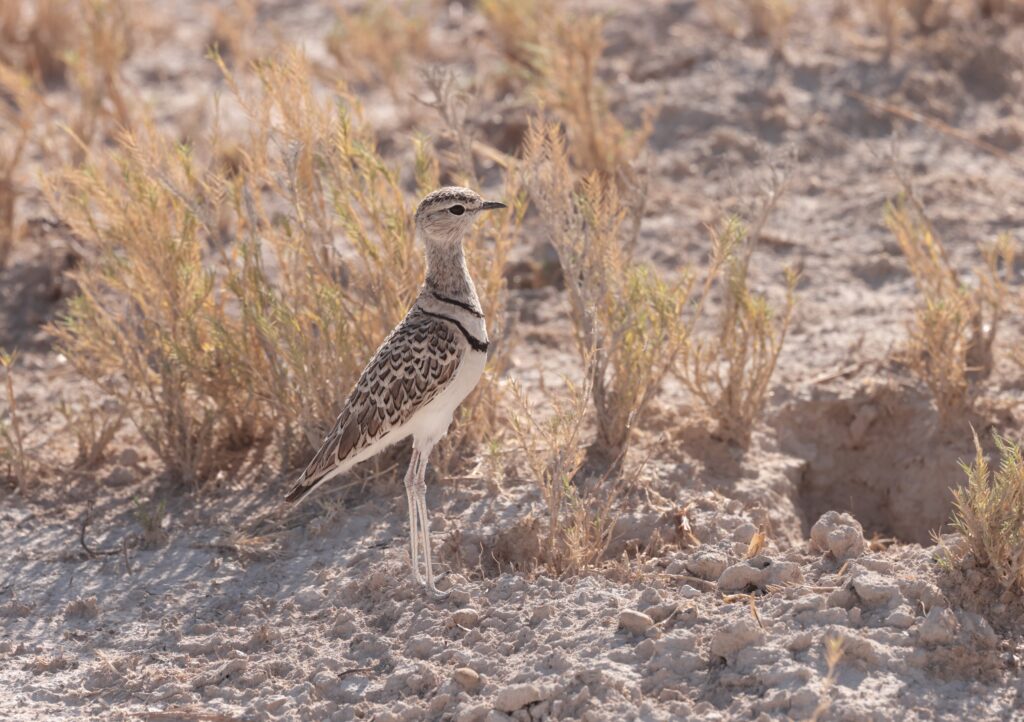
After breakfast, where we have invited Namaqua Sandgrouse and a Pygmy Falcon, we start our drive through the Namib Desert to the Skeleton Coast. This exciting journey allows us second chances to look for Meerkat, Mountain Zebra and Jameson’s Red Rock Rabbit, while bustards, coursers and larks are today’s fare. Numbers and variety depend on the previous year’s rain and grass growth. Double-banded and Burchell’s Coursers should be roadside birds while the many larks can include Spike-heeled, Stark’s, Red-capped and, if we try hard enough, Gray’s Lark. The latter is restricted only to the gravel plains of the Namib and is notoriously difficult to spot, but we have an excellent track record in finding them.
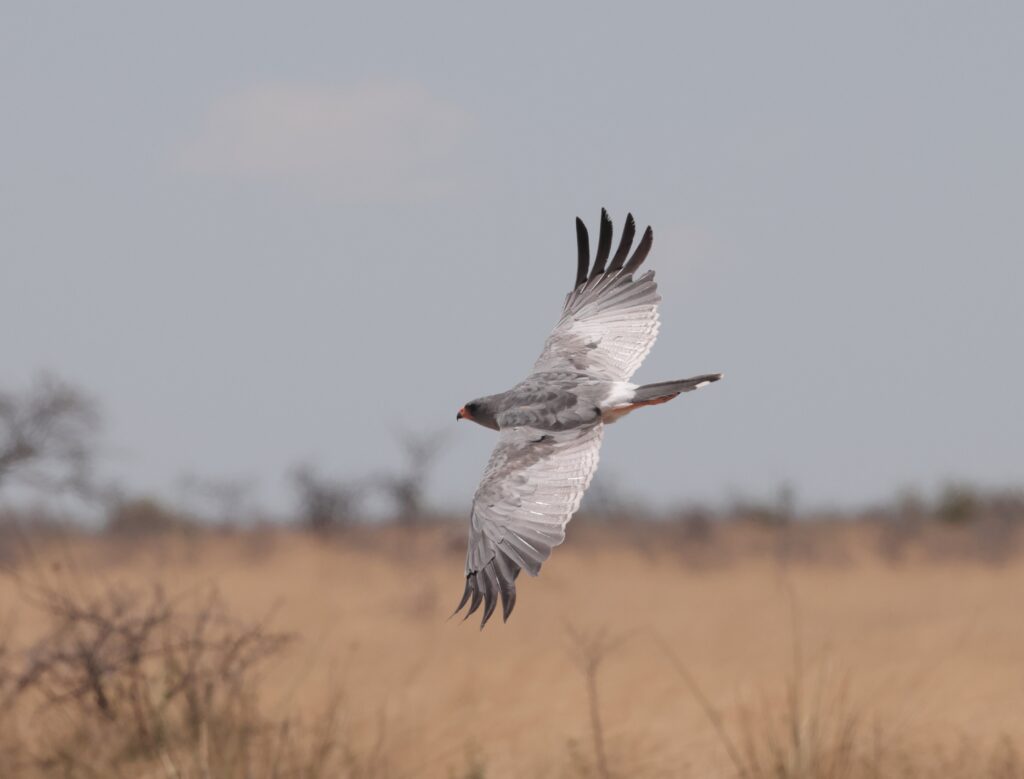
Raptor numbers depend on lark numbers that in turn depend on termite numbers resulting from showers. It may not have rained here for several years, but different lark species prefer different grass structures and ages, so no two journeys here are the same. Sometimes we are restricted to the odd Greater Kestrel and Pale-chanting Goshawk but, in periods of large lark numbers, we find Lanner and Red-necked Falcon. Lots of termites bring in Pygmy Falcons and Rock Kestrel, while an abundance of mammals or larger prey attract Black-breasted Snake-eagle and Martial Eagle.
Crossing the Kuiseb Canyon, with its Mountain Wheatear and Yellow Canary, the vast open plain provides mirages of a lone Ostrich or Oryx but, as the group dozes in the bus, the leaders will be looking for Tractrac Chat or Karoo Chat.
The cool evening here allows us to recover from the heat of previous days in the desert as we enter the breezy sea air of Walvis (Whale-fish) Bay.
Night Protea Hotel, Walvis Bay.
DAY SIX
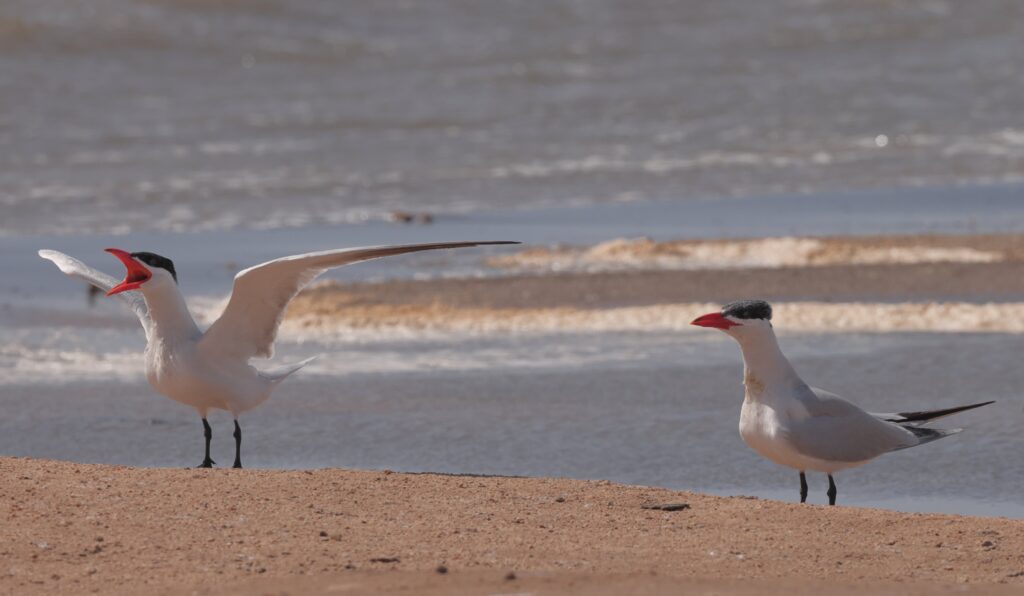
With two nights in Walvis Bay, we will explore this part of the Skeleton Coast. The small headland of Cape Cross lies on Namibia’s Skeleton Coast, roughly 60 kilometres north of Henties Bay. The historic area was landed on by the Portuguese in 1486, and they erected a stone cross here in honour of the Portuguese King, however, this cross was replaced by the German settlers in the 1800’s. Cape Cross best known for its extraordinary breeding colony of Cape fur seals and has been made a reserve for this reason. The climate is remarkably cool, a result of the cold Benguela Current which flows all the way from Antarctica. Thousands of Lesser and Greater Flamingos form a pink backdrop to the masses of waders and terns. Specialities include Chestnut-banded Plover and the endemic Damara Tern. Thousands of Cape Cormorants nest on specially constructed guano platforms and the Cape Fur Seals will be pupping.
After lunch we take an afternoon drive into the saltpans to get a closer look at the waders. Walvis Bay has the highest numbers and best selection of shorebirds on the whole West African coast. There is always chance of a rarity among the thousands of Curlew Sandpipers, Little Stints and Avocets. The numbers are staggering and are supplemented by wildfowl like Cape Teal. We have also counted over 500 Black-necked Grebes on occasion.
Overnight Cape Cross Lodge.
DAY SEVEN
As we leave the bay, we try to pick up something we may have overlooked the previous day: Black Oystercatcher may be on rocky beaches alongside the many Kelp and Hartlaub’s Gulls. Maybe a Crowned or Rock Cormorant will be drying its wings, but these have become harder to find in recent years.
Heading inland via the impressive granite outcrop of Spitzkoppe trying to pick out a Meerkat from the many Ground Squirrels, we have another chance to find the endemic Gray’s Lark and the elusive Herero Chat. The pale wheatear-like Karoo and Tractrac Chats perch on boulders along the way with Grey-backed and Chestnut-backed Sparrow-larks seeking shade with Sabota Larks beside roadside rocks.
As vegetation increases, we start to pick up birds of the dry acacia scrub like Capped Wheatear, Marico Sunbird, Rufous-vented Tit-babbler, Dusky Sunbird or even Secretarybird.
Taking a picnic lunch, we have the flexibility to stop and look for Rüppell’s Parrot, Damara Red-billed Hornbill, Grey Hornbill, Cardinal and Bearded Woodpeckers, Scimitarbill, Acacia Pied Barbet and lots of other bushbirds before reaching our lodge in the Erongo Mountains.
Overnight Ondudu Safari Lodge
DAY EIGHT
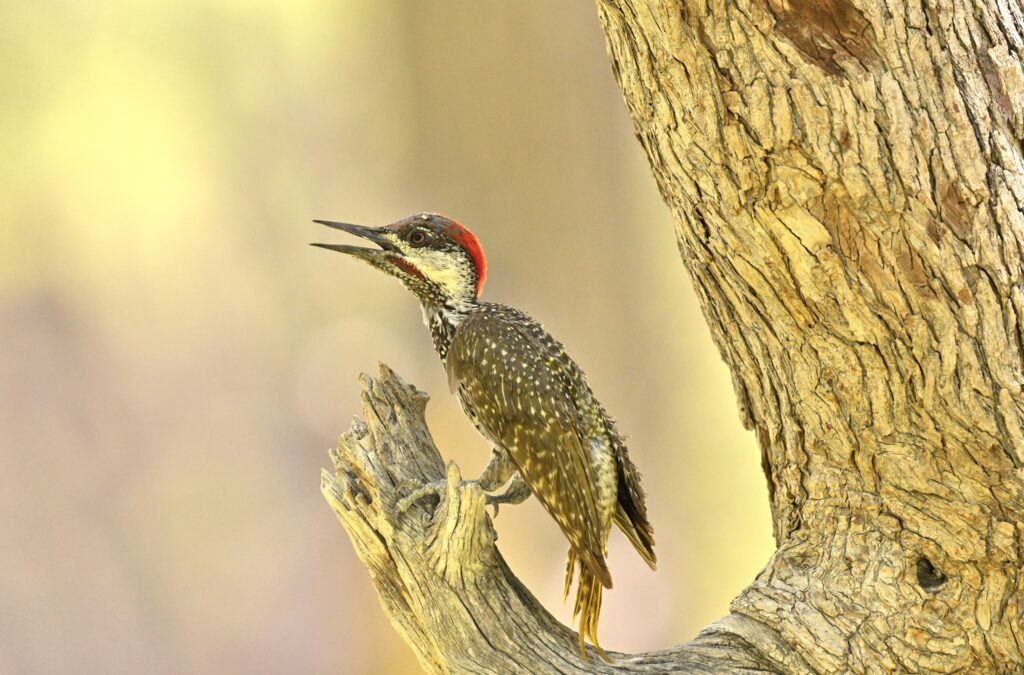
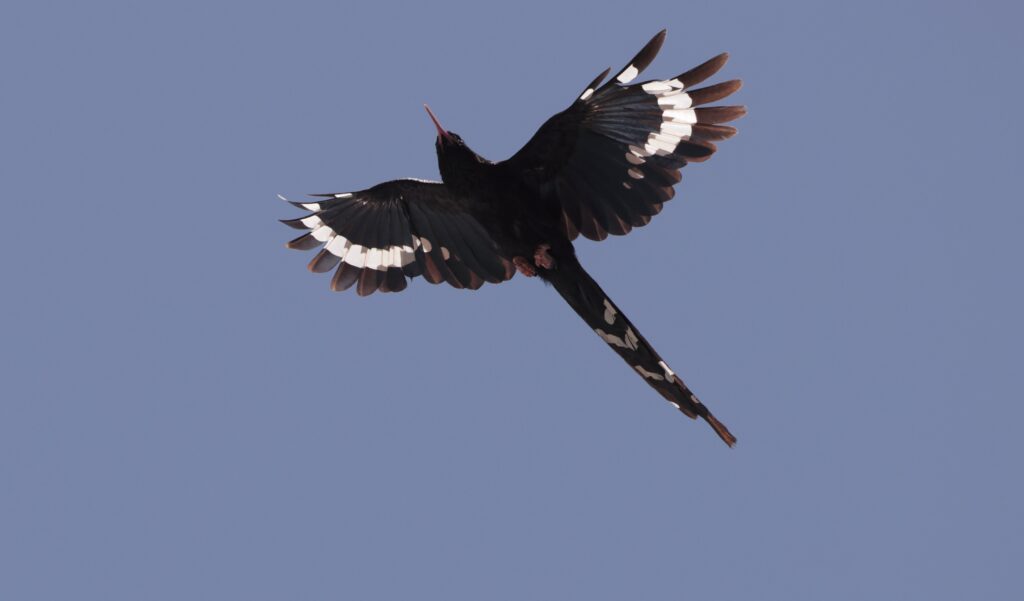
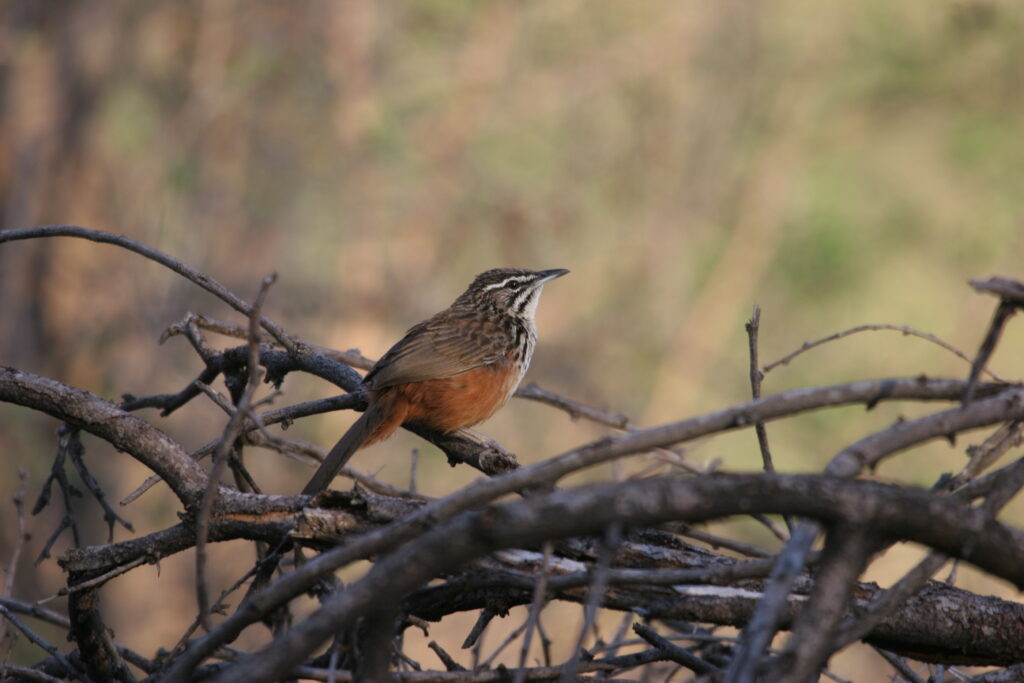
Our lodge is situated among the spectacular granite domes of the Erongo Mountains where birdwatching is excellent. Woodland around the accommodation could provide us with views of Verreaux’s Eagle, Black-chested Snake-eagle, Pririt Batis, Melba Finch, Red-necked Francolin, Carp’s Black Tit, Short-toed Rock-thrush, Peach-faced Lovebird, Diederik Cuckoo, Kalahari Robin with the endemic Rockrunner and White-tailed Shrike all possible in a morning’s walk!
We could add Damara Dikdik to our mammal list and the spectacular blue and road-cone-orange Namibia Rock Agama to the reptile list.
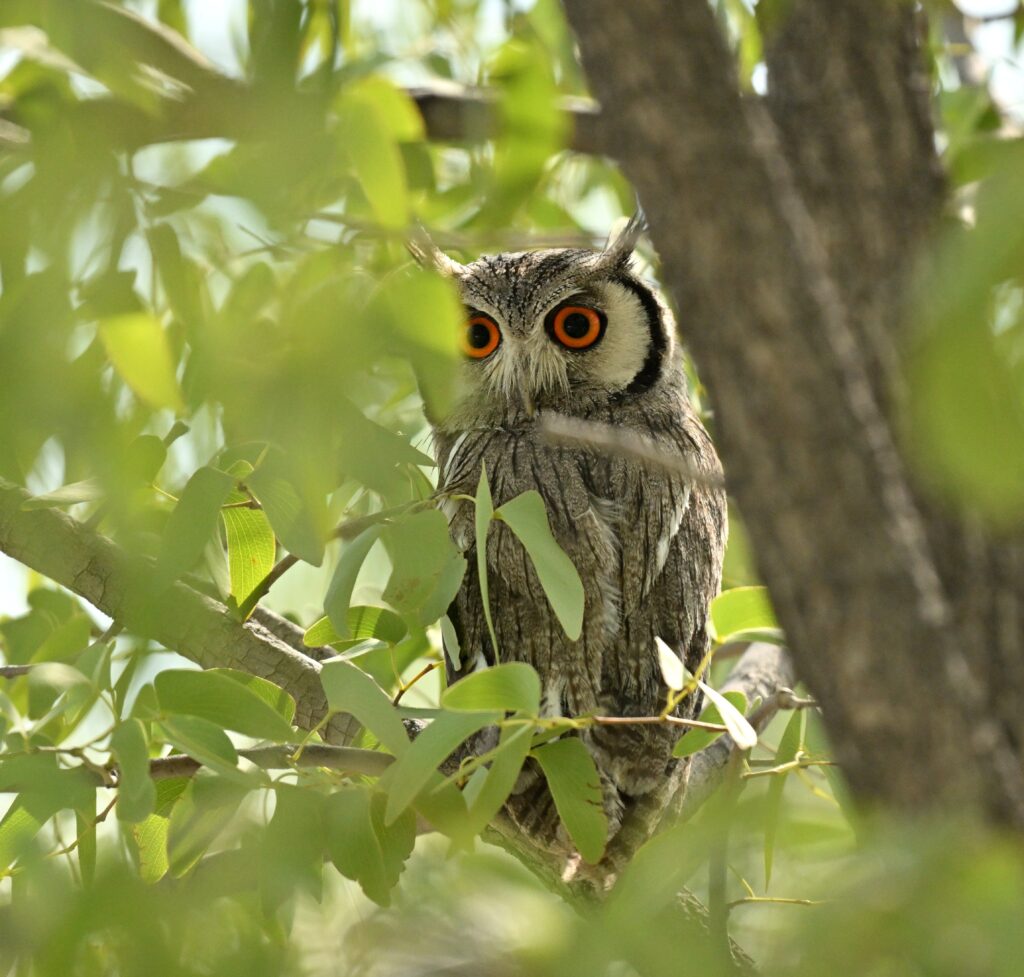
Pearl-spotted Owl hunts in the daytime and Brown-crowned Tchagra, Black-cheeked and Violet-eared Waxbills may point to its location. The noisy mobs that find one pull in Cape, Golden-breasted and Chestnut-bellied Rock Buntings. Late morning, we leave for Etosha with plenty more to look for along the way.
There is a good chance of various raptors including White-backed and Lappet-faced Vultures, Whalberg’s and Tawny Eagles with Fawn-coloured Lark something you may(?) want to stay awake for if you like the small brown birds. A Monotonous Lark would be good too. Not always present, they come with the first showers of December and their call is more exciting than the bird’s name implies.
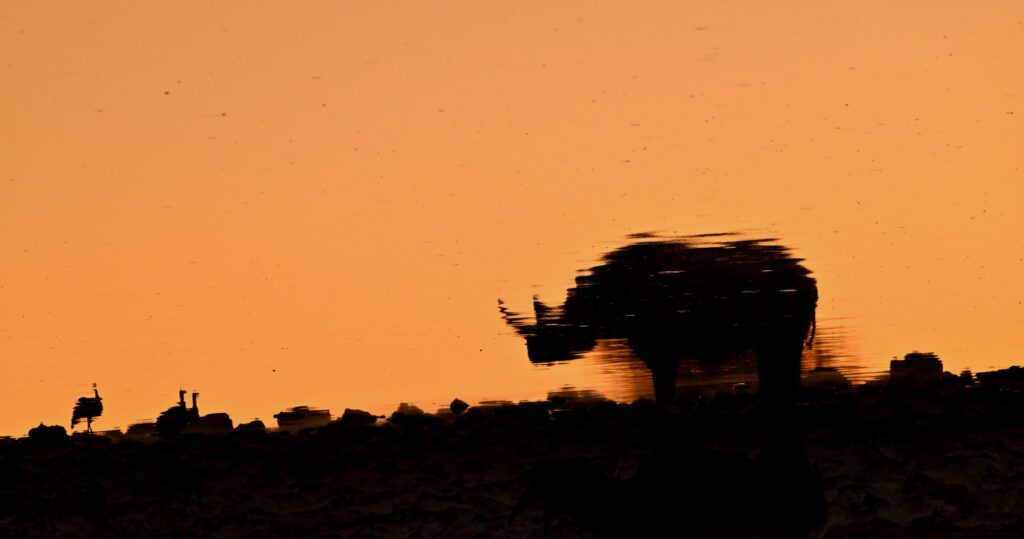
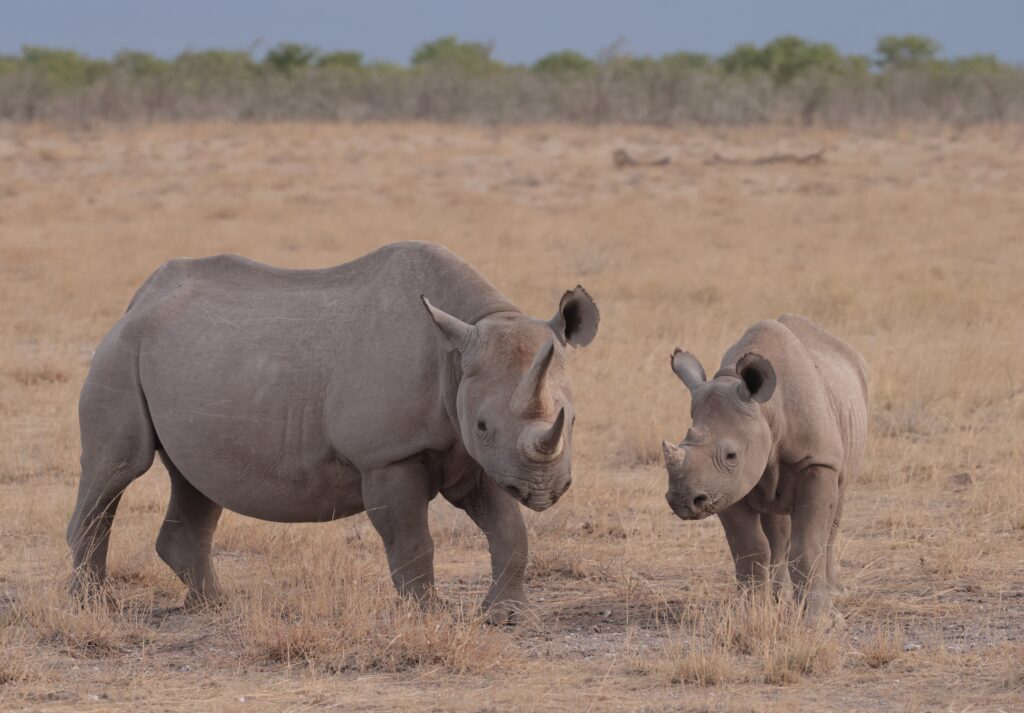
Entering Etosha, we game drive our way to the first camp and here the mammals rule. Once checked in you are free to go sit by the waterhole which is so hard to leave. As the sun sets, animals queue to drink at this time of year with Double-banded Sandgrouse joining Spotted Dikkops and Blacksmith’s Plovers. A Verreaux’s Eagle-owl may come to bathe, but the highlight here is chance to see the rare Black Rhino, several of which can come to drink if it has been hot and dry.
You will struggle to tear yourself away to grab dinner, but this is the beauty of Etosha; there are so many things to see that you can do things as your own personal pace dictates.
Night Okaukuejo, Etosha.
DAY NINE
Etosha, ‘The Great White Plain’ as it is known in bushman language, has been made famous by numerous TV documentaries. A vast ancient salt pan is surrounded by a mixture of bush, woodland and savannah with three camps inside the park. Each one has a waterhole to attract animals and we will spend a total of five nights here. We choose to spend the nights inside that park to raise chances of seeing the nightlife that cannot be found by those staying outside the park.
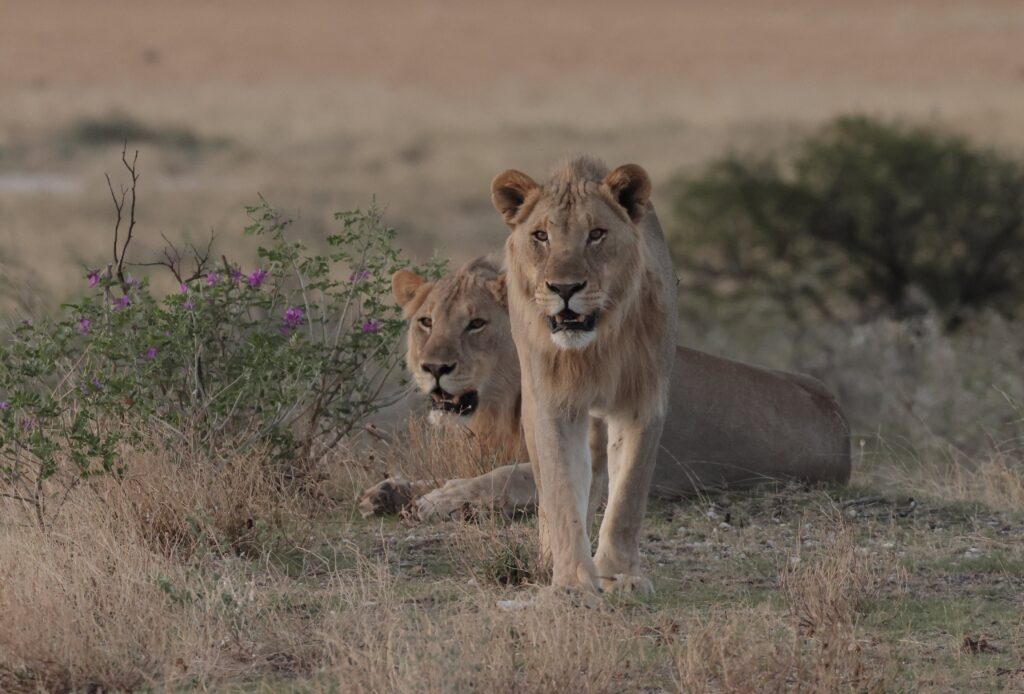
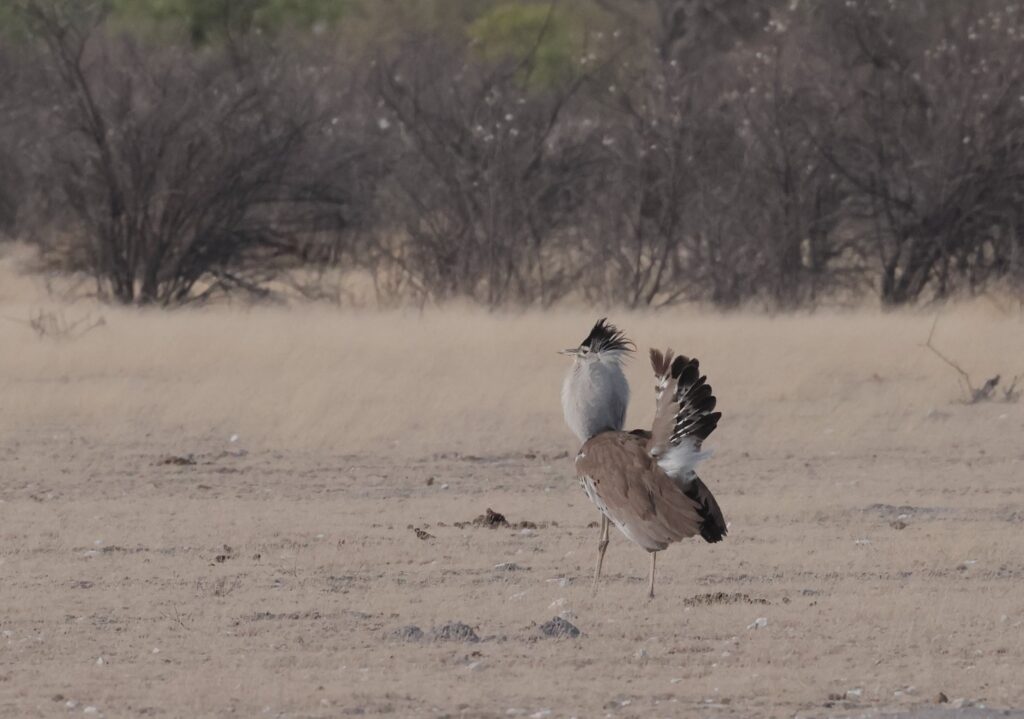
Only with experience can one find the star birds and mammals along the many winding trails which connect the springs and waterholes. Elephants, the largest in Africa, dominate the waterholes driving off other game such as Zebra and Giraffe. The many Lions wait for Blue Wildebeest, Red Hartebeest, Greater Kudu, Springbok, the regionally endemic Black-faced Impala, and the appealing Damara Dikdik. At the time of our visit, bird numbers are swelled by migrants. Double-banded Coursers feed precariously amongst the feet of big game. Secretarybird and Kori Bustard strut by.
Today we will do an early morning game drive and another in the afternoon. Lunch at the camp can allow a little rest but folk usually sit by the waterhole to see what comes to drink. The camp has shady trees that attract weavers, sunbirds, canaries, pipits, whydah’s and ridiculously tame African Hoopoe. There may be raptors after them like Gabar Goshawk, or Shikra. A Black Drongo usually has young that are learning to mimic and let us know if there is a Yellow Mongoose around. In the evening, there is chance to visit the waterhole to look for rhino, elephant or sandgrouse again.
Night Okaukuejo, Etosha.
DAY TEN
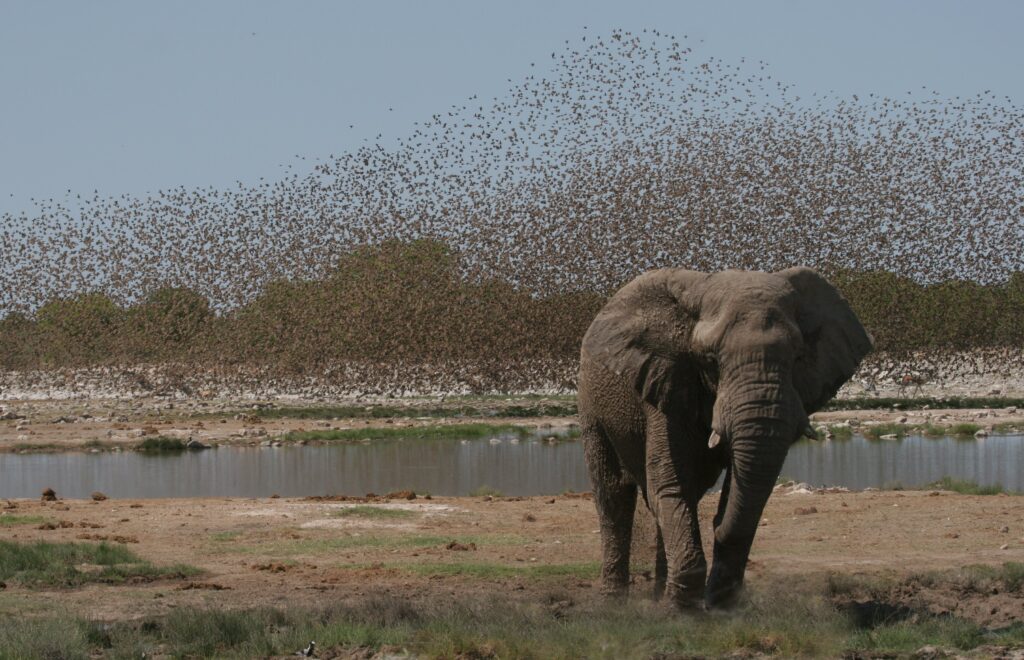
Leaving the drier end of the park, we head to Halali camp game driving all the way. Chances of seeing Lion are very high but Pink-billed Lark is a big deal (for some?). There can never be a bad day whether it is baking hot, or wet and rainy as each condition brings highlights. A shower may cause a big hatching of termites to bring in Bee-eaters, Purple and Lilac-breasted Rollers, Red-breasted Swallow, Cape Starling or big mixed flocks of swifts. A real downpour can flush out Honey Badgers, or force migrating eagles onto the ground but, for those that prefer sunshine, the hot, dry weather forces large flocks of Red-billed Quelea to the waterholes where they are joined by Red-headed Finch, Shaft-tailed Whydah, Great Sparrow, and Cape Wagtail, with Painted Snipe possible among palearctic waders. A lack of water raises chances of the rarer spotted cats like Leopard or Cheetah, but seeing any cat is a real privilege.
The area around Halali has plenty of Steenbok, their main prey and we remain flexible and trust the leaders’ experience to maximise chances of a sighting as mammals are given equal preference to birds.
Halali is a quiet camp and well wooded holding Red-billed Hornbill, Violet Woodhoopoe, African Scops Owl, Bare-cheeked and Pied Babblers.
Night Halali, Etosha.
DAY ELEVEN
We may do a campground walk before game driving to our next lodge in the west of the park. We hope to have a night-time shower or two once we have seen Black Rhino as this raises the possibility of seeing cuckoos: Jacobin, Striped, African, Klaas’s, Diederik and Black are all possible. Showers can also cause Red Crested and Northern Black Bustards into their aerial displays, and we may add White-crested Helmet-shrike, Rufous-naped and Clapper Larks to the list.
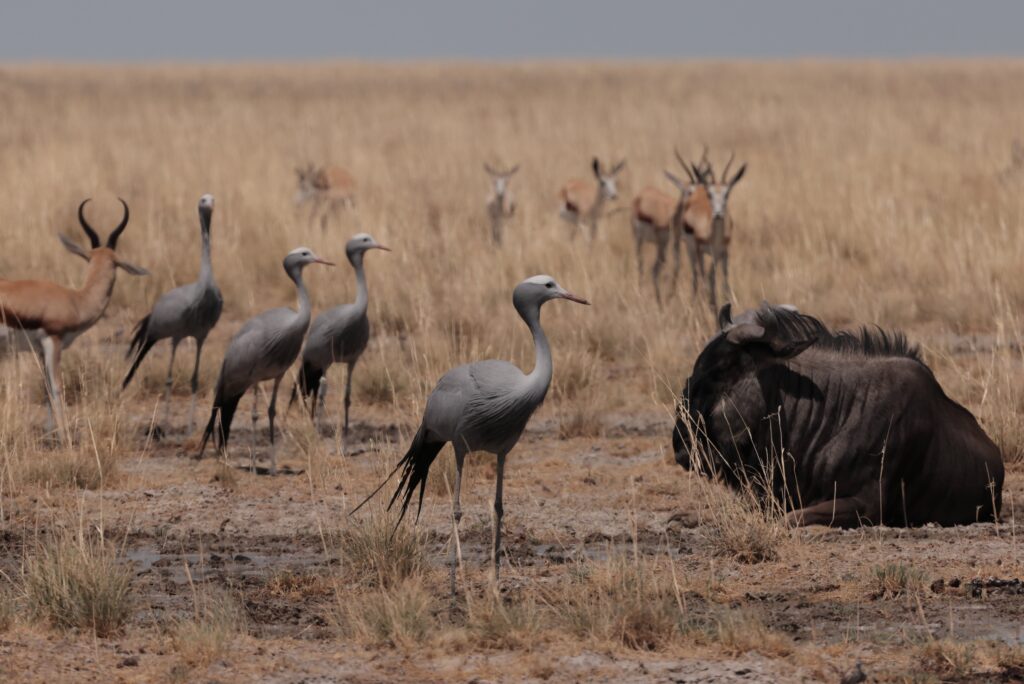
There will be wildebeest, Burchell’s Zebra, Red Hartebeest, Gemsbok and Kudu in good numbers and we are entering an area where we can find one of the few remaining pairs of Blue Crane left in Namibia. Probably no more than 15 pairs are resident in Northern Namibia and, since finding our first nest in 1994, we have located birds on each trip. Our records have been sent to a long-established research project that hopes to help their recovery, but it has been a long slog just to stabilise the population.
Our last camp at Namutoni has a different waterhole that is better for birds rather than mammals. Reeds beside it bring in waders like Wattled and Crowned Lapwing but over the years some vagrants have found it attractive. Our groups have found Corncrake, African Crake, Black Crake, Wattled Crane, Lesser Moorhen, and Lesser Jacana, even a Dwarf Bittern that kept cool under a garden hose! So, who knows what awaits us this time.
Night Namutoni, Etosha.
DAY TWELVE
In the morning, we plan to head to the Andoni Plain where game can be plentiful and a waterhole that can attract Blue Crane, Temminck’s Courser, Bateleur, White-headed Vulture, Red-billed Teal, South African Shelduck, Cape Shoveller, and Marabou Stork among a good number of migrant waders like Wood Sandpiper, Ruff, Avocet and Little Stint. Plovers include Kittlitz, White-fronted and Chestnut-banded.
The treeless grasslands provide home for Desert Cisticola and, if it has rained, Quailfinch move in to join mixed flocks of African Pipits and larks.
For those opting to relax in camp instead, shady trees pull in White-bellied Sunbird, Southern Masked Weaver, Long-billed Crombec, Barred Wren-babbler, Rattling Cisticola, Black-shouldered Kite, African Oriole and many others. The old fort here provides a good vantage point to watch for raptors.
Night Namutoni, Etosha.
DAY THIRTEEN
Early morning will be spent checking the camp or game driving through a nearby woodland called Dikdik Drive depending on weather conditions. There are often plenty of Giraffe at this end of Etosha and shady trees are home for Hyena, Crested and Swainson’s Francolin, Helmeted Guineafowl, Groundscraper Thrush and Emerald-spotted Dove.
We will have traversed the Etosha National Park from west to east to enjoy the diverse range of habitats and wildlife; through desert, grassy plain, mopane and miombo woodland before heading out into acacia bush.
Driving to the Waterberg Plateau where a strange but spectacular red-rock table rises out of the surrounding plain. It is wooded at its base where our lodge is situated and where there are plenty of small birds to look for in a short walk around the chalets. Burchell’s Glossy Starling, Blue Waxbill, Lesser Masked Weaver, Scarlet-chested Sunbird, Black-backed Puffback, Brubru, Green Woodhoopoe, Greater and Lesser Striped Swallows all breed here.
Night Waterberg
DAY FOURTEEN
A leisurely breakfast overlooking the woods allows us to look for birds missed the previous evening as well as the long tailed, African Paradise Flycatcher that can be common here. Monteiro’s Hornbills swoop through the trees and Speckled Pigeon is common on the red cliffs where Rock Kestrel and a southern population of Alpine Swift breeds.
The drive back to Windhoek will show how much things can change here in a couple of weeks. It should be greener, with good numbers of butterflies and, by now, migrant Red-backed and Lesser Grey Shrikes will have arrived to join European Bee-eaters sitting on the roadside wires. Steppe Buzzards sit on the bigger posts, and other raptors to catch up on include African Hawk-eagle. The road verges attract Chacma Baboon and Warthog that take advantage of the verges that have greened-up.
Arriving at the airport in good time to fly home, once checked in, there may be time to catch up with a last White-rumped, Little and African Palm Swift before boarding the plane home.
DAY FIFTEEN
Arrive back into the UK where the tour will conclude
WHAT’S INCLUDED
Return flights UK/Windhoek, probably via Frankfurt. All meals including tips for group meals, accommodation, services of driver and guides, and transport listed for the itinerary (large overlander customised safari truck and boat trip into Walvis Bay). Bottled water will be carried on the vehicle for the use of clients.
NOT INCLUDED
Travel/medical insurance (which is compulsory for travel on this tour), items of a personal nature such as tips, laundry, health or covid-related testing, any activities not mentioned in the itinerary.
ACCOMMODATION & FOOD
Full board accommodation is provided in excellent hotels, lodges and camps. We will spend one night at NamibGrens guest farm, two nights at the Namib Naukluft Lodge near Sossusvlei, two nights at the Pelican Bay, Walvis Bay, one night at a lodge in the Erongo mountains, five nights in Etosha (at Okaukuejo, Halali, and Namutoni Rest Camps) and one night at the Waterberg Rest Camp. All accommodation has private facilities en-suite.
HEALTH and VISAS.
To enter Namibia, British citizens do not need a visa. For non-British nationals you should check your own entry requirements.
There are no major health issues in Namibia. The only real concern is the potential for sunstroke if you do not utilise shade or do not drink enough. There is an extremely low risk of Malaria but seeing a mosquito is equally rare anyway.
WEATHER, PACE & DAILY ROUTINE
Our visit is at the end of the hot dry season. It will be hot and sunny, but with the slight possibility of thunderstorms. The coast is influenced by the Benguela Current and cooler, cloudy mornings (without rain) are the norm. Inland we must rise early to make the most of the opportunities available. The pattern in Namibia involves early morning and late afternoon excursions, resting and relaxing, or travelling between these times.
There are long journeys between accommodation which are as much a birding activity as a journey with birds and animals in view most of the time – it can be hot but it is rarely boring. We can break up the travel with stops for the special birds and our vehicle has very big windows for the best viewing and ventilation. PLEASE NOTE that many of the roads are extremely rough as we travel on un-made or graded roads often for long distances.
It will be a very early start into the dunes to be out before the excessive midday heat.
Basic fitness is all that is required as there is not a lot of walking. Any walking should be done at your own pace to avoid heat exhaustion. There is a little uphill walking in the Waterberg Plateau and at Erongo.
PHOTOGRAPHIC OPPORTUNITIES: Namibia has a photograph at every turn making it easy to get good photos but it is frustrating that one is not here for a whole year! In national parks, we are restricted to staying inside our large vehicle for safety but that makes a great hide. We can also do the same during normal travelling days to allow a closer approach. At other times, we will be taking leisurely walks where you may pause, linger or in some cases wander off to do your own thing. There is wildlife around most lodges and a waterhole at each Etosha camp, all attracting so many creatures that you will be glad that the days of photographic film are long gone. If photography is a priority, then you are free to stay by the waterholes rather than go on a game drive where incredible results can easily be obtained. Our leaders can advise about the possibilities.